Global Action on Social Determinants of Health
To cite: Donkin A, Goldblatt P,
Allen J, et al. Global action
on the social determinants
of health. BMJ Glob Health
2017;3:e000603. doi:10.1136/
bmjgh-2017-000603
Handling editor Seye Abimbola
► Additional material is
published online only. To view,
please visit the journal online
(http://dx.doi.org/10.1136/
bmjgh-2017-000603).
Received 11 October 2017
Revised 3 November 2017
Accepted 8 November 2017
Abstract
Action on the social determinants of health (SDH) is
required to reduce inequities in health. This article
summarises global progress, largely in terms of
commitments and strategies. It is clear that there is
widespread support for a SDH approach across the world,
from global political commitment to within country action.
Inequities in the conditions in which people are born, live,
work and age, are however driven by inequities in power,
money and resources. Political, economic and resource
distribution decisions made outside the health sector
need to consider health as an outcome across the social
distribution as opposed to a focus solely on increasing
productivity. A health in all policies approach can go
some way to ensure this consideration, and we present
evidence that some countries are taking this approach,
however given entrenched inequalities, there is some
way to go. Measuring progress on the SDH globally will
be key to future development of successful policies and
implementation plans, enabling the identification and
sharing of best practice. WHO work to align measures with
the sustainable development goals will help to forward
progress measurement.
Saturday, January 27, 2018


American Poverty

More than 40 million people live below the poverty line. These stark photos by Matt Black capture life in the poorest communities in the U.S.


Awareness of Ignorance
Researchers shed light on areas of the brain associated with metacognitive judgement.
|


Friday, January 26, 2018
Sex Differences
New post on Mind Hacks |  |
|

 A talk I gave titled "Debating Sex Differences in Cognition: We Can Do Better" now has
 Flu:Risk for Acute MI
Em homenagem à AMICOR Maria Inês Reinart Azambuja
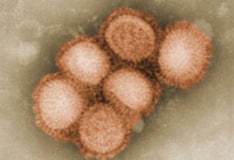
Flu Virus Linked to Imminent Risk for Acute MI
BOSTON — Patients with laboratory-confirmed influenza were about six times as likely to be admitted for acute MI in the following 7 days compared with the period comprising the prior and subsequent years, results of a cohort study show.[1]
The risk was especially pronounced in older patients and was independent of flu vaccination status or history of MI hospitalization. There was also a signal that other forms of respiratory infection can similarly raise the risk for MI admission.
The findings are consistent with a lot of prior research, acknowledged Dr Jeffrey C Kwong (University of Toronto, ON), but much of it associated MI with acute respiratory infections by undetermined pathogens, or with other indirect indicators of flu.
"This is the first one where we used lab-confirmed influenza as the exposure, and we found this association that was quite strong between influenza and MI," he told theheart.org | Medscape Cardiology.
Kwong is lead author on the study, which was based on Ontario health insurance records of people tested for respiratory viruses from May 2009 to May 2014 and was published January 24 in the New England Journal of Medicine.
The results are "no surprise," agreed Dr Scott David Solomon (Brigham and Women's Hospital, Boston, MA), who wasn't involved in the study. But, he added, "What's novel here, and improves on prior knowledge, is that it goes down to the individual-patient level, and says that when somebody actually has confirmed influenza, that they are more likely to have an MI."
Kwong and his colleagues state that the increased MI risk regardless of vaccination status should not be seen as evidence that influenza vaccinations are ineffective; the study wasn't designed to explore that issue. It does suggest, however, "that if vaccinated patients have influenza of sufficient severity to warrant testing, their risk of acute myocardial infarction is increased to a level that is similar to that among unvaccinated patients."
The study seems to strengthen familiar public health messages about getting flu vaccinations and taking measures to prevent the spread of respiratory viruses, especially for patients with cardiovascular risk factors. Despite such messages, vaccination rates may be low even in such high-risk groups.
Solomon pointed to a recent analysis based on patients with heart failure in the PARADIGM-HF trial that saw only about a 53% rate of vaccination for influenza in North America.[2]
"And that was surprising because these were people who are clearly at risk, and would clearly benefit from vaccination," he said.
Even when the effectiveness of the season's flu vaccination has been questioned, such as the current flu season, "getting some protection is better than getting no protection," Kwong said.
Secondary prevention patients with heart disease "don't question taking aspirin, they don't question taking β-blockers, they don't question taking blood pressure medications or statins. But a lot of patients question the value of getting a flu shot," he said.
"If you compare the effectiveness of influenza vaccination in preventing infection to statins in preventing MI, they shouldn't be having second thoughts about getting a flu shot."
Seven-Day Risk Interval
The analysis looked at 364 hospitalizations for acute MI in 332 patients that occurred within 1 year before and 1 year after laboratory confirmation of influenza; 48% in were women and 24% of the patients had been previously hospitalized for MI.
Of the 364 hospitalizations, 20 occurred during the first 7 days after the collection of a positive respiratory specimen, termed the "risk interval." The remaining 344 hospitalizations occurred during the 2-year period made up of the year before and the year after the risk interval, termed the "control interval."
The risk for MI hospitalization was increased sixfold during the risk interval compared with the control interval. Kwong said the group had expected the risk to fall off gradually, "but we actually saw that it just dropped down to nothing right after the first week. It's really that first week where the risk is concentrated."
Table 1. Incidence Ratios for Acute MI Hospitalization by Time After Laboratory Confirmation of Influenza
| Interval | Incidence Ratio (95% CI) |
|---|---|
| Days 1–7 | 6.05 (3.86–9.50) |
| Days 1–3 | 6.30 (3.25–12.22) |
| Days 4–7 | 5.78 (3.17–10.53) |
| Days 8–14 | 0.60 (0.15–2.41) |
| Days 15–28 | 0.75 (0.31–1.81) |
The group also observed increased MI hospitalization risk associated with respiratory samples positive for viruses other than influenza. The implication may be that respiratory infections per se, not simply influenza, are associated with acute MI, according to Kwong.
"I think we just found that influenza risk seemed to be higher than that of the other respiratory viruses."
Risk associated with influenza B was higher than with influenza A; Kwong said his group doesn't have an explanation for the difference.
Table 2. Incidence Ratios for Acute MI Hospitalization by Specific Infections
| Infection | Incidence Ratio (95% CI) |
|---|---|
| Influenza A | 5.17 (3.02–8.84) |
| Influenza B | 10.11 (4.37–23.38) |
| RSV | 3.51 (1.11–11.12) |
| Noninfluenza virus, non-RSV | 2.77 (1.23–6.24) |
| Illness, no respiratory virus identifieda | 3.30 (1.90–5.73) |
| RSV = respiratory syncytial virus.
aFrom among influenza A, influenza B, RSV, parainfluenza virus, adenovirus, human metapneumovirus, coronavirus, or enterovirus.
| |
Respiratory infections could trigger MI by any of several possible mechanisms, Kwong and Solomon observed.
Influenza elevates an array of proinflammatory cytokines that can lead to endothelial dysfunction, and possibly plaque rupture, but whether that's the primary mechanism "is really just a postulate. We don't know for sure that's what is contributing," Solomon said.
People with the flu also have increased oxygen demand, which might produce myocardial ischemia in someone with significant coronary lesions, he observed. Platelet activation is also increased.
"If the flu can trigger these events in people who are at risk, then it behooves us to do everything we can to minimize the risk associated with influenza," Solomon said. "Obviously that means vaccination. And we are currently testing a strategy that might provide even better immunity in patients who are at risk."
Solomon is a principal investigator for the ongoing Influenza Vaccine to Effectively Stop Cardiothoracic Events and Decompensated Heart Failure(INVESTED) trial, which has randomly assigned about 3000 of an estimated target of 9300 patients, he said.
INVESTED is comparing a high-dose trivalent influenza vaccine to a quadrivalent vaccine at a standard dose in patients with a recent history of hospitalization for MI or heart failure and other high-risk features. Mortality and cardiopulmonary hospitalization are the primary endpoints.
Kwong and Solomon have disclosed no relevant financial relationships. Potential conflicts for the other authors are at nejm.org..
Follow Steve Stiles on Twitter: @SteveStiles2. For more from theheart.org | Medscape Cardiology, follow us on Twitter and Facebook.
SLIDESHOW
|

oldest modern human
|
|---|
|
|---|
|
|---|
Informatics
Ultra-thin ‘atomistor’ synapse-like memory storage device paves way for faster, smaller, smarter computer chips
An artificial synapse for future miniaturized portable ‘brain-on-a-chip’ devices
| January 24, 2018 |
 | A team of electrical engineers at The University of Texas at Austin and scientists at Peking University has developed a one-atom-thick 2D “atomristor” memory storage device that may lead to faster, smaller, smarter computer chips. The atomristor (atomic memristor) improves upon memristor (memory resistor) memory storage technology by using atomically thin nanomaterials (atomic sheets). (Combining … more… |
 |
An artificial synapse for future miniaturized portable ‘brain-on-a-chip’ devices
| January 22, 2018 |
 |
MIT engineers plan a fingernail-size chip that could replace a supercomputer
MIT engineers have designed a new artificial synapse made from silicon germanium that can precisely control the strength of an electric current flowing across it. In simulations, the researchers found that the chip and its synapses could be used to recognize samples of handwriting with 95 percent accuracy. The engineers say the new design, published … more… |
Doomsday Clock
The Doomsday Clock is now two minutes before midnight
| January 25, 2018 |
 |
Scientists move clock ahead 30 seconds, closest to midnight since 1953
Citing growing nuclear risks and unchecked climate dangers, the Doomsday Clock — the symbolic point of annihilation — is now two minutes to midnight, the closest the Clock has been since 1953 at the height of the Cold War, according to a statement today (Jan. 25) by the Bulletin of the Atomic Scientists. “In 2017, world … more… |
Thursday, January 25, 2018
Luiz e Amantina Adamy Cechella
Família de minha mãe Luiza matéria de Jornal de Santa Maria (zoom permite ler)


Memory
Somewhere in the brain is a storage device for memories
New technology and new ideas spur the hunt for the physical basis of memory, the engram

TRACES OF MEMORY New technologies and new ideas have revived the hunt for the physical basis of memory, challenging existing notions of where memories are stored.
SVEN HUATH
Magazine issue: Vol. 193, No. 2, February 3, 2018, p. 22
People tend to think of memories as deeply personal, ephemeral possessions — snippets of emotions, words, colors and smells stitched into our unique neural tapestries as life goes on. But a strange series of experiments conducted decades ago offered a different, more tangible perspective. The mind-bending results have gained unexpected support from recent studies.
In 1959, James Vernon McConnell, a psychologist at the University of Michigan in Ann Arbor, painstakingly trained small flatworms called planarians to associate a shock with a light. The worms remembered this lesson, later contracting their bodies in response to the light.
Human brain rounded into shape
|

NEWS
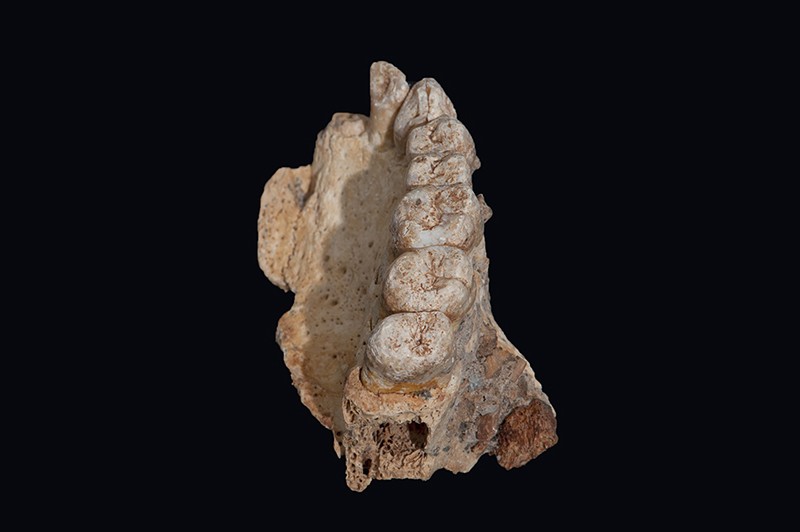
Human brains rounded into shape over 200,000 years or more
JAN 24 2018 2:00 PM
Ancient humans' brains slowly but surely became round, scientists say. Read More
|
Metabolic brain ‘switch’
Revealed: brain ‘switch’ tells body to burn fat after a meal
Scientists at Monash Biomedicine Discovery Institute have found a mechanism by which the brain coordinates feeding with energy expenditure, solving a puzzle that has previously eluded researchers and offering a potential novel target for the treatment of obesity.
Scientists at Monash University’s Biomedicine Discovery Institute have found a mechanism by which the brain coordinates feeding with energy expenditure, solving a puzzle that has previously eluded researchers and offering a potential novel target for the treatment of obesity.
Obesity – a major risk factor for many diseases including cardiovascular disease, Type 2 diabetes, liver disease and several cancers – is at epidemic levels in Australia./.../
Corazón Aquino
 |  | Corazon Aquino Two-and-a-half years after her husband's assassination, Corazon Aquino, born this day in 1933, was elected president of the Philippines in February 1986, restoring democracy after the long dictatorship of Ferdinand Marcos. |
Tuesday, January 23, 2018
Curcumin
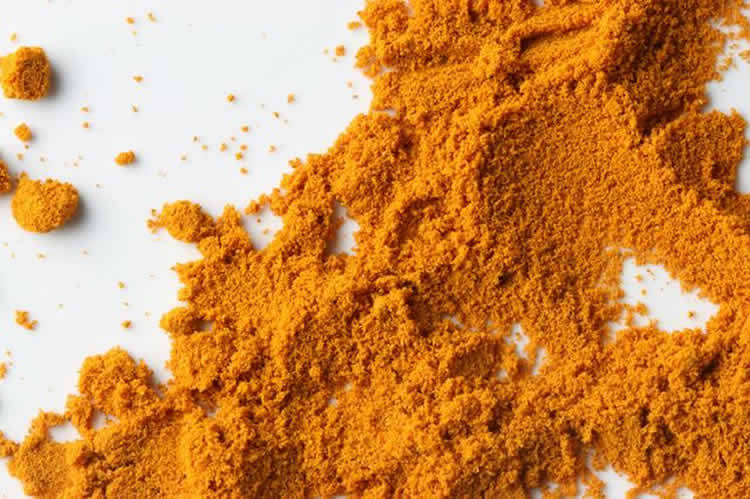
Lovers of Indian food, give yourselves a second helping: Daily consumption of a certain form of curcumin — the substance that gives Indian curry its bright color — improved memory and mood in people with mild, age-related memory loss, according to the results of a study conducted by UCLA researchers.
The research is in American Journal of Geriatric Psychiatry. (full open access)
Subscribe to:
Posts (Atom)