Translate AMICOR contents if you like

Tuesday, November 15, 2022

3.111 AMICOR (25)

 3.111 AMICOR (25) 

AMICOR 3.110 (semana passada - link de correção) houve um erro na versão inicial

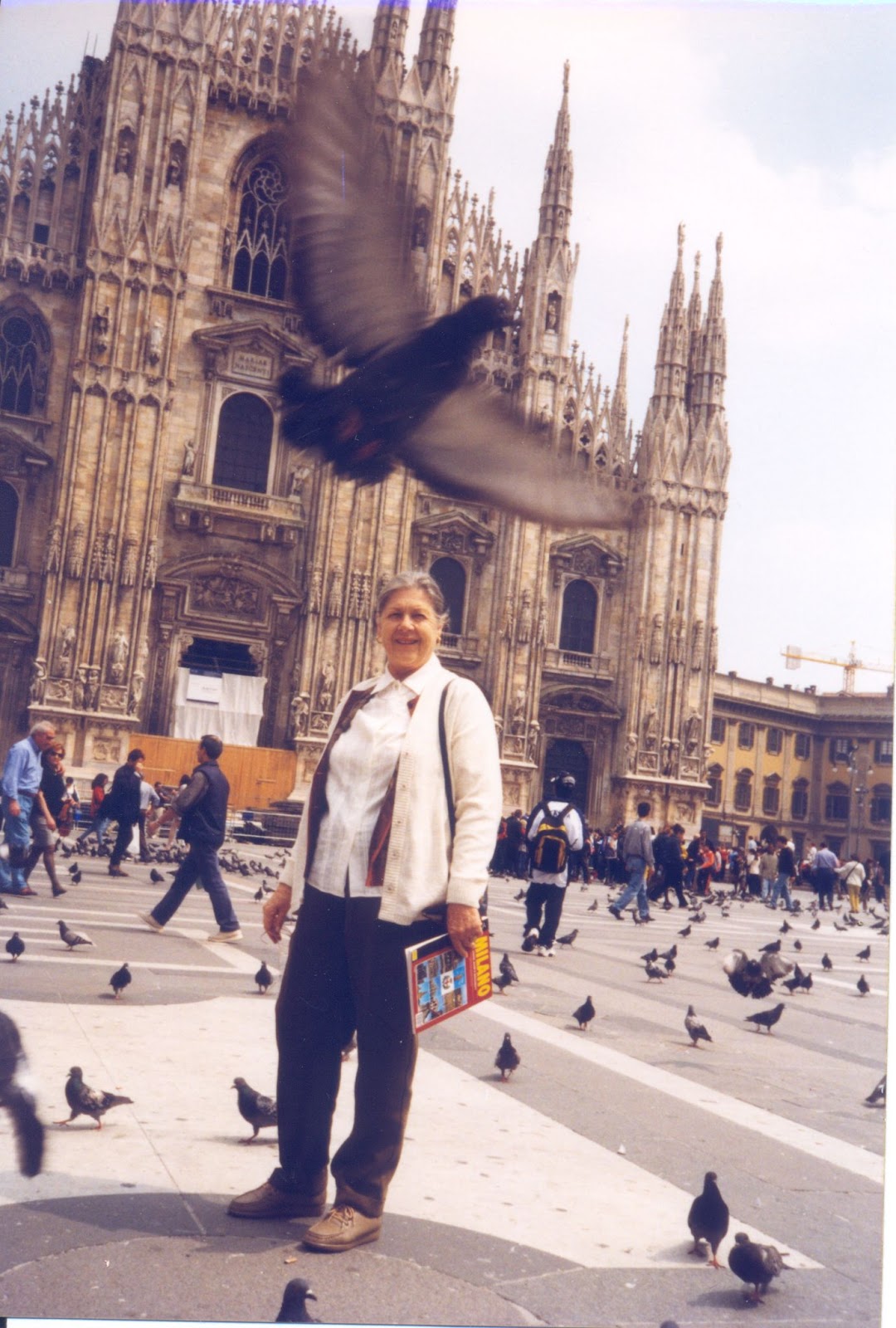
#Dra. Valderês Antonietta Robinson Achutti (*13/06/1931+15/06/2021)


Estava feliz!...Deve ter sido no México em 1994

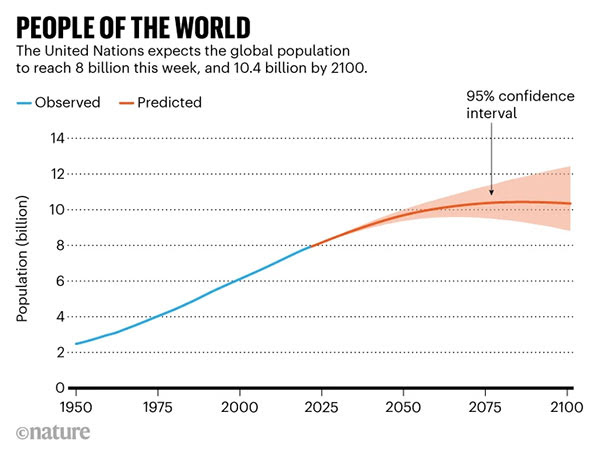
#Nature Briefing   8Bi

#IHME 

#The Heart.org

Neil Skolnik, MD. DISCLOSURES November 14, 2022


#Sciencenews

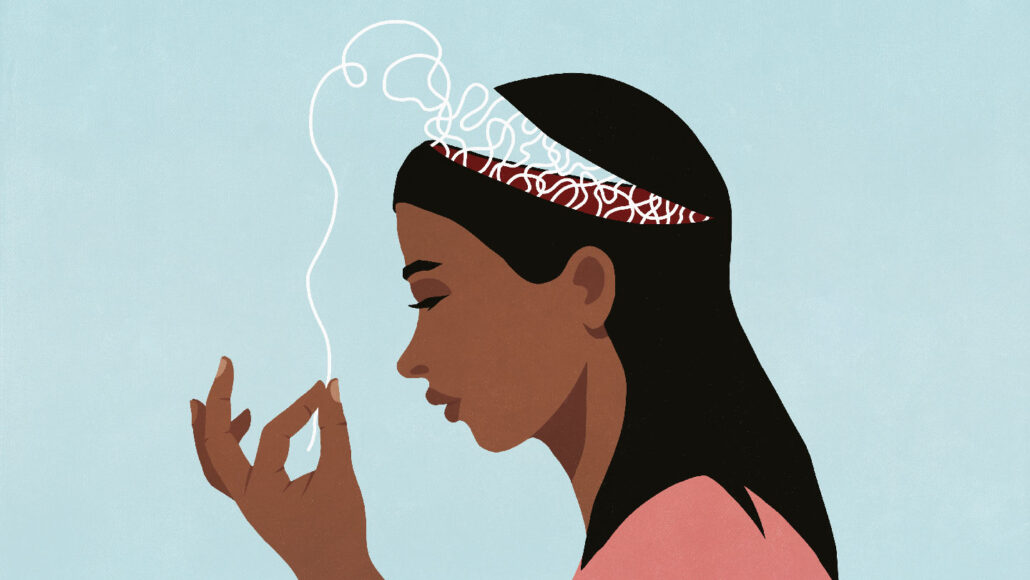
An illustration of a woman with the top of her appearing to open on a hinge and her pull a thin white string out of a tangled collection of string where her brain would be


MALTE MUELLER/FSTOP/GETTY IMAGES PLUS

New brain implants ‘read' words directly from people's thoughts
NOV 15 2022 7:00 AM

In the lab, brain implants can translate internal speech into external signals, technology that could help people who are unable to speak or type. READ MORE  


#Nature

Locating the moral-dilemma centre of the brain

© KATERYNA KON/SCIENCE PHOTO LIBRARY/Getty Images

In moral-dilemma tests, people with damage to a brain region called the basolateral amygdala seldom chose to sacrifice one person even if it would save the lives of thousands of others.

A small, almond-shape structure, the amygdala has been dubbed the fear centre of the brain. Experiments with rodents have indicated that the basolateral amygdala plays a critical role in decisions that require weighing the cost of a sacrifice against the benefit of the outcome. But it wasn’t known whether this carries over to people.

Now, a team led by researchers from the University of Cape Town in South Africa has found compelling evidence that humans use the basolateral amygdala when making such judgements.

They found that five people with damaged basolateral amygdalas due to a rare genetic condition frequently opted to save one person even if it would result in the deaths of thousands.

Supported content

References

  1. PNAS 119, e2119072119 (2022). doi: 10.1073/pnas.2119072119

Roots determine dominant biome

© Martin Harvey/The Image Bank/Getty Images

Belowground competition for scarce resources fought by plant roots plays a much bigger role than previously thought in determining boundaries between biomes.

Abiotic factors such as geology, climate and fire regimes have been thought to largely determine the dominant biome in an area.

But now, a team that included researchers from the University of Cape Town in South Africa has shown that the root strategies that plants employ to obtain nutrients from the soil can determine the biome.

In a four-yield field study, the team investigated the sharp boundaries between two very contrasting biomes: one (forest) dominated by a small number of trees and the other (Fynbos) with great plant diversity that included many shrubs. The two biomes occur in areas with identical climate and geology.

The team found that the different root strategies employed determined whether forest or Fynbos dominated.

References

  1. PNAS 119, e2117514119 (2022). doi: 10.1073/pnas.2117514119

#Facebook Quantum Physics


Available online !
#Na próxima semana (quarta feira)
De nosso querido primo arquiteto 
#SIMERS

Preocupado com o fechamento de mais de 200 leitos, o Simers lançou a campanha “Salvem o Beneficência Portuguesa”. O presidente Marcos Rovinski, em vídeo, alertou sobre o processo de negociação para quitar dívidas trabalhistas no valor de R$ 35 milhões.


Assista ao vídeo no canal do Simers no Youtube:

#
My Bookmarks

FLUID DYNAMICS | ALL TOPICS


Computer Proof ‘Blows Up’ Centuries-Old Fluid Equations

By JORDANA CEPELEWICZ

For more than 250 years, mathematicians have wondered if the Euler equations might sometimes fail to describe a fluid’s flow. A new computer-assisted proof marks a major breakthrough in that quest.

Read the article

COSMOLOGY


Why This Universe?
New Calculation Suggests Our Cosmos Is Typical.

By CHARLIE WOOD

Physicists have calculated that the universe has a higher entropy — and is therefore more likely — than alternative possible universes.

Read the article


Related: 
Physicists Rewrite a Quantum
Rule That Clashes With Our Universe

By Charlie Wood

DEVELOPMENTAL BIOLOGY


The Gut Microbiome Helps Social Skills Develop in the Brain

By JOANNA THOMPSON

New research in fish suggests that gut microbes can have a crucial early influence on the brain’s social development.

Read the blog


Related: 
How Microbiomes
Affect Fear

By Elena Renken (2019)

QUANTIZED COLUMNS


How to Think About Relativity

By SEAN CARROLL

Albert Einstein’s ideas about space-time aren’t exactly intuitive, and they aren’t exactly Einstein’s, either.


Read the column

Around the Web

Thought-to-Speech
Researchers announced that they have developed a brain implant that can read words directly from a user’s thoughts. The device could aid communication with people who are paralyzed or have other physical impairments, reports Laura Sanders for Science News. In science fiction, brain-machine interfaces often have the ability to control thoughts and behaviors. But in 2021 R. Douglas Fields wrote for Quanta about why real-world technology is still far from achieving these capabilities.

New Win for MOND
A new calculation shows that a controversial alternative theory of gravity called Modified Newtonian Dynamics (MOND) accurately predicts how star clusters break apart, reports Sam Jarman for Physics World. Physicists have struggled to find a version of MOND that is consistent with all astrophysical observations. In 2020 Charlie Wood wrote for Quanta about a new formulation that finally managed to describe the cosmic microwave background.

Saturday, November 12, 2022

3.110 AMICOR (25)

#Dra. Valderês Antonietta Robinson Achutti (*13/06/1931+15/06/2021)

Saturday, November 05, 2022

3.109 - AMICOR (25)

 3.109 AMICOR (25)

#Dra. Valderês A. Robinson Achutti (*13/06/1931+15/06/2021)

Milão, maio de 1999

                                    (clicar  em Apresentação de Slides)

#JSTOR

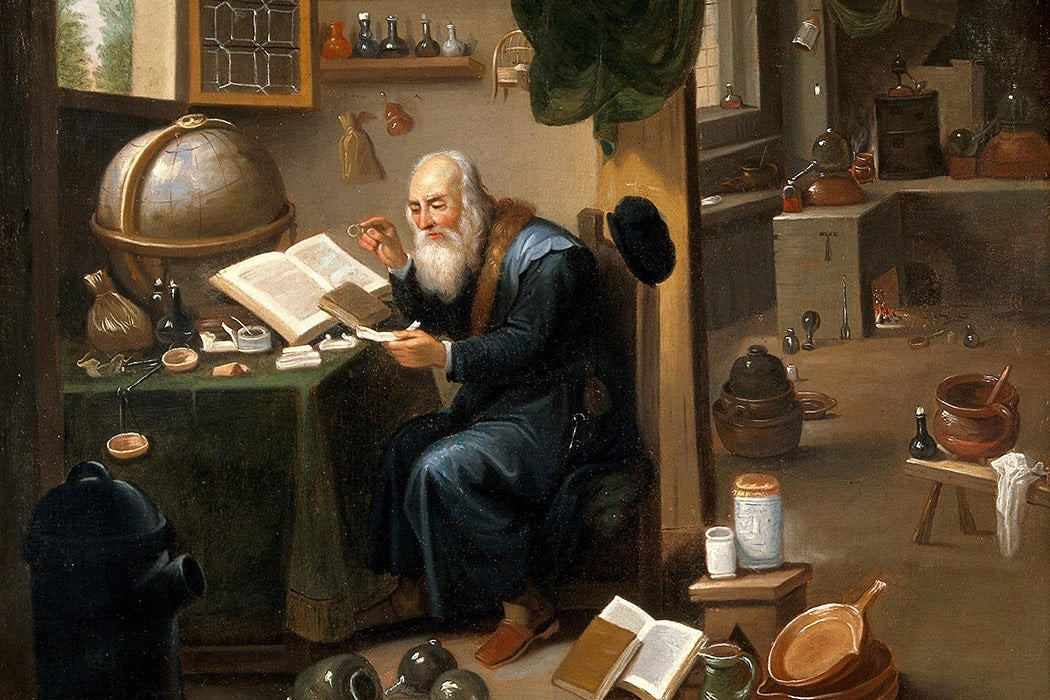
When Did Alchemy End?
By Matthew Wills
Despite royal prohibition, transmutation efforts continued underground long after the widely accepted dates for their demise. Read more...

#LiveScience


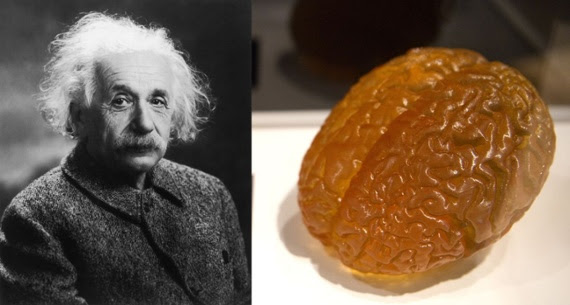
On April 18, 1955, Albert Einstein died of an abdominal aneurysm at the age of 76, at the University Medical Center of Princeton in Plainsboro, New Jersey. Per his wishes, the legendary physicist's remains were cremated, and his ashes were scattered at an undisclosed location.

Except, that is, for his brain.
 Full Story: Live Science (11/2) 

#Academia SR de Medicina

What's the deadliest month of the year?

In the U.S., the deadliest month of the year is in the winter. (Image credit: Andrew Bret Wallis via Getty Images)

People die daily from causes ranging from common ailments, such as heart disease, to rare occurrences, such as getting hit by lightning. But during which month do the most deaths happen in the United States?

The deadliest month in the U.S. is the one that heralds the New Year: January. An average of 251,699 people in the U.S. died in January every year between 2010 and 2020, according to a Live Science analysis of the Centers for Disease Control and Prevention (CDC) Wonder database, which tracks how and when people die. In comparison, the averages for the other months for this time period range from 218,102 (August) to 242,475 (December), Live Science found.

#UNDP - Human Development Report


Human Climate Horizons platform released
Without concerted and urgent action, climate change will exacerbate inequalities and widen gaps in human development, according to the new Human Climate Horizons (HCH) platform launched today by the United Nations Development Programme (UNDP) and the Climate Impact Lab.

Designed to empower people and decision makers everywhere, the platform allows users to see what climate change could mean for people’s lives using
hyperlocal data from over 24,000 places around the world.

“Focusing on the effect of climate change on issues like mortality, labour and energy use, the new Human Climate Horizons puts vital data and analytics into the hands of policymakers, helping countries to take climate action where it is needed most," says UNDP Administrator Achim Steiner. "For instance, the platform shows that stronger global efforts towards the Paris Agreement’s targets could reduce projected mortality from extreme heat in the year 2100 by more than 80%, saving tens of millions of lives.”

Freely available in the lead up to COP27, the HCH platform opens access to an evolving stream of research to help inform action to reduce the unequal effects of rising global greenhouse gas emissions. 
Follow the conversation on Twitter at @HDRUNDP and hashtag #ClimateFutures

#

We just published a data explorer on Global Health


What do people die from? How do health outcomes and systems vary across the world? Explore data for all countries in our data explorer.


Latest posts

From $1.90 to $2.15 a day: the updated International Poverty Line
How many people die from the flu?
Introducing our updated work on Poverty: a new design for our content
We just published our new data explorer on Poverty
Which countries have put a price on carbon?
The mission of Our World in Data is to make data and research on the world’s largest problems understandable and accessible.
#Centro Histórico e Cultural da Santa Casa

#
Our recent publications
We published a new data explorer on global health

What do people die from? What is the life expectancy in different countries, and how has this changed over time? How do health outcomes and systems vary across the world?

Find answers to these questions and many more in our new Global Health Data Explorer.

The explorer covers the following high-level areas, with many indicators within each area and data from multiple sources to compare:
#
My Bookmarks

ASTROBIOLOGY | ALL TOPICS


A Dream of Discovering Alien Life Finds New Hope

By JOSHUA SOKOL

For Lisa Kaltenegger and her generation of exoplanet astronomers, decades of planning have set the stage for an epochal detection.

Read the article

MICROBIOLOGY


Ocean Bacteria Reveal
an Unexpected Multicellular Form

By CARRIE ARNOLD

Marine bacteria normally seen as single cells join together as a “microscopic snow globe” to consume bulky floating carbohydrates.

Read the blog


Related: 
Single Cells Evolve Large
Multicellular Forms in Just Two Years

by Veronique Greenwood (2021)

GEOMETRY


Why Mathematicians Study Knots

By DAVID S. RICHESON

Knot theory began as a way to explain the fundamental makeup of the physical world. Today, it’s applied in fields including fluid dynamics, electrodynamics and genetics.

Read the column


Related: 
Untangling Why
Knots Are Important

From The Joy of Why podcast

Q&A


A Mathematician Who Fled to Freedom but Still Stares Down Doubts

By JORDANA CEPELEWICZ

Svetlana Jitomirskaya was born in Ukraine, but left the Soviet Union to escape sexism and antisemitism. Even though her work in mathematical physics has now been honored with one of the field’s top prizes, she finds herself still fighting old battles.

Read the interview

IN CASE YOU MISSED IT


Inside the Proton, the ‘Most Complicated Thing’ Imagineable

By CHARLIE WOOD;
Graphics by MERRILL SHERMAN

The positively charged particle at the heart of the atom is an object of unspeakable complexity. We’ve attempted to connect the proton’s many faces to form the most complete picture yet.

Explore the visual explainer

Around the Web

Benevolent Blobs
Biomolecular condensates are membraneless cellular organelles that dissolve as soon as their function is fulfilled. Many questions remain about these strange objects, reports Elie Dolgin for Nature. The discovery of these unstructured organelles that are driven by phase changes has fundamentally changed our ideas of how cells work. In 2021 Viviane Callier wrote for Quanta about what we’ve learned so far.

Corvid Companionship
Befriending crows requires patience, routine and peanuts, writes Abby Ohlheiser for MIT Technology Review. But in the end, you could be rewarded with gifts of shells and dead snakes. Crows are extremely intelligent. They remember people’s faces and have complex social structures. They also understand abstract math like the concept of zero, as Jordana Cepelewicz reported in 2021.

#Nature - Biomolecular Condensates

More than a decade ago, scientists started finding peculiar droplets inside cells. Now researchers are trying to work out how these ‘biomolecular condensates’ form and what they do. (Nature | 12 min read)