Translate AMICOR contents if you like

Saturday, May 20, 2023

3.137 - AMICOR (26)

  3.137 AMICOR (26) Completamos 25 anos no último dia 17/05/2023

A mãe Dra. Valderês entregando o diploma para a filha Dra. Ana Lúcia em 1987
Em homenagem ao dia das mães médicas, composição feita pela filha médica (psiquiatra)

#Slideshow: 107 fotos de abertura Clicar em apresentação


#Artigo meu| De médicos e economia

Publicdo em 16 de outubro de 2013

O incentivo ao consumo em geral não tem limite, e termina não sobrando nada para investir na prevenção
ALOYZIO ACHUTTI*
Médicos, somos tradicionalmente preparados para aliviar sofrimento e cuidar de pessoas doentes, buscando a cura quando possível, sem provocar danos adicionais. Aprendemos também ser preferível prevenir, cortando o mal pela raiz, detendo ou retardando suas consequências. As causas das doenças, entretanto, estão geralmente relacionadas com as experiências de vida das pessoas: com educação, ambiente, nutrição, saneamento, habitação, trabalho, transporte, segurança, estresse e perspectiva de vida. Como se pode ver, nada disso se compra em farmácia, nem se consegue transfundir em hospital, mas médicos podem ajudar a identificar os componentes da rede causal. Embora as doenças exijam assistência do sistema, seus determinantes se situam predominantemente fora do setor saúde, e cada vez mais distantes de nosso receituário e alcance profissional.
A figura do médico se confunde com o sistema de saúde, no qual temos papel crítico, mas não único, nem onipotente. Nossos honorários e salários representam muito pouco nos altos custos do sistema, envolvendo inúmeros outros atores, recursos governamentais, privados e do próprio bolso do paciente, diretamente proporcionais à extensão da cobertura e à qualidade pretendidas. Esta complexidade se acompanha de progresso técnico-científico e eficiência, mas oportuniza conflitos de interesse que terminam se refletindo na imagem do médico.
Sempre coube ao médico a difícil tarefa _ se não impossível de um todo _ de compatibilizar interesses do paciente com as normas científicas e os próprios interesses profissionais. Hoje tudo se mistura com pretensões de instituições securitárias, intermediárias e empregadoras de trabalho médico, lucro da indústria de equipamentos-farmacêutica-hospitalar, sem falar da utilização político-partidária da assistência com propósitos eleitoreiros.
Durante algum tempo, se imaginou ser mais econômico e suficiente dar assistência básica (para não falar em simplificada) a um número maior de pessoas, mesmo sem tentar, na mesma medida, solucionar os determinantes que impactam no desenvolvimento humano e qualidade de vida: dentre os quais saúde é um dos componentes e não um objetivo em si mesmo.
A promoção da saúde e a prevenção de doenças projetam-se no futuro à semelhança do investimento no domínio da economia, da mesma forma como a assistência se equivale ao consumo. Tanto em economia quanto em saúde, ambos são necessários e precisam ser seriamente considerados de forma balanceada, mas independentes. O incentivo ao consumo em geral não tem limite, e termina não sobrando nada para investir na prevenção.
Vale lembrar um parágrafo de um dos mestres da epidemiologia (professor Geoffrey Rose): “Quem é responsável? É claro que médicos têm somente responsabilidade limitada pela saúde da nação. Nosso papel, bem como o papel da educação em saúde, não é manipular, mas informar, guiar, desafiar e apoiar. É relevante considerar o papel de outras forças mais importantes. Médicos são conselheiros treinados na sociedade, mas não são responsáveis por suas escolhas”. *Médico

#The Moral of Flowers: An Illustrated Victorian Encyclopedia of Poetic Lessons from the Garden

From the sensuous honeysuckle to the humble daisy, a lyrical journey to where nature meets human nature.
BY MARIA POPOVA

The Moral of Flowers: An Illustrated Victorian Encyclopedia of Poetic Lessons from the Garden

“In forty years of medical practice, I have found only two types of non-pharmaceutical ‘therapy’ to be vitally important for patients with chronic neurological diseases: music and gardens,” the poetic neurologist Oliver Sacks wrote in contemplating the healing power of gardens.

More than two centuries earlier, gardening had taken on a new symphonic resonance with the psychological and physiological score of human nature when the philosopher Erasmus Darwin, Charles Darwin’s grandfather, published The Botanic Garden — a book-length poem using scientifically accurate verse to enchant the popular imagination with the scandalous new science of sexual reproduction in plants. Botany was suddenly both sensual and poetic, seeding a new genre of literary botanica in the early nineteenth century. Crowning it is a book of especial loveliness — the 1833 gem The Moral of Flowers (public library | public domain) by the poet, painter, and self-taught naturalist Rebecca Hey.


#MEDSCAPE

No Evidence: Antidepressants Help Chronic Pain

Megan Brooks, May 10, 2023

The majority of antidepressants prescribed for chronic pain lack sufficient evidence of efficacy and safety, results of a large Cochrane review show.

"This is a global public health concern. Chronic pain is a problem for millions who are prescribed antidepressants without sufficient scientific proof they help," lead author Tamar Pincus, PhD, from the University of Southampton, UK, said in a news release.
..............................................................

"Evidence synthesis is often complex and nuanced, but the evidence underpinning the use of these treatments is not equivalent, so current treatment modalities are hard to justify," Stewart said.

#The World in Data

We published a new topic page on Influenza


Explore global data on influenza cases, deaths, and vaccinations.


More of our recent work

We published a major overhaul of our work on Technological Change
We published a redesign of our work on the Internet
Mortality in the past: every second child died
We published a redesign of our work on the ozone layer
We published a redesign of our work on suicides

#Science Magazine

A new Science study shows that mammals had begun to change and diverge even before the Earth was hit by the asteroid that killed the dinosaurs, approximately 65 million years ago. scim.ag/2BP #Zoonomia

#HMV


#

INFORMATION THEORY | ALL TOPICS


Secret Messages Can Hide in AI-Generated Media

By STEPHEN ORNES

In steganography, an ordinary message masks the presence of a secret communication. Humans can never do it perfectly, but a new study shows it’s possible for machines.

Read the article

NONLINEAR DYNAMICS


New Proof Finds the ‘Ultimate Instability’ in a Solar System Model

By JORDANA CEPELEWICZ

For the first time, mathematicians have proved that planetary orbits in a solar system will always be unstable.

Read the article


Related: 
Strange Stars Pulse
to the Golden Mean

By Natalie Wolchover (2015)

MEMORY


Memories Help Brains Recognize New Events Worth Remembering

By YASEMIN SAPLAKOGLU

Memories may affect how well the brain will learn about future events by shifting our perceptions of the world.

Read the blog


Related: 
New Map of Meaning in the Brain
Changes Ideas About Memory

By Jordana Cepelewicz (2022)

SOLAR PHYSICS


The Tiny Physics Behind Big Cosmic Eruptions

By ZACK SAVITSKY

A new theory describes how particle interactions fuel fast magnetic reconnection, the process behind solar flares and other astrophysical jets.

Read the blog


Related: 
Sun’s Puzzling Plasma
Recreated in a Laboratory

By Erika K. Carlson (2019)

THE JOY OF WHY


Are There Reasons to Believe in a Multiverse?

Podcast hosted by STEVEN STROGATZ

Several areas of physics suggest reasons to think that unobservable universes with different natural laws could lie beyond ours. The theoretical physicist David Kaplan talks with Steven Strogatz about the mysteries that a multiverse could solve.

Listen to the podcast

Read the transcript

Around the Web

Digging for Buried Baryons
The missing baryon puzzle asks where all the ordinary (not dark) matter is hiding in the universe. While some astrophysicists have declared the puzzle solved, others are scouring the cosmos for the last bits of baryonic matter, reports Nathan Collins for Symmetry Magazine. In 2018, a large trove of previously overlooked baryonic matter was found in the warm tendrils of gas in the space between galaxies. Katia Moskvitch wrote about the discovery for Quanta and how it helped solve the missing baryon puzzle.

Complexity in the Yeast Likely of Places
Life has repeatedly evolved from unicellularity to multicellularity — and it can happen much more suddenly than was thought possible. Selection pressures led cultures of laboratory yeast to evolve multicellular forms in just a couple of years, reports Ed Yong for The Atlantic. The researchers imposed selection pressure on the yeast by depriving it of oxygen, which made larger, multicellular clumps more favorable. Veronique Greenwood reported on their study for Quanta when a preprint of the work was posted in 2021.
#Veja a arte...

Saturday, May 13, 2023

3.136 AMICOR (25)

 3.136 AMICOR (25) próximo dia 17 estaremos completando 26 anos na WEB!

#Dra. Valderês Antonietta Robinson Achutti (*13/06/1931+15/06/2021)


#Slideshow: 106 fotos de abertura Clicar em apresentação de slides

#Science Magazine

Like treasured recipes that are passed down from generation to generation, there are only certain regions of DNA that evolution dares not alter. Mammals around the world share a variety of these coding sequences, for example, which have remained intact for millions of years.

Humans are a rare exception to this club. For whatever reason, the recipes long held by our ancient ancestors were suddenly “spiced up” in a short period of evolution. Because we are the only species in which these regions have been rewritten so quickly, they are called ‘human accelerated regions’ (or HARs). Furthermore, scientists believe that at least some of the HAR may be the source of many qualities that distinguish humans from their close relatives, such as chimpanzees and bonobos./.../


SOLAR SYSTEM

The Voyager probes raised perplexing questions as they exited the Solar System. Now, scientists have conceived new missions to interstellar space. Learn more: scim.ag/2zb

Coronal loops are arches of magnetized plasma that protrude from the surface of the sun. Here, the loops in a magnetic dance.
Coronal loops are arches of magnetized plasma that protrude from the surface of the sun. Here, the loops in a magnetic "dance."
Credit: NASA/SDO/HMI/AIA/LMSAL
#Science
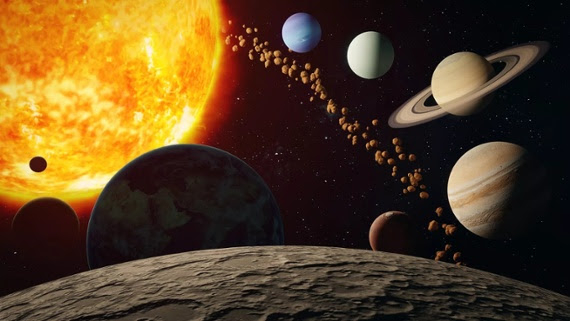
Scientists discover secret 'symmetries' that protect Earth from the chaos of space
BlenderTimer / Pixabay
A new analysis of chaos in the solar system reveals how planetary collisions are avoided over billions of years.
Read More
newsletter image

How Pythagoras turned math into a tool for understanding reality

Reality was made of numbers, Pythagoras said, and he employed numbers to explain the “harmony of the heavens.”
Read More

 #NAUTILUS


Our Most Read Stories from Each Year

This week marks 10 years since Nautilus first started publishing. Let’s have a look back at the most-read articles from each of our first 10 years. 


#Medscape
May 11, 2023
Cães detectam covid-19 em crianças e adolescentes assintomáticos
Hipoglicemia, câncer, malária, convulsões iminentes, migrânea e agora... covid-19. Pesquisa preliminar mostra que cães farejadores podem identificar pacientes assintomáticos infectados por SARS-CoV-2.
Saiba mais ›

Human pangenome supports analysis of complex genomic regions

QUOTE OF THE DAY

“Humans live in a culture in which it seems as if everything must go right the first time we try it, but that is not how successful products are developed, nor how science unfolds.”

Recent space-exploration hiccups — such as the loss of an international Moon mission and the untimely end of the SpaceX Starship rocket test — show that failures are painful but essential part of the work, argues a Nature editorial. (4 min read)

Gut microbes likely contribute to the development of anorexia  

Your gut hosts a massive population of more than 1,000 bacterial species,
which outnumber the cells in your body by a factor of ten, and they
contain at least 100 times more genesthan are encoded by your own DNA.
It is also home to many thousands of viral species, aswell as archaea
and fungi.These microbes, collectively referred to as the gut microbiome, 
begin to colonize the gastrointestinal tract at birth. Research published
over the last 20 years has implicated gut bacteria in numerous processes,
ranging from brain development and immune system function
to digestion and drug metabolism.        As well as playing vital roles in
maintaining health, gut bacteria are also linked to a wide variety
of chronic diseases, including asthma, diabetes, irritable bowel disease,
and rheumatoid arthritis, as well as mental health disorders such
as anxiety and depression. Research published in the journal
Nature Microbiology now suggests that gut microbes contribute 
to anorexia nervosa./.../


#Resgate de artigos antigos meus já publicados na imprensa...

De Médicos e Medicina (data?)

Aloyzio Achutti. Médico.

É curioso e intrigante observar o crescente prestígio e valorização da Medicina, enquanto médicos e pacientes estejam cada vez mais insatisfeitos com a prática. As ciências biomédicas (não confundir com medicina) têm se desenvolvido vertiginosamente na esteira das conquistas científicas e tecnológicas permitindo a realização de diagnósticos e tratamentos até há bem pouco inimagináveis. Estes recursos tornam-se cada vez mais caros por serem tratados como produtos de mercado, e envolverem custos marginais relacionados com inúmeros interessados da indústria farmacêutica, de equipamentos, organizações hospitalares, de pesquisa, securitárias, de especulação financeira, político-governamentais e de outras profissões que atuam no mesmo setor. Além de lidar com a vida humana (cujo valor é inestimável), a operação deste oneroso e complexo sistema depende ainda em grande parte do médico, sobrando-lhe cada vez menos para remunerar seu trabalho e comprometendo-lhe a autonomia.

É bem possível que a crise seja bem mais ampla e relacionável com a problemática observável em outros setores, quando se diz serem necessárias reformas econômica, política e ética para readequar a estrutura de nossa sociedade, por não mais corresponder ao grau e tipo de desenvolvimento e globalização.

Além da impossibilidade de conciliar totalmente os interesses do paciente, da ciência e do profissional, é preciso enfrentar o dilema da qualidade e da extensão de cobertura. As soluções adotadas, mesmo com o suporte de recursos tecnológicos, não têm o dom de multiplicar o número de profissionais capacitados, preservar a continuidade e estender o tempo necessários para estabelecer uma adequada relação médico-paciente, e ao mesmo tempo promover o atendimento em massa.

Em condições muito menos complexas, com uma demanda certamente bem mais reduzida e exigente, Platão já reconhecera o dilema, e estabelecera duas categorias de profissionais:  os médicos de escravos e os de homens livres. Os primeiros corriam de um paciente a outro sem maiores preocupações (expressão usada por ele), enquanto que os de homens livres esperavam convencer o paciente antes de proceder a cura.

A abrangência atual e diversidade dos objetivos profissionais têm ofuscado o foco primordial e humanístico, dificultando o relacionamento, complicando a formação, e distraindo a atenção das causas das causas das doenças. Ao mesmo tempo nosso modelo cultural centrado no pragmatismo mercadológico e competitividade agressiva, tem corroído muito do idealismo de uma profissão inicialmente confundida com o sacerdócio...

Bem, quando descobrimos que até os sacerdotes não são mais os mesmos, quem sabe não é chegado o tempo de reservar o título de médico somente para aqueles que se conformem com a prática da medicina centrada na pessoa humana, integrada em seu contexto histórico e social?

#

My Bookmarks

QUANTUM COMPUTING | ALL TOPICS


Physicists Create Elusive Particles That Remember Their Pasts

By CHARLIE WOOD

In two landmark experiments, researchers used quantum processors to engineer exotic particles that have captivated physicists for decades. The work is a step toward crash-proof quantum computers.

Read the article

MACHINE LEARNING


Chatbots Don’t Know What Stuff Isn’t

By MAX G. LEVY

Today’s language models are more sophisticated than ever, but they still struggle with the concept of negation. That’s unlikely to change anytime soon.

Read the article


Related: 
Machines Beat Humans on a Reading Test.
But Do They Understand?

By John Pavlus (2019)

EVOLUTION


A Mutation Turned Ants Into Parasites — Quickly

By VIVIANE CALLIER

A new genetics study of ant “social parasites” shows how complex sets of features can emerge very rapidly and potentially split species.

Read the article


Related: 
How Supergenes Fuel Evolution
Despite Harmful Mutations

By Carrie Arnold (2022)

Q&A


A Plan to Address the World’s Challenges With Math

By KEVIN HARTNETT

Minhyong Kim is leading a new initiative called Mathematics for Humanity that encourages mathematicians to apply their skills to solving social problems.


Read the interview

QUANTA SCIENCE PODCAST


Scientists Rethink the Causes of Alzheimer’s (Part 2)

Podcast hosted by SUSAN VALOT;
Story by YASEMIN SAPLAKOGLU

If plaques of amyloid protein in the brain aren’t the root cause of Alzheimer’s disease, what is?

Listen to the podcast

Read the article

Around the Web

The Human “Pangenome”
A new genome map based on 47 diverse individuals aims to capture the full genetic variation of humans, reports Antonio Regalado for MIT Technology Review. Despite the human genome being declared “complete” in 2000, additional sequencing has been an ongoing, decades-long effort. In a 2021 interview for Quanta, Carrie Arnold spoke with Karen Miga, one of the primary researchers behind the new “pangenome” project, about her work filling in the missing pieces of the human genome.


Nutty Non-Newtonians
Although peanut butter doesn’t flow like water, it’s still a liquid. For The Conversation, mechanical engineer Ted Heindel explains the physics of the sandwich spread and other non-Newtonian fluids. Some non-Newtonian fluids are viscoelastic: They seize up when they flow too fast. In 2022, Adam Mann wrote for Quanta about a new discovery that chaotic flow causes this counterintuitive phenomenon.
#