Translate AMICOR contents if you like

Saturday, December 23, 2023

3.168 - AMICOR (26)

 3.168 - AMICOR (26) 

#Com Dra. Valderês A. Robinson Achutti (*13/06/1931+15/16/2021)

Como está fazendo muito calor, preferi convidar os amigos para visitarmos as montanhas no norte da Italia (Dolomiti). Também, nosso Natal costumava ter algodão na decoração do pinheiro, imitando flocos de neve...

#Re-Publicando artigos mais antigos meus  (2016)

PAPAI NOEL?

Aloyzio Achutti (2016)

    Dá para acreditar no Papai Noel? A pergunta parece descabida, mas muitos de nós aceitamos essa ilusão durante algum tempo em nossa infância, assim como até hoje toleramos sem discutir muita coisa incerta, ilusória ou mentirosa. Convém crer, é melhor não duvidar, nem perguntar, e pode até não haver resposta…

    É preciso haver um mínimo de compatibilidade entre conhecimentos e “verdades”  utilizados em nosso cotidiano e, ao mesmo tempo, uma boa margem de tolerância, ou explicação razoável, para juntar ideias aparentemente conflitantes. Para viver bem não precisamos estar tentando testar a veracidade a cada momento, nem é preciso que todos tenhamos crenças iguais. Basta haver equilíbrio e estabilidade  no conjunto de crenças de cada um, e haja respeito à diversidade.

    Há quem diga que aquilo que chamamos de realidade não existe de fato (assim como Papai Noel), cada um lança mão da imaginação para construir um mundo como gostaria que fosse, ou como convém, e fique compatível com o restante de nossa memória pessoal. Dúvidas, discordâncias e contestações, nos causam algum desconforto, mas terminamos por nos acomodar.

    A ciência foi criada para colocar um mínimo de ordem na casa, mas mesmo existindo um arquipélago de postulados científicos bastante sólidos nos quais nos agarramos, sobra sempre espaço a ser preenchido pela imaginação.

    Gosto de repetir a frase de Albert Einstein: “imaginação é mais importante que o conhecimento”.

    Afinal de contas não sabemos de onde, nem como surgimos, nem para onde vamos como espécie, nem o sentido e o destino desse mundo. Imaginamos um universo imenso, a se perder no limite da capacidade de nossos sentidos, e das máquinas inventadas para enxergar  o inatingível. Mesmo assim, pelas distâncias que nos separam, estamos recém recebendo e misturando informações  de mundos provavelmente já desaparecidos. 

    Não sabemos o que preenche os espaços entre os astros e seres palpáveis de cuja existência não ousamos duvidar, nem do microcosmo de partículas componentes cuja realidade está a exigir cada vez mais definições, teorias e elucubrações só concebíveis no domínio da imaginação…

    Minha intenção inicial era explorar o clima de descrédito e insegurança no qual vivemos, onde não sobra mais ninguém para se acreditar - assim como Papai Noel que já se foi. Ninguém sabe, ninguém viu, não há provas materiais, só indícios que podem corresponder a um plano conspiratório...

    Ainda, voltando ao espírito natalino materializável na troca de presentes, deveríamos falar sobre o circuito da recompensa, radicado na satisfação gerada pelo mimo, pelo carinho, por qualquer ganho, propina, poder, perpetuando o caminho do prazer e do sucesso, no funcionamento do circuito cerebral naturalmente desenvolvido para garantir sobrevivência e evolução das espécies, mas isso terá que ficar para outra ocasião. 

    Enquanto isso - Feliz Natal!...

#É Natal!


#

Quanta’s 2023 in Review

The Year in Physics

By NADIA DRAKE

From the smallest scales to the largest, the physical world provided no shortage of surprises this year.

Read more | Watch the video

The Year in Biology

By HANNAH WATERS

In a year packed with fascinating discoveries, biologists pushed the limits of synthetic life, probed how organisms keep time, and refined theories about consciousness and emotional health.

Read more | Watch the video


The Year in
Computer Science

By BILL ANDREWS

AI learned how to generate text and art better than ever before, while computer scientists developed algorithms that solved long-standing problems.

Read more | Watch the video

The Year in Math will publish later today — check our site and YouTube channel for updates.

Also this week:

GRAPH THEORY


A Close-Up View Reveals the ‘Melting’ Point of an Infinite Graph

By KELSEY HOUSTON-EDWARDS

Like ice melting into water, graphs undergo phase transitions. Mathematicians showed that they can pinpoint such transitions by examining only local structure.

Read the article

CHRONOBIOLOGY


How This Marine Worm Can Tell Moonglow From Sunbeams

By ELISE CUTTS

For the first time, scientists have decoded the molecular structure of a protein that helps to sync a biological clock to the phases of the moon.

Read the blog

ASTROPHYSICS


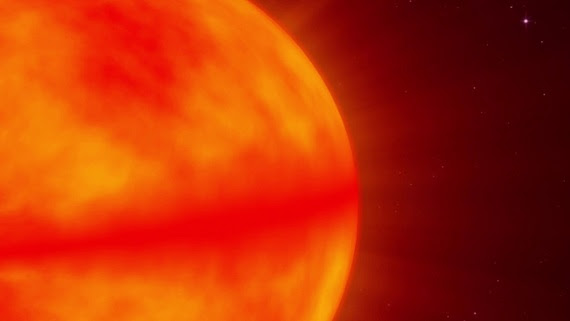
New Clues for What Will Happen When the Sun Eats the Earth

By JONATHAN O'CALLAGHAN

Recent observations of an aging, alien planetary system are helping to answer the question: What will happen to our planet when the sun dies?


Read the blog

QUANTA SCIENCE PODCAST


Selfish, Virus-Like DNA Can Carry Genes Between Species

Podcast hosted by SUSAN VALOT;
Story by SAUGHAT BOLAKHE


Genetic elements called Mavericks that have some viral features could be responsible for the large-scale smuggling of DNA between species.

Listen to the podcast

Read the article

#PUB MED

1993 Jan;76(1):26-35.

The evolution of medicine as a profession. A 75-year perspective

PMID: 8426585 
Abstract
Recomendação da Prof. Maria Inês Reinert Azambuja
The profession of medicine has changed dramatically in 75 years. Despite the commitment of individual practitioners to the highest ideals of professionalism, the profession itself has lost privilege, power, and public reputation. It has been toppled from the high moral ground of professionalism. This has happened not so much because individual clinicians have abandoned that ground, but largely because others have occupied it--primarily complex organizations that have developed public mandates to regulate and oversee health care. The issue is not one of unfeeling physicians--it is one of a health care system that has evolved so as to limit medicine's autonomy. This changing system places new constraints and pressures on the physician-patient relationship. The question we are left with is whether medicine can regain its professionalism. How do we reform a system that, by its complexity, has become amoral? The only way is for physicians to re-assume a stout position of advocacy--advocacy for individual patients in a complex and frightening system of care, advocacy for patients as a class of people in a political system that seeks to restrict care, advocacy for patients in a world of environmental and epidemic threats. Such advocacy requires an equally strong moral commitment to the principles of service. Acting in the patient's best interest is not enough. It requires that the profession avoid the appearance of blatant self-interest at every turn. It requires a revised commitment to political activism in the interest of service to patients as a community. The costs are extremely high--but the alternative, physicians-as-technicians and medicine as a slave to corporate and government interests, is hardly acceptable.

#Time
A quick programming note: Health Matters will be off next week, and return on Jan. 2. From all
 of us on the TIME health team, we wish you a happy and health new year. 


Health journalists should be some of the healthiest people around. All day long, we call up experts
and ask them what people can do to live long and full lives.
But knowing what's good for you doesn't always translate into optimal behaviors. We
deprioritize exercise, spend hours scrolling through social media, and eat too many Christmas cookies.
(Maybe just like you.) This year, everyone on our team made time for at least one new activity we
felt sure would enrich our lives. From eating more ice cream to rage biking, some stuff worked so
well that we're planning to take it with us into the new year.

READ WHAT ELSE WORKED FOR US 

#Live Science
TOP SCIENCE NEWS
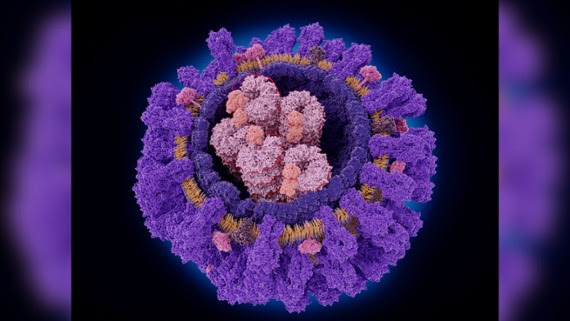
Never-before-seen antibodies can target many flu viruses
Scientists identified a new class of antibodies in human blood that are able to target multiple
strains of influenza A virus in the lab.
Read More
PLANET EARTH
'Rainbow clouds' appear in Arctic for 3 days in a row
In and around the Arctic Circle, stunning multicolor clouds have been shining in the
sky for days on end. It is very unusual to see so many of these vibrant clouds over such a
long period.
Read More
A research expedition in the Southern Ocean has mapped a string of seamounts that help
to shape the Antarctic Circumpolar Current, an ocean current that flows clockwise around
Antarctica.
 Full Story: Live Science (12/21) 
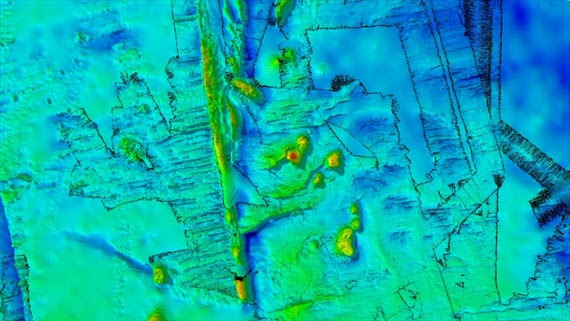
Chain of ancient volcanoes discovered off Antarctica
(FOCUS voyage/CSIRO)

SPACE
Atom-size black holes from the dawn of time could exist

(NASA's Goddard Space Flight Center)
New research suggests that if tiny primordial black holes created during the Big Bang exist,
some of them may have been snared by stars and are now forced to eat their way out.
Read More
Hubble Telescope captures a galaxy's 'forbidden' light
(ESA/Hubble & NASA, C. 
The Hubble Telescope viewed a distant galaxy whose light appears to contradict
some of the most common rules of quantum physics.
 Full Story: Live Science (12/21) 

#2023 TED TALKS

TED Talks Daily daily@ted.com Cancelar inscrição

para mim
TED Talks


Saturday, December 16, 2023

3.167 - AMICOR (26)

 3.167 - AMICOR (26) em construção

#com Dr. Valderês A. Robinson Achutti (*13/06/1931+15/06/2021)

e nosso filho Luiz Eduardo, presente também na foto que encerra o AMICOR de hoje (bem abaixo)

#Re-Publicando artigos antigos meus


#PNAS

Amazonia and the tropical forests are full of scientific surprises, with important environmental and climatic impacts that range from local to regional and global. Before the Industrial Revolution, there was quite an equilibrium between forest photosynthesis and ecosystem respiration, keeping the carbon stock of tropical forests in equilibrium (1). However, the increase in atmospheric carbon dioxide concentrations caused forests to absorb more carbon than they released, with the Global Carbon Project estimating that forests are absorbing 26% of the CO2 emissions (2). The Amazon rainforest is highly biodiverse and the largest contiguous tropical rainforest in the world. The links between forest and climate are very strong regarding precipitation, temperature, radiation, aerosols, clouds, and other variables (3). Carbon cycling is very much coupled to climate and water cycles in tropical rainforests. Undisturbed forests act as a carbon sink by taking up about 11.4 GtCO2/y, or 29% of anthropogenic emissions annually, while v accounts for an emission of 4.5 GtCO2/y, or 11% of emissions (2). However, deforestation and climate change are altering tropical forest’s important ecosystem services. Tropical deforestation is an important driver of global climate change through emissions of greenhouse gases. But the reverse is also important, where increased temperatures, reduced precipitation, and increased climate extremes, such as droughts, are making some regions in the Amazon Forest start to have a positive net carbon flux to the atmosphere (45).
/.../
#NGM

There’s another biome tucked inside your microbiome—here’s why it’s so important

Your microbiome has its own fungal communities that live in the gut, skin, and
respiratory tract. Known as the mycobiome, its role in your overall health is an
emerging area of interest.

Studies show that patients with irritable bowel syndrome tend to have high levels of the fungus Candida
albicans
 (illustrated here) in their gut. In recent years, scientists have started to take a closer look at how the fungi in ​your gut microbiome affect your health.
COLORIZED SCANNING ELECTRON MICROSCOPE IMAGE BY MARTIN OEGGERLI UNIVERSITY HOSPITAL BASEL, SWISS NANOSCIENCE INSTITUTE, BASEL. 

PUBLISHED DECEMBER 4, 2023

Of the many types of microscopic organisms that make up the gut microbiome, bacteria receive the most attention. But other tiny organisms in the gut might be just as important to overall health—and they’re often overlooked.

Your microbiome also has its own mycobiome, or fungal communities that live in the gut, skin, and respiratory tract. Recent studies show that the mycobiome might help keep dangerous microbes at bay and regulate the immune system—or cause chronic disease.

(Your gut health can affect your whole body. The gut microbiome, explained.)

Scientists have linked the fungal communities in the gut to myriad diseases, including long COVID, and dozens of other intestinal, neurological, and respiratory diseases. And although researchers are only just starting to piece together how fungi impact our health, here’s what we do know.

What makes up the gut microbiome?

Researchers have studied the bacterial microbiome for centuries, but they’ve largely ignored the mycobiome, says Mahmoud Ghannoum, a microbiologist and professor at Case Western Reserve University School of Medicine and University Hospitals Cleveland Medical Center who coined the term “mycobiome.” (Ghannoum also cofounded BIOHM Health, a biotechnology company that’s testing probiotic nutritional supplements and biotherapeutics.)/.../

#Gates Notes

Lessons in lifesaving from Brazil

What the biggest country in South America can teach the world about healthcare.

| 
I’ve been a big fan of Brazil for a while. I first visited back in 1995 when Microsoft was building out our operations there, including working with one of the national banks to launch home banking. And some of my favorite family trips have been to the Amazon, whose river, basin, and rainforest come up often during conversations on climate change. But it wasn’t until I began working in public health that I started appreciating just how impressive the country’s track record in this area is—and how much the rest of the world could learn from it.

https://www.youtube.com/watch?v=iXCEgPM-bSQ&embeds_referring_euri=https%3A%2F%2Fwww.gatesnotes.com%2F&embeds_referring_origin=https%3A%2F%2Fwww.gatesnotes.com&feature=emb_imp_woyt

#LiveScience

The 1st life in the universe could have formed seconds after the Big Bang

A composite image of the Bullet Cluster, a much-studied pair of galaxy clusters that have collided head on. One has passed through the other, like a bullet traveling through an apple, and is thought to show clear signs of dark matter (blue) separated from hot gases (pink).
A composite image of the Bullet Cluster, a much-studied pair of galaxy clusters that have collided head on. One has passed through the other, like a bullet traveling through an apple, and is thought to show clear signs of dark matter (blue) separated from hot gases (pink). (Image credit: X-ray: NASA/ CXC/ CfA/ M.Markevitch, Optical and lensing map: NASA/STScI, Magellan/ U.Arizona/ D.Clowe, Lensing map: ESO/WFI)

Life has found a home on Earth for around 4 billion years. That's a significant fraction of the universe's 13.77 billion-year history. Presumably, if life arose here, it could have appeared anywhere. And for sufficiently broad definitions of life, it might even be possible for life to have appeared mere seconds after the Big Bang.

To explore the origins of life, first we have to define it. There are over 200 published definitions of the term, which shows just how difficult this concept is to grapple with. For example, are viruses alive? They replicate but need a host to do so. What about prions, the pathogenic protein structures? Debates continue to swirl over the line between life and nonlife. But for our purposes, we can use an extremely broad, but very useful definition: Life is everything that's subject to Darwinian evolution./.../

#Our World in Data

We’re hiring a Senior Full-stack Engineer!


We’re hiring a Senior Full-stack Engineer to help us transform how the world understands its biggest challenges.


Recent articles, updates, and announcements

What were the death tolls from pandemics in history?
Period versus cohort measures: what’s the difference?
Why do women live longer than men?
The Human Development Index and related indices: what they are and what we can learn from them
How do researchers measure how common and deadly armed conflicts are?


#Science News

The James Webb telescope took some stunning images in 2023

Just a year and a half into its mission, JWST is revolutionizing our view of the cosmos


#

NEUROSCIENCE | ALL TOPICS


New Cell Atlases Reveal Untold Variety in the Brain and Body

By YASEMIN SAPLAKOGLU

Recent efforts to map every cell in the human body have researchers floored by unfathomable diversity, with many thousands of subtly different types of cells in the human brain alone.

Read the article

Quanta is conducting a series of surveys to better serve our audience. Take our newsletter subscriber survey and you will be entered to win free Quanta merchandise.

ASTROPHYSICS


Extra-Long Blasts Challenge Our Theories of Cosmic Cataclysms

By CHARLIE WOOD

In less than half the duration of a pop song, gamma-ray bursts can emit about as much energy as our sun produces over billions of years. Recent observations are forcing astronomers to rethink their best theories of what might cause the bursts.

Read the article


Related: 
Brighter Than a Billion Billion Suns:
Gamma-Ray Bursts Continue to Surprise

By Jonathan O'Callaghan (2021)

NUMBER THEORY


A Triplet Tree Forms One of the Most Beautiful Structures in Math

By ANNA KRAMER
and KONSTANTIN KAKAES

The Markov numbers reveal the secrets of irrational numbers and the patterns of the Fibonacci sequence. But there’s one question about them that has resisted proof for over a century.

Read the blog


Related: 
Two Students Unravel a Widely
Believed Math Conjecture

By Max G. Levy

COMPUTER SECURITY


Celebrated Cryptography Algorithm Gets an Upgrade

By MADISON GOLDBERG

Two researchers have improved a well-known technique for lattice basis reduction, opening up new avenues for practical experiments in cryptography and mathematics.

Read the blog


"The Theater of the World" 
In the 16th century, the Belgian cartographer Abraham Ortelius created the world’s first modern atlas — a collection of maps that he called “The Theater of the World.” The maps, drawn by Ortelius and others, detailed what was at the time the best knowledge of the world’s continents, cities, mountains, rivers, lakes and oceans and helped usher in a new understanding of global geography.

Similarly, the creation of cell atlases — maps of organs and bodies constructed cell by cell — is heralding a new era in our understanding of biology. Powerful sequencing and imaging technologies invented in the last decade are revealing with unprecedented detail the composition of human organs and tissues, from the pancreas and liver to the placenta, as well as those of other animals like the mouse and fruit fly. With these new tools, researchers can fingerprint individual cells based on which genes they are expressing. That information has revealed subtle and unsuspected distinctions among cells and has begun to illuminate how the diversity of cell types can be essential to the healthy functioning of organs. /.../ Quanta Magazine

#Seminário: A fonte das imagens
com nosso filho Luiz Eduardo
Foto de Luiz Avila - RBS - Ele foi motivo par o painel que segue, encerrando AMICOR de hoje, quando fez a foto da pomba da paz...