Translate AMICOR contents if you like

Showing posts with label behavior. Show all posts

Wednesday, September 16, 2020

"Universe 25"


The Horrifying Study That Predicted Human Extinction
How utopia went to hell

Wednesday, August 19, 2020

Morning Routine


This Morning Routine will Save You 20+ Hours Per Week

Author, Husband, Father of 5

Your first three hours will make or break you.

The traditional 9–5 workday is poorly structured for high productivity. Perhaps when most work was physical labor, but not in the knowledge working world we now live in.
Although this may be obvious based on people’s mediocre performance, addiction to stimulants, lack of engagement, and the fact that most people hate their jobs — now there’s loads of scientific evidence you can’t ignore./.../

Friday, August 14, 2020

1934 - Paris


Today in 1934: Paris Fashion

Aug. 13, 1934“Not for three months will the horse chestnut trees on Paris' Champs-Elysees begin to turn yellow. Yet last week on the brief and severe Rue de la Paix autumn had already come. And on hand for its coming was an excited little army of U. S. dress buyers who crowded through closely-guarded doorways into the salons of the great Parisian couturiers. Inside the warm air was heavy with perfume and the smell of new silk. Buyers who usually paid $100 to get in (refunded on the first order) cocked their heads and adjusted their glasses as the sleek mannequins rustled to ward them in long-skirted evening gowns, sport dresses with Brazil nuts for buttons, coats made of steamer rugs, woolen dresses with oilcloth grapes. Soon the buyers would stream out of the city with notes and gossip on the fashions Paris was about to set the world for the winter of 1934-35.” (Aug. 13, 1934)

Tuesday, August 11, 2020

Emotion, aggression, desire


Wednesday, July 22, 2020

Moral Determinants of Health

Viewpoint
June 12, 2020

The Moral Determinants of Health

JAMA. 2020;324(3):225-226. doi:10.1001/jama.2020.11129

The source of what the philosopher Immanuel Kant called “the moral law within” may be mysterious, but its role in the social order is not. In any nation short of dictatorship some form of moral compact, implicit or explicit, should be the basis of a just society. Without a common sense of what is “right,” groups fracture and the fragments wander. Science and knowledge can guide action; they do not cause action.

No scientific doubt exists that, mostly, circumstances outside health care nurture or impair health. Except for a few clinical preventive services, most hospitals and physician offices are repair shops, trying to correct the damage of causes collectively denoted “social determinants of health.” Marmot1 has summarized these in 6 categories: conditions of birth and early childhood, education, work, the social circumstances of elders, a collection of elements of community resilience (such as transportation, housing, security, and a sense of community self-efficacy), and, cross-cutting all, what he calls “fairness,” which generally amounts to a sufficient redistribution of wealth and income to ensure social and economic security and basic equity. Galea2 has cataloged social determinants at a somewhat finer grain, calling out, for example, gun violence, loneliness, environmental toxins, and a dozen more causes./.../-

Thursday, July 09, 2020

Collapse of civilization

Paul Ehrlich: ‘Collapse of civilization is a near certainty within decades’

 
An interview with Paul Ehrlich on The Population Bomb 50 years on: what has changed and what we must do to avoid a collapse of  civilization.

Friday, July 03, 2020

Autism Is an Identity


Autism Is an Identity, Not a
Disease: Inside the
Neurodiversity Movement

Activists argue that rather than trying to ‘cure’ or treat the
neurodivergent, society should learn to accept, appreciate,
and accommodate their needs, covered by journalist
Katherine Reynolds Lewis
(Se não conseguirem acesso, peçam-me que dou um jeito)

Learn more

Friday, June 12, 2020

Hugging Your Dog


There’s a better way to show your dog love
Carlyn Beccia in CreaturesMember only content4 min read

Tuesday, May 26, 2020

Let's make the world wild again...

Let's make the world wild again


16:22 minutes · TED2020: The Prequel
Earth, humanity and nature are inextricably interconnected. To restore us all back to health, we need to "rewild" the world, says environmental activist Kristine Tompkins. Tracing her life from Patagonia CEO to passionate conservationist, she shares how she has helped to establish national parks across millions of acres of land (and sea) in South America -- and discusses the critical role we all have to play to heal the planet. "We have a common destiny," she says. "We can flourish or we can suffer, but we're going to be doing it together."
Watch now »

Saturday, May 23, 2020

Bullet Joural

One Notebook Could Replace All the Productivity Apps That Have Failed You
Amy Schellenbaum, Popular Science
A nerd’s guide to bullet journaling.

To be more Productive...

Want to Be More Productive? Try Doing Less.
Kate Northrup, Harvard Business Review
We’ve been taught that if we want more — money, achievement, vitality, joy, peace of mind — we need to do more, to add more to our ever-growing to-do list. But what if we’ve been taught wrong?
Save to Pocket

Lavar as mãos de Fernando Neubarth


Wednesday, May 13, 2020

Infodemic...


An infodemic of misinformation

What makes coronavirus misinformation and conspiracy theories so potent — and how might they be stopped? A Nature video explores how researchers are studying the viral power of fake news and its impact on the spread of COVID-19. (Nature (on YouTube) | 6 min video)

Tuesday, May 05, 2020

Fakenews

Think again!

Insane People on Facebook

Post image

Thursday, April 30, 2020

Solitude

Solitude has always been both a blessing and a curse


Two timely books spell out its dangers and perennial allure

In his “politics” Aristotle argued that, thanks to the gift of language, man is destined to be a social and therefore a political animal. Yet the human instinct to socialise has always been balanced by an urge to withdraw into solitude. A few hermits make their lives in isolation, but many ordinary folk believe society is only tolerable if punctuated by frequent spells on their own. “There are many modern thinkers who emphasise the individual’s dependency upon society,” John Cowper Powys, a British writer and advocate of solitude, observed. “It is, on the contrary, only the cultivation of interior solitude, among crowded lives, that makes society endurable.”
Historians are for the most part solitary creatures themselves—the sort of people who, at school, preferred reading to team sports and, as adults, desperately try to avoid committees in order to spend more time in the library. All the same, they generally focus on gregarious activities, whether politicians on manoeuvres or the masses on the march. Bucking that trend, a couple of fascinating books on social isolation have appeared in time for the lockdown. Fay Bound Alberti has tried her hand at a history of loneliness. David Vincent focuses on loneliness’s rather more interesting sibling, solitude. Both concentrate on late modern Britain, Ms Alberti because she argues, somewhat unpersuasively, that loneliness is a recent phenomenon, the product of industrialisation and secularisation; Mr Vincent because he has spent a lifetime studying the country’s modern social history. What Aristotle called the “bird which flies alone” is finally getting his due./.../

Saturday, March 28, 2020

Abraço...

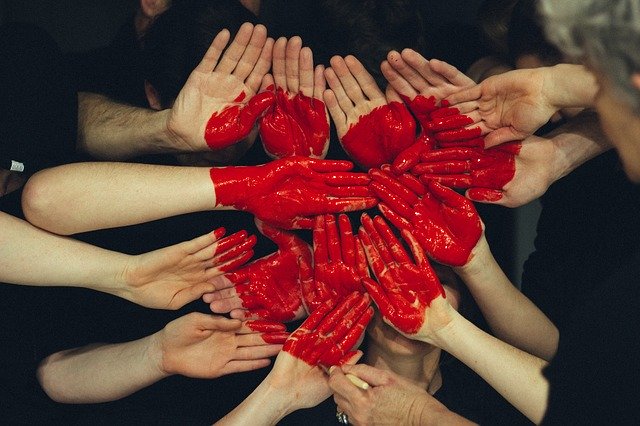
Recebi de um afiliado (Leônidas Xausa Fo.) dizendo-me que o dia de hoje seria do abraço. Como estamos com recomendações para limitar nossas expressões físicas de afeto, a imgem dinâmica que me enviou serve para levar meu abraço virtual a todos os AMICOR. Estamos precisando...

Tuesday, March 24, 2020

Telehackathons Collaboration

Telehackathons, Bacteria, and Poverty: A Homeostatic Argument for Collaboration

Ajay Dave | March 24, 2020 | 1 CommentDownload as PDF


According to the UN, just .7% of the global gross national product (GNP) is all it would take to eradicate extreme poverty, defined by the World Bank as living on less than $1.25 daily. Jeffrey Sachs, the former head economist for the Millennium Development Project and University Professor at Columbia, affirmed this finding in his bestseller “The End of Poverty”, arguing that these funds should be used to help communities create their own markets for necessary goods and services. Even Sachs’ staunchest critic, NYU economist William Easterly, agrees that a collaborative, holistic, and community-oriented approach is necessary to improve living standards and wellbeing for the world’s poor.
While significant progress has been made in reducing poverty through investment in sustainable community entrepreneurship and innovation, Sachs effectively argues that a lack of concentrated political will is the reason for the continued existence of widespread human suffering, which is exacerbated by new issues including climate change and tech-catalyzed authoritarianism. It’s not that people don’t want to donate time or money. Multiple surveys have shown that American citizens vastly overestimate the amount of foreign aid the US gives, and upon learning of the actual rate, tend to support giving more. While the gross amount of US foreign aid is relatively high, the US ranks near the bottom of all nations in the percentage of developmental assistance as a percentage of GNP donated. With this said, the Brookings Institute has found that the amount of foreign aid likely exceeds the amount of aid needed to eradicate extreme poverty in its entirety. Thus, there’s a gap between the public perception of aid, the amount actually given, and its impact./.../

Thursday, March 12, 2020

Men in Hats...


Bortolo Achutti 1924
Whatever happened to the hat? Wherefore the fedora? Where have they stashed the Stetsons? Who has banished…
Dwight LongeneckerMember only content4 min read


Sempre me gostei de chapéu. Provavelmente pela memória que
guardei da imagem de meu pai Bôrtolo Achutti (à Direita com bengala, foto da década de 20)
Eu em 2019

Saturday, March 07, 2020

Dos and Don’ts of Gift-Giving

Photo from Unsplash.
If you think the art of giving gifts is tricky at home, try making it work abroad. While you must carefully choose the item itself, the gift’s wrapping is surprisingly important, too, as is the timing. In fact, in many cultures, gift-giving is like a traditional dance—you have to do the steps in order, in time to the music, and without stepping on anyone’s toes for it to be a good experience for everyone involved.