Translate AMICOR contents if you like

Showing posts with label development. Show all posts

Wednesday, April 29, 2020

Human Development and COVID-19

Human Development Newsletter -
Special Edition
Twitter ‌ Facebook ‌ LinkedIn ‌
COVID-19: New UNDP data dashboards reveal huge disparities among countries in ability to cope and recover
Indicators such as the level of poverty, healthcare capacity, access to internet and social protection can portray how severe the effects of the COVID-19 crisis might be in each of 189 countries.
Click here for Spanish and French
New York, April 29, 2020 – The United Nations Development Programme (UNDP) today released two new data dashboards that highlight the huge disparities in countries’ abilities to cope with and recover from the COVID-19 crisis.

The pandemic is more than a global health emergency. It is a systemic human development crisis, already affecting the economic and social dimensions of development in unprecedented ways. Policies to reduce vulnerabilities and build capacities to tackle crises, both in the short and long term, are vital if individuals and societies are to better weather and recover from shocks like this. 

Preparedness of countries to respond to COVID-19

UNDP’s Dashboard 1 on Preparedness presents indicators for 189 countries – including level of development, inequalities, the capacity of a healthcare system and internet connectivity– to assess how well a nation can respond to the multiple impacts of a crisis like COVID-19. 

While every society is vulnerable to crises, their abilities to respond differs significantly around the world.

For example, the most developed countries – those in the very high human development category- have on average 55 hospital beds, over 30 physicians, and 81 nurses per 10,000 people, compared to 7 hospital beds, 2.5 physicians, and 6 nurses in a least developed country.

And with widespread lockdowns, the digital divide has become more significant than ever. 6.5 billion people around the globe – 85.5 percent of the global population – still don’t have access to reliable broadband internet, which limits their ability to work and continue their education.  
Vulnerabilities of countries in crisis like COVID-19

Preparedness is one thing. But, once a crisis hits, how vulnerable are countries to the fallout? UNDP’s Dashboard 2 on Vulnerabilities present indicators that reflect countries’ susceptibility to the effects of this crisis

Those already living in poverty are particularly at risk. Despite recent progress in poverty reduction, about one in four people still live in multidimensional poverty or are vulnerable to it, and more than 40 percent of the global population does not have any social protection. 

The COVID-19 pandemic also reminds us that disruptions in one place are contagious, triggering problems elsewhere. For example, in some countries, like Kyrgyzstan, a significant part of their GDP comes from remittances. While places as diverse as Montenegro, Maldives and Cabo Verde, rely heavily on tourism (almost 60% of GDP in the Maldives, for example), which is being hit very hard by travel bans and lockdowns.  
ABOUT UNDP:
UNDP is the leading United Nations organization fighting to end the injustice of poverty, inequality, and climate change. Working with our broad network of experts and partners in 170 countries, we help nations to build integrated, lasting solutions for people and planet. Learn more at www.undp.org or follow at @UNDP.


ABOUT THESE DASHBOARDS:
These colour-coded tables monitor the level of preparedness of countries to respond to the COVID-19 crisis and their level of vulnerability. The dashboards allow partial grouping of countries by each indicator in the table. For each indicator countries are divided into five groups of approximately equal size with the intention not to suggest threshold or target values for the indicators but to allow a crude assessment of a country’s performance relative to others. A country that is in the top quintile group performs better than the 80 percent of countries, and country in the middle quintile group performs better than 40 percent but also worse than 40 percent. Five-color coding visualizes the partial grouping of countries and helps users to immediately discern a country performance across the set of selected indicators. Data presented in these tables come from the official international sources.

Human Development Report Office | 304 East 45th Street, 12th Floor, New York, NY 10017
Unsubscribe achutti@gmail.com
Update Profile | About Constant Contact
Sent by hdro.web@undp.org in collaboration with
Trusted Email from Constant Contact - Try it FREE today.
Try email marketing for free today!

Thursday, January 09, 2020

Child Growth Failure


Local Burden of Disease - Child Growth Failure

With this dynamic map visualization tool, explore local patterns in child stunting, wasting, and underweight across all low- and middle-income countries from 2000 to 2017. Observe trends at multiple spatial scales and search to view trends in specific countries and local areas.
Interact with the data visualization

Sustainable Development Goals

Get the Sustainable Development Goals back on track

At the current rate, most of the goals will not be met. Here’s how the 2030 agenda can be put back on the right path.
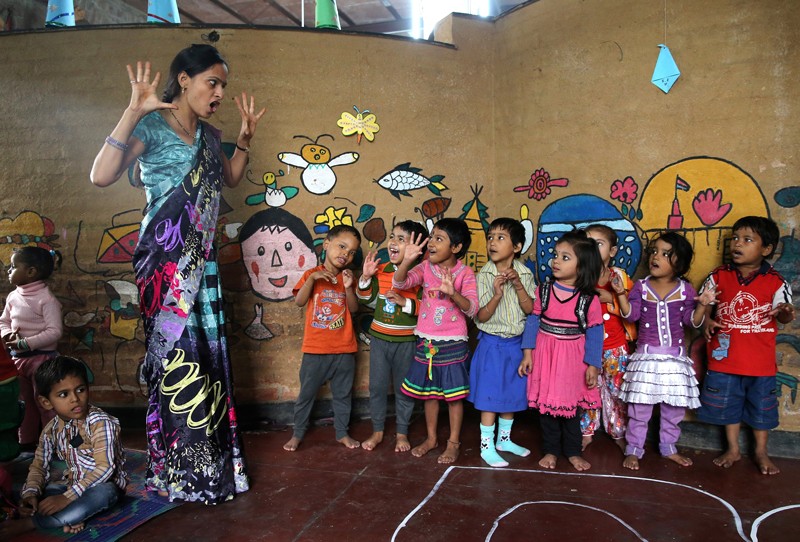
A teacher leads a lesson at Katha Community School in the Govindpuri slum district of Delhi, India
Getting children into primary schools is within reach, but most of the Sustainable Development Goals will not be met by 2030 on current trends.Credit: Chris Jackson/Getty
In 2015, world leaders met in New York at a landmark conference of the United Nations. Their aim: to end poverty, stop environmental destruction and boost well-being. In the world of multilateral diplomacy, such meetings are not uncommon, but they tend to focus on individual areas, such as climate change or food security. The 2015 summit was different because heads of state and governments pledged concrete action across an integrated set of economic, environmental and social issues. They signed up to the Sustainable Development Goals (SDGs), a package of 17 goals and associated targets for ending hunger, eliminating extreme poverty, reducing inequality, tackling climate change and halting the loss of biodiversity and ecosystems — all by 2030./.../

Monday, December 09, 2019

Human Development Report 2019


9 December 2019
Twitter ‌ Facebook ‌ LinkedIn ‌
Just Released: #HDR2019
Dear Colleague,


The report argues that a new generation of inequalities is opening up, around education, and around technology and climate change which could trigger a ‘new great divergence’ in society. For example, in countries with very high human development, subscriptions to fixed broadband are growing 15 times faster and the proportion of adults with tertiary education is growing more than six times faster than in countries with low human development.

Inequalities are entrenched in our societies. Parents’ advantages in income, health and education shape their children’s lives, often leading to “hoarding” of opportunities across generations, the report shows. For example, children in professional families in the United States are exposed to three times as many words as children in families receiving welfare benefits, with a knock-on effect on test scores later in life.
A new “social norms index” in the Report also says that in half of the countries assessed, gender bias has grown in recent years. About fifty per cent of people across 77 countries, said they thought men make better political leaders than women, while more than 40 per cent felt that men made better business executives.

But inequality is not beyond solutions, the report says, and presents a broad suite of policy options that can help tackle it in various forms, going:
BEYOND INCOME,
BEYOND AVERAGES,
BEYOND TODAY,
for example to change social norms that perpetuate discrimination and reinforce the importance of early childhood education.
to get a clearer picture of the whole inequality story, for example to understand which groups of people are most disadvantaged and why.
by recognizing that the climate crisis and rapid technological change have profound implications for inequality.

I would like to invite you to read the report and its overview here (available in English, French, Spanish, Arabic, Chinese and Russian) and share it with your friends and colleagues.

You can also access the press package here and join the conversation on social media with #HDR2019 with a full social media package.
 
Thank you,

Pedro ConceiĂ§Ă£o

Director,
Human Development Report Office, UNDP.

Sunday, September 01, 2019

Brain waves in the lab...

Clumps of cells in the lab spontaneously formed brain waves

Nerve cells fired coordinated signals in brain organoids, 3-D clusters of cells that mimic some aspects of early brain development.
Read More

Friday, August 30, 2019

2019 Human Development Report


August 2019 Newsletter
Highlights: January - July 2019
As we approach the launch of the 2019 Human Development Report later this year, we look back at the key events, human development data and other notable work from the first half of 2019.
Human Development Report 2019 Intro Teaser
2019 Human Development Report to focus on inequality
Announced for a release in the last quarter of 2019, the latest Human Development Report will focus on understanding the dimensions and causes of inequality most vital to people’s wellbeing.

The report will go beyond the dominant discourse focused on income disparities to also consider inequalities in other dimensions such as health, education, access to technologies, and exposure to economic and climate-related shocks.

It will use new data and methods to highlight how inequality affects people’s lives in a way that measures based on averages cannot; and it will take a long-term view towards 2030 and the achievement of the Sustainable Development Goals and beyond.