Translate AMICOR contents if you like

Showing posts with label politics. Show all posts

Monday, July 27, 2020

Nazism


Image for post

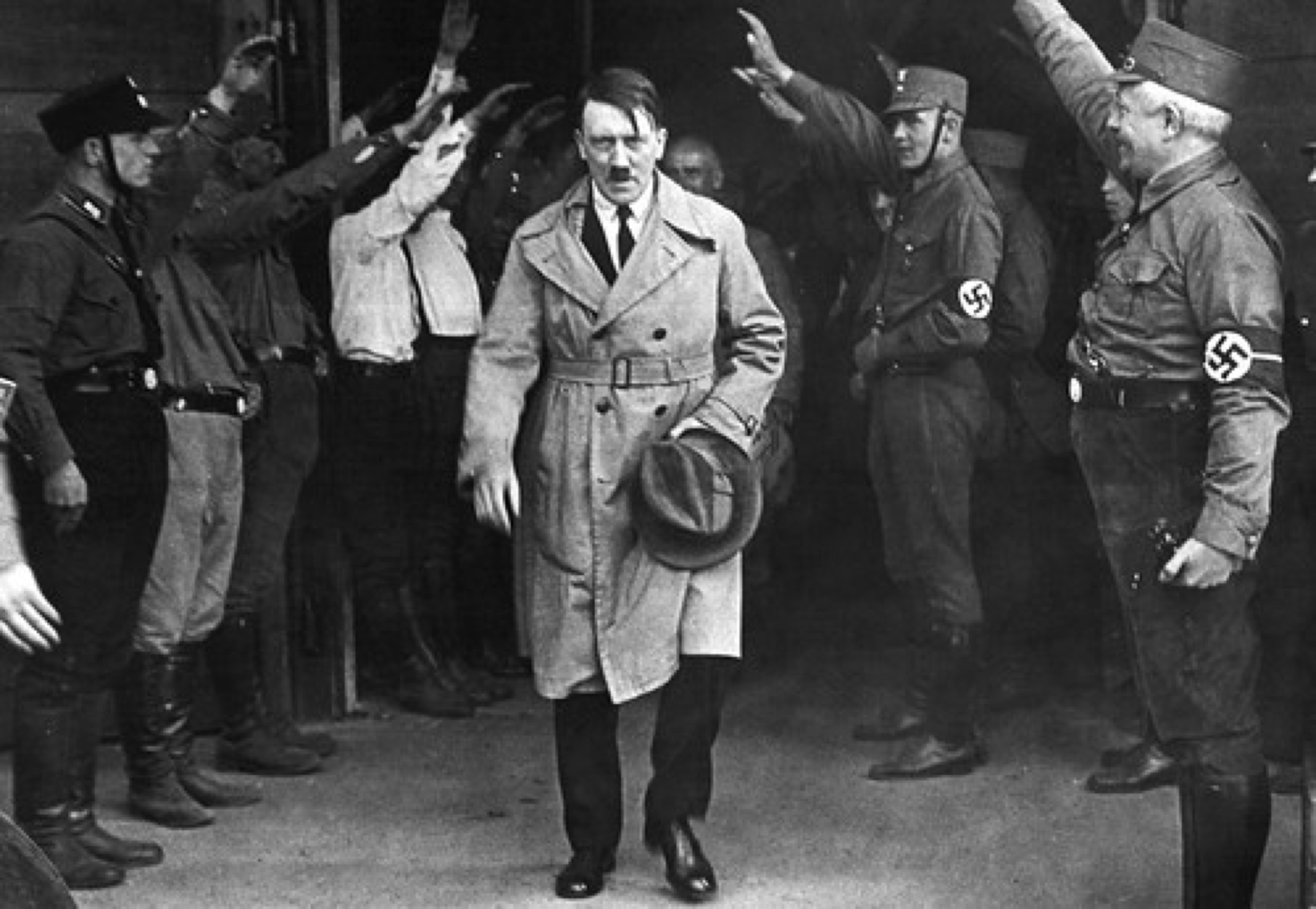
Carl Jung once made the tragically accurate statement that Hitler was akin to the mouthpiece of the collective unconscious for the German people.
It is more common to think — as well as nicer to think — that Hitler was simply a madman run amok on Germany and that his influence alone spoke for all of Nazism in its crazed, manic, ruthless aspects. “He was evil,” people say, their eyes widened, their heads shaking in disbelief, and they leave it at that.

Saturday, May 30, 2020

Spain and WWII

Francisco Franco was one of the most brutal fascist dictators of all time, yet he probably saved Europe from fascism. In addition, Franco helped ensure Allied victory in World War II.
Strangely, Adolph Hitler and Benito Mussolini set the stage for their eventual defeat by helping Franco win the Spanish Civil War. To explain, Franco became leader of a military coup against Spain’s democratic Republic because he could get military aid from Nazi Germany and Fascist Italy.
The coup failed triggering the Spanish Civil War, and Franco became the Generalissimo or dictator of the Nationalist or fascist government. During the Civil War Spain’s fascists, or Falange. and monarchists fought the socialists, Communists, anarchists and others who supported the Republic. In 1937, the Falange became the official political movement of the nationalists and Franco’s government.

Thursday, May 28, 2020

Democracy as a Religion

ForwardForward
ShareShare
TweetTweet
ShareShare
+1+1
PinPin
Today's encore selection -- from Achieving Our Country by Richard Rorty. John Dewey (1859-1952) was an American philosopher, psychologist and educational reformer; Walt Whitman (1819-1892) an American poet, essayist and journalist. Both hoped for a thoroughly secular "democracy" as a civic religion displacing conventional religion:
"Whitman and Dewey were among the prophets of [an American] civic religion. They offered a new account of what America was, in the hope of mobilizing Americans as political agents. The most striking feature of their redescription of our coun­try is its thoroughgoing secularism. In the past, most of the stories that have incited nations to projects of self-improve­ment have been stories about their obligations to one or more gods. For much of European and American history, na­tions have asked themselves how they appear in the eyes of the Christian God. American exceptionalism has usually been a belief in special divine favor, as in the writings of Joseph Smith and Billy Graham. .../.../

Tuesday, April 21, 2020

Machiavelli

Machiavelli: The Art of Teaching People What to Fear

Patrick Boucheron (Author)  Willard Wood (Translator)

A NEW YORK TIMES EDITORS' CHOICE
In a series of poignant vignettes, a preeminent historian makes a compelling case for Machiavelli as an unjustly maligned figure with valuable political insights that resonate as strongly today as they did in his time.
Whenever a tempestuous period in history begins, Machiavelli is summoned, because he is known as one for philosophizing in dark times. In fact, since his death in 1527, we have never ceased to read him to pull ourselves out of torpors. But what do we really know about this man apart from the term invented by his detractors to refer to that political evil, Machiavellianism?
It was Machiavelli's luck to be disappointed by every statesman he encountered throughout his life--that was why he had to write The Prince. If the book endeavors to dissociate political action from common morality, the question still remains today, not why, but for whom Machiavelli wrote. For princes, or for those who want to resist them? Is the art of governing to take power or to keep it? And what is "the people?" Can they govern themselves? Beyond cynical advice for the powerful, Machiavelli meditates profoundly on the idea of popular sovereignty, because the people know best who oppresses them.
With verve and a delightful erudition, Patrick Boucheron sheds light on the life and works of this unclassifiable visionary, illustrating how we can continue to use him as a guide in times of crisis.

Saturday, March 21, 2020

Disease as Political Metaphor


  • Artigo de 1978 quee pode interessar na conjuntura atual Se hou'ver dificuldade de acesso avisem-me que  encontro outra forma de compartilhar o texto


Disease as Political Metaphor

I

Punitive notions of disease have a long history, and such notions are particularly active with cancer. There is the “fight” or “crusade” against cancer; cancer is the “killer” disease; people who have cancer are “cancer victims.” Ostensibly, the illness is the culprit. But it is also the cancer patient who is made culpable. Widely believed psychological theories of disease assign to the ill the ultimate responsibility both for falling ill and for getting well. And conventions of treating cancer as no mere disease but a demonic enemy make cancer not just a lethal disease but a shameful one.
Leprosy in its heyday aroused a similarly disproportionate sense of horror. In the Middle Ages the leper was a social text in which corruption was made visible; an exemplum, an emblem of decay. Nothing is more punitive than to give a disease a meaning—that meaning being invariably a moralistic one. Any important disease, whose physical etiology is not understood, and for which treatment is ineffectual, tends to be awash in significance. First, the subjects of deepest dread (corruption, decay, pollution, anomie, weakness) are identified with the disease. The disease itself becomes a metaphor. Then, in the name of the disease (that is, using it as a metaphor), that horror is imposed on other things. The disease becomes adjectival. Something is said to be disease-like, meaning that it is disgusting or ugly. In French, a crumbling stone façade is still “lépreuse.”
Epidemic diseases were a common figure for social disorder. From pestilence (bubonic plague) came “pestilent,” whose figurative meaning, according to the Oxford English Dictionary, is “injurious to religion, morals, or public peace—1513”; and “pestilential,” meaning “morally baneful or pernicious—1531.” Feelings about evil are projected onto a disease. And the disease (so enriched with meanings) is projected onto the world.

Tuesday, March 03, 2020

Democracy

melting statue of liberty
he Future of Democracy

The Last Time Democracy Almost Died

From our series on democracy in America: learning from the upheaval of the nineteen-thirties.
By Jill Lepore

THE NEW YORKER | THE FUTURE OF DEMOCRACY NEWSLETTER

Dear reader, 

Thank you for signing up for Future of Democracy e-mail alerts! You will be among the first to know when The New Yorker publishes new pieces on the crisis facing American democracy. This limited series will run through November and the Presidential election.

Many institutions of our government are dysfunctional and getting worse. Our electoral system has produced, in a single generation, two Presidents who received fewer votes than their opponents. A changed media landscape has loosened our collective grasp on reality. Technology is enriching some and leaving many others behind; meanwhile, as the country’s demography shifts, a nativist far-right is resurgent. Although President Donald Trump is undeniably a leading actor in this crisis, it precedes him and seems certain to persist after his departure, whenever that may be.  

Throughout the course of this project, a wide range of New Yorker writers will explore the past, present, and future of American democracy: tallying our problems, reckoning with their implications, and inspecting proposed solutions. 

Is there a specific topic you want the series to explore? Write to us at democracy@newyorker.com and let us know! Feel free to e-mail us with feedback on the project, too. We’d love to hear from you.

To make sure this e-mail always lands in your in-box, please add newyorker@newsletter.newyorker.com to your address book. If this e-mail lands in your Gmail promotions folder, just drag it to your primary folder and click “yes” when it asks if you want to do the same for future messages. 

Thank you for reading.

—The Editors

Sunday, February 09, 2020

Sunday, December 29, 2019

“The Art of the Deal,”

Editing Donald Trump

What I saw as the editor of “The Art of the Deal,” the book that made the future President millions of dollars and turned him into a national figure.


In the fall of 1984, a few months after arriving at Random House as a senior editor, I was at lunch with the publishing house’s proprietor, S. I. (Si) Newhouse (whose family owns Condé Nast, which publishes The New Yorker), and its C.E.O., Robert Bernstein, who had hired me away from the Washington Post. We were in the Bahamas, at a sales conference. Newhouse was ordinarily a quiet, phlegmatic man, I had been told, but on one subject he was very animated: Donald Trump. By then, Trump, who had recently completed the construction of a shimmering tower on Fifth Avenue, had been around for a decade. A profile in the Times, in 1976, had called him New York’s “No. 1” real-estate promoter. “He is tall, lean and blond,” the story noted, “and he looks ever so much like Robert Redford.” More recently, at the suggestion of Roy Cohn, the notorious New York lawyer and fixer, who had been Newhouse’s close friend since their days together at the Horace Mann School, Trump had appeared on the cover of GQ, a Condé Nast magazine. The issue had sold especially well./.../

Friday, December 13, 2019

Liberty: Individual and Society

Philosopher of the human
Johnny Lyons
John Lyons is an author and he works in corporate communications. Before entering the business world, he tutored and lectured in politics at Trinity College Dublin in Ireland. He is a contributor to the Dublin Review of Books and The Times Literary Supplement, and the author of the forthcoming book The Philosophy of Isaiah Berlin (2020).
3,100 words
Edited by Nigel Warburton