Translate AMICOR contents if you like

Saturday, July 29, 2017

Taste and Obesity

Dulled Taste May Prompt More Calories on Path to Obesity

by Neuroscience News
A new study reveals blocking taste receptors leads people to desire sweeter, higher calorie foods. Researchers believe a dulled sense of taste could increase a person's obesity risk.
Neuroscience News | July 29, 2017 at 10:48 am | Tags: caloriesgustatory systemtaste system | URL: http://wp.me/p4sXNK-b2Y
Comment   See all comments

Suicídio familiar

Suicídios na mesma família podem ser explicados, em parte, pela genética

Divulgação
getúlio Vargas em cena do documentário 'imagens do estado novo', de eduardo escorel
Getúlio Vargas (ao microfone) em cena do documentário "Imagens do Estado Novo"


Friday, July 28, 2017

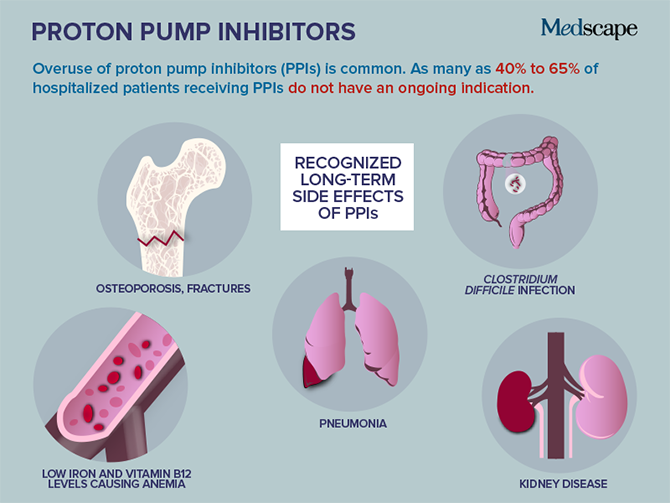
Proton Pump Inhibitors

Clinical Trend of the Week (July 8-14): Proton Pump Inhibitors

Potentially serious consequences associated with a particularly popular drug class resulted in this week's top search term. A study in BMJ Open that included more than 6 million people determined that proton-pump inhibitors (PPIs) may be associated with an increased risk for death. PPIs are available by prescription and over-the-counter and are used to treat gastroesophageal reflux and peptic ulcer disease. Use of the medication nearly doubled from 1999-2000 to 2011-2012. The study found that PPI use was associated with a 25% increased risk for death from all causes, compared with histamine-2 blocker use. These findings reiterate the need to limit use of these drugs only where specifically indicated. Guidelines for deprescribing have been recently published to help clinicians reduce unnecessary PPI use.
For more information on gastroesophageal reflux treatment, read here.

câncer colorretal

Publicado por  em 27 de Julho de 2017 - 12:39PM EDT

De acordo com o Centers for Disease Control and Prevention (CDC), o câncer colorretal é a segunda principal causa de morte por câncer nos Estados Unidos, responsável por 52.000 mortes a cada ano. Nas últimas décadas, colonoscopias foram os testes mais apropriados e recomendados para a pesquisa de cancro do cólon em pacientes com mais de 50 anos, contudo, os custos, a capacidade de invasão e o desconforto não tranquilizam nem motivam as pessoas a realizarem este tipo de testes.
Agora, no entanto, existe a possibilidade de ser realizarem testes fecais em casa, que parecem ser menos invasivos e complicados, mas igualmente eficazes. Estes testes de auto-diagnóstico permitem que os pacientes coletem uma amostra de fezes e a enviem para um laboratório. Os testes detectam se há sangue nas fezes (um sinal comum de cancro do cólon ou pólipos pré-cancerosos) e se existem alterações celulares ou células cancerosas, ao examinar o ADN.

World Hepatitis day

World Hepatitis Day
View this email in your browser
Share
Tweet
Forward
Eliminate hepatitis

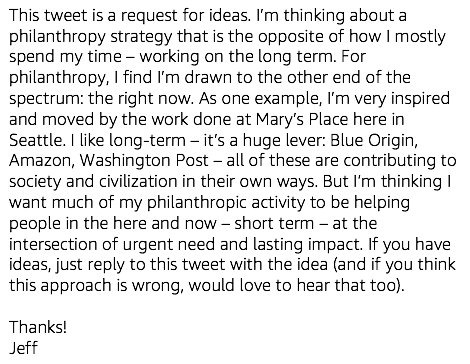
Jeff Bezos

Philanthropy
Nossas ideias sobre igualdade, ambiente e saúde urbana também podem ser consideradas como filantrópicas?
Será que não temos alguma sugestão para dar ao Jeff Bezos?
A seguir solicitação de ideias por que ontem ficou o homem mais rico do mundo e logo em seguida voltou ao segundo lugar.


195 countries access and quality

Summary

Background

National levels of personal health-care access and quality can be approximated by measuring mortality rates from causes that should not be fatal in the presence of effective medical care (ie, amenable mortality). Previous analyses of mortality amenable to health care only focused on high-income countries and faced several methodological challenges. In the present analysis, we use the highly standardised cause of death and risk factor estimates generated through the Global Burden of Diseases, Injuries, and Risk Factors Study (GBD) to improve and expand the quantification of personal health-care access and quality for 195 countries and territories from 1990 to 2015.

Methods

We mapped the most widely used list of causes amenable to personal health care developed by Nolte and McKee to 32 GBD causes. We accounted for variations in cause of death certification and misclassifications through the extensive data standardisation processes and redistribution algorithms developed for GBD. To isolate the effects of personal health-care access and quality, we risk-standardised cause-specific mortality rates for each geography-year by removing the joint effects of local environmental and behavioural risks, and adding back the global levels of risk exposure as estimated for GBD 2015. We employed principal component analysis to create a single, interpretable summary measure–the Healthcare Quality and Access (HAQ) Index–on a scale of 0 to 100. The HAQ Index showed strong convergence validity as compared with other health-system indicators, including health expenditure per capita (r=0·88), an index of 11 universal health coverage interventions (r=0·83), and human resources for health per 1000 (r=0·77). We used free disposal hull analysis with bootstrapping to produce a frontier based on the relationship between the HAQ Index and the Socio-demographic Index (SDI), a measure of overall development consisting of income per capita, average years of education, and total fertility rates. This frontier allowed us to better quantify the maximum levels of personal health-care access and quality achieved across the development spectrum, and pinpoint geographies where gaps between observed and potential levels have narrowed or widened over time.

Findings

Between 1990 and 2015, nearly all countries and territories saw their HAQ Index values improve; nonetheless, the difference between the highest and lowest observed HAQ Index was larger in 2015 than in 1990, ranging from 28·6 to 94·6. Of 195 geographies, 167 had statistically significant increases in HAQ Index levels since 1990, with South Korea, Turkey, Peru, China, and the Maldives recording among the largest gains by 2015. Performance on the HAQ Index and individual causes showed distinct patterns by region and level of development, yet substantial heterogeneities emerged for several causes, including cancers in highest-SDI countries; chronic kidney disease, diabetes, diarrhoeal diseases, and lower respiratory infections among middle-SDI countries; and measles and tetanus among lowest-SDI countries. While the global HAQ Index average rose from 40·7 (95% uncertainty interval, 39·0–42·8) in 1990 to 53·7 (52·2–55·4) in 2015, far less progress occurred in narrowing the gap between observed HAQ Index values and maximum levels achieved; at the global level, the difference between the observed and frontier HAQ Index only decreased from 21·2 in 1990 to 20·1 in 2015. If every country and territory had achieved the highest observed HAQ Index by their corresponding level of SDI, the global average would have been 73·8 in 2015. Several countries, particularly in eastern and western sub-Saharan Africa, reached HAQ Index values similar to or beyond their development levels, whereas others, namely in southern sub-Saharan Africa, the Middle East, and south Asia, lagged behind what geographies of similar development attained between 1990 and 2015.

Interpretation

This novel extension of the GBD Study shows the untapped potential for personal health-care access and quality improvement across the development spectrum. Amid substantive advances in personal health care at the national level, heterogeneous patterns for individual causes in given countries or territories suggest that few places have consistently achieved optimal health-care access and quality across health-system functions and therapeutic areas. This is especially evident in middle-SDI countries, many of which have recently undergone or are currently experiencing epidemiological transitions. The HAQ Index, if paired with other measures of health-system characteristics such as intervention coverage, could provide a robust avenue for tracking progress on universal health coverage and identifying local priorities for strengthening personal health-care quality and access throughout the world.

Funding

Bill & Melinda Gates Foundation.

Thursday, July 27, 2017

Biology of Consciousness

In Witnessing the Brain’s ‘Aha!’ Moment, Scientists Shed Light on Biology of Consciousness

Summary: Researchers report becoming consciously aware of a decision conforms to the same mechanism the brain goes through to complete a simple decision.
Source: Zuckerman Institute.
Study in human participants lends insight into one of neuroscience’s greatest puzzles: How the brain transforms unconscious information into conscious thought.
Columbia scientists have identified the brain’s ‘aha!’ moment — that flash in time when you suddenly become aware of information, such as knowing the answer to a difficult question. Today’s findings in humans, combined with previous research, provide compelling evidence that this moment — this feeling of having decided — pierces consciousness when information being collected by the brain reaches a critical level. The results of this study further suggest that this piercing of consciousness shares the same underlying brain mechanisms known to be involved in making far simpler decisions. Importantly, this study offers new hope that the biological foundations of consciousness may well be within our grasp.
This research was reported today in Current Biology./.../

Human Development Report 2016

Human Development Report 2016: Human Development for Everyone

The 2016 Human Development Report is the latest in the series of global Human Development Reports published by the United Nations Development Programme (UNDP) since 1990 as independent, analytically and empirically grounded discussions of major development issues, trends and policies. Additional resources related to the 2016 Human Development Report can be found online at http://hdr.undp.org, including digital versions of the Report and translations of the overview in more than 20 languages, an interactive web version of the Report, a set of background papers and think pieces commissioned for the Report, interactive maps and databases of human development indicators, full explanations of the sources and methodologies used in the Report’s composite indices, country profiles and other background materials as well as previous global, regional and national Human Development Reports. The 2016 Report and the best of Human Development Report Office content, including publications, data, HDI rankings and related information can also be accessed on Apple iOS and Android smartphones via a new and easy to use mobile app.
The cover reflects the basic message that human development is for everyone—in the human development journey no one can be left out. Using an abstract approach, the cover conveys three fundamental points. First, the upward moving waves in blue and whites represent the road ahead that humanity has to cover to ensure universal human development. The different curvature of the waves alerts us that some paths will be more difficult and sailing along those paths will not be easy, but multiple options are open. Second, in this journey some people will be ahead, but some will be lagging behind. Those lagging behind will need helping hands from those who are ahead. The gestures of the two hands reflect that spirit of human solidarity. Third, the two colours— green and blue—and the hands at the top—convey that universal human development requires a balance among planet, peace and people.
Global Human Development Report

Wednesday, July 26, 2017

Dia dos Avós

Dizem que 26 de julho é o dia dos avós. Temos quatro que estão nesta foto feita no dia 13 de junho p.p. aniversário da Valderês.
Dois deles o Eduardo e o Pedro Martin, os dois da esquerda para direita devem viajar no início do próximo mês: Eduardo (camisa verde claro) vai para a Itália, de onde vieram vários de nossos ascendentes. O Pedro (blusa escura, logo atrás da Celita) vai para Santa Maria, de onde vim eu.
Os outros dois Antônio e Júlia, permanecem por aqui para nos consolar, ao menos por enquanto.
                             Eduardo     Pedro  Martin                       Antônio     Júlia

chronic traumatic encephalopathy

High Prevalence of Evidence of CTE in Brains of Deceased Football Players

by Neuroscience News
A new JAMA study reveals chronic traumatic encephalopathy was present in a exceptionally high number of brains of former football players. Researchers looked at the brains of former high school, college and NFL football players. Of the 202 brains analyzed, 177 showed signs of CTE. 110 of the 111 former NFL players brains were diagnosed with CTE. Researchers say that, while the findings are significant, the findings could have limitations due to the players families being motivated to donate the brains as a result of public awareness of the lasting effects of head injuries in football players.

Tuesday, July 25, 2017

25 julho 1824 - início da Imigração Alemã

Imigração alemã-193 anos


José Antonio Brenner


Dia do Imigrante - Em 25.7.1824, os 1ºs imigrantes alemães chegaram à Colônia Alemã de São Leopoldo, então uma extensa área rural que passou a se desenvolver rapidamente. Eram 38 pessoas - homens, mulheres e crianças - que foram os pioneiros da imigração e colonização alemã no RGS. Ernst Zeuner (1895-1967) imaginou, em sua pintura, esse momento.

Seguiram-se sucessivas levas que, com seus descendentes, muito contribuíram para o desenvolvimento e composição da identidade cultural de nosso Estado.
Rendo homenagem aos meus ancestrais, citando-os com o ano de sua imigração. Lado paterno: Friedrich Karl Brenner 1829, Philipp Jacob Schirmer 1827, Jacob Weber 1824, Friedrich Bohrer 1825. Lado materno: Franz Karl Brenner 1846, Mathias Hoffmeister 1826, Jacob Ludwig Laydner 1848, Philipp Leonhard Niederauer 1825.

Aproveito a publicação de nosso primo (5a geração) José Antônio Brenner, para também homenagear nossos ascendentes. Nos encontramos em Johann Friedrich Böbion, aqui chegado em 10 de maio de 1829, com duas filhas: de uma delas descende José Antônio, e da outra, que casou com Adamy, a minha linhagem. Uma terceira filha ficou na Europa e posteriormente imigrou para o Canadá, onde vive Barbara Fisher com quem tenho me correspondido.

Monday, July 24, 2017

Language Patterns

Physics of Bubbles May Explain Language Patterns

by Neuroscience News
A new study reveals dialects move outwards from population centers, which may explain why some cities have their own dialects, researchers say.
Comment   See all comments