Translate AMICOR contents if you like

Showing posts with label pandemics. Show all posts

Tuesday, October 06, 2020

FLU x COVID-19


Identify the Different Symptoms of the Flu and Covid-19
Donald G. McNeil Jr., The New York Times
With fears of a “twindemic” in the United States this fall, here’s a guide to understanding what’s making you feel terrible.
Save to Pocket

Saturday, September 05, 2020

Medieval Pandemics

 LIBRARY, DE AGOSTINI/GETTY

Medieval pandemics spawned fears of the undead, burials reveal

An analysis of graves shows a spike in people buried face-down as plagues ravaged German-speaking Europe. What were the living trying to achieve?

In 2014, Swiss anthropologist Amelie Alterauge was just a few days into her new job at Bern University’s Institute of Forensic Medicine in Switzerland when she was called to investigate an odd burial in a centuries-old cemetery that was being excavated ahead of a construction project. Of some 340 burials in the cemetery, one stood out: a middle-aged man, interred face-down in a neglected corner of the churchyard. “I had never seen such a burial in real life before,” says Alterauge.

Thursday, August 20, 2020

The aliens among us


Our cover this week focuses on the universe of viruses , a form of life stripped down to the essentials of information and reproduction. Viruses have caused a litany of modern pandemics, from covid-19 and HIV/AIDS to the influenza outbreak of 1918-20. Before that, the colonisation of the Americas by Europeans was abetted by epidemics of smallpox, measles and influenza. Yet the influence of viruses on life on Earth goes far beyond the tragedies of a single species, however pressing SARS-CoV-2 is today. Recent research puts viruses at the heart of the strategies of genes. It is becoming clear how viruses represent the blind, pitiless power of natural selection at its most dramatic. They have shaped the evolution of organisms of all types since the very beginnings of life.  For humanity they present a heady mix of threat and opportunity.

Monday, August 17, 2020

Viroses Respiratórias Pandêmicas

O Encontro Literário Virtual será  pelo aplicativo ZOOM  
ID de acesso: 850 2254 7572 


      ACADEMIA SUL-RIO-GRANDENSE DE MEDICINA 
                             
CONVITE – ENCONTRO DE LITERATURA & MEDICINA DA ASRM
 
Convidamos aos Acadêmicos e aos Novos Talentos a participarem do nosso próximo Encontro Literário Virtual.
Data: 18 de agosto - terça-feira
Horário: 18:00 – 19:00 Horas


COLÓQUIO: "As Viroses Respiratórias Pandêmicas e a Atualidade"


 Instituto Oswaldo Cruz: A FIOCRUZ completou 120 anos em 25/05/2020 


Homenagem à médica e pesquisadora da FIOCRUZ Dra. Jussara Pereira do Nascimento (RJ, 1949 - 2007)
 
     
Palestrantes:

  1) Acadêmico José Luís Reis Rosati, Academia de Medicina do Estado do Rio de Janeiro
    
 
2) Dr. Afonso Luís Barth, Centro de Pesquisa Experimental do HCPA
 

Coordenador do Encontro: Acadêmico Carlos Henrique Menke

Responsável pelos Eventos Culturais: Acadêmico Rogério Xavier

Friday, August 14, 2020

Ventilation Pandemics

Enviado  pela AMICOR  Berenice F. Goelzer
ventilation and COVID - 19

https://mail.google.com/mail/u/0?ui=2&ik=5028a0f2fd&attid=0.1&permmsgid=msg-f:1675032315572850629&th=173ee9042d050fc5&view=att&disp=inline&realattid=5de13213008b10d5_0.1

Wednesday, August 12, 2020

Virus-linked Heart ailment


Recomendado pela AMICOR Maria Inês Reinert Azambuja
At least five student-athletes in the Big Ten Conference have been diagnosed with a heart condition potentially linked to the novel coronavirus, prompting concern among Power 5 conference leadership evaluating the viability of college sports this fall, ESPN reported.

Monday, August 10, 2020

Decoys could trick COVID-19

Decoys could trick COVID-19, keep humans safe from infection

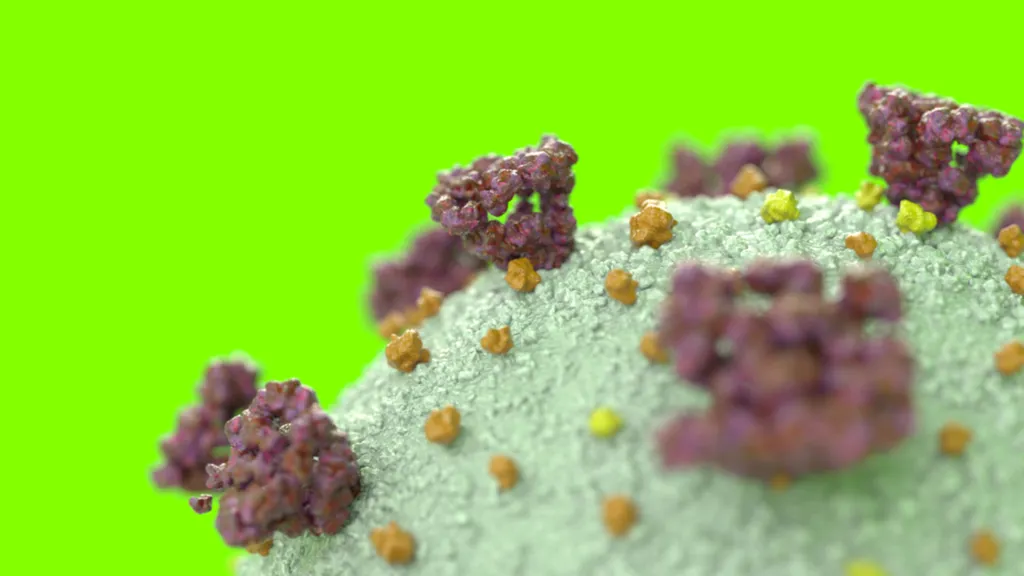
close up on coronavirus
(Image: © Shutterstock)
The coronavirus that causes COVID-19 infects cells by plugging into a receptor on their surface. Now, by crafting a "decoy" of that receptor, scientists aim to foil the virus's attack. 
In a new study, published Aug. 4 in the journal Science, researchers engineered such a decoy and found that the coronavirus bound tightly to the imposter receptor, and once attached, the virus couldn't infect primate cells in a lab dish. The decoy binds to the virus as tightly as a neutralizing antibody, a Y-shaped molecule generated by the immune system to grab the virus and prevent it from infecting cells. 

The Great Influenza

PRESIDENT WILSON GETS THE SPANISH FLU -- 8/10/20

The Great InfluenzaToday's selection -- from The Great Influenza by John M. Barry. In 1919, when President Woodrow Wilson was in Paris singlehandedly masterminding the direction of post-war treaty negotiations toward the new ideals he had established, he fell ill. That illness may very well have been the Spanish Flu, which had as a side effect an unexpected debilitation of the brain. Whatever it was, after he recovered, Wilson was not the same. The outcome of the talks turned darker, conforming much less to his ideals, and resulted in the acrimony that helped lead to a second world war:
"In March another 1,517 Parisians died [of the Spanish influenza], and the Journal of the American Medical Association reported that in Paris 'the epidemic of influenza which had declined has broken out anew in a most disquieting manner .... The epidemic has assumed grave proportions, not only in Paris but in several of the departments.' That month Wilson's wife, his wife's secretary, Chief White House Usher Irwin Hoover, and Cary Grayson, Wilson's personal White House physician and perhaps the single man Wilson trusted the most, were all ill. [Georges] Clemenceau and Lloyd George both seemed to have mild cases of influenza../;;;/
"Berle, later an assistant secretary of state, settled for writing Wilson a blistering letter of resignation: 'I am sorry that you did not fight our fight to the finish and that you had so little faith in the millions of men, like myself, in every nation who had faith in you. Our government has consented now to deliver the suffering peoples of the world to new oppressions, subjections and dismemberments -- a new century of war.'
"Wilson had influenza, only influenza."
 
author: John M. Barry 
title: The Great Influenza 
publisher: Penguin Group 
date: Copyright John M. Barry, 2004, 2005 
page(s): 383-388 

The Great Influenza

Wednesday, August 05, 2020

Common Colds and COVID-19

Common colds train the immune system to recognize COVID-19

An illustration of a T cell.
(Image: © Shutterstock)
Previous infections with common cold viruses can train the immune system to recognize SARS-CoV-2, the virus that causes COVID-19, according to a new study.
The study, published Aug. 4 in the journal Science, found that immune cells known as T cells that recognize common cold coronaviruses also recognize specific sites on SARS-CoV-2 — including parts of the infamous "spike" protein it uses to bind to and invade human cells.
This existing immune system "memory" may explain why some people have milder COVID-19 infections compared with others; however, the authors stress that this hypothesis is "highly speculative" and requires more research to confirm. That's because it's unknown exactly how big a role T cells play in fighting COVID-19 — T cells are just one part of a complex menagerie of molecules and cells that makes up our immune system.

Monday, July 27, 2020

COVID-19 The Lancet

Do grupo sobre Saúde Urbana da UFRGS
Se alguém estava ainda ansioso com a volta do "normal", é preciso ler o editorial do Lancet: 

*Do you long for a return to normal after COVID-19?*
Before the pandemic, 734 million people lived in extreme poverty, 690 million people went hungry, and 79·5 million people were forcibly displaced. Bill Gates and the late great Hans Rosling would tell you that the world is in a better state than you might expect, and that huge progress has been made. They would be right. Yet for billions of people, normal—ie, life before COVID-19—was not working. We might not be able to return to normal, but perhaps we should not want to. With the climate crisis pressing in, we cannot afford to. COVID-19 is a human catastrophe, but it gives the health community an opportunity to rethink the purpose of society in a fractured world and to redefine what we want normal to mean.
The pandemic has two salutary lessons for societies. First, it has reminded us who truly keeps society functioning: key workers. Health workers and care workers, shop workers and social workers, bus drivers, teachers, bank tellers, police officers, farmers, and cleaners. Society often takes these workers for granted, but without them, we would sink into chaos.
The second is that society and its systems are much more fragile than many of us appreciated. Some of the very best health systems have so far averted total collapse only through extreme emergency measures and heroic personal efforts, with ventilator shortages, crises over personal protective equipment, oxygen stockouts, and the pressure on the health workforce. Food systems have proven flimsy when faced with stockpiling and disruptions to just-in-time supply chains. Job markets have evaporated in a matter of weeks. The decline of the high street and a hollowing-out of city centres are accelerating. Fragility is not some special property of war-torn countries; it is here, among us all.
While many countries face a worsening epidemic, there is talk of recovery and what form it should take. If we are to learn from these lessons, we must make equity, resilience, and sustainability the priorities for our future.
The pandemic is amplifying inequalities. The direct health effects of COVID-19 differ by race, gender, wealth, and comorbidity. Disruptions to wider health services, such as routine vaccination and the prevention and treatment of non-communicable diseases, are likely to worsen existing health inequities. The effects on social determinants of health are devastating too. School and university education has stalled. Businesses have closed and 1·6 billion workers in the informal economy, many with no other means of support, are affected by COVID-19 restrictions. At least 70 million more people will be pushed into poverty because of the pandemic. John Alston, the outgoing UN Special Rapporteur on Extreme Poverty and Human Rights, argues that extreme poverty has been neglected and that we need to reconceive the relationship between growth and poverty elimination. Decreasing the Gini coefficient, a measure of equality, in each country by 1% per year could have a bigger impact on global poverty than increasing annual growth by 1 percentage point. Wealth redistribution, not growth alone, is essential.
To address the fragility in our systems, we need resilience: an ability to cope with stresses, shocks, and change. A resilient health system has effective responses to health emergencies. It has surge capacity. It has a commitment to quality improvement. It is flexible and can adapt. A resilient health system would not plan for an influenza pandemic and then follow that plan when a coronavirus outbreak occurs. Economic systems need to be resilient too. The focus of orthodox economics on efficiency needs to be reconsidered. Pandemics, climate disasters, and financial meltdowns might feel exceptional, but they are not unexpected. We ought to recalibrate our priorities towards resilience to have a chance of coping with them.
We need to focus on sustainability for health, society, and the planet. The idea of a Green New Deal, which links the climate agenda to economic justice and redistribution, and a green and healthy recovery from the pandemic, have been gaining political support, at least in rhetoric, but they will only scratch the surface of what is needed. The opportunity to sharply accelerate climate policy must be embraced.
The need to challenge society's normal obsessions—efficiency, consumption, and growth—is not a new idea, even to economists. But the health community has a renewed moral authority to call for this challenge. This will require a change of culture as well as a change of metrics. The individuals, institutions, organisations, and societies that have these obsessions at heart need to think again. *Normal will no longer do*.