Translate AMICOR contents if you like

Showing posts with label inequity. Show all posts

Monday, July 27, 2020

COVID-19 The Lancet

Do grupo sobre Saúde Urbana da UFRGS
Se alguém estava ainda ansioso com a volta do "normal", é preciso ler o editorial do Lancet: 

*Do you long for a return to normal after COVID-19?*
Before the pandemic, 734 million people lived in extreme poverty, 690 million people went hungry, and 79·5 million people were forcibly displaced. Bill Gates and the late great Hans Rosling would tell you that the world is in a better state than you might expect, and that huge progress has been made. They would be right. Yet for billions of people, normal—ie, life before COVID-19—was not working. We might not be able to return to normal, but perhaps we should not want to. With the climate crisis pressing in, we cannot afford to. COVID-19 is a human catastrophe, but it gives the health community an opportunity to rethink the purpose of society in a fractured world and to redefine what we want normal to mean.
The pandemic has two salutary lessons for societies. First, it has reminded us who truly keeps society functioning: key workers. Health workers and care workers, shop workers and social workers, bus drivers, teachers, bank tellers, police officers, farmers, and cleaners. Society often takes these workers for granted, but without them, we would sink into chaos.
The second is that society and its systems are much more fragile than many of us appreciated. Some of the very best health systems have so far averted total collapse only through extreme emergency measures and heroic personal efforts, with ventilator shortages, crises over personal protective equipment, oxygen stockouts, and the pressure on the health workforce. Food systems have proven flimsy when faced with stockpiling and disruptions to just-in-time supply chains. Job markets have evaporated in a matter of weeks. The decline of the high street and a hollowing-out of city centres are accelerating. Fragility is not some special property of war-torn countries; it is here, among us all.
While many countries face a worsening epidemic, there is talk of recovery and what form it should take. If we are to learn from these lessons, we must make equity, resilience, and sustainability the priorities for our future.
The pandemic is amplifying inequalities. The direct health effects of COVID-19 differ by race, gender, wealth, and comorbidity. Disruptions to wider health services, such as routine vaccination and the prevention and treatment of non-communicable diseases, are likely to worsen existing health inequities. The effects on social determinants of health are devastating too. School and university education has stalled. Businesses have closed and 1·6 billion workers in the informal economy, many with no other means of support, are affected by COVID-19 restrictions. At least 70 million more people will be pushed into poverty because of the pandemic. John Alston, the outgoing UN Special Rapporteur on Extreme Poverty and Human Rights, argues that extreme poverty has been neglected and that we need to reconceive the relationship between growth and poverty elimination. Decreasing the Gini coefficient, a measure of equality, in each country by 1% per year could have a bigger impact on global poverty than increasing annual growth by 1 percentage point. Wealth redistribution, not growth alone, is essential.
To address the fragility in our systems, we need resilience: an ability to cope with stresses, shocks, and change. A resilient health system has effective responses to health emergencies. It has surge capacity. It has a commitment to quality improvement. It is flexible and can adapt. A resilient health system would not plan for an influenza pandemic and then follow that plan when a coronavirus outbreak occurs. Economic systems need to be resilient too. The focus of orthodox economics on efficiency needs to be reconsidered. Pandemics, climate disasters, and financial meltdowns might feel exceptional, but they are not unexpected. We ought to recalibrate our priorities towards resilience to have a chance of coping with them.
We need to focus on sustainability for health, society, and the planet. The idea of a Green New Deal, which links the climate agenda to economic justice and redistribution, and a green and healthy recovery from the pandemic, have been gaining political support, at least in rhetoric, but they will only scratch the surface of what is needed. The opportunity to sharply accelerate climate policy must be embraced.
The need to challenge society's normal obsessions—efficiency, consumption, and growth—is not a new idea, even to economists. But the health community has a renewed moral authority to call for this challenge. This will require a change of culture as well as a change of metrics. The individuals, institutions, organisations, and societies that have these obsessions at heart need to think again. *Normal will no longer do*.

Wednesday, October 23, 2019

Health inequities


Upcoming webinar

October 31, 2019
1:00–2:30 p.m. (ET)

Webinar presented in partnership with Health Promotion Canada
This webinar (in English) will explore the status of health inequities in Canada and the implications for both health promotion practice and policy-level decisions. Speakers will reflect on seven key approaches in health promotion practice directed towards reducing health inequities, with a focus on the influence of public policy and power structures.

Speakers:
·         Dianne Oickle, Knowledge Translation Specialist, NCCDH
·         Dennis Raphael, Professor, School of Health Policy and Management, York University 
·         Sionnach Lukeman, Assistant Professor, Elizabeth and Thomas Rankin School of Nursing, St. Francis Xavier University


Webinaire à venir (en anglais)

Implications of health inequities for health promotion and public health policy (conséquences des iniquités en santé sur la promotion de la santé et les politiques de santé publique)
31 octobre 2019

Tuesday, June 25, 2019

On "Manels", for my AMICOR girls

NIH Director Francis Collins Has a Plan to Help Eliminate "Manels"


BY ALICE PARK  
JUNE 24, 2019
If you want Dr. Francis Collins, director of the National Institutes of Health, to speak at your next event or conference, he has one important condition. Any panel in which he participates has to include a diverse range of speakers from different backgrounds and show a fair gender distribution. “If I don’t see that,” he says, “I will respectfully, or not so respectfully, decline. And not come.”
Collins laid out his requirements in an announcement, published on June 12, titled “Time to End the Manel Tradition.” It was the latest effort to address a glaring inequity in the scientific field: the tendency for speakers and panels to be composed entirely of men—“manels.”
While STEM efforts focus on ensuring girls and women receive equal consideration and opportunity to train and enter scientific fields, more established scientists and researchers, like Collins, are raising the alarm about male-dominated practices that need to be changed immediately./.../

Tuesday, January 22, 2019

Wednesday, November 21, 2018

SE Deprivation Health Outcomes

The effect of socioeconomic deprivation on the associationbetween an extended measurement of unhealthy lifestylefactors and health outcomes: a prospective analysis of theUK Biobank cohort 
Hamish M E Foster*, Carlos A Celis-Morales*, Barbara I Nicholl, Fanny Petermann-Rocha, Jill P Pell, Jason M R Gill†, Catherine A O’Donnell†, Frances S Mair†
Summary
Background Combinations of lifestyle factors interact to increase mortality. Combinations of traditional factors such as smoking and alcohol are well described, but the additional effects of emerging factors such as television viewing time are not. The effect of socioeconomic deprivation on these extended lifestyle risks also remains unclear. We aimed to examine whether deprivation modifies the association between an extended score of lifestyle-related risk factors and health outcomes. Methods Data for this prospective analysis were sourced from the UK Biobank, a prospective population-based cohort study. We assigned all participants an extended lifestyle score, with 1 point for each unhealthy lifestyle factor (incorporating sleep duration and high television viewing time, in addition to smoking, excessive alcohol, poor diet [low intake of oily fish or fruits and vegetables, and high intake of red meat or processed meats], and low physical activity), categorised as most healthy (score 0–2), moderately healthy (score 3–5), or least healthy (score 6–9). Cox proportional hazards models were used to examine the association between lifestyle score and health outcomes (all-cause mortality and cardiovascular disease mortality and incidence), and whether this association was modified by deprivation. All analyses were landmark analyses, in which participants were excluded if they had an event (death or cardiovascular disease event) within 2 years of recruitment. Participants with non-communicable diseases (except hypertension) and missing covariate data were excluded from analyses. Participants were also excluded if they reported implausible values for physical activity, sleep duration, and total screen time. All analyses were adjusted for age, sex, ethnicity, month of assessment, history of hypertension, systolic blood pressure, medication for hypercholesterolaemia or hypertension, and body-mass index categories/.../

Saturday, November 10, 2018

Electricity Access

The report has 5 questions:
  1. Why is electricity access key to achieve the Global Goals for Sustainable Development from the United Nations?
  2. What is the status of electricity access?
  3. What are the challenges + drivers of transformative electricity access?
  4. Why is it important to explore co-operation between access, renewable energy, and energy efficiency?
  5. What are the new, innovative business + delivery models?
The key findings are:
  • Urgent actions need to speed-up access to modern energy services or there will still be several countries in 2030 — mostly in sub-Saharan Africa — with a significant percent of the population going without electricity.
  • 1 billion people in sub-Saharan Africa may gain electricity access by 2040 — but an estimated 530 million will still not have electricity access due to population growth.
  • In countries with low levels of electricity access — 1. on-grid solutions: traditional power lines  2. off-grid solutions: solar mini, micro grids — are vital for universal access. But they have to be  supported by proper institutions, policies, strategic planning, regulations, and incentives.
  • The good news is lower costs for renewable energy tech like solar, adequate energy efficiency measures, and innovation can help countries. The private sector can finance interventions, assuming there are incentives for investors to earn returns on their investments.
  • Energy is linked to every other critical sustainable development challenge — health, education, food security, gender equality, poverty reduction, employment, and climate change. Meeting universal electricity access is essential to reaching other Global Goals for Sustainable Development from the United Nations.
  • Innovative energy service delivery mechanisms offer new private sector off-grid electricity — but only if countries can help them replicate and scale-up.
* SDG is the Global Goals for Sustainable Development from the United Nations

Monday, April 30, 2018

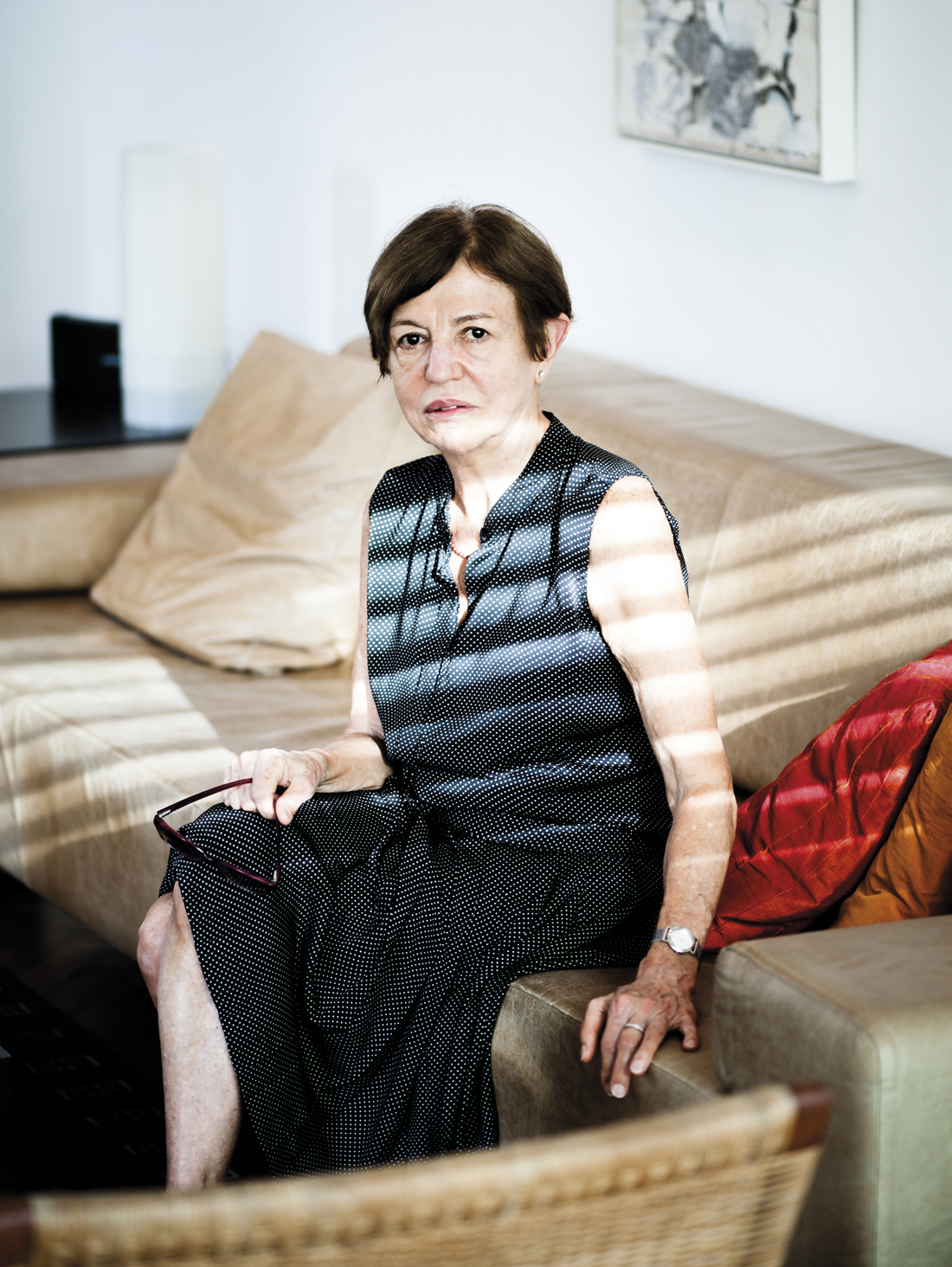
Elisa Pereira Reis

Elisa Pereira Reis: Olhar pioneiro sobre a desigualdade social

Estudiosa das elites, pesquisadora defende o desenvolvimento de projetos comparativos para melhor entendimento dos fenômenos sociais
CHRISTINA QUEIROZ | ED. 266 | ABRIL 2018

© LÉO RAMOS CHAVES
Em um momento no qual a temática da pobreza mobilizava os pesquisadores de sua área, a socióloga política Elisa Pereira Reis desenvolveu estudos inovadores sobre desigualdade social. A partir de análises comparativas da situação de diferentes nações, seus trabalhos têm influenciado o modo de pensar o desequilíbrio na distribuição de recursos, não apenas no Brasil como também no mundo. Ao se debruçar sobre as perspectivas que as elites têm do problema, Elisa propiciou o desenvolvimento de uma nova compreensão acerca das disparidades sociais. Em sua concepção, constituem a elite pessoas que ocupam altos postos em determinadas instituições, controlando recursos materiais e simbólicos. Ou seja, não apenas dinheiro mas também a capacidade de influenciar decisões alicerça o poder das elites./.../

Sunday, April 09, 2017

Sir Michael Marmot in Adelaide: two talks

Live stream of two talks by Sir Michael Marmot in Adelaide this week - Monday 10th and Tuesday 11th April


Fran Baum fran.baum@flinders.edu.au por  yorku.ca 

05:50 (Há 2 horas)
para SDOH


The first is a one hour lecture on Monday 10th August and the second a live stream of a Symposium on Policies for Health Equity including a keynote by Sir Michael and then a series of presentations on the 5 year evaluation of the South Australian Health in All Policies initiative

 Fran Baum AO FASSA, LMPHAA, FAHPA PhD
Matthew Flinders Distinguished Professor. Director, Southgate Institute for Health, Society & Equity. Southgate Institute for Health, Society & Equity
Room 2.05, Health Sciences Building Flinders University Sturt Road | Bedford Park | South Australia 5042. Postal: GPO Box 2100 | Adelaide SA 5001
EA: Moira Mathieson moira.mathieson@flinders.edu.au
The New Public Health, Oxford 2015 Paperback copy: http://www.oup.com.au/baum4e
Member, Global Steering Council, People's Health Movement (www.phmovement.org )
Twitter: @baumfran
“It happened, therefore it can happen again: this is the core of what we have to say”
Primo Levi

Tuesday, April 12, 2016

The Health inequality Project

The poor may "always be with us," but the rich hang around longer, according to theHealth Inequality Project.

Life Expectancy vs. Income in the United States

02040608010070 75 80 85 90
Household Income PercentileLife Expectancy at Age 40 (race-adjusted)WomenMen
The richest American men live 15 years longer than the poorest men, while the richest American women live 10 years longer than the poorest women.
The gaps between the rich and the poor are growing rapidly over time. The riches