Translate AMICOR contents if you like

Showing posts with label philosopy. Show all posts

Monday, May 25, 2020

Ancient Philosophy?


Mar 9 · 3 min read

The philosopher, Michael Huemer, recently wrote a piece arguing against historical philosophy. In his words:
We should think, for example, about what is the right thing to do, not what Kant said was the right thing to do; we should think about what is real, not what Plato said was real.
His primary target is academic philosophers studying history, but it’s a fair point and one that we can restate it to applying and studying the philosophy of Stoicism today:
We should think about what the right thing to do is, not what Marcus Aurelius said was the right thing to do; we should think about the correct theory of mind, not what Epictetus said about how the mind works

Thursday, April 30, 2020

Philosophy


We need philosophy more than ever, but it has drifted too far from the issues that matter
More To That in Human PartsMember only content13 min read

Wednesday, February 05, 2020

Saturday, February 23, 2019

Post-human?


THE WEEKEND ROUNDUP

By Nathan Gardels, WorldPost editor in chief
An anxious recognition is dawning: the latest scientific and technological developments are so consequential they can’t be left in the hands of scientists alone. Philosophers, artists and others who think outside the algorithm need to be engaged to fathom what it all means for the human condition. That was a key theme that emerged from a panel on science and art at Frieze Los Angeles last week.
“We are entering an age where we can build our own DNA from scratch. We will create a series of beings that are natural but do not exist in nature,” anthropologist Tobias Rees observed. “What then happens to the distinction between nature and technology when we enter post-human land?”/.../

Friday, December 28, 2018

Visions of a Better World

Visions of a Better World

Noam Chomsky, Richard Dawkins, Martin Rees and others answer the question: What’s your utopia?
Visions of a Better World
Credit: Kiratsinh Jadeja Getty Images
Unless you are too stoned or enlightened to care, you are probably dissatisfied with the world as it is. In that case, you should have a vision of the world as you would like it to be. This better world is your utopia. That, at any rate, is the premise of a question I’ve been asking scientists and other thinkers lately: What’s your utopia?
I presented students’ responses to this question last year. This final column for 2018 (if aliens land in Central Park or CERN discovers a portal to a parallel universe, I’ll let major media handle it) offers responses from scientists and others I’ve interviewed lately. My hope is that these visions will cheer up readers bummed out by my previous post, “Dark Days.” See the end of the post for my utopia.

Friday, March 16, 2018

Reputation Era

Say goodbye to the information age: it’s all about reputation now

Gloria Origgi is an Italian philosopher, and a tenured senior researcher at CNRS (the French National Centre for Scientific Research) in Paris. Her latest book is Reputation: What It Is and Why It Matters (2017), translated by Stephen Holmes and Noga Arikha.
Published in association with 
Princeton University Press 
an Aeon Partner 
1,200 words Edited by Nigel Warburton
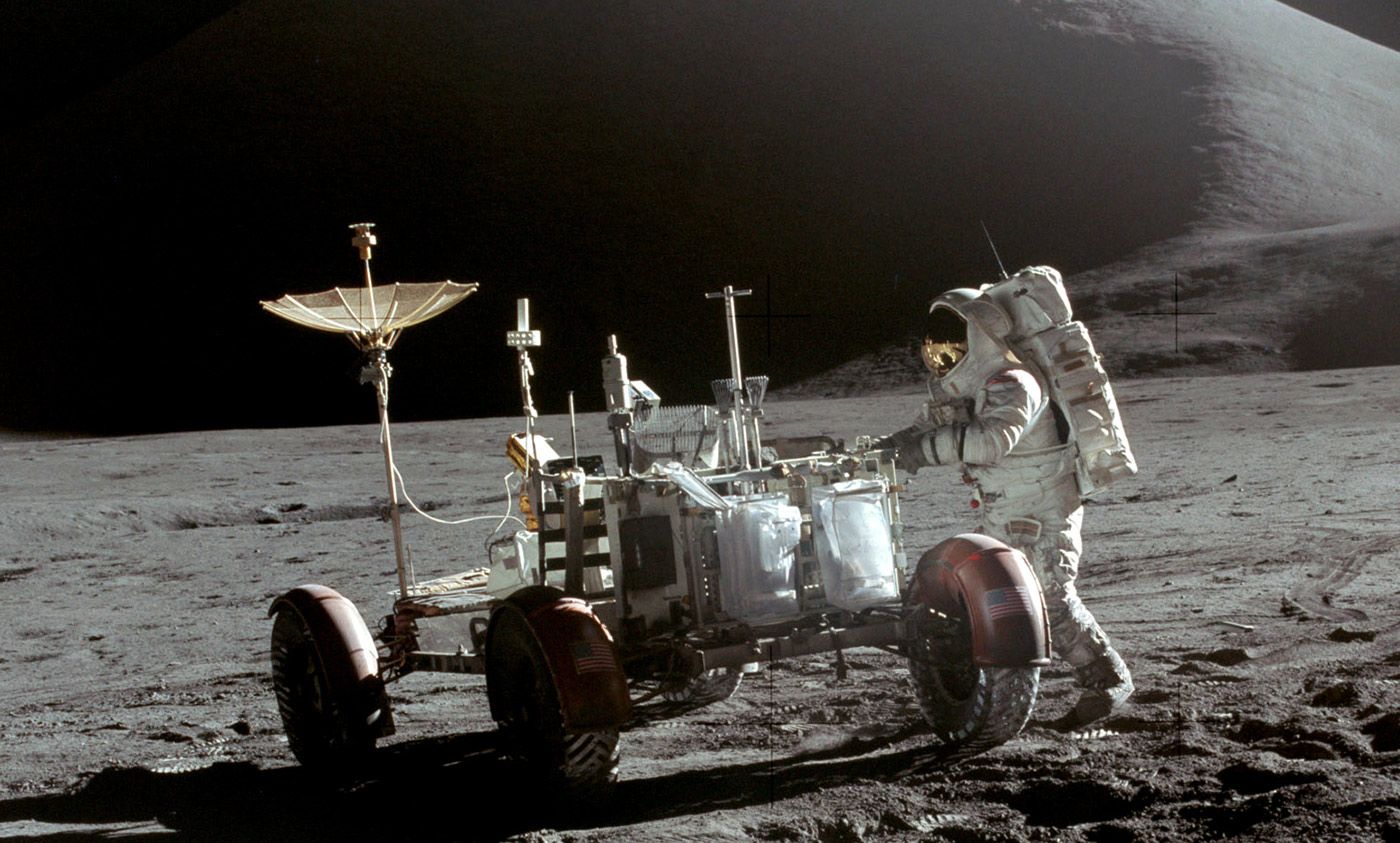
Not faking it. From the Apollo 15 mission. <em>Photo NASA</em>
Not faking it. From the Apollo 15 mission. Photo NASA
There is an underappreciated paradox of knowledge that plays a pivotal role in our advanced hyper-connected liberal democracies: the greater the amount of information that circulates, the more we rely on so-called reputational devices to evaluate it. What makes this paradoxical is that the vastly increased access to information and knowledge we have today does not empower us or make us more cognitively autonomous. Rather, it renders us more dependent on other people’s judgments and evaluations of the information with which we are faced.