Enviado pelo AMICOR Jorge da Rocha Gomes, colega de turma da Valderês (1960)
Notícias e Perspectivas > Medscape Notícias MédicasMesmo em baixas concentrações, fármacos encontrados na água têm impacto significativo no ambienteRoxana Tabakman
NOTIFICAÇÃO 8 de outubro de 2020
4Comente Share
Um teste feito nas praias de Guarujá, no estado de São Paulo, revela a primeira quantificação de medicamentos em águas marinhas da América Latina. [1] A equipe identificou cinco tipos de anti-hipertensivos, três estimulantes, três analgésicos/anti-inflamatórios, um anticonvulsivante, um antidepressivo, um redutor do colesterol, um diurético e um antiagregante plaquetário, além de cafeína, cocaína e benzoilecgonina (metabolito da cocaína). Todos esses produtos potencialmente perigosos para o ambiente foram detectados em uma cidade que tem 107 dos seus 143 km2 definidos como Área de Proteção Ambiental.
Showing posts with label environment. Show all posts
Showing posts with label environment. Show all posts
Sunday, October 11, 2020


Wednesday, April 22, 2020
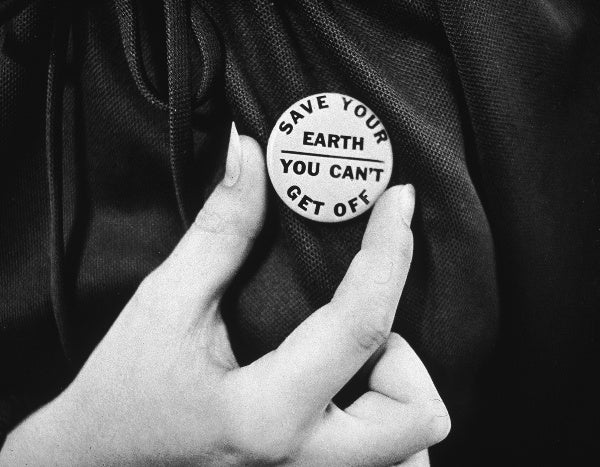
Changes from the First Earth Day 50 Years Ago
 | |
|
Friday, January 31, 2020
Global CO2 emissions p/c

We knitted the global carbon dioxide emissions per capita from 1960 to 2014 into a pullover [OC]

Thursday, January 30, 2020
Sunday, January 19, 2020
Mina Guaíba. Alerta!

NOTA DE ALERTA URGENTE À POPULAÇÃO:
sobre a Poluição da Mina Guaíba
O III Simpósio de Saúde Planetária de Porto Alegre propiciou palestras e debates
públicos com renomados professores e especialistas internacionais em Saúde Ambiental das
áreas da Justiça, Geologia, Medicina, e outros. Por consequência, julgamos imperativo tornar
público as considerações:
a) Graves falhas na EIA-RIMA (Estudo de Impacto Ambiental) da Mina Guaíba, como:
i) Não inclusão do município de Porto Alegre na região de impacto ambiental
indireto da mineração localizada a apenas 16 km do centro da cidade;
ii) Subestimação na exposição dos reais custos sociais, ambientais e econômicos
do projeto;
iii) Não apresentar a composição química elementar do carvão mineral;
b) O risco de contaminação por metais pesados na água da Região Metropolitana de Porto
Alegre (RMPA);
c) O risco de emissão de “poeira fina” oriunda das explosões da mineração que poderiam
aumentar a ocorrência de infartos do coração, “derrames” (AVCs), demência, asma,
câncer de pulmão, pneumonia infantil, partos prematuros e baixo peso ao nascer, entre
outras, e impactos nos atendimentos nas UBS, pronto atendimentos e hospitais;
d) A ausência de Avaliação de Impacto à Saúde (AIS) aos 4,3 milhões de habitantes da
RMPA;
e) A proximidade perigosa ao Parque Estadual do Delta do Jacuí - “filtro” da água potável
da RMPA;
f) A emergência climática;
Em face disso, alertamos para os graves riscos à saúde pela danosa poluição que
resultaria do projeto da Mina Guaíba e Polo Carboquímico.
Participantes do III Simpósio de Saúde Planetária de Porto Alegre
Thursday, January 02, 2020
Sunday, December 15, 2019
Climate Change
Artigo recomendado pelo AMICOR Enrique Barros
Sounding the Alarm on Climate Change, 1989 and 2019
The subject of climatic and environmental changes that result from human activity has been much in the news recently,” Alexander Leaf wrote in the Journal 30 years ago.1 Threatened by acid rain, greenhouse gases, ozone depletion, and global warming, the planet seemed vulnerable. Humans would face “disastrous consequences” as the planet ruptured around them. Leaf was sounding the alarm on climate change and human health: environmental change had become part of the burden of physicians. Now, as the climate crisis continues to unfold, the story of a physician who devoted his attention first to the nuclear threat and then to planetary health offers much-needed inspiration.
Leaf was born Alexander Livshiz in 1920, in Japan, where his parents had fled the Russian Revolution. After migrating to the United States, he studied chemistry at the University of Washington, joined the Army Medical Corps, and completed an accelerated medical degree at the University of Michigan in 1943. After residencies at Massachusetts General Hospital (MGH) and the Mayo Clinic, he returned to Michigan to research electrolyte metabolism, including how bodies responded to hot climates. With support from the Rockefeller Foundation, he established a cell biology laboratory at Harvard Medical School (HMS). In 1966, he became the Jackson Professor of Clinical Medicine at Harvard and chief of medicine at MGH.
........................
But the climate crisis might prove more intractable than the nuclear threat. Prevention of nuclear war requires sustained commitments by world leaders. Public pressure can be brought to bear directly on them. Prevention — or, at this point, mitigation — of climate change requires fundamental restructuring of all societies. Wednesday, December 11, 2019

Thursday, November 14, 2019
Air Pollution
Air pollution nanoparticles linked to brain cancer for first time

2:07 PM · Nov 13, 2019


Thursday, October 17, 2019
Bees, the Most Important Beings

Insects send a chill down a lot of people’s spines. Hence, it’s quite fitting for Internauts to refer to spiders as “nopes” and centipedes as “nope rope nopes”—when you see one, you are certain to say “nope”! However, all is not lost as Mother Nature has given us some adorable insects like butterflies, ladybugs, and, of course, bees. Yes, you do get the occasional bee sting every once in a while, but they outweigh your discomfort of its self-defense by being a vital component in the planet’s ecosystem. Open full post
Saturday, September 21, 2019
Disruptores endócrinos
Em agosto deste ano foi lançada a versão traduzida para o português do documento Introdução aos disruptores endócrinos (DEs): Um guia para governos e organizações de interesse público, uma iniciativa conjunta da Endocrine Society e da organização não governamental IPEN. [1]
A tradução e a revisão técnica foram assinadas pelo Dr. Cesar Boguszewski, endocrinologista e vice-presidente da Sociedade Brasileira de Endocrinologia e Metabologia (SBEM), e o documento foi publicado durante o Congresso Brasileiro de Atualização em Endocrinologia e Metabologia (CBAEM), realizado em Florianópolis, Santa Catarina.
Segundo o Dr. Cesar, o objetivo é alertar os médicos, em particular os endocrinologistas, mas também os demais profissionais de saúde, as autoridades e o público em geral sobre os potenciais efeitos tóxicos dos disruptores endócrinos.
Em entrevista, o médico e tradutor falou ao Medscape sobre o guia.
Sunday, September 15, 2019
2050 Hello
 |
 | |
A special feature from The Brief
Hello from the year 2050. We avoided the worst of climate change — but everything is different
 |
Tuesday, September 03, 2019
Air Pollution
C. Liu and Others
|
N Engl J Med 381:705, August 22, 2019
|
 CME CME  | |  Interactive/Multimedia | Interactive/Multimedia |  Comments Comments |
J.L. Witztum and Others
|
N Engl J Med 381:531, August 8, 2019
|
Thursday, July 18, 2019
Azardous Chemicals
Material enviado pela AMICOR Berenice Goelzer
Hazardous Chemicals in Helath Care
“Documentation of chemicals present in health care personnel will increase awareness of chemical exposure among health care workers and will help us understand more about the effectiveness of exposure reduction efforts, and treatments.” — Anna Gilmore Hall, RN, CAE
Hazardous Chemicals in Helath Care
“Documentation of chemicals present in health care personnel will increase awareness of chemical exposure among health care workers and will help us understand more about the effectiveness of exposure reduction efforts, and treatments.” — Anna Gilmore Hall, RN, CAE
Tuesday, July 09, 2019

Wednesday, May 29, 2019
bacteria that eats plastic
This bacteria eats plastic

9:13 minutes · TEDxMtHood
Humans produce 300 million tons of new plastic each year -- yet, despite our best efforts, less than 10 percent of it ends up being recycled. Is there a better way to deal with all this waste? Microbiologist Morgan Vague studies bacteria that, through some creative adaptations, have evolved the unexpected ability to eat plastic -- and could help us solve our growing pollution problem.
| Watch now » |
Tuesday, May 28, 2019
Climate predictions beyond 20 years
US government scientists ordered to ignore climate predictions beyond 20 years
The administration of US President Donald Trump is moving to limit the duration of climate-change predictions in the influential National Climate Assessment report. Omitting climate modelsthat go beyond the year 2040 would eliminate any mention of the worst-case case scenarios that will occur if we fail to curb carbon dioxide pollution. Critics see the move as a long-feared response to the last edition of the report, which laid bare the enormous risk to the US economy and livelihoods by the end of the century if current trends in global greenhouse-gas emissions continue.
The New York Times | 10 min readRead more: Fire, drought, flood: climate challenges laid bare in US government report (Nature, from November) Reference: National Climate Assessment report (from November) |
Tuesday, May 21, 2019
Sea level could rise
Global Sea Levels Could Rise by Much More Than Previously Predicted, According to New Study
Global sea levels could rise by over 6 feet by 2100––twice as much as had previously been predicted––threatening major cities and potentially flooding hundreds of millions of people, a study published Monday warned.
The implications for coastal populations around the world could be severe if the predictions in the study in the Proceedings of the National Academy of Sciences prove accurate. In the worst-case scenario, where global emissions are not curtailed and the climate warms by 5°C (9° Fahrenheit), the report authors predict sea levels could rise by as much as 7.8 feet.
Subscribe to:
Posts (Atom)