Translate AMICOR contents if you like

Saturday, December 31, 2011

The Internet, peer-reviewed


The Internet, peer-reviewed

October 28, 2011 by Amara D. Angelica
It could be one of the most important innovations on the Internet since the browser.
Imagine an open-source, crowd-sourced, community-moderated, distributed platform for sentence-level annotation of the Web. In other words, a way to cut through the babble and restore some sanity and trust.
That’s the idea behind Hypothes.is. It will work…

Human Connectome Project


Tangled thoughts <i>(Image: Courtesy Arthur W. Toga of the Laboratory of Neuro Imaging at UCLA and Martinos Centre for Biomedical Imaging at MGH, Consortium of the Human Connectome Project)</i>

Smart Guide to 2012:
Mapping the human brain

  • 23 December 2011 by Linda Geddes
  • Magazine issue 2844Subscribe and save
    • The HCP aims to map the
  • For similar stories, visit the The Human Brain Topic Guide"
    You're missing 
    huge amounts of information if you don't
                                                    know which regions are connected
    to other regions," says
                                                    Tim Behrens of the University of Oxford, who is a

                                                    member of the Human Connectome Project/.../
    Tangled thoughts (Image: Courtesy Arthur W. Toga of the Laboratory of Neuro Imaging at UCLA and Martinos Centre for Biomedical
    Imaging at MGH, Consortium of the Human Connectome Project)

With 100 billion neurons, each with around 10,000 connections, mapping the human brain will be no easy feat, and charting every single connection could take decades. The HCP will tackle the lowest hanging fruit first: charting the major highways between different brain regions, and showing how these connections vary between individuals. To do this they will combine several imaging tools including something called diffusion MRI, which maps the structure of the white matter that insulates the "wires" of the brain, and also resting-state MRI, which measures how brain regions oscillate in unison as a result of shared connections.
Even this should produce a more complex structural anatomy of the brain than anything ever seen before, and provide tantalising insights into how personality, memory and even consciousness are formed./.../


Super-memory


A super-memory smart drug?

December 15, 2011 by Amara D. Angelica
[+]Suppression of PKR
Suppression of the PKR molecule in mutant mice (right) enhances learning and memory by lowering GABA release, compared to the process in "wild type" (normal) mice (left) (credit: BCM)
Could this be the “Limitless” breakthrough we’ve been looking for?
Researchers at Baylor College of Medicine  (BCM) have discovered that when the activity of PKR — a molecule normally elevated during viral infections — is inhibited in the brain, mice learn and remember dramatically better.
“The molecule PKR (the double-stranded RNA-activated protein kinase) was originally described as a sensor of viral infections, but its function in the brain was totally unknown,” said Dr. Mauro Costa-Mattioli, assistant professor of neuroscience at BCM. But the activity of PKR is altered in a variety of cognitive disorders, so Costa-Mattioli and colleagues decided to take a closer look.
Super memory
“We found that when we genetically inhibited PKR, we increased the excitability of brain cells and enhanced learning and memory in a variety of behavioral tests,” said Costa-Mattioli./.../

Friday, December 30, 2011

Porque comigo?

(Artigo meu publicado no jornal Mente & Corpo de novembro p.p. -ano IX No.81- dirigido pelo Dr. João Gomes Mariante)

Esta pergunta é das primeiras que em geral fazemos quando doentes, ou quando algo mais de ruim nos acontece. São bem conhecidas as etapas pelas quais passamos ao tomar contato com o infortúnio: negação, ira, negociação, depressão e aceitação. Deve ser o caminho natural da percepção até a incorporação da novidade, no caso, a má notícia.
Neste “porque comigo” não vai somente surpresa ou busca indiferente da etiologia do mal. Em geral vem acompanhado de um solilóquio mais extenso: “o que é que eu fiz para merecer isso?”.  É o componente de culpa e castigo que nos acompanha ao tomarmos consciência da doença. Existe certamente muito de cultural na relação entre perda da saúde e castigo. Pode ser um arquétipo, mas certamente se relaciona com tempos sem explicações científicas para fenômenos naturais. Fica difícil aceitar envelhecimento, doença e morte, especialmente quando deles nos aproximamos ou temos que enfrenta-los.
Culpa só serve para evitar reincidência no erro. Em nosso caso – como em grande parte das vezes doença não acontece por responsabilidade nossa, ao menos direta e deliberada - a sensação de culpa só vem aumentar desnecessariamente o sofrimento.
Embora o conceito de risco tenha ajudado a compreender melhor o processo mórbido, e seja útil na prevenção, é de se questionar possíveis abusos, mesmo que bem intencionados,  beirando discriminação, intolerância e terrorismo.  Facilmente encontramos aí os chamados fatores de risco comportamentais ligados à obesidade, sedentarismo, tabagismo e adição ao álcool ou outros produtos causadores de dependência.
Não que se deva ignorar a importância do desvio de comportamento na exposição aos fatores de risco, mas sua determinação cultural e social precisa ser estudada, informada, discutida, e seriamente considerada na programação de qualquer intervenção preventiva. É provável que grande parte da sensação de culpa, e mesmo dos insucessos dos programas de saúde pública estejam relacionados com essa falha. Nossa cultura se satisfaz com a responsabilidade do indivíduo na busca do nexo causal, o que se expressa também na conhecida busca de um bode expiatório em outras circunstâncias.
É muito mais fácil jogar a culpa nos indivíduos do que reformar a sociedade e mexer com as estruturas de poder e de interesses que produzem uma distribuição desigual de fraquezas humanas e lucram com sua exploração, até usando recursos e estratégias tecnológicas e de mercado cientificamente embasadas.
Se ao menos a pergunta fosse “porque conosco?”...
Recém realizou-se no Rio de Janeiro uma conferência mundial sobre Determinação Social de Saúde e Doença. É possível que se contemplássemos os males que nos afligem sob novo paradigma, os que sofrem não teriam seus males reforçados ao assumirem culpa sozinhos, e poderíamos alcançar maior sucesso em nossas pretensas ações preventivas.

Brain cells & Proteins


Viewing protein interactions in brain cells

December 27, 2011 by Editor
[+]
At the core of this new imaging technology is FRET (fluorescence resonance energy transfer), which occurs when two fluorescently tagged molecules come within 8 nanometers or less. Detecting the FRET serves as a proxy for the two proteins X and Y associating within a living cell (credit: University of Miami)
University of Miami (UM) biology professor Akira Chiba is leading a multidisciplinary team to develop the first systematic survey of protein interactions within brain cells. The team is aiming to reconstruct genome-wide in situ protein-protein interaction networks (isPIN) within the neurons of a multicellular organism.
Like all other cells, each neuron produces millions of individual proteins that associate with one another and form a complex communication network. Until recently, observing these protein-protein interactions had not been possible due to technical difficulties. Individual proteins are typically less than 10 nm (nanometers) in diameter, considered inaccessible even with super-resolution microscopy.
The researchers are creating genetically engineered fruit flies that are capable of expressing over 500 fluorescently tagged assorted proteins, two at a time. The fluorescent tags make it possible to visualize the exact spot where a given pair of proteins associates with each other.
The team utilizes a custom- built 3D FLIM (fluorescent lifetime imaging microscopy) system to quantify this association event within the cells of a live animal. FLIM shows the location and time of such protein interaction, providing the data that allow creation of a point-by-point map of protein-protein interactions.
The pilot phase of this multidisciplinary project, funded by the National Institutes of Health, employs advanced genetics, molecular imaging technology, and high-performance computation, among other fields.
In the future, they will begin to visualize directly how the individual proteins interact with one another in their “native environment,” the cells in our body.

365 days: 2011 in review

From neutrinos to stem cells: a round-up of the year in research and science policy.

Scientific Paper Trail

Glia Cells


More than glue: Glia cells found to regulate synapses

December 30, 2011 by Editor

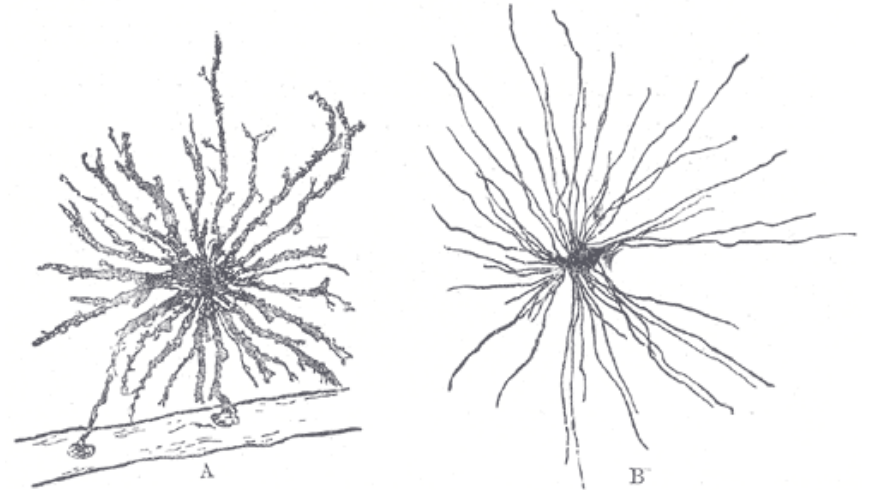
Glia cells: the brain's supervisors (credit: Gray's anatomy/Wikimedia Commons)
Glia cells are central to the brain’s plasticityTel Aviv Universityresearchers have found, controlling how the brain adapts, learns, and stores information — and their design can be implemented in neuromorphic computer chips.
Glia cells (Greek for “glue,” also known as glial) hold the brain’s neurons together and protect the cells that determine our thoughts and behaviors. But glia cells have now been found to do much more: a mechanism within the glia cells also regulate the synapses, sorting information for learning purposes, according to Ph.D. student Maurizio De Pittà of TAU’s Schools of Physics and Astronomy and Electrical Engineering.
“Glia cells are like the brain’s supervisors. They control the transfer of information between neurons, affecting how the brain processes information and learns.”/.../

Alzheimer


How Your Diet May Affect Your Risk of Alzheimer’s Disease

Omega-3s and vitamins may protect your brain's function and size.

Photo Researchers RM / Getty Images
PHOTO RESEARCHERS RM / GETTY IMAGES
An Alzheimer's patient shares a moment with her daughter
In the first study of its kind, researchers have linked specific vitamins and nutrients in the diet with cognitive performance and the risk of Alzheimer’s disease.
The research, published in the journal Neurology, showed that people with healthier diets — rich in omega-3 fatty acids and a variety of vitamins — had bigger brains and better cognitive function than those whose diets were unhealthier on the whole./.../


FAOSTAT: 2010 Data Now Available


PIN -
            Agriculture - Food
FAO/O. Thuillier
 The agricultural productiondomain covers:
  • Quantity produced
  • Producer price
  • Value at farmgate (forthcoming)
  • Area harvested
  • Yield per hectare


Wednesday, December 28, 2011


Smoking During Pregnancy May Damage Children's Blood Vessels

Yet Another Reason Not to Smoke During Pregnancy
By Rita Rubin
WebMD Health News
Reviewed by Laura J. Martin, MD

pregnant woman holding cigarette
Dec. 26, 2011 -- If women didn’t already have enough reasons to quit smoking before pregnancy, here’s a big one: Smoking during pregnancy may set their child up for blood vessel damage, a new study shows.
Dutch scientists enrolled more than 250 children. When the children were 4 weeks old, their body dimensions and lung function were measured. At the same time, their parents completed questionnaires about such factors as smoking during pregnancy.
When the children were 5, the researchers used ultrasound to measure the thickness and flexibility of their carotid arteries, large blood vessels in the neck that supply blood to thebrain. They also collected updated smoking information from their parents./.../

Top Advances in Cancer Treatment


 Top Advances in Cancer Treatment

By Kurt Ullman, Contributing Writer, MedPage Today
Published: December 27, 2011
Advances in screening and prevention, treatments for refractory cancers, and ways to reduce cancer recurrence were part and parcel of the progress made against the disease in 2011, according to the American Society of Clinical Oncology.
...............................
Hard-to-treat cancers also were the focus of treatment advances. These included:
Governmental policy developments also were important during the year, according to the editorial board. The board pointed to progress in the areas of increased efficiency and greater prioritization of trials, as well as talks about sustaining federal resources for clinical trials as important to future cancer care.
"It has been 40 years since President Richard Nixon signed the National Cancer Act of 1971, which many view as the nation's declaration of the 'War On Cancer,'" wrote ASCO president Michael P. Link, MD, in an accompanying message. "Cancer research has transformed cancer care in the past 40 years, and this year's Clinical Cancer Advances illustrates how far we have come in the past year alone."
The authors disclosed many potential conflicts including consultant or advisory roles, honoraria, research funding, and other renumeration from multiple industry sources.

Aromasin


Year in Review: Exemestane Scores for Prevention of Breast Ca

By Crystal Phend, Senior Staff Writer, MedPage Today
Published: December 27, 2011
Our Year in Review series highlights the major medical news stories of 2011. The announcement of study results showing a 65% decrease in first breast cancers among postmenopausal women at moderate or high risk of the disease brought expectations that more women would be placed on chemoprevention. Here, again, is the original article, first published on June 4. In a companion article, you'll find out what's happened since.
CHICAGO -- Make room, tamoxifen: The aromatase inhibitor exemestane (Aromasin) prevents first breast cancers in moderate- to high-risk postmenopausal women, according to randomized trial results.
Exemestane reduced the annual incidence of invasive breast cancer by a relative 65% compared with placebo (0.19% versus 0.55%, P=0.002), Paul E. Goss, MD, PhD, of the Massachusetts General Hospital Cancer Center in Boston, and colleagues found.
The number of patients who needed to treat to prevent one breast cancer with exemestane therapy was 94 in three years. That number was projected to drop to 26 in five years, the group reported here at the American Society of Clinical Oncology meeting and simultaneously online in the New England Journal of Medicine.
By comparison, five years of tamoxifen reduces breast cancer incidence by about 50% in high-risk women, while the same strategy with sister drug raloxifene (Evista) cuts risk by 38%./.../

Clnical Trials


Drug Trials Not Representative, Researchers Charge

By Emily P. Walker, Washington Correspondent, MedPage Today
Published: December 27, 2011
Few major randomized, controlled clinical trials examine the effects of a drug in patients who have multiple chronic conditions, even though more than one-quarter of all Americans are living with at least two chronic health conditions, researchers reported.
The proportion is even greater for older individuals, two out of three of whom are likely to have at least two chronic health conditions, according to Alejandro Jadad, MD, and colleagues from the Centre for Health, Wellness and Cancer Survivorship at the University Health Network in Toronto.
That means that most trials on which the FDA bases its approval of new drugs are not generalizable to the U.S. population, they wrote in a research letter published in the Dec. 28 issue of the Journal of the American Medical Association./.../

Celebrity Health


2011 Year in Review: 27 Most Shocking Moments in Celebrity Health

By: Michele R. Berman, MD  |  December 27, 2011
Pictured left is Aerosmith front man and American Idol judge Steven Tylerwhose accident, while on tour in Paraguay, once again demonstrated that the bathroom is the most dangerous room in the house. Mr. Tyler is one of Barbara Walters10 Most Fascinating People of the Year and has also been featured in our series on Ailments of the Aging Rock Star.

In addition to covering common diseases affecting uncommon people, our reporting on celebrity health and lifestyle topics in 2011 included a number of unusual conditions and practices including Angelman Syndromebreast milk ice creambuttocks augmentationDukan DietentomophagyMaroteaux-Lamy Syndromemisophoniamusic therapynude psychotherapypica & pregnancy cravings, "pinkwashing,"psychopathy, "spider medicine" and tanorexia.

Listed below are our Top 27 Teachable Moments* in celebrity health, selected from 300 stories published this year.


  1. Charlie Sheen Will Make Your Face Melt Off
  2. Michael Douglas Beats Throat Cancer
  3. Bret Michaels Survives Heart Surgery
  4. Barbara Walters Opens Her Heart to the World
  5. Serena Williams Undergoes Treatment for Pulmonary Embolism
  6. Matthew Morrison’s Sweet Potato Abs
  7. Keenan Cahill is Dynamite!
  8. Missy Elliot with Graves
  9. Harry Potter was an Alcoholic?!
  10. R. Kelly Has a Bump N’ Grind Removed (from his throat)
  11. Angelina Jolie Eats Bugs
  12. Kim Kardashian Gets a Nasty Rash
  13. I’ll take “Kick Ass Game Show Hosts For $100, Alex
  14. Dianna Agron Gets a Broken Nose
  15. Sean Kingston looks at Beautiful Girls, Crashes Jet Ski & Nearly Dies, Twice!   
  16. Steven Tyler Slips in the Tub
  17. Tanorexics Everywhere! [Snookie, George Hamilton, Rebecca Minkoff]
  18. Bono’s Heart Skips a Beat
  19. Venus Williams Leaves US Open
  20. Don’t Chew Anything Around Kelly Ripa
  21. John Mayer Silenced
  22. Demi Lovato Does What Few Actresses Do
  23. Wanda Sykes says Breast Cancer is No Laughing Matter
  24. Did Alternative Medicine Kill Steve Jobs?
  25. Adele Can’t Sing
  26. Gabby Giffords learns to speak again
  27. They’re letting Khloe Kardashian Have a Baby?!

*For all of the fascinating details, see here.

Is Atherosclerosis an Allergic Disease?


Is Atherosclerosis an Allergic Disease?

By: Chris Kaiser  |  December 27, 2011
That was the title of a recent commentary in Circulation Research by Christoph J. Binder, MD, PhD, and Joseph L. Witztum, MD, from the University of California, San Diego (Circ Res 2011;109:1103-04).

The two commentators were impressed by Wang et. al.'s research showing the involvement of immunoglobulin E (IgE), which plays an important role in allergic reactions, in promoting atherogenesis (J Clin Invest2011;121:3564-3577).

IgE, in relation to allergic reactions, activates mast cells by binding to IgE's high-affinity receptor FcER1. In addition to allergic responses, mast cells participate in other inflammatory diseases, including atherosclerosis, Wang and colleagues wrote.

For their study, Wang et. al. analyzed serum IgE levels in two separate Chinese populations and found them elevated in patients with myocardial infarction and unstable angina.

Those with acute MIs had the highest levels of IgE, followed by those with unstable angina, and then those with stable angina. In other words, the circulating levels of IgE correlated with plaque instability, Wang and colleagues wrote.

In addition, the investigators found IgE and FcER1 in human atherosclerotic lesions, mostly localized in macrophage-rich areas.

Prior studies had found that people with common allergic diseases such as asthma and allergic rhinitis were more prone to develop atherosclerosis (Arch Intern Med 2005;165:2521-6), suggesting a link./.../

New Troponin Assays


New Troponin Assays May Help Identify MI Earlier

By Todd Neale, Senior Staff Writer, MedPage Today
Published: December 27, 2011
Reviewed by Robert Jasmer, MD; Associate Clinical Professor of Medicine, University of California, San Francisco.
A next-generation, highly sensitive troponin I assay may help speed the diagnosis of myocardial infarction (MI) among patients presenting to the emergency department with acute chest pain, researchers found.

Using a diagnostic cutoff of greater than the 99th percentile of 32 pg/mL, the Architect STAT High Sensitive Troponin I assay had a negative predictive value of 94.7% at admission and 99.4% at three hours after admission, according to Stefan Blankenberg, MD, from the University Heart Center Hamburg in Germany, and colleagues./.../