Translate AMICOR contents if you like

Sunday, September 12, 2021

3.048 AMICOR (24)

 AMICOR 3.048 

#Dra. Valderês A. R. Achutti (*13/06/1931+15/06/2021)

Visitando a Pequena Sereia em Kopenhagen...
Dia 15 fez três meses que ela partiu, mas deixou semente...

#Da: Academia Sul-Riograndense de Medicina

reunião Cultural de amanhã, 14 de setembro, às 18h. (link de acesso abaixo).

O palestrante da Sessão será o Jornalista Ricardo Chaves, fotógrafo, cujo mini-currículo foi citado no card enviado na última sexta-feira.

Miriam Oliveira

Diretora Cultural da ASRM

Gestão Luiz Lavinsky (2021-2022)

 Aplicativo ZOOM

ID Sessão Cultural: 856 3939 7843

Link de acesso: https://us02web.zoom.us/j/85639397843


#de: Sociedade, Cultura e Poder (Porto, Portugal)


August Ferdinand Möebius (+26/09/1868)

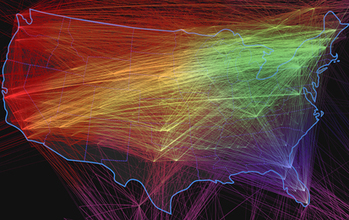
Map showing U.S. Internet connections


#From: NEJM

PERSPECTIVE ROUNDTABLE

Race in Medicine
 — Genetic Variation, Social Categories, and Paths to Health Equity

Featured Image

Watch the new Perspective Roundtable on Race in Medicine, in which experts from diverse clinical and biomedical fields discuss complex questions about race in medicine and how to build a system of equitable health for all.

View the video, listen to the audio, or read the transcript.
Read more articles from the Race and Medicine collection.


#From:JAMA

In 2010 emoji were officially introduced to the global lexicon as part of Unicode, the computing standards adhered to by most of the world's word processing systems. Today an emoji occupies the same status in Unicode as the Latin letter A, or Chinese character 愛, or Arabic غ, and an estimated 5 billion are used every day on Facebook and in Facebook Messenger alone.1 Emoji set curation is overseen by Unicode Consortium, a Silicon Valley–based nonprofit tasked with maintaining text standards across computers, whose members include representatives from Microsoft, Apple, and Google, among others. Anyone can propose new emoji, but each submission is reviewed via a formal and lengthy consortium process.

As of 2020 there were 3521 emoji in the Unicode Standard, roughly 30 of which could be considered relevant to medicine, excluding generic body part images (eg, ear 👂, hand 🖐, leg 🦵, and foot 🦶). The current set of medical emoji is the result of ongoing, if erratic, efforts over the last 5 years. The first, introduced in 2015, were syringe 💉 and pill 💊. In 2016, efforts to expand the representation of professions brought male health worker 👨 and female health worker 👩. In 2017 Apple added emoji to better represent individuals with disabilities, collaborating with the American Council of the Blind, the Cerebral Palsy Foundation, and the National Association of the Deaf to introduce the white cane 🦯, mechanical arm 🦾, mechanical leg 🦿, and hearing aid 🦻 emoji, among others. Stethoscope 🩺, blood drop 🩸, bone 🦴, tooth 🦷, and microbe 🦠 (often used to represent viruses) followed in 2019. In 2020, 2 of the authors (D. L. and S. H.) worked with a member of the UK’s National Health Service (NHS) to win Unicode approval of the anatomical heart and anatomical lung (Figure 1).

#Da:ASRM


    ACADEMIA SUL-RIO-GRANDENSE DE MEDICINA
 
  
É com grande pesar que comunicamos o falecimento de nosso Membro Honorário Werner Paul Ott. Filho de August Paul Ott e Emma Matilde Ott, nasceu em 1934 em Stuttgart (Alemanha), e foi naturalizado brasileiro em 1964. Formou-se em Medicina pela Universidade Federal do Rio Grande do Sul (UFRGS) em 1966, fez mestrado em Pneumologia e se especializou em Saúde Pública. Co-fundador e ex-presidente da Sociedade Brasileira de Pneumologia e Tisiologia e Membro Titular da Federação Brasileira das Sociedades de Tuberculose e Doenças Respiratórias e da União Internacional contra a Tuberculose, de 1969 a 1978, tendo dedicado sua vida profissional no controle da tuberculose a nível local (Santa Casa, Secretaria da Saúde e Hospital de Clínicas) e internacional (OMS). Sua perda deixa a Academia enlutada, mas com a forte lembrança de uma pessoa e um Médico amável e incansável de seu objetivo de erradicação da tuberculose. Seu velamento está ocorrendo na Capela 2 do Memorial Angelus, na Av. Porto Alegre, 320, até as 14h30min. de hoje. 

#From: MEDIUM

23 Great books to Read

Although 2020 was a year that took many precious things like our freedom and emotional stability, it gave us many other invaluable things. The one I believe has caused the biggest impact on us is that this pandemia has allowed us to get to know ourselves better. We have learned to fill the void that used to be satisfied by the social distractions that consumed our weekends.

For me, reading was the hobby that gave me multiple benefits during the quarantine. It kept me motivated, helped me reduce the stress caused by being unable to go out of my apartment, and allowed me to sleep better by putting my mind and body at ease before getting into bed.

“The more that you read, the more things you will know. The more that you learn, the more places you’ll go.” — Dr. Seuss


#From: The LANCET
Brain health and its social determinants
Published:September 18, 2021DOI:https://doi.org/10.1016/S0140-6736(21)02085-7
Opinions about the relative importance of the biological and sociological causes of mental ill health have moved wildly from one extreme to another over the past 50 years. So, when Vivian Pender, the newly elected President of the American Psychiatric Association (APA), pronounced in July that “we need to be more aware of the broader context in which that illness occurred and how that context has shaped the health outcome”, cynics could be forgiven for thinking it just another swing of the pendulum. However, perhaps this time Pender—and many others, for she is not alone—has got it right./.../

From QUANTA Magazine

My Bookmarks

CELL BIOLOGY | ALL TOPICS


Biologists Rethink the Logic Behind Cells’ Molecular Signals

By PHILIP BALL

The molecular signaling systems of complex cells are nothing like simple electronic circuits. The logic governing their operation is riotously complex — but it has advantages.

Read the article

GEOPHYSICS


A Massive Subterranean ‘Tree’ Is Moving Magma to Earth’s Surface

By ROBIN GEORGE ANDREWS

Deep in the mantle, a branching plume of intensely hot material appears to be the engine powering vast volcanic activity.

Read the article

Related: 
Continents of the Underworld
Come Into Focus

by Joshua Sokol (2020)

QUANTIZED COLUMNS


The Journey to Define Dimension

By DAVID S. RICHESON

The concept of dimension seems simple enough, but mathematicians have struggled for centuries to precisely define and understand it.

Read the column

Related: 
3-D Fractals Offer Clues
to Complex Systems

by Kevin Hartnett (2017)

NUMBER THEORY


How Ancient War Trickery Is Alive in Math Today

By LAKSHMI CHANDRASEKARAN

Legend says the Chinese military once used a mathematical ruse to conceal its troop numbers. The technique relates to many deep areas of modern math research.

Read the blog

Related: 
Smaller Is Better: Why Finite Number Systems Pack More Punch
by Kevin Hartnett (2019)

QUANTA SCIENCE PODCAST


DNA Has Four Bases. Some Viruses Swap in a Fifth.

Podcast hosted by SUSAN VALOT;
Story by JORDANA CEPELEWICZ

The DNA of some viruses doesn’t use the same four bases found in all other life. New work shows how this exception is possible and hints that it could be more common than we think.

Listen to the podcast

Read the article

Around the Web

Starlight Takes a Detour
Astronomers were treated to three views of the same supernova because of massive sources of gravity that sent the starlight on detours. The next replay, which may come in 2037, could help cosmologists nail down the universe’s controversial expansion rate, Ken Croswell reports for Science News. Diverted light has become a major tool for studying the universe in recent years. Distortions of distant galaxies caused by dark matter have hinted at weaknesses in the leading theory of cosmology, Charlie Wood reported for Quanta last year. 

Rebuilding Math With Infinity Categories
“Infinity categories” is a dizzying and novel new branch of mathematics. Emily Riehl, one of the mathematicians leading the development of this young field, has written an introduction to it for Scientific American. Infinity category theory takes on the ambitious task of rebuilding math from the ground up. As Kevin Hartnett reported for Quanta in 2019, it may encourage mathematicians to abandon the equals sign for the squishier but more comprehensive concept of “equivalence.” 


The Long Trek Toward Humanity
Where did we humans come from? Our evolution hasn’t been a steady march from tree dwellers to tool users, Erin Wayman writes for Science News. Rather, we are the last twig of a surprisingly bushy hominin tree. Powerful new genetics tools have played a major role in revealing our ancestors’ migrations out of Africa and the interactions they had with our hominin cousins along the way, Jordana Cepelewicz reported for Quanta in 2019. 

#FROM THE TIME VAULT


Today in 1996: Bill Gates Aims at the Internet

“For two years the rapidly expanding global computer matrix called the Internet had nagged at Gates like a low-level headache. Even as his company shipped Windows 95 last fall—an 11-million-line program that solidified Microsoft's PC hegemony—Gates worried about what lay ahead. Microsoft had long dominated the world of personal computing by providing the software that controlled the way users interacted with their machines—a program called an operating system. Microsoft's operating systems, first DOS in 1980 and then Windows 10 years later, had given the company intimidating control over PC software. And lush profits, enough to vault Gates to the top of the list of the richest Americans. But the Internet could undo all that.” (Sept. 16, 1996)

READ MORE »

#From: CME Institute

#From: TED

When your beliefs are being challenged

When your beliefs are being challenged

What do you do when your beliefs and understanding of the world have been challenged, unraveled or even destroyed? Take a deep breath and learn from TED's best on how to approach these moments with grace and fortitude.
Watch »»


Monday, September 06, 2021

3.047 AMICOR (24)

 AMICOR 3.047  (09/11)

#Dra. Valderês A. R. Achutti (*13/06/1931+15/06/2021)

Figurante, com o mesmo sorriso que era tão ou mais cativante do que sua interpretação vocal.

No Coral da Associação Médica do Rio Grande do Sul

Vera, colega dela no Coral lembrou apresentação do coro do Nabucco de Verdi, o "Va pensiero",  quando nos vestimos como ela está na foto, como  refugiados judeus lamentando a perda da pátria. Doce lembrança.

Na próxima semana (setembro, 15) completam-se 3 meses que ela se foi, para não mais voltar a cantar, nem sorrir..

#From: AEON Magazine

The first page of Bach’s Ricercar à 3 (three-part fugue) on the Royal Theme with complete statements of the subject annotated at the tonic (red) and dominant (blue). Image courtesy IMSLP and annotated by the author
Audio of Bach’s Ricercar à 3 (three-part fugue) on the Royal Theme
MusicEssay
Maestro of more than music
Look beneath the surface of Bach’s music and you will find a fascinating hidden world of numerology and cunning craft
by Milton Mermikides


#From: TIME

#From: Britannica


#de: ADUFRGS Horta Caseira


#Da: Revista Galileu

#From:NATURE

A sleep-like state in Hydra unravels conserved sleep mechanisms during the evolutionary development of the central nervous system

A brain isn’t necessary to sleep

© NNehring/E+/Getty Images

© NNehring/E+/Getty Images

Even animals that are so simple that they lack brains need their sleep.

Sleep is remarkably universal, with a wide range of animals exhibiting the state, even down to insects and nematodes.

Now, a team led by researchers at Kyushu University in Japan has observed a sleep-like state in hydra — a surprising finding that given that hydra lack a central nervous system./.../


Made-up words convey across cultures

Nonsense words can be recognizable to people around the world — and not just when they’re onomatopoeic. Researchers asked English-speaking people, mostly from the United States, to make up sounds to represent a wide range of concepts, including ‘sleep’, ‘tiger’, ‘many’ and ‘good’. These vocalizations were played for volunteers in 7 countries, who spoke a total of 28 languages, and had to guess the sounds’ meanings from a list of options. Across the board, people guessed the intended meanings at rates better than chance. The findings might hint at ‘iconic’ sounds that serve as the foundations for language.

Scientific American | 3 min read
Reference: Scientific Reports paper

#From: NY Times
Article Image

Gracia Lam

Personal Health

How Vision Loss Can Affect the Brain

A growing body of evidence suggests that when older people’s brains have to work harder to see, declines in language, memory, attention and more could follow.

#From: The LANCET

Global Health Metrics S86 www.thelancet.com Vol 396 October 17, 2020 Figure 1: Composition of DALYs by constituent Level 3 causes for both sexes combined, 2019 Rheumatic heart disease Cardiomyopathy and myocarditis Ischaemic heart disease Atrial fibrillation and flutter Stroke Other cardiovascular and circulatory diseases Hypertensive heart disease Other causes Total sources Incidence 599 Prevalence 646 Remission 0 Causes of death 3901 Other 361 Table 1: Total sources used in GBD 2019 estimation What is new in GBD 2019? • Non-fatal data have been updated for a subset of causes including ischaemic heart disease and heart failure. • In order to better represent population-level disease prevalence, new adjustments were developed and applied to administrative health facility data for causes that are subcategories of cardiovascular disease. • Adjustment for alternative study methods and case definitions were applied to data before analysis in DisMod-MR. These adjustments varied by cause and case definition and were implemented using our MR-BRT modelling tool. Cardiovascular diseases—Level 2 cause Summary Cardiovascular diseases were responsible for 393 million (95% UI 368–417) DALYs in 2019, and were the leading Level 2 cause of disease burden. Overall, there were 18·6 million (17·1–19·7) deaths due to cardiovascular diseases in both sexes combined in 2019. Definition This aggregate cause incorporates death and disability resulting from 11 cardiovascular causes, led by ischaemic heart disease, stroke, and hypertensive heart disease, as well as disability due to heart failure. Both atherosclerotic and non-atherosclerotic cardiovascular diseases are included.

#De: Centro Cultural e Histórico da Santa Casa

#Da Academia Sul-Riograndense de Medicina

O palestrante da Sessão será o Jornalista Ricardo Chaves, fotógrafo, com passagem em jornais e revistas nacionais, incluídas Veja e Isto é, atualmente em Zero Hora. Participou de várias exposições fotográficas, tem obras no acervo do Masp e livro autobiográfico premiado. Atualmente, edita em ZH a página de memória Almanaque Gaúcho. Ele nos falará sobre sua trajetória no fotojornalismo.

Esperamos que a reunião, agora destacando a fotografia, represente mais um momento de aprendizado e congraçamento. Sintam-se à vontade para convidar familiares e amigos, que serão bem-vindos no ambiente da Academia Sul-Rio-Grandense de Medicina.

Este e-mail tem o propósito de "Save the Date". No dia 13 de setembro, véspera da Sessão, os senhores receberão cópia deste e-mail e link de acesso.

Obrigado e até lá!

 Miriam Oliveira

#By Jane E. Brody

Edmond H. Fischer, 101, Who Helped Discover How Cells Talk, Dies

He and a colleague identified a mechanism by which cells communicate, a Nobel-winning breakthrough that paved the way for disease-fighting drugs.


#From: Understanding Evolution

Understanding Evolution updates - September 2021
View this email in your browser

September 8, 2021

A decade of change, a decade of Evo in the News

In science, explanations like evolution are accepted or rejected based on evidence – and in that sphere, evolutionary theory has more than proven its worth. However, in the public sphere, particularly in the United States, evolutionary theory has not fared so well. Between around 1950 and 2007, surveys suggest that less than half of American adults accepted evolution. But that is changing. Researchers just announced that, over the last decade, we crossed over the halfway mark: the majority of American adults surveyed now report accepting evolution as an explanation for humans. Here, we’ll focus on the evolutionary science that accompanied this uptick in acceptance. Get the whole story here.

#Da: BBC - FEB

Dra. Ana Lúcia, nossa filha encontrou e recomendou. Audios de 1944 da FEB

From: Quanta Magazine

My Bookmarks

TOPOLOGY | ALL TOPICS


New Math Book Rescues Landmark Topology Proof

By KEVIN HARTNETT

Michael Freedman’s momentous 1981 proof of the four-dimensional Poincaré conjecture was on the verge of being lost. The editors of a new book are trying to save it.

Read the article

Q&A


Karen Miga Fills In the Missing Pieces of Our Genome

By CARRIE ARNOLD

Driven by her fascination with highly repetitive, hard-to-read parts of our DNA, Karen Miga led a coalition of researchers to finish sequencing the human genome after almost two decades.

Read the interview

Related video: 
How Scientists Finally Finished the Human Genome

QUANTUM GRAVITY


One Lab’s Quest to Build Space-Time Out of Quantum Particles

By ADAM BECKER

Physicists have pondered how the fabric of space-time may emerge from some kind of quantum entanglement. In Monika Schleier-Smith’s lab at Stanford University, the thought experiment is becoming real.

Read the article

Related video: 
Albert Einstein, Holograms and Quantum Gravity

QUANTUM INFORMATION THEORY | ALL TOPICS


The New Thermodynamic Understanding of Clocks

By NATALIE WOLCHOVER

Studies of the simplest possible clocks have revealed their fundamental limitations — as well as insights into the nature of time itself.

Read the article

NEUROSCIENCE


To Learn More Quickly, Brain Cells Break Their DNA

By JORDANA CEPELEWICZ

New work shows that neurons and other brain cells use DNA double-strand breaks, often associated with cancer and aging, to quickly express genes related to learning and memory.

Read the blog

Related: 
Under Pressure,
Does Evolution Evolve?

by Emily Singer (2014)

NEURONS


How Computationally Complex Is a Single Neuron?

By ALLISON WHITTEN

Computational neuroscientists taught an artificial neural network to imitate a biological neuron. The result offers a new way to think about the complexity of single brain cells.

Read the blog

Related: 
Hidden Computational Power
Found in the Arms of Neurons

by Jordana Cepelewicz (2020)

QUANTA SCIENCE PODCAST


The Mystery at the Heart of Physics That Only Math Can Solve

Podcast hosted by SUSAN VALOT;
Story by KEVIN HARTNETT

The accelerating effort to understand the mathematics of quantum field theory will have profound consequences for both math and physics.

Listen to the podcast

Read the article

EVOLUTION


The Complex Truth About ‘Junk DNA’

By JAKE BUEHLER

Genomes hold immense quantities of noncoding DNA. Some of it is essential for life, some seems useless, and some has its own agenda.

Read the explainer

Related: 
Scientists Find Vital Genes
Evolving in Genome’s Junkyard

by Vivane Callier (2020)

Around the Web

Molded Differently
Slime molds — single-celled organisms that can collaborate to solve mazes, recreate maps of the Tokyo railway network, and more — challenge our notion of individuality, Lacy Johnson writes in an essay for Orion Magazine. The amoebas also challenge biologists’ notion of cognition, Katia Moskvitch reported for Quanta in 2018. Slime molds show signs of learning and remembering, all without a single brain cell. 


New Hope for Nine
If the solar system’s fringe hides a super-Earth, it may be larger and closer than astronomers had thought, Nadia Drake reports for National Geographic. That’s good news for those hunting for the hypothesized Planet Nine beyond the orbit of Pluto. The world’s inferred characteristics had previously put it right at the edge of what was feasible to detect with optical telescopes, Charlie Wood reported for Quanta in 2018. 
A Quantum Route to Randomness
Researchers have created a SIM card-sized chip that uses the quantum behavior of photons to pull off a feat impossible for standard computers: creating truly random numbers, Pradeep Niroula reports for Physics World. Because genuinely random numbers are a scarce resource, generating them could be the first commercial application for quantum computers. Anil Ananthaswamy wrote about two schemes for doing so for Quanta in 2019. 


Evolution, Fast and Slow
Animals are “shapeshifting” as the planet warms, Helena Horton reports for The Guardian. Birds in particular are rapidly evolving larger beaks, legs and wings that can radiate heat more efficiently. While the observed pace of evolution tends to be slow over eons, biologists are finding abundant evidence that more frantic adaptation can often occur over just a few generations, Carrie Arnold reported for Quanta in 2017. 


By Sabrina Imbler

Article Image

Getty Images

How Alcohol Affects the Heart

A new study has found that even moderate drinking can increase the risk of A-fib, a heart rhythm abnormality that afflicts some 3 million Americans.

By Anahad O’Connor


Article Image