Translate AMICOR contents if you like

Saturday, December 25, 2021

3.062 AMICOR (24)

 AMICOR 3.062 

#Dra. Valderês A. R. Achutti (*13/06/1931+15/06/2021)

No comando...

Natal 2021

Este é o primeiro Natal sem a presença Dela (Valderês, minha querida esposa), e o terceiro sem a cunhada dela (minha irmã Lia Maria) É provável que lembrem das festas que ela gostava de organizar aqui em casa, não somente no Natal. Arrumava tudo, com decoração apropriada. No Natal com pinheiro enfeitado, presépio e luzinhas. A gente ajudava, e alguns de vocês também devem ter participado.

Ceia de Natal, durante muitos anos servida com Peru. Houve anos que ganhamos perús já preparados, e ao menos um ano vieram perús a pé…Houve época em que o peru era levado para locais especializados na preparação. Não havia peru congelado. Lembro de um ano em que sobrou, e levamos um já preparado, e entregamos no Asilo Padre Cacique.

Experimentamos de tudo, amigo secreto, música,  distribuição de presentes…

Mas o que eu gostaria de lembrar era o discurso que ela costumava fazer, prendendo a atenção de todos durante alguns momentos. Achei uma fotografia em que ela está, em pose característica, frente a lareira, na sala com minha irmã ao lado. Pena que não a tenha filmado.. As palavras eram de paz, saúde, amor  e harmonia.

Presentes, já não tenho mais muitas condições de distribuir, mas a herança que já foi repartida, e o que ainda virá, é presente dela, e fruto dos setenta anos de convívio que tivemos.

Confesso que me sinto frustrado em não dar continuidade à cerimônia de distribuição de presentes, mas precisamos assumir que os tempos são outros, e que não vamos conseguir compensar a falta que ela faz.

Podemos sim, manter nossos laços afetivos, e as boas lembranças dos anos que passou conosco.

Meu abraço a cada um, com votos de saúde, felicidade e sucesso.

Minha irmã Maria Helena, dando-me o prazer de sua companhia, se associa à nossa celebração.

Aos parentes, à Celita e aos amigos presentes em nossas vidas, também nosso agradecimento e votos de Feliz Natal.

Muito obrigado por vocês existirem e, de alguma forma darem continuidade à existência e à memória da minha querida Valderês Antonietta
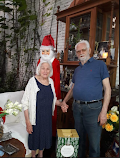

@NATAL 2017
SPACE EXPLORATION
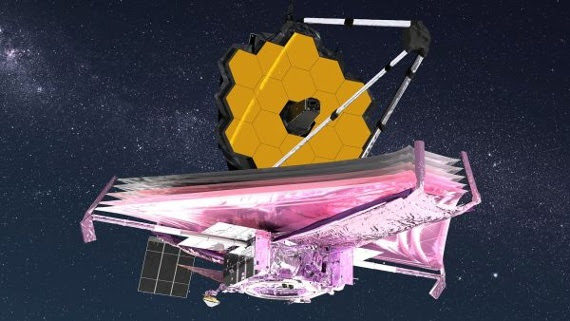
How to watch the James Webb telescope launch into space
(NASA GSFC/CIL/Adriana Manrique Gutierrez)
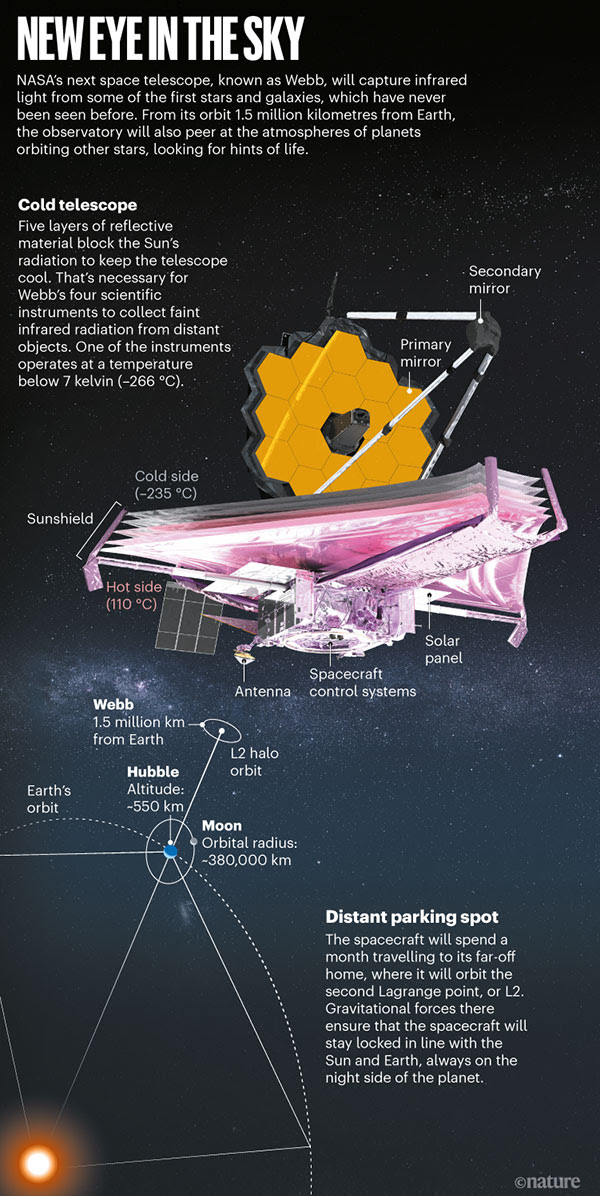
On Friday (Dec. 24) at 7:20 a.m. EST, a shiny new observatory called the James
Webb Space Telescope (JWST) is scheduled to ride a rocket launching from South America. Once aloft, the space telescope will take its place in orbit as humanity's
newest and most powerful eye in the sky, scanning the cosmos for signs of the
earliest galaxies, newborn and ancient stars, and even life in distant solar systems.

Live launch coverage in English begins on Dec. 24 at 6 a.m. EST. You can watch the launch here at Live Science, on NASA's YouTube channel and NASA TV, and on the agency's website and social media accounts. Spanish language coverage will begin
at 6:30 a.m. EST on the NASA en español's YouTube account and on NASA's
website, NASA representatives said on Saturday (Dec. 18) in a statement.

You can also check in at our sister site Space.com all week, to catch the latest
updates leading up to the Dec. 24 launch.
 Full Story: Live Science (12/21) 
LinkedIn Twitter Facebook Email
MATH & PHYSICS
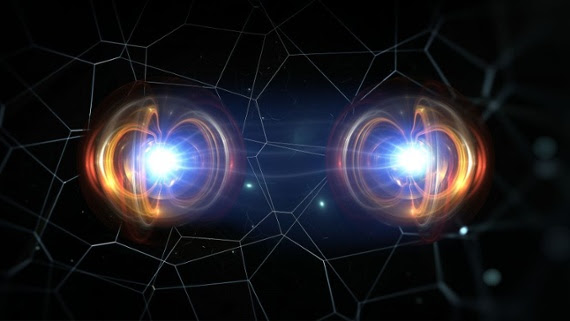
Imaginary numbers could be needed to describe reality, new studies find
(Jurik Peter via Shutterstock)
Imaginary numbers are necessary to accurately describe reality, two new studies
have suggested.

Imaginary numbers are what you get when you take the square root of a negative
number, and they have long been used in the most important equations of quantum mechanics, the branch of physics that describes the world of the very small. When
you add imaginary numbers and real numbers, the two form complex numbers,
which enable physicists to write out quantum equations in simple terms. But
whether quantum theory needs these mathematical chimeras or just uses them as convenient shortcuts has long been controversial.
 Full Story: Live Science (12/21) 
LinkedIn Twitter Facebook Email
Frozen tardigrade becomes first 'quantum entangled' animal in history, researchers claim
(STEVE GSCHMEISSNER/SCIENCE PHOTO LIBRARY/Getty Images)
Tardigrades — those microscopic, plump-bodied critters lovingly known as "moss
piglets" — have been put through the ringer for science. The amazingly durable
creatures have been shot out of guns, bathed in boiling-hot water, exposed to
intense ultraviolet radiation and even (accidentally) crash-landed on the moon,
all to test the limits of their impressive "tun" state — a survival mechanism
wherein tardigrades curl up into shrunken, dehydrated balls and suspend their
biological functions indefinitely in order to endure extreme environmental conditions.

Now, researchers have exposed tardigrades to the coldest temperatures and
highest pressures that moss piglets have ever survived — not just to test the
critters' biological limits, but also to see whether a frozen tardigrade could be
incorporated into two quantum entangled electric circuits, then later revived to
its normal active state.
 Full Story: Live Science (12/20) 

#
 

COMPUTER SCIENCE, MATHEMATICS

The Year in Math and Computer Science

By BILL ANDREWS
Mathematicians and computer scientists answered major questions in topology, set theory and even physics, even as computers continued to grow more capable.

Read article

#IPS NEWS

First came sugar. For four centuries, it was the main sugarcane product in Brazil. But since the 1970s sugarcane has grown and diversified as a source of energy: ethanol, electricity and biogas. “Sugarcane is the green oil,” said André Alves da Silva, commercial and new products director of Cocal, as the company Comércio Indústria Canaã […]


A History of Disruption, From Fringe Ideas to Social Change
David Potter, Aeon
Major disruptions in world history follow a clear pattern. What can upheavals of the past tell us about our own future?

What Would The Ideal Hospital Look Like?

If your imagination could run wild, how would you envision the future of hospitals? We checked what's also possible.

How Christmas Has Evolved Over Centuries
Erin Blakemore, National Geographic
People around the world celebrate the birth of Jesus Christ on December 25. Here’s why—and the history of its iconic symbols from Christmas trees to Santa Claus.

#NYTimes
The  Space Telescope is scheduled to launch on Christmas Eve after years of delay. Dennis Overbye looks at the history of this mission, which is the successor to the Hubble Space Telescope, and what it might discover: “Webb Telescope Prepares to Ascend, With an Eye Toward Our Origins”
The James Webb Space Telescope, with its five-layer sunshield, deployed in a facility at Northrop Grumman in Redondo Beach, Calif., last year.
 Chris Gunn/NASA

More about the Webb Space Telescope and the birth of the universe:

Why the World’s Astronomers Are Very, Very Anxious Right Now. The James Webb Space Telescope is endowed with the hopes and trepidations of a generation of astronomers.

The Webb Telescope’s Latest Stumbling Block: Its Name. The long-awaited successor to the Hubble Space Telescope is scheduled to launch in December. But the NASA official for whom it is named has been accused of homophobia.

When the Big Bang Was Just a Theory. In “Flashes of Creation,” Paul Halpern offers a dual biography of George Gamow and Fred Hoyle, two midcentury physicists who debated the origins of the universe.

Why the Big Bang Produced Something Rather Than Nothing. How did matter gain the edge over antimatter in the early universe? Maybe, just maybe, neutrinos.

In Praise of Lumpy Gravy From the Cosmic Kitchen. Without that texture, there’d be none of us.

#TOP SCIENCE NEWS


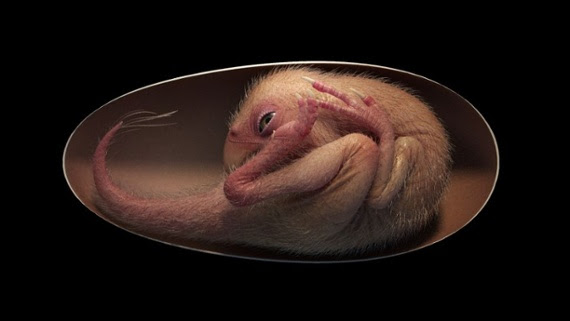
About 70 million years ago, a wee ostrich-like dinosaur wriggled inside its egg, putting itself into the best position to hatch. But that moment never came; the embryo,
dubbed "Baby Yingliang," died and remained in its egg for tens of millions of years, until researchers found its fossilized remains in China.

Researchers have discovered many ancient dinosaur eggs and nests over the past
century, but Baby Yingliang is one of a kind. "This skeleton is not only complete from
the tip of the snout to the end of its tail; it is curled in a life pose within its egg as if the
animal died just yesterday," said study co-researcher Darla Zelenitsky, an assistant
professor of paleontology at the University of Calgary in Alberta, Canada.
 
Full Story: Live Science (12/21) 

Sunday, December 12, 2021

3.061 - AMICoR (24)

 3.061 - AMICOR (24) 

#Dra. Valderês A. R. Achutti (*13/06/1931+15/06/2021)

Navegando...
#ScienceNews

For 50 years, CT scans have saved lives, revealed beauty and more

In 1971, the first CT scan of a patient laid bare the human brain. That was just the beginning of a whole new way to view human anatomy.Read More

Plastics, transistors and other material innovations made modern life

From our homes and cities to our electronics and clothing, the stuff of daily life is
dramatically different from decades ago.
Read More

These are Science News’ favorite books of 2021

Our favorite books covered the Big Bang theory, human evolution, gene editing, how to define life, pseudoscience and more.Read More

#Maria Popova

The Scar: A Tender Illustrated French Meditation
on Loss and Healing

I know only three side-doors to the cathedral of consciousness, through which
we can bypass the bewildered mind to enter the heart of the most unfathomable,
shattering, and universal human experiences, emerging a little more whole:
poetry, children’s books, and Bach.

No human experience is more shattering than the vanishing of a loved one
into “the drift called ‘the Infinite,'” in Emily Dickinson’s haunting phrase
 — especially a parent, and especially if one is still a child when the unfeeling
hand of chance smites./.../

#CREMERS

Abertas inscrições para o curso de
Doutoramento em Bioética

O curso do Programa de Doutoramento em Bioética será realizado por
meio de convênio estabelecido entre o Conselho Federal de Medicina
(CFM) e a Faculdade de Medicina da Universidade do Porto (FMUP),
em Portugal.
O doutorado tem duração de três anos, sendo que um dos módulos
exige aulas presenciais na faculdade portuguesa, previstas para
outubro de 2022. Os demais acontecem na sede do CFM, em Brasília.
São oferecidas 25 vagas, e as inscrições já estão abertas,
estendendo-se até o dia 2 de janeiro de 2022. 
Podem inscrever-se no processo seletivo candidatos que tenham
diploma de Medicina em curso reconhecido pelo MEC, com inscrição
no CRM e residentes em qualquer estado do Brasil.
As normas do processo seletivo, para o preenchimento
das vagas, podem ser acessadas no edital de seleção,
no link: https://doutorado.cfm.org.br/.

#TED

16 planet-friendly gift ideas, recommended by TED speakers


We asked 16 TED speakers to share their Earth-friendly gift recommendations --
and here's their green gift list. 

Read more »


#Nature

June Lindsey, seen at the age of 96, played a key role in the discovery of the DNA double helix, but she was never formally recognized for her work. Lindsey died in Ottawa earlier this month at the age of 99.

June Lindsey, a forgotten pioneer of DNA

In the story of the discovery of DNA, alongside Rosalind Franklin,
there was another X-ray crystallographer whose contribution has
been widely neglected: June Lindsey
. Born June Broomhead, she
discovered the structure of adenine and guanine — a key part of
solving the DNA double-helix puzzle. In 1945, Lindsey joined the
legendary Cavendish Laboratory at the University of Cambridge,
UK. “I think she had the best time of her life,” says her daughter
Jane. That’s where DNA co-discoverer James Watson consulted
Lindsey’s thesis, which sparked a new understanding of the
makeup of the molecule of life.

Lindsey is the latest woman to be featured in Chemistry World’s
‘Significant Figures’ series, thanks to Briefing reader Alex MacKenzie. He wrote to us after we featured the edition about chemist Julia Lermontova, and I passed his
comments on to Chemistry World. Lindsey died in November, at
the age of 99, but in March MacKenzie wrote that Lindsey was
“still with us, living in a retirement home in Ottawa, lucid and clear
eyed, she remains a delight”. As he said in a previous interview,
“I would love, ultimately, for her to be known.”

Chemistry World | 9 min read
New eye in the sky: Infographic that shows the Webb telescope and it's sunshield, and it's orbital location in relation to Earth

#Museu da História da Medicina
A partir de publicação do Dr. Valério Garcia, colega de turma
(Med1960) da Dra. Valderês, cujo falecimento ocorreu há seis meses


#ASRM
14 dezembro 18 horas
Link da reunião: https://us02web.zoom.us/j/85639397843
ID da reunião: 856 3939 7843


 SECRETÁRIA DA ACADEMIA SUL-RIO-GRANDENSE DE MEDICINA 
                                             Tel.: (51) 3217-0666 / (51) 995025863
                                           Site: www.academiademedicinars.com.br

#Hospital Moinhos de Vento


#Vera Elisabeth Verissimo (lançamenos recentes)
Ganhei hoje, da Autora. Obrigado!


#

COSMOLOGY | ALL TOPICS


Cosmologists Parry Attacks on the Cosmological Principle

By CHARLIE WOOD

A central pillar of cosmology — the universe is the same everywhere and in all directions — is surviving a storm of possible evidence against it.

Read the article

COMBINATORICS


Oxford Mathematician Advances Century-Old Combinatorics Problem

By ERICA KLARREICH

A new paper shows how to create longer disordered strings than mathematicians had thought possible, proving that a well-known recent conjecture is “spectacularly wrong.”

Read the article

QUANTIZED COLUMNS


What Does It Mean
for AI to Understand?

By MELANIE MITCHELL

Language models can generate uncannily humanlike prose (and poetry!) and seemingly perform sophisticated linguistic reasoning. How can we test if these machines actually understand what they’re doing?

Read the column
 

Q&A


When a Gene Illness Discovery Means Breaking Bad News

By RACHEL CROWELL

When scientists discover genes linked to dangerous illnesses in their samples, how should they convey that news to the study participants? The geneticist Cristen Willer had to tackle that challenge.

Read the interview

Related: 
Karen Miga Fills In the Missing
Pieces of Our Genome

by Carrie Arnold

Around the Web

Rebalancing Ocean Carbon
Removing carbon dioxide from our atmosphere is critical to fighting climate change. Equally important is its removal from our oceans, as Scott K. Johnson reports for Ars Technica
One key to removing CO2 from the ocean is fighting ocean acidification. In 2019, Christie
Wilcox wrote for Quanta about how dead creatures on the sea floor can help maintain a
healthy pH.

Be Chill but Don't Freeze
Researchers managed to keep water in its liquid form down to -47.2 degrees Fahrenheit, Ashley Hamer reports for Live Science. Water’s phase diagram is vastly more complicated than textbooks usually describe. Not only can it be a frigid liquid, but it can also be a sweltering solid. In 2019, Joshua Sokol wrote for Quanta about “superionic ice,” water ice with a temperature of thousands of degrees.
The Algorithm That (Recently) Changes the World


Kwame Anthony Appiah
Digging for Utopia

In The Dawn of Everything David Graeber and David Wengrow search for historical examples of nonhierarchical societies to justify their anarchist vision of human freedom. But must we find our future in the past?

Lawrence 

Lawrence Lessig
Why the US Is a Failed Democratic StateThe self-governing republic works only if it expresses the will of the majority. But one party is now committed to minoritarian rule by any means.