Translate AMICOR contents if you like

Saturday, October 21, 2023

3.159 AMICOR (26)

 3.159 AMICOR (26) 

#Com a Dra. Valderês A. Robinson Achutti (*13/06/1931+15/06/2021)


Na portaria do Hotel em Beijing no século passado...

#Republicando Artigos antigos meus

ZH 18 de outubro de 2012 | N° 17226

Pensando Medicina, por Aloyzio Achutti *

Cada vez mais se fala em saúde, longevidade, remédios, prevenção de doenças, diagnósticos, curas, aparelhos, custo-benefício, acesso a serviços e planos de saúde e hospitais. Fala-se pouco do operador de tudo isso. Só é percebido quando falha, ou não atende às fantasias da clientela. Muito do milagre, e pouco do santo...

De fato, por iniciativa dos próprios médicos, descobriram-se muitos meios, ciência, técnicas, instrumentos, profissões auxiliares, com os quais se impõe compartilhar os resultados. Tudo ficou mais complexo e mais caro. O médico é elemento essencial, embora permaneça o mais barato, e não seja o único responsável. Ficou evidente a necessidade da especialização, da organização institucional, dos mecanismos de financiamento, de infraestrutura, mas, na hora da aplicação de toda essa riqueza de recursos ao indivíduo, é imprescindível o papel do profissional da medicina.

As opções são várias e muitas vezes conflitantes. Os interesses são múltiplos e nem sempre voltados exclusivamente para o cliente. As causas das causas das doenças em geral não são tão ostensivas, estão entrelaçadas, e em cadeias que frequentemente terminam nas condições sociais e de vida, fora do alcance das ciências e das técnicas para as quais os médicos foram treinados.

Certamente, a prevenção é fundamental, mas não se pode comprometer cegamente o presente tendo em vista um futuro incerto. Uma das características de nosso tempo é a insegurança motivada pelo clima de terrorismo, e pela sua exploração mercadológica. É preciso não cair na tentação mesmo com “bons pretextos”, pois o estresse provocado pode ser tão nocivo quanto o mal que se pretende evitar. Embora 2,5 mil anos nos separem, vale pensar na recomendação platônica, de não proceder à cura enquanto o paciente não estiver convencido.

Para convencer, é preciso estabelecer vínculo, confiança, conhecimento mútuo, tempo e seguimento. Não dá para fazer medicina em escala industrial, nem só por aparelhos. Saúde exige perspectiva populacional e política para chegar à raiz dos problemas. Entretanto, não se pode esquecer que a população é formada de pessoas que precisam ser consideradas individualmente pelo médico, que pode ajudar a resolver o que se esconde na interface, pois é do relacionamento entre os indivíduos (e seu meio) que se estruturam nossas cidades e nossa sociedade humana.

*MÉDICO

#Passeata dos Bichos de 1953…
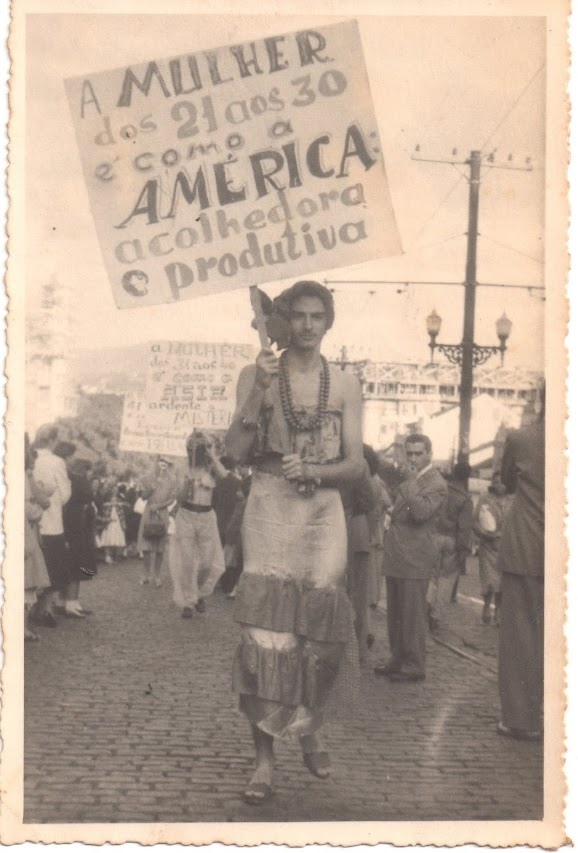
Na semana passada tive um feliz encontro virtual com meu eminente colega de turma (1958), Professor Eduardo Beck Paglioli, que mencionou ter participado do mesmo desfile onde eu me apresentei travestido de América, na então avenida 10 de Novembro, hoje Salgado Filho

#Novo livro em Santa Maria por Leoniza M.Vilarino
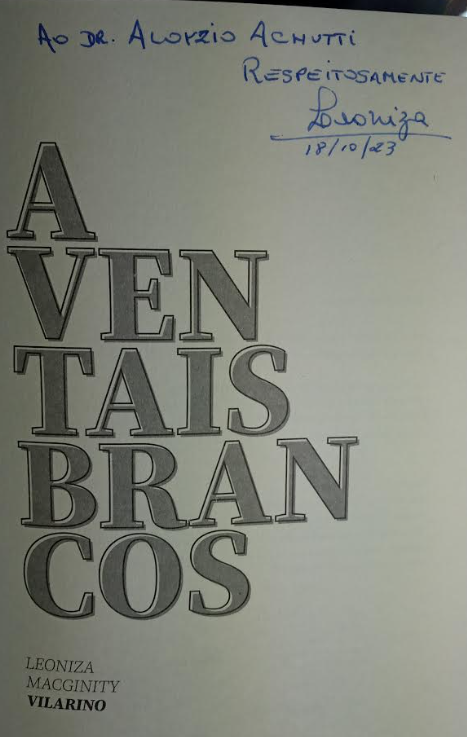
Através do meu primo José Antônio Brenner, soube do lançamento de publicação contando histórias de médicos de minha terra natal. Meus agradecimentos à autora.

#JAMA

Loneliness and Risk of Parkinson Disease

Antonio Terracciano, PhD1; Martina Luchetti, PhD2; Selin Karakose, PhD1; et al

https://jamanetwork.com/journals/jamaneurology/fullarticle/2809774?guestAccessKey=ffcfffc9-48e8-4bba-b8de-01e83f1ed0b5&utm_source=silverchair&utm_medium=email&utm_campaign=article_alert-jamaneurology&utm_term=mostread&utm_content=olf-widget_10162023&adv=000002041439#supplemental-tab

Conclusions and Relevance  This large cohort study found that loneliness was associated with risk of incident PD across demographic groups and independent of depression and other prominent risk factors and genetic risk. The findings add to the evidence that loneliness is a substantial psychosocial determinant of health.


#Our World in Data

Our recent publications

We’ve launched a major redesign of our interactive data visualizations

Interactive data visualizations are at the heart of our work. The Our World in Data “Grapher” is the software we’ve developed in-house to let you, our readers, explore and visualize data. It powers all the interactive charts on our website.

You can also find our Grapher charts elsewhere, such as embedded in news articles or other websites; reusability is at the core of its design.


Maintaining and improving this software is a significant part of our team’s work. But the latest round of changes marks a more substantial and concerted effort over the past few months to rethink and improve the layout and functionality of our charts.

In this article, we show the changes we’ve made and talk about why we made them, our plans to improve things further, and how you can help.
We’re hiring our first Communications & Outreach Manager

We’re looking for a Communications & Outreach Manager to join our team. This role will be pivotal in helping us achieve our mission to increase the use of data and research to make progress against the world’s largest problems.

The role will include overseeing our current communication channels — including this newsletter — while developing and executing innovative strategies to broaden our reach and ensure our work reaches the right audiences.

Explore our featured work

Guinea worm disease is close to being eradicated — how was this progress achieved?

Guinea worm disease is a painful and debilitating disease that was once common in Asia, the Middle East, and many countries in Africa. In 1989, almost 900,000 cases were recorded globally.

In 2022, the number of cases had fallen to just 13. Guinea worm disease is now close to being eradicated.

Although there is no vaccine, this much progress has been possible because we know how to prevent the disease's spread: by preventing people from drinking contaminated water. The eradication program has therefore focused on water treatment and filtration, public education, and providing safe sources of drinking water.

In this article, we explain what guinea worm disease is, which countries have eliminated it, and the challenges that remain to eradicate the disease once and for all.
How many animals get slaughtered every day?
How does the land use of different electricity sources compare?

#

QUANTUM COMPUTING | ALL TOPICS


The Quest to Quantify Quantumness

By CHARLIE WOOD

What makes a quantum computer more powerful than a classical computer? It’s a surprisingly subtle question that physicists are still grappling with, decades into the quantum age.

Read the article

QUANTUM COMPUTING


Thirty Years Later, a Speed Boost for Quantum Factoring

By BEN BRUBAKER

Shor’s algorithm will enable future quantum computers to factor large numbers quickly, undermining many online security protocols. Now a researcher has shown how to do it even faster.

Read the article


Related: 
What Makes Quantum
Computing So Hard to Explain?

By Scott Aaronson (2021)

NEUROSCIENCE


These Cells Spark Electricity in the Brain. They’re Not Neurons.

By LAURA DATTARO

Researchers have long debated whether brain cells called astrocytes can signal like neurons. A recent study provides the best evidence yet that some astrocytes are part of the electrical conversation.

Read the blog


Related: 
Glial Brain Cells, Long in Neurons’
Shadow, Reveal Hidden Powers

By Elena Renken (2020)

OBITUARY


The Mathematician Who Sculpted the Shape of Space

By STEVE NADIS

Eugenio Calabi, who died on September 25, conceived of novel geometric objects that later became fundamental to string theory.

Read the obituary


Related: 
The Strange Second Life of String Theory

By K.C. Cole (2016)

Around the Web

A Fine Transition
Clocks based on nuclear transitions are better protected against environmental disruptions than atomic clocks based on electronic transitions are. They could make advanced timekeeping more than a trillion times as precise, reports Kenna Hughes-Castleberry for Scientific American. The world’s best atomic clocks lose only one second after running for 100 million years, an accuracy that has enabled physicists to sense differences in time’s passage within a single cloud of atoms, as Katie McCormick reported for Quanta in 2021. Nuclear clocks will do even better.

Flight Control
Some flying insects flap their wings synchronously, while others have independent control of each wing. That difference is inspiring new designs for flying robots, reports Rupendra Brahambhatt for Ars Technica. Engineers are also learning from studies of how birds fly. In 2022, Yasemin Saplakoglu wrote for Quanta about new insights into the biomechanics of birds.
Quanta is conducting a series of surveys to better serve our audience. Take our newsletter subscriber survey and you will be entered to win free Quanta merchandise.

#Wanyce M. Robinson+
Os familiares da Professora Doutora WANYCE MIRIAM ROBINSON convidam para a missa de trigésimo  dia do seu falecimento, a ser celebrada no dia 21/10/2023, sábado, às 16 horas, na Igreja Santa Terezinha , na Av. José  Bonifácio,  645  em Porto Alegre.

As duas irmãs, enquanto ainda estavam por aqui...

#JAMA October 16, 2023
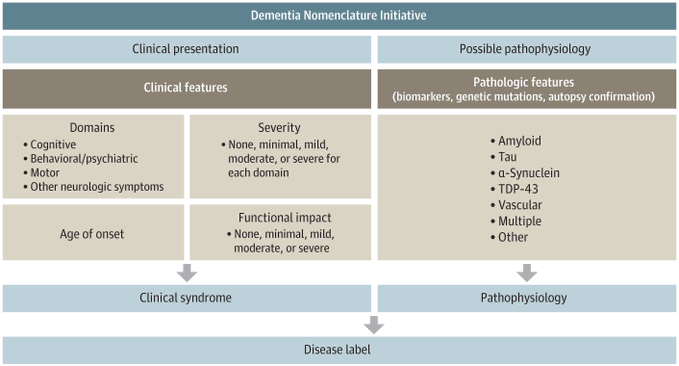
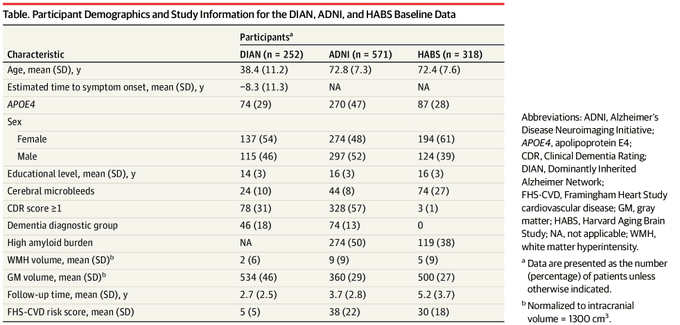
A New Framework for Dementia Nomenclature

Ronald C. Petersen, MD, PhD1; Sandra Weintraub, PhD2; Marwan Sabbagh, MD3; et al

Conclusions and Relevance  The Dementia Nomenclature Initiative established a framework to guide communication about cognitive impairment among
older adults. Wider testing and refinement of the framework will subsequently improve the information used in communicating
about cognitive impairment and the way in which the information is used in clinical, research, and public settings.
#Política Internacional

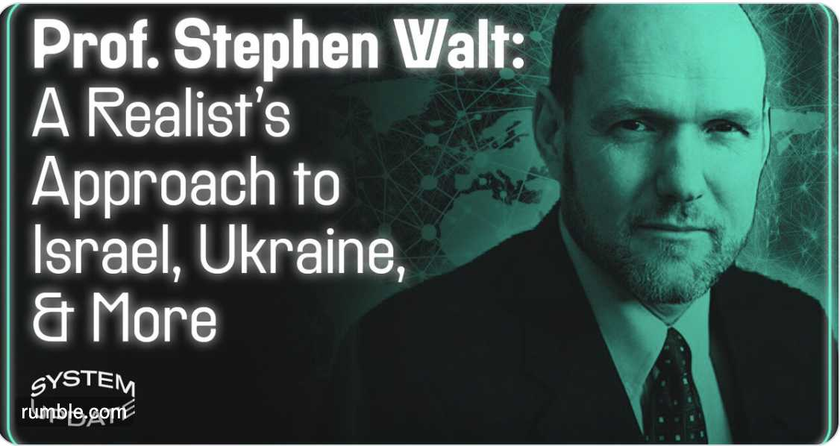
Recomendado pela AMICOR Maria Inês Reinart Azambuja

Harvard Prof. Stephen Walt Dissects US Foreign Policy: Israel/Gaza, Ukraine, Iran, China, BRICS, & More 

#Academia Sul-Riograndense de MEDICINA

SESSÃO CULTURAL, dia 17/10, às 18h, em formato virtual, pelo GOOGLE MEET.

A apresentação estará a cargo do Dr. José Pio Rodrigues Furtado, cirurgião, Professor e autor de inúmeros livros. Tema: "Médicos Escritores". Link de acesso:  http://meet.google.com/hhf-oada-eqp ID: hhf oada eqp

#BBC

Planet Earth III

Saturday, October 14, 2023

3.158 - AMICOR (26)

 3.158 - AMICOR (26) 

#Com Dra. Valderês A. Robinson Achutti (*13/06/1931+15/06/2021),
Dr. Jair Soares, eu e outros, em 1979, em Brasília, durante o 35o CBC

No corrente ano, há duas semanas, aqui em Porto Alegre, aconteceu o 78o. Congresso da SBC

#Artigos antigos de minha autoria

DECLARAÇÃO DE GUERRA (Artigo de 16/02/2007)

Aloyzio Achutti. Membro da Academia Sul-riograndense de Medicina.

            Stalin teria dito que “uma morte isolada é uma tragédia enquanto que mais de um milhão passa a ser mera estatística”. Olhando ao contrário, em conseqüência da segunda guerra mundial, por exemplo, as tragédias individuais não podem ser avaliadas pelo registro estatístico de cerca de 40 milhões de pessoas mortas em todo o mundo!
            Nós médicos ao atender moribundos e famílias que perdem seus entes queridos, lidamos todo o dia com tragédias, o que nos dificulta amontoa-las aos milhares ou aos milhões. É provável que por aí esteja uma das dificuldades de fazer com que clínicos pensem em termos de saúde pública, onde a perspectiva precisa ser coletiva.
            Para controlar doenças que afetam milhões de pessoas entretanto, não basta saber apartar a briga corpo a corpo de um indivíduo com a moura torta, é preciso muitas vezes pensar como um estrategista, lidar com estatísticas e juntar tanto poder quanto for necessário para a defesa da população.
            Existem guerras declaradas como foi a segunda mundial e muitas outras não tão explícitas, continuadas, torpes, viradas meras estatísticas, às quais nos acostumamos. Aí estão a miséria e a ignorância consentidas, a destruição ecológica, o “apartheid”, os meninos de rua, a promoção de drogas nocivas e substâncias que causam dependênca, etc...
            Dr Bernard Lawn de Boston, junto com um colega Russo ganhou o premio Nobel da Paz na década de 80, por ter liderado o movimento dos médicos contra a guerra nuclear, denunciando os preparativos da guerra nas estrelas que poderia nos ter levado a uma tragédia com proporções estatísticas incalculáveis. Desarmadas (nem tanto) as grandes potências da época, Dr. Lawn prosseguiu seu movimento humanitário pela saúde principalmente nos países em desenvolvimento, promovendo uma rede cibernetica mundial de comunicação, informação e troca de experiências, e escolheu o tabagismo como prioridade no lugar da guerra tradicional.
            Atribui-se ao consumo do cigarro cera de 3 milhões de mortes por ano em todo o mundo, ou estatísticas semelhantes às da segunda guerra mundial há cada 10 anos, sendo que 2/3 delas em países em desenvolvimento. Por este motivo e por ser o tabagismo a maior causa de doença e morte prevenivel no mundo de hoje, que a recém eleita nova diretora da Organização Mundial da Saúde, Dra. Gro H. Brundtland,  o escolheu como uma das prioridades na luta por melhor saúde mundial.
            Ouvi de um economista à testa de nosso Ministério da Saúde, Dr. José Serra, que para a indústria, o viciado no tabaco, não passa de uma maço a mais de cigarro a ser vendido. Com a coragem que não tenho tido oportunidade de ver em muito sanitarista, afirmou que a causa do tabagismo estava na indústria que gasta mais na promoção do vício do que no insumo necessário para produzir o cigarro. Disse também que como economista acostumado a fazer cálculos que levam em conta também as “deseconomias externas” (spill over), não podia aceitar a afirmação de que a abolição do tabagismo pudesse afetar negativamente a economia global do país.
            Disse nosso Ministro, que não é o viciado que consome o cigarro, mas o cigarro que vai consumindo lentamente o fumante. Apresentou também um programa de controle abrangente, envolvendo educação, medidas econômicas, fiscais e legislativas, dizendo estar, junto com  nosso Presidente, dispostos a enfrentar o desgaste das medidas impopulares (ao menos para a minoria dos fumantes e para o poder do complexo fumageiro).
            O economista e político, (confesso que no início o ouvi com um certo preconceito por não ser ele profissional da área da saúde), com a perspicácia de um estrategista, responsável pela política nacional de saúde, concluiu seu discurso dizendo que a guerra estava declarada! 


#HISTORY

HOJE NA HISTÓRIA

Cristóvão Colombo chega à América

POR HISTORY CHANNEL BRASIL EM 04 DE OUTUBRO DE 2019 ÀS 22:29 HS

#HMV


Em nossos corações está um sentimento de gentileza, cuidado e a força para mover sonhos. Vamos ver o mundo com mais simplicidade e abraçar a vida com alegria. Não deixe que a criança dentro de você cresça totalmente, pois ela é fonte de aprendizado, inovação e felicidade. Com esse olhar, vamos Redefinir a saúde no Brasil.

#The New York Times
(Enviado pela AMICOR Maria Inês Reinart Azambuja)

Here’s why we appear to be getting cooler, and what that could mean when it comes to fevers.

Credit...Pete Gamlen Dana G. Smith
Over the past few decades, evidence has been mounting that the average human body temperature is not really 98.6 degrees Fahrenheit. Instead, most people’s baseline is a little bit cooler.

The standard of 98.6 was established over 150 years ago by the German physician Dr. Carl Wunderlich, who reportedly took over a million measurements from 25,000 people. Temperatures ranged from 97.2 to 99.5, and the average was 98.6. Dr. Wunderlich also established 100.4 degrees as “probably febrile.”

However, a study published in September that evaluated the temperatures of more than 126,000 people between 2008 and 2017 found that the average is closer to 97.9 degrees. Other modern-day studies have reported similar numbers./.../


How ‘Ugly’ Fruits and Vegetables Can Help Solve World Hunger

About a third of the planet’s food goes to waste, often because
of its looks. That’s enough to feed two billion people.

Every year some 2.9 trillion pounds of food—about a third of all that the world produces—
never get consumed. Along the supply chain fruits and vegetables are lost or wasted at
higher rates than other foods. Easily bruised and vulnerable to temperature swings en
route from farm to table, they’re also usually the first to get tossed at home.
FOOD LOSS
Lost during production and processing
Agriculture
Postharvest
Processing
FOOD WASTEDistribution
Consumption
CEREALS
5.7%
13.7%
29.1%
ROOTS AND TUBERS
15.4%
11.1%
10.2%
46.2%
OILSEEDS AND PULSES
8.5%
5.9%
22.1%
FRUITS AND VEGETABLES
14.4%
6.9%
8.5%
7.1%
8.8%
45.7%
MEAT
7.1%
21.5%
FISH AND SEAFOOD
10.8%
6.3%
9.3%
5.2%
34.7%
DAIRY PRODUCTS
5.5%
17.1%
CHIQUI ESTEBAN, MANUEL CANALES, NG STAFF; TONY SCHICK  -  SOURCE: FAO

#QuantaMagazine

LANGLANDS PROGRAM | ALL TOPICS


Echoes of Physics Found in Number Theory

By KEVIN HARTNETT

A new magnum opus posits the existence of a hidden mathematical link akin to the connection between electricity and magnetism.

Read the article

CHRONOBIOLOGY


In Our Cellular Clocks, She’s Found a Lifetime of Discoveries

By VERONIQUE GREENWOOD

For decades, Carrie Partch has led pioneering structural research on the protein clockwork that keeps time for our circadian rhythm. Is time still on her side?

Read the article | Watch the video


Related: 
The Body’s Clock Offers
a Rhythmic Target to Viruses

By Veronique Greenwood (2019)

FOUNDATIONS OF MATHEMATICS


The Deep Link Equating Math Proofs and Computer Programs

By SHEON HAN

The Curry-Howard correspondence establishes a link between mathematical proofs and computer programs. Learn how that connection works.

Read the explainer


Related: 
Proof Assistant Makes
Jump to Big-League Math

By Kevin Hartnett (2021)

CONDENSED MATTER PHYSICS


Invisible ‘Demon’ Discovered in Odd Superconductor

By CHARLIE WOOD

Physicists have long suspected that hunks of metal could vibrate in a peculiar way that would be all but invisible. Now physicists have spotted these “demon modes.”

Read the blog


Related: 
The Near-Magical Mystery
of Quasiparticles

By Thomas Lewton (2021)

QUANTA SCIENCE PODCAST


JWST Spots Giant Black Holes All Over the Early Universe

By CHARLIE WOOD;
Podcast hosted by SUSAN VALOT

Giant black holes were supposed to be bit players in the early cosmic story. But recent James Webb Space Telescope observations are finding an unexpected abundance of the beasts.


Listen to the podcast

Read the article

Around the Web

Pretty Deep
More than 125 million years ago, porous volcanic rock in Earth’s crust slurped up a sea’s worth of water, creating a giant subterranean reservoir, reports Sascha Pare for Live Science. This isn’t the only water beneath our feet. Massive oceans reside even farther down, inside Earth’s mantle. In 2018, Marcus Woo wrote for Quanta about the subterranean oceans and the water-bearing minerals produced there.

Perception Without Penalties
A new study suggests that soccer goalkeepers can perceive events more precisely than other players can. In tests, the keepers were better able to discern small differences in the timing between visual and audio cues, reports Linda Geddes for The Guardian. A possible explanation for the keepers’ heightened perception is that they developed it through practice. In 2020, Quanta featured an essay by the late neurobiologist Richard Masland about how our malleable senses can be rewired by our experiences.