This Blog AMICOR is a communication instrument of a group of friends primarily interested in health promotion, with a focus on cardiovascular diseases prevention.
To contact send a message to
achutti@gmail.com
http://achutti.blogspot.com
In older patients with diabetes, use of metformin was linked with slower cognitive decline and reduced risk of dementia, according to a prospective observational /.../study.
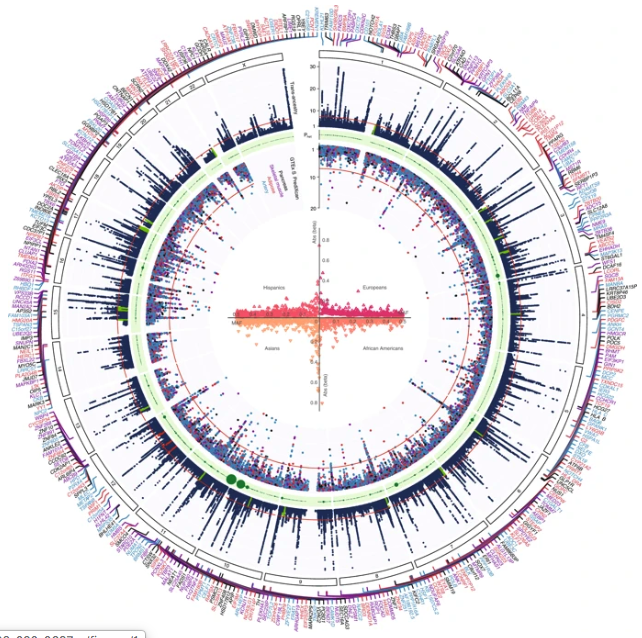
Discovery of 318 new risk loci for type 2 diabetes and related vascular outcomes among 1.4 million participants in a multi-ancestry meta-analysis (Vujkovic et al.) https://go.nature.com/3e2QmYc
For the first time, antihyperglycemic therapies are available to modify cardiovascular disease courses in type 2 diabetes . Two therapeutic classes (sodium-glucose cotransporter inhibitors and glucagon-like peptide-1 receptor agonists) are now recognized to be associated with multisystem health and reductions in cardiovascular and kidney outcomes. Despite the ongoing expansion of the evidentiary base supporting their use and the broadening of regulatory labels of select sodium-glucose cotransporter inhibitors and glucagon-like peptide-1 receptor agonists, their prescription has been largely restricted to primary care physicians and endocrinologists.1,2 Primary care physicians treat approximately 90% of individuals with type 2 diabetes nationally.3 However, high-risk patients with type 2 diabetes commonly encounter various internal medicine specialists because of high rates of comorbidities and clinical events.4 We therefore characterized the distribution of internal medicine specialists in the United States who may be able to provide care for the growing population with diabetes.
The FDA approved dapagliflozin (Farxiga) to reduce heart failure (HF) hospitalization risk in adults with type 2 diabetes at elevated risk due to established cardiovascular disease or multiple risk factors for it, AstraZeneca announced.
Dapagliflozin is the first selective inhibitor of sodium-glucose cotransporter 2 (SGLT2) to gain that particular supplemental indication.
Just last month, SGLT2 inhibitor canagliflozin (Invokana)got an indication to reduce HF admissions and other cardiovascular events among type 2 diabetes patients with diabetic kidney disease.
Dapagliflozin's new indication was based on the DECLARE-TIMI 58 trial. Although the trial missed the primary endpoint for major adverse cardiovascular events, it met the other by reducing risk of cardiovascular death or hospitalization for heart failure by 17% versus placebo -- driven entirely by HF admission reduction./.../
What to know about glycosuria Glycosuria is where the urine contains more blood sugar (glucose) than usual. Diabetes and kidney disease can cause glycosuria. Learn about the causes, symptoms, and treatments here.
A gestão 2018-2019 da Sociedade Brasileira de Diabetes manifesta sua grande satisfação por conta da aprovação da incorporação definitiva das insulinas de ação prolongada no Sistema Único de Saúde (SUS). Esta é, sem dúvidas, mais uma batalha que foi ganha por seus membros, que vêm lutando de forma contínua, persistente e otimista para obter uma melhoria das condutas terapêuticas, visando transformar a vida de pessoas com diabetes do país.
Estendo os parabéns a todos da SBD, em especial, aos integrantes do Departamento de Diabetes Tipo 1 sob a coordenação de Dra. Monica Gabbay, à Dra. Karla Melo e Dra. Luciana Bahia, pela assistência direta à Presidência nos encaminhamentos técnico-científicos e reuniões em Brasília; à SBEM, pela parceria inconteste e às associações de pessoas com diabetes: ADJ e FENAD.
Mais ainda, cumpre agradecer ao staff do Ministério da Saúde, com destaque para a SCTIES, cujos membros se sensibilizaram com as sugestões e posições apresentadas pela Sociedade ao Protocolo Clínico e Diretriz Terapêutica (PCDT) para a insulina de ação prolongada inclusive, em tempo muito mais curto do que as insulinas de ação rápida.
A SBD está extremamente feliz com essa conquista, que é de fato, de todas as pessoas com diabetes do Brasil!