
NEW BLOG by
| Reminiscing a life at the World Bank. Thank you Patricio for your passion and dedication
Showing posts with label Global Health. Show all posts
Showing posts with label Global Health. Show all posts
Tuesday, July 30, 2019


Sunday, June 09, 2019
Legal Determinants of Helath
Legal determinants of health: facing global health challenges
Published:April 30, 2019DOI:https://doi.org/10.1016/S0140-6736(19)30808-6
Law is crucial for protecting the health and wellbeing of society. Robust legal systems strive to create a society that is fair. Laws influence every aspect of society and health, from regulating individual lives to stipulating expected behaviours of individuals, states, and corporate entities.
Today, The Lancet publishes the report of the Lancet–O'Neill Institute Commission on Global Health and Law, The legal determinants of health: harnessing the power of law for global health and sustainable development.
Initiated in 2015, the Commission was led by Lawrence Gostin and John Monahan of the O'Neill Institute for National and Global Health Law, Georgetown University, Washington, DC, USA, and convened experts from health, governance, and law to examine the central role of law in responding to global health and to define the legal determinants of health.
Initiated in 2015, the Commission was led by Lawrence Gostin and John Monahan of the O'Neill Institute for National and Global Health Law, Georgetown University, Washington, DC, USA, and convened experts from health, governance, and law to examine the central role of law in responding to global health and to define the legal determinants of health.
Sunday, April 14, 2019
Global Health
Sugestão da AMICOR Maria Inês Reinert Azambuja
| |||
| |||

Roger
Acho que o artigo do Lancet (abaixo) e este documento da Usaid/F.Rockfeller/F. Bill e Melinda Gates
podem ser disponibilizados no site, no link sobre o evento do dia 9, como leituras complementares...
podem ser disponibilizados no site, no link sobre o evento do dia 9, como leituras complementares...
Abs
Maria Inês

Saturday, March 16, 2019

Wednesday, February 20, 2019

Sunday, February 10, 2019

Friday, November 16, 2018
Global Health 2018
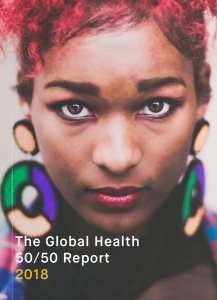
Global Health 50/50 Report (2018)
The Global Health 50/50 Report, the first of its kind, provides a comprehensive review of the gender-related policies of more than 140 major organisations working in and/or influencing the field of global health. The initiative is focused at the intersection of several Sustainable Development Goals (SDGs), including on health (3), gender equality (5), inequalities (10) and inclusive societies and institutions (16).
Gender equality has seemingly been embraced as a priority in global health. The report is inspired, however, by a growing concern that too few global health organisations walk the talk by defining, programming, resourcing or monitoring gender, either as a determinant of health, or as a driver of career equality in their own workplaces.
The Global Health 50/50 Report provides a benchmark across the sector to catalyse shifts in organisational and management culture and practice, the adoption of gender-responsive policies, and ensuring adequate resources for programmes focusing on the gendered dynamics of global health. It seeks to provide evidence of where the gaps lie, while shining a light on ways forward.Global Health 50/50 Report 2018Explore the 2018 Data
Download the 2018 Report presentation (PPT)
Download the 2018 Report presentation (PDF)
Read the press release
Download the 2018 Report presentation (PPT)
Download the 2018 Report presentation (PDF)
Read the press release
Saturday, October 06, 2018
Cities Health
Cities for global health
BMJ 2018; 363 doi: https://doi.org/10.1136/bmj.k3794 (Published 03 October 2018)Cite this as: BMJ 2018;363:k3794- Majid Ezzati, professor of global environmental health1,
- Christopher J Webster, dean and chair professor of urban planning and development economics2,
- Yvonne G Doyle, director for London3,
- Sabina Rashid, dean and professor4,
- George Owusu, professor and director5,
- Gabriel M Leung, dean and chair professor of public health medicine6
- Correspondence to: M Ezzati majid.ezzati@imperial.ac.uk

Tuesday, September 04, 2018
GH Horizons (03/12/2018)
Encaminhado AMICOR Maria Inês Reinert Azambuja
Save with Early Bird rates before 22 October. Open as a webpage
Global Health programme is now live!
Join us on 3 December 2018 at the Global Health Conference: Learning from the past, looking to the future and join over 150 global leaders, current/future partners, RCP members and fellows to explore some of the biggest opportunities and challenges in the field, and be inspired by our recently announced speakers.
The programme will challenge some of the key questions in global health today. We'll consider:
- How we find a solution to international challenges around workforce
- How to prioritise funding between non-communicable and infectious disease when budgets are stretched
- How evidence fits into the new world of healthcare delivered by artificial intelligence
VIEW THE PROGRAMME
David Mosca
Break out 7: Refugee and migrant health
David is a medical doctor with almost thirty-five years experience in global health, migration health, humanitarian response and emergencies. A former Director of Migration Health at the International Organisation for Migration (IOM) Headquarters in Geneva, Dr. Mosca has worked 24 years in Africa and the Middle East first as a surgeon and emergency specialist, shifting later to public health.
Chris Underhill MBE
Break out 2: The impact of urbanisation on mental health
Chris is a leading exponent on global mental health practice, a social entreprenuer, and a mentor. Chris is the founder of BasicNeeds, the mental health charity working in developing countries, and previously founded Action on Disability and Development, and Thrive. He is currently co-founding citiesRISE, an initiative designed to promote mental health by catalyzing collective actions across sectors within cities.
BOOK WITH EARLY BIRD BY 22 OCTOBER We look forward to welcoming you to the Global Health Horizons Conference in December.
The Global Health Conference Team


Subscribe to:
Posts (Atom)