- 15 julho 2020
This Blog AMICOR is a communication instrument of a group of friends primarily interested in health promotion, with a focus on cardiovascular diseases prevention. To contact send a message to achutti@gmail.com http://achutti.blogspot.com
Translate AMICOR contents if you like
Showing posts with label medicine. Show all posts
Friday, October 30, 2020
Video-consultations
Recomendado pela AMICOR Maria Inês Reinert Azambuja
Video consultations in primary and specialist care during the covid-19 pandemic and beyond
BMJ 2020; 371 doi: https://doi.org/10.1136/bmj.m3945 (Published 20 October 2020)
Cite this as: BMJ 2020;371:m3945
Practice Practice Pointer
Video consultations in primary and specialist care during the covid-19 pandemic and beyond
BMJ 2020; 371 doi: https://doi.org/10.1136/bmj.m3945 (Published 20 October 2020)
Cite this as: BMJ 2020;371:m3945
Read our latest coverage of the coronavirus outbreak
Article
Related content
Metrics
Responses
Josip Car, director1 2, Gerald Choon-Huat Koh, professor3, Pin Sym Foong, postdoctoral fellow3, C Jason Wang, director4 5
Author affiliations
Correspondence to J Car josip.car@ntu.edu.sg
What you need to know
Video consultations in healthcare present an approximation of face-to-face interaction and are a “visual upgrade” of widely used telephone consultations
Evidence for the effectiveness of video consultations is scarce, but points towards effectiveness, safety, and high satisfaction in patients and healthcare providers
Be prepared to switch from a video to a telephone or in-person consultation, depending on technical, patient, or clinical factors
Friday, August 07, 2020
Wednesday, August 05, 2020
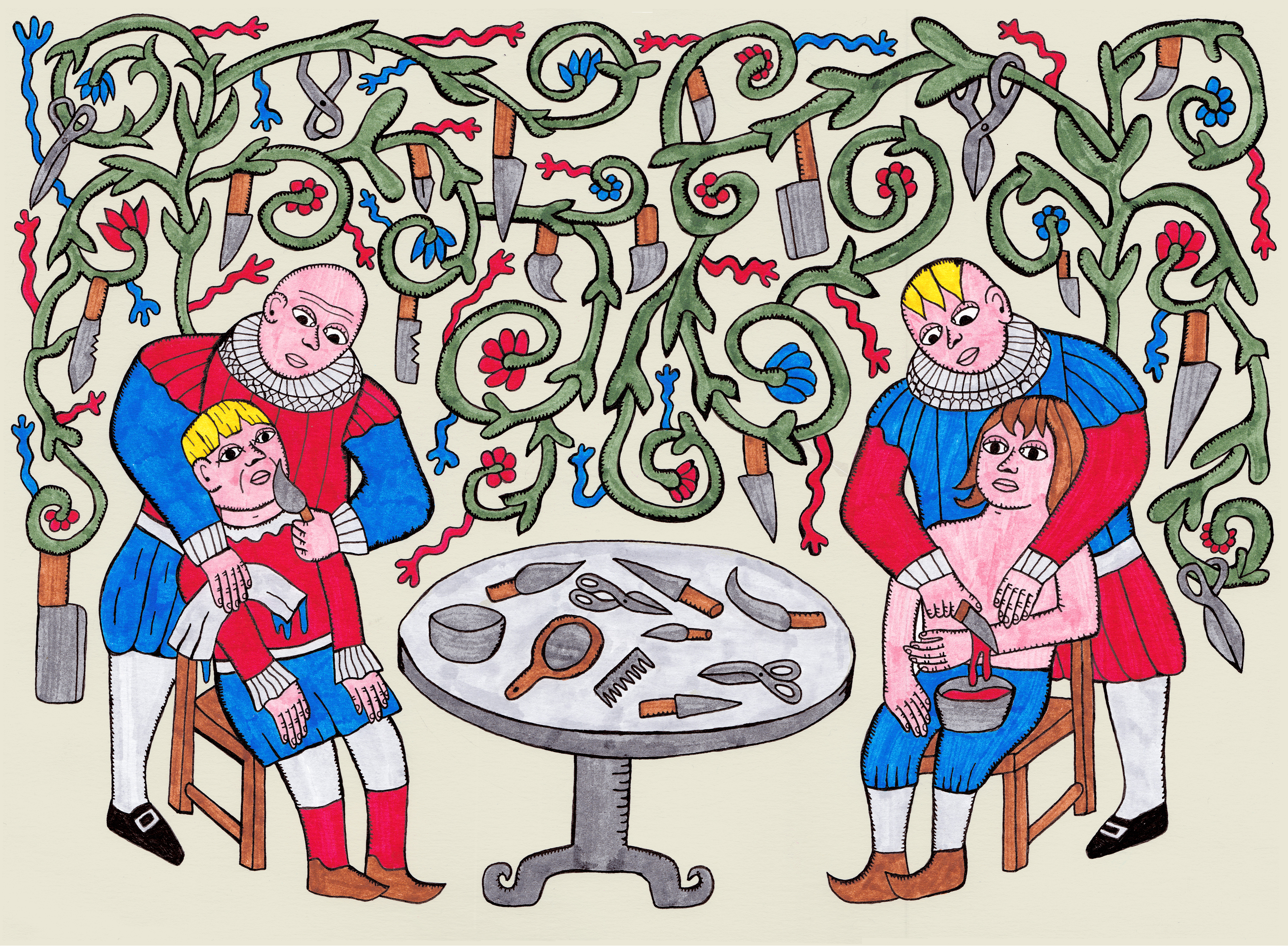
Les barbiers, des chirurgiens...
RETOUR VERS LA SUTURE
Bien avant que ne soient réunies médecine et chirurgie, les opérations étaient pratiquées dans les échoppes des barbiers. Point d’anesthésie, mais des acolytes solides
et des sangles serrées pour maintenir les patients en place. Et ça fonctionnait plutôt bien

Publié lundi 23 juillet 2018 à 20:34
Modifié mardi 7 août 2018 à 11:13
Thursday, July 16, 2020
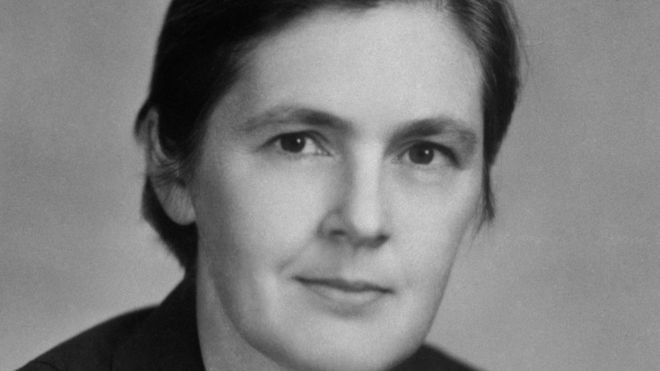
Frances Oldham Kelsey (1914-2015)
A médica que salvou uma geração de bebês da tragédia da talidomida nos EUA
Margarita RodríguezBBC News Mundo
Direito de imagemGETTY IMAGES
O "não" que a médica Frances Oldham Kelsey disse a uma empresa em 1960 foi um dos mais poderosos da história da indústria farmacêutica.
Com sua negativa, ajudou a "salvar talvez milhares de pessoas da morte ou da invalidez durante a vida”, afirmou a Agência Americana de Drogas e Alimentos (FDA, na sigla em inglês)./.../
Tuesday, June 09, 2020
Remote Care
|
The novel coronavirus made healthcare professionals retrace their way of thinking. It did disrupt the systems, and forced health networks to rehash their telemedicine concepts. Not only that: in order to protect medical professionals from the virus, the need for remote technologies skyrocketed.
What’s for sure is that telemedicine is faster, cheaper and can also be better streamlined. And it’s definitely a better solution for both the patient and the doctor. I just wish moving on to digital health solutions would be as easy as this. |
Wednesday, May 06, 2020
Tuesday, May 05, 2020
A Piece of My Mind
IN THIS ISSUE OF JAMA
A PIECE OF MY MIND
The Changing of the Seasons
Terry J. Ratner, RN, MFA
May 5, 2020: JAMA
JAMA. 2020;323(17):1651-1652. doi:10.1001/jama.2020.3760
Forty years ago, in 1980, Jimmy Carter was president. Pac-Man debuted. In medicine, smallpox was declared to be eradicated. Additionally, on May 9, 1980, A Piece of My Mind was inaugurated in JAMA. The first essay, “Tuna on Rye, 1984,” was written by then–senior editor Samuel Vaisrub under the pen name Sam Vee.1 He introduced the column with an editorial entitled “For the Peace of Your Mind.”2
Although much has changed in the world and in medicine since then, A Piece of My Mind has endured and changed very little during the subsequent 4 decades. The essays are longer, for a time they were peer reviewed, and the specific topics and issues have kept pace with medical advances, but the column still serves as a forum for physicians to discuss the human side of medicine. Physicians are trained in science and evidence. Indeed, most articles published in medical journals are research studies full of technical methods and statistics, but devoid of emotion by design. But physicians treat patients, not just their diseases, and confront complicated issues and circumstances daily, with the complexity of medicine only increasing over the past 40 years.
**************************
For the Peace of Your Mind
JAMA. 2020;323(17):1642. doi:10.1001/jama.2019.13422
Originally Published May 9, 1980 | JAMA. 1980;243(18):1845.
We hasten to assure our readers that a piece of my mind...is not intended as a sounding board for peevish gripes, nit-picking beefs, or sundry assortments of righteous indignation, which are usually prefaced by an angry “let me give you a piece of my mind.” Nor is this section of The Journal meant to be a podium for pompous preachments and ex cathedra pronouncements. Nor again is it designed to be a forum for half-baked speculations and warmed-over hypotheses. Least of all is a piece of my mind envisaged as a jamboree of jokes and a shivaree of limericks.
What we have in mind for the newly inaugurated feature is not a formal court of opinion but an informal courtyard of creativity, in which physicians display vignettes of their nonscientific and not strictly clinical observations, experiences, reflections, and fantasies tinged with philosophy or humor.
The appearance of a piece of my mind will, of necessity, be determined by available contributions. These will not be assessed by peer review. They will be accepted or rejected without explanation. Based on the principle of “De gustibus non est disputandum,” this arbitrariness needs no apology. Do take a chance and mail us your masterpieces.
Samuel Vaisrub, MD
Section Editor: Jennifer Reiling, Assistant Editor.
Editor’s Note: JAMA Revisited is transcribed verbatim from articles published previously, unless otherwise noted.
*************************
Editorial
May 5, 2020
JAMA. 2020;323(17):1651-1652. doi:10.1001/jama.2020.3760
Forty years ago, in 1980, Jimmy Carter was president. Pac-Man debuted. In medicine, smallpox was declared to be eradicated. Additionally, on May 9, 1980, A Piece of My Mind was inaugurated in JAMA. The first essay, “Tuna on Rye, 1984,” was written by then–senior editor Samuel Vaisrub under the pen name Sam Vee.1 He introduced the column with an editorial entitled “For the Peace of Your Mind.”2
Although much has changed in the world and in medicine since then, A Piece of My Mind has endured and changed very little during the subsequent 4 decades. The essays are longer, for a time they were peer reviewed, and the specific topics and issues have kept pace with medical advances, but the column still serves as a forum for physicians to discuss the human side of medicine. Physicians are trained in science and evidence. Indeed, most articles published in medical journals are research studies full of technical methods and statistics, but devoid of emotion by design. But physicians treat patients, not just their diseases, and confront complicated issues and circumstances daily, with the complexity of medicine only increasing over the past 40 years.
A journal limited to research would fail to convey the entire experience of a physician or meet all the needs of readers. In one essay, “Story as Evidence, Evidence as Story,” Dr Aronson writes “a single, well-told story of human suffering trumps the most eloquent explanation of a large-scale trial.”3 In JAMA, A Piece of My Mind allows authors to share their perspectives and recount the patients who have touched them or redefined their careers; their experiences trying to balance medicine and all the other parts of their lives; their struggles learning to be physicians, whether in medical school or adjusting to changes in practice; their own medical and emotional challenges or those of family members; and the aspects of medicine that confound or delight them./.../
*************************
Editorial
May 5, 2020
JAMA. 2020;323(17):1649-1650. doi:10.1001/jama.2020.1488
My first glimpse into the craft of physician-writers did not come through Anton Chekhov, Walker Percy, or William Carlos Williams, whose works I only came to after medical school. As a schoolboy, I loved W. Somerset Maugham, although he never practiced medicine, and his craft had little to do with his medical degree. My introduction to physicians as writers came through my textbooks. Boyd’s Pathology made me aware of literary voice, the ability of authors to place themselves in the text, let their personality come through, and subtly become a character in the reading experience.1 On the topic of defining the moment of death, Boyd in his single-author text wrote, “It was the author of the book of Ecclesiastes who said, ‘There is a time to be born, and a time to die.’ Fortunately it is the clinician, not the pathologist, who has to make this difficult decision. Sometimes, however, the kindly doctor may find himself murmuring those moving lines from the last act of King Lear: O let him pass! He hates him/That would upon the rack of this tough world/Stretch him out longer.”
Sunday, May 03, 2020
Diseases with slave trade
| ||
Friday, May 01, 2020
Brain Death
Robert D. Truog, MD, MA1,2; Erin Talati Paquette, MD, JD, MBe3,4; Robert C. Tasker, MA, MD, MBBS, DCH2,5
JAMA. Published online May 1, 2020. doi:10.1001/jama.2020.3593
The concept of brain death, or the determination of death by neurological criteria, was first proposed by a Harvard committee in the United States in 1968,1 and then adopted into the Uniform Determination of Death Act (UDDA) in 1981.2 Although the UDDA was widely accepted and endorsed by medical professional organizations, in recent years the concept has come under greater scrutiny and is increasingly the focus of legal challenges. Most urgent is that the current diagnostic standards do not satisfy the wording of the law. The UDDA defines brain death as the “irreversible cessation of all functions of the entire brain.” Yet, it is now widely acknowledged that some patients who meet the current diagnostic standards may retain brain functions that are not included in the required tests, including hypothalamic functioning.3 Until the UDDA is revised to be more specific about which functions must be lost to satisfy the definition (such as, for example, consciousness and the capacity to breathe), current medical practice will not be in alignment with the legal standard.
Wednesday, April 29, 2020
Medicalo response to Crisis
|
J. Barr and S.H. Podolsky
DOI: 10.1056/NEJMp2008512 | April 29, 2020
D.S. Jones
N Engl J Med 2020;382:1681-1683 | Published Online March 12, 2020
|
Tuesday, April 28, 2020
Snorkeling Mask
Wednesday, April 15, 2020
Dr. Li Wenliang
|
|
|
|
|
Subscribe to:
Posts (Atom)
