Translate AMICOR contents if you like

Monday, October 05, 2015

Migrant Crisis

Europe’s Migrant Crisis By the Numbers


Europe’s Migrant Crisis By the Numbers
In April, a 66-foot boat carrying some 850 migrants across the Mediterranean Sea to Italy capsized, killing almost all those on board. The tragedy catapulted migration issues to the forefront of Brussels’s political agenda, as ministers grappled with how to deal with Europe’s influx of asylum-seekers and migrants without documentation.
The crisis, of course, had been simmering long before April. According to the Geneva-based International Organization for Migration (IOM), some 3,200 people died trying to cross the Mediterranean in 2014. (The number was nearly 2,000 for just the first half of 2015.) And globally, the number of people displaced by conflict, persecution, or human rights violations topped 59.5 million at the end of 2014, according to a report by the Office of the U.N. High Commissioner for Refugees—numbers not seen in decades.
The European Union’s proximity to protracted conflicts in the Middle East and Africa, as well as economically depressed areas in Eastern Europe, has made member countries—particularly Germany, Hungary, France, Italy, and Sweden—top destinations for asylum-seekers. In the first four months of 2015, EU member states received 242,075 first-time asylum applications, an 80 percent increase from the same period in 2014. (First-time applications, represented throughout the graphs to the right, offer the best trend measure, due to the high likelihood of repeat claims within a year or even a month.) Hungary, which people typically reach by way of Turkey or the Balkan states, saw the largest increase in applications, with nearly 13 times as many. And given the well-publicized dangers of traversing the Mediterranean, the EU shouldn’t be surprised that this land route is growing congested: In the first six months of 2015, IOM data showed 61,000 asylum-seekers and undocumented migrants there, already surpassing tallies for the whole of 2014.
No one can deny that migration is a full-blown regional crisis. The question now is whether the EU has the collective will and resources to solve it.
Who goes where?Citizens from Syria and Kosovo comprised nearly 40 percent of asylum applicants during the first four months of 2015; Syrian claims were up 80 percent from the same period last year, whereas those from Kosovo exploded, seeing a 17-fold jump.
What are their favored destinations?Germany received 40 percent of asylum applications during the first third of 2015, while Hungary, France, Italy, and Sweden combined received another 39 percent.
Who are they?The vast majority of asylum applicants are men ages 18 to 34, but the proportion of minors grew significantly during 2014. Those with unknown age or gender (only 0.1 percent of applicants) are not shown.
How do they get there?In 2014, nearly 78 percent of detections of asylum-seekers and undocumented migrants occurred at sea—the most common being Syrians attempting to traverse the eastern and central Mediterranean (two of the most congested border crossings). Eritreans were one of the most frequently found populations along the central Mediterranean, while Afghans, Somalis, and Iraqis contributed to heavy volume along the eastern Mediterranean. And in late 2014, a spike occurred along the route through the Western Balkans, the third-most-popular land or sea route.

Sunday, October 04, 2015

Negative Thinking


What Negative Thinking Does to Your Brain
Psychology      30K Views
View Page

2726 - AMICOR 18

Urban Health

Aloyzio AchuttiemAMICOR - Há 4 horas
Boring cityscapes increase sadness, addiction and disease-related stress. Is urban design a matter of public health? 5489 942 Colin Ellard is an environmental psychologist and neuroscientist at the University of Waterloo in Canada, and the author of *Where Am I?* (2009). His latest book is *Places of the Heart* (2015). Edited by Pam Weintraub @pam3001 3,100 words - Read later 23 5489 942 55 In 2007, the Whole Foods supermarket chain built one of their largest stores on New York City’s storied Lower East Side, occupying an entire block of East Houston Street from the Bowery to C... mais »

Albert Einstein

Aloyzio AchuttiemAMICOR - Há 4 horas
Einstein on the Common Language of Science in a Rare 1941 Recording“Perfection of means and confusion of goals seem — in my opinion — to characterize our age.”BY MARIA POPOVA What makes Albert Einstein endure as “the quintessential modern genius” isn’t merely his monumental contribution to science but also his unflinching faith in the human spirit and in our civilizational capacity for good even in the face of undeniable evil. At the peak of WWII — exactly a decade after his little-known correspondence with W.E.B. Du Bois on racial justice and exactly a decade before his letter to a ... mais »

Há mais de 50 anos: outra visita

Aloyzio AchuttiemAMICOR - Há 5 horas
Há mais de 50 anos atendi na Santa Casa, com dois dias de vida, e agora deram-me o prazer da visita. Ângela e sua mãe.

Test for virus detection

Aloyzio AchuttiemAMICOR - Há 9 horas
New test detects almost all viruses that infect people, animals Additional research needed to validate the test accuracy October 1, 2015 A new test developed at Washington University School of Medicine in St. Louis can detect virtually any virus that infects people and animals, including the Ebola virus (above) (credit: National Institute of Allergy and Infectious Diseases) A new test that detects virtually any virus that infects people and animals has been developed at Washington University School of Medicine in St. Louis. Current tests aren’t sensitive enough to detect low virus leve... mais »

Virus are alive

Aloyzio AchuttiemAMICOR - Há 9 horas
Study of protein folds adds to evidence that viruses are alive and ancient Scientists estimate there are more than a million viral species, but less than 4,900 viruses have been identified and sequenced October 1, 2015 *[+]* The diverse physical attributes, genome sizes and lifestyles of viruses make them difficult to classify. A new study uses protein folds as evidence that viruses are living entities that belong on their own branch of the tree of life. (credit: Julie McMahon) Viruses are actually living entities that share a long evolutionary history with cells, researchers report in... mais »

Connectome

Aloyzio AchuttiemAMICOR - Há 10 horas
Neuroscience: Connectomes make the map - Amber Dance Nature 526, 147–149 (01 October 2015) doi:10.1038/526147aPublished online 30 September 2015 Article tools - PDF - Citation - Reprints - Rights & permissions - Article metrics Working at a variety of scales and with disparate organisms and technologies, researchers are mapping how parts of the brain connect. Subject terms: - Imaging - Neuroscience Introduction - Introduction• - References• - Author information• - Related links Allen Institute for Brain Science Connections to the tha... mais »

Brain Genealogy

Aloyzio AchuttiemAMICOR - Há 14 horas
Each of your neurons is more closely related to heart cells than to most of its neighbors. Why? Ann Larle Valentine / Flickr The Surprising Genealogy of Your Brain Each of your neurons is more closely related to heart cells than to most of its neighbors. Why? - ED YONG - OCT 1, 2015

Ageing and Health

Aloyzio AchuttiemAMICOR - Há 2 dias
World report on ageing and health *Authors*: WHO [image: Book cove rimage] Publication details Number of pages: 260 Publication date: 2015 Languages: Full report in English, Spanish. Executive summaries in Arabic, Chinese, English, French, Japanese, Portuguese, Russian and Spanish ISBN: 978 92 4 156504 2 Downloads - World report on ageing and health - Spanish Executive summaries

Vila Cruzeiro

Aloyzio AchuttiemAMICOR - Há 4 dias
*Vila Cruzeiro - Porto Alegre* *Apresentação preparada pela AMICOR * *Professora Maria Inês Reinert Azambuja*

Dia Mundial do Coração

Aloyzio AchuttiemAMICOR - Há 4 dias

Glue, instead of needle and fil

Aloyzio AchuttiemAMICOR - Há 6 dias
Maria Pereira's surgical glue could completely revolutionize modern medicine Wherever Maria Pereira goes these days—her office in Paris, a conference in Boston, or back home to Portugal—she carries around a thumb-size vial of glue. That vial, a good-luck charm, may contain the solution to one of surgery’s oldest problems: how to seal wounds and holes in the body without damaging the body itself. The ancient Egyptians and Greeks faced the same dilemma, and coarse stitches from catgut and silk were their method of choice. The modern physician relies on a more refined technique of suturi... mais »

Urban Health


Boring cityscapes increase sadness, addiction and disease-related stress. Is urban design a matter of public health?

Colin Ellard is an environmental psychologist and neuroscientist at the University of Waterloo in Canada, and the author of Where Am I? (2009). His latest book is Places of the Heart (2015).
Edited by Pam Weintraub
@pam3001
3,100 words
5489
In 2007, the Whole Foods supermarket chain built one of their largest stores on New York City’s storied Lower East Side, occupying an entire block of East Houston Street from the Bowery to Chrystie Street. For the well-off, the abundant availability of high-quality organic foods was a welcome addition, but for the majority of locals, many of whom had roots going back generations to New York’s immigrant beginnings, the scale of the new store, selling wares that few of them could easily afford, was a symbolic affront to the traditions of this part of the city.
When I conducted research at the site in 2011, my interest was more pedestrian: how did this megastructure – plopped into a neighbourhood populated with tiny bars and restaurants, bodegas, pocket parks, playgrounds and many different styles of housing – influence the psychological state of the urban pedestrian? What happens inside the minds of city-dwellers who turn out of tiny, historic restaurants with bellies full of delicious knish and encounter nothing but empty sidewalk beneath their feet, a long bank of frosted glass on one side, and a steady stream of honking taxicabs on the other?/.../

Albert Einstein

Einstein on the Common Language of Science in a Rare 1941 Recording

“Perfection of means and confusion of goals seem — in my opinion — to characterize our age.”

What makes Albert Einstein endure as “the quintessential modern genius” isn’t merely his monumental contribution to science but also his unflinching faith in the human spirit and in our civilizational capacity for good even in the face of undeniable evil. At the peak of WWII — exactly a decade after his little-known correspondence with W.E.B. Du Bois on racial justice and exactly a decade before his letter to a disheartened young woman (incidentally, a Brain Pickings reader’s mother) affirming why we are alive — Einstein penned a piece titled “The Common Language of Science,” which aired as a radio broadcast for London’s Science Conference on October 2, 1941. It was eventually included in the altogether indispensable anthology Ideas and Opinions (public library), which also gave us Einstein’s views on the value of kindness and the combinatory nature of creativity.

Há mais de 50 anos: outra visita

Há mais de 50 anos atendi na Santa Casa, com dois dias de vida, e agora deram-me o prazer da visita. Ângela e sua mãe.

Saturday, October 03, 2015

Test for virus detection

New test detects almost all viruses that infect people, animals

Additional research needed to validate the test accuracy
October 1, 2015

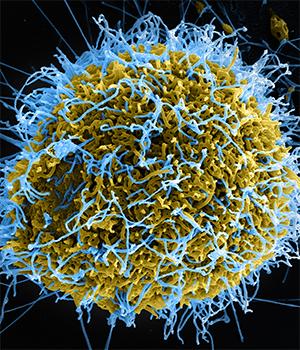
A new test developed at Washington University School of Medicine in St. Louis can detect virtually any virus that infects people and animals, including the Ebola virus (above) (credit: National Institute of Allergy and Infectious Diseases)
A new test that detects virtually any virus that infects people and animals has been developed at Washington University School of Medicine in St. Louis.
Current tests aren’t sensitive enough to detect low virus levels or are limited to detecting only those viruses suspected of being responsible for a patient’s illness.
“With this test, you don’t have to know what you’re looking for,” said the study’s senior author, Gregory Storch, MD, the Ruth L. Siteman Professor of Pediatrics. “It can efficiently detect viruses that are present at very low levels. We think the test will be especially useful in situations where a diagnosis remains elusive after standard testing or in situations in which the cause of a disease outbreak is unknown.”/.../

Virus are alive

Study of protein folds adds to evidence that viruses are alive and ancient

Scientists estimate there are more than a million viral species, but less than 4,900 viruses have been identified and sequenced
October 1, 2015
[+]
The diverse physical attributes, genome sizes and lifestyles of viruses make them difficult to classify. A new study uses protein folds as evidence that viruses are living entities that belong on their own branch of the tree of life. (credit: Julie McMahon)
Viruses are actually living entities that share a long evolutionary history with cells, researchers report in a study that traces viral evolution back to a time when neither viruses nor cells existed in the forms recognized today.
The new findings appear in an open-access paper in the journal Science Advances.
Abstract of A phylogenomic data-driven exploration of viral origins and evolution
The origin of viruses remains mysterious because of their diverse and patchy molecular and functional makeup. Although numerous hypotheses have attempted to explain viral origins, none is backed by substantive data. We take full advantage of the wealth of available protein structural and functional data to explore the evolution of the proteomic makeup of thousands of cells and viruses. Despite the extremely reduced nature of viral proteomes, we established an ancient origin of the “viral supergroup” and the existence of widespread episodes of horizontal transfer of genetic information. Viruses harboring different replicon types and infecting distantly related hosts shared many metabolic and informational protein structural domains of ancient origin that were also widespread in cellular proteomes. Phylogenomic analysis uncovered a universal tree of life and revealed that modern viruses reduced from multiple ancient cells that harbored segmented RNA genomes and coexisted with the ancestors of modern cells. The model for the origin and evolution of viruses and cells is backed by strong genomic and structural evidence and can be reconciled with existing models of viral evolution if one considers viruses to have originated from ancient cells and not from modern counterparts.

Connectome

Neuroscience: Connectomes make the map

Nature
 
526,
 
147–149
 
 
doi:10.1038/526147a
Published online
 
Working at a variety of scales and with disparate organisms and technologies, researchers are mapping how parts of the brain connect.

Introduction

Allen Institute for Brain Science
Connections to the thalamus, the brain's relay station, mapped from 80 sites in the cortex.
A newborn baby, well fed and sleepy, is swaddled in a blanket and lying on what looks like a tea tray with a helmet attached to one end. Once the infant falls asleep, researchers pull special tabs on the blanket to ease the baby into the helmet. It is a customized receiver coil used for magnetic resonance imaging (MRI), a common method for visualizing brains in living people. The researchers slide the baby-holding contraption along a special trolley into the MRI tube and start collecting images.
From about 1,000 such scans, and another 500 of developing fetuses, UK scientists in the Developing Human Connectome Project plan to map how regions of the brain communicate with each other during development. They then hope to work out why preterm babies are at risk for conditions such as autism spectrum disorder or attention deficit hyperactivity disorder, and perhaps to do similar scans to check whether methods to prevent such disorders are working.

Brain Genealogy

Each of your neurons is more closely related to heart cells than to most of its neighbors. Why?


Ann Larle Valentine / Flickr

The Surprising Genealogy of Your Brain

Each of your neurons is more closely related to heart cells than to most of its neighbors. Why?

Thursday, October 01, 2015

Ageing and Health

World report on ageing and health

Authors:
WHO
Book cove rimage

Publication details

Number of pages: 260
Publication date: 2015
Languages: Full report in English, Spanish. Executive summaries in Arabic, Chinese, English, French, Japanese, Portuguese, Russian and Spanish
ISBN: 978 92 4 156504 2

Downloads

Executive summaries