
When an American thinks about whether he is honest, his brain activity looks very different than when he thinks about whether another person is honest, even a close relative. That’s not true for Chinese people. When a Chinese man evaluates whether he is honest, his brain activity looks almost identical to when he is thinking about whether his mother is honest.
That finding — that American and Chinese brains function differently when considering traits of themselves versus traits of others (Neuroimage, Vol. 34, No. 3) — supports behavioral studies that have found that people from collectivist cultures, such as China, think of themselves as deeply connected to other people in their lives, while Americans adhere to a strong sense of individuality.
The study also shows the power of cultural neuroscience, the growing field that uses brain-imaging technology to deepen the understanding of how environment and beliefs can shape mental function. Barely heard of just five years ago, the field has become a vibrant area of research, and the University of Michigan, the University of California, Los Angeles, and Emory University have created cultural neuroscience centers. In addition, in April a cultural neuroscience meeting at the University of Michigan attracted such psychology luminaries as Hazel Markus, PhD, Michael Posner, PhD, Steve Suomi, PhD, and Claude Steele, PhD, to discuss their work in the context of cultural neuroscience./.../


 1 year of age, population counts from the US Census were used in the denominator; for infant mortality, live birth counts were used. From 1999 to 2006, there were 41 494 CHD-related deaths and 27 960 deaths resulting from CHD (age-standardized mortality rates, 1.78 and 1.20 per 100 000, respectively). During this period, mortality resulting from CHD declined 24.1% overall. Mortality resulting from CHD significantly declined among all race-ethnicities studied. However, disparities persisted; overall and among infants, mortality resulting from CHD was consistently higher among non-Hispanic blacks compared with non-Hispanic whites. Infant mortality accounted for 48.1% of all mortality resulting from CHD; among those who survived the first year of life, 76.1% of deaths occurred during adulthood (


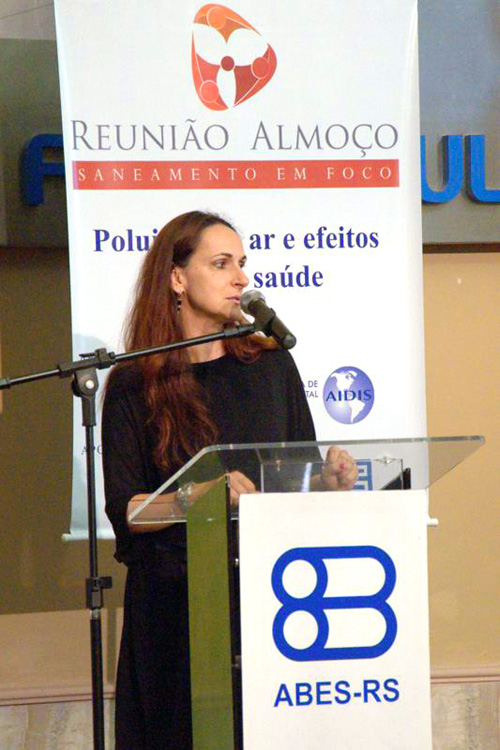
 No inverno, depois de São Paulo, Porto Alegre é a capital que tem o ar mais poluído por material particulado inalável. Essa informação foi dada pela professora Cláudia Rohden durante reunião-almoço Saneamento Ambiental em Foco, promovida pela Abes-RS (Associação Brasileira de Engenharia Sanitária e Ambiental – seção Rio Grande do Sul) no salão nobre da Federasul, nesta sexta-feira (26), com o tema “Poluição do ar e efeitos sobre a saúde”.
