| |||||||||||||||||||||||||||||||||||||||||||||||
Showing posts with label Heart Failure. Show all posts
Showing posts with label Heart Failure. Show all posts
Sunday, July 12, 2020
Heart Faillure. Guideline


Thursday, January 09, 2020

Tuesday, September 10, 2019
Diuretic withdrawal
Recomendado pelo AMICOR Luis Beck da Silva
Diuretic withdrawal likely safe for stable outpatients with mild heart failure
SEPTEMBER 5, 2019
By Marilynn Larkin
NEW YORK (Reuters Health) - Discontinuing furosemide may be safe for outpatients with stable heart failure and no fluid retention, researchers say.
"Patients have many pills to take for their heart failure and for comorbidities such as diabetes, hypertension and kidney disease," Dr. Luis Rohde of Universidade Federal do Rio Grande do Sul in Puerto Alegre, Brazil, told Reuters Health. "Withdrawing one drug when it is no longer necessary should make it easier to take the ones that are needed."
"In particular, patients don't like using diuretics because they feel they have to stay at home to use the bathroom and they might get side effects like cramps," he said by email. "Patients would welcome being able to stop this medication."/.../
Tuesday, September 03, 2019
Serelaxin
M. Metra and Others
| |||
N Engl J Med 381:716, August 22, 2019
| |||
Wednesday, August 28, 2019
Barostim
Barostim Neo Neuromodulation Device for Heart Failure Wins FDA Approval


CVRx, a Minneapolis, Minnesota company, won FDA approval for the first neuromodulation device designed to address heart failure. Intended as a treatment option for patients with an ejection fraction ≤35% and New York Heart Failure Classification of III or II (with recent history of Class III), the device stimulates the carotid artery and in turn the baroreceptors that control cardiovascular activity.

The system monitors and adjusts the signals it delivers to achieve optimal beat-to-beat stimulation. It has been approved in Europe for a number of years (see flashbacks below).
Tuesday, July 09, 2019
Iron Deficit

História do conhecimento no tratamento de deficiência de ferro em pacientes com insuficiência cardíaca.
JACC Heart Fail. 2019 Jan;7(1):36-46. doi: 10.1016/Sunday, April 14, 2019
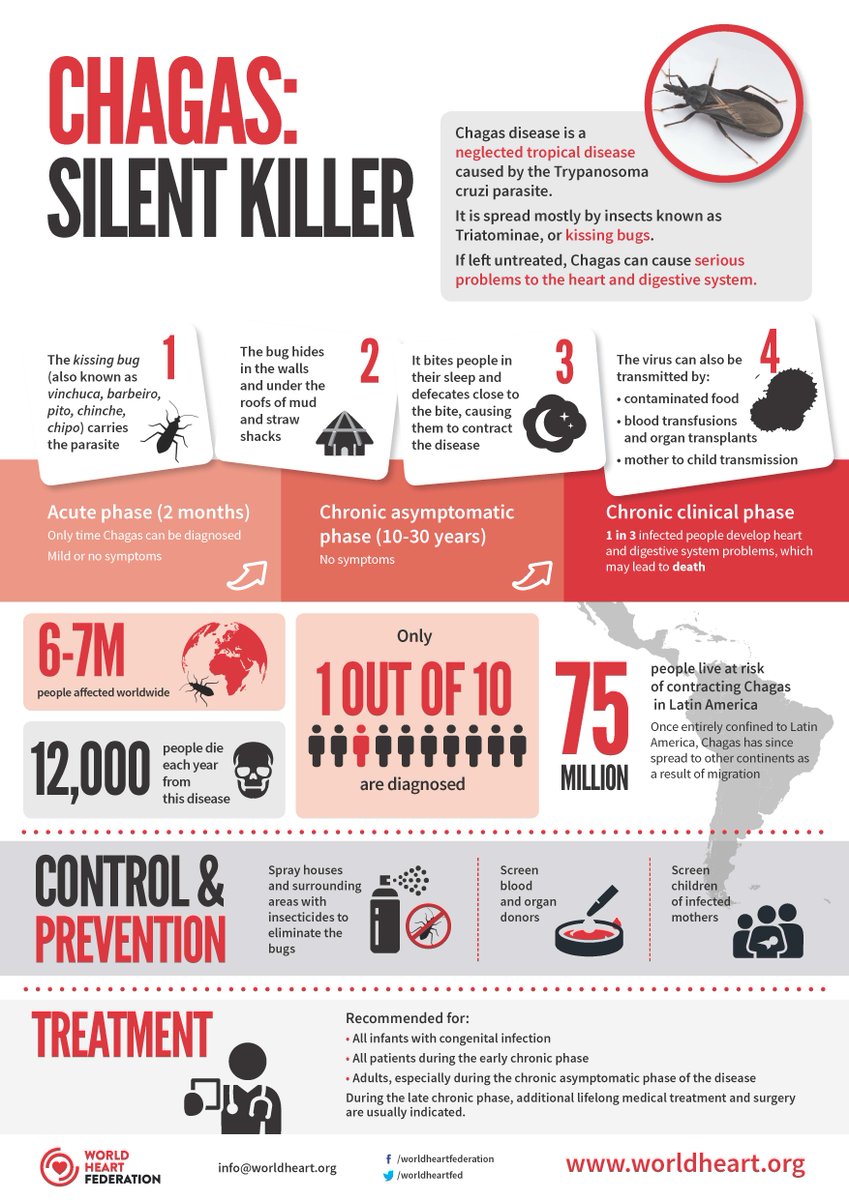
Chagas Disease
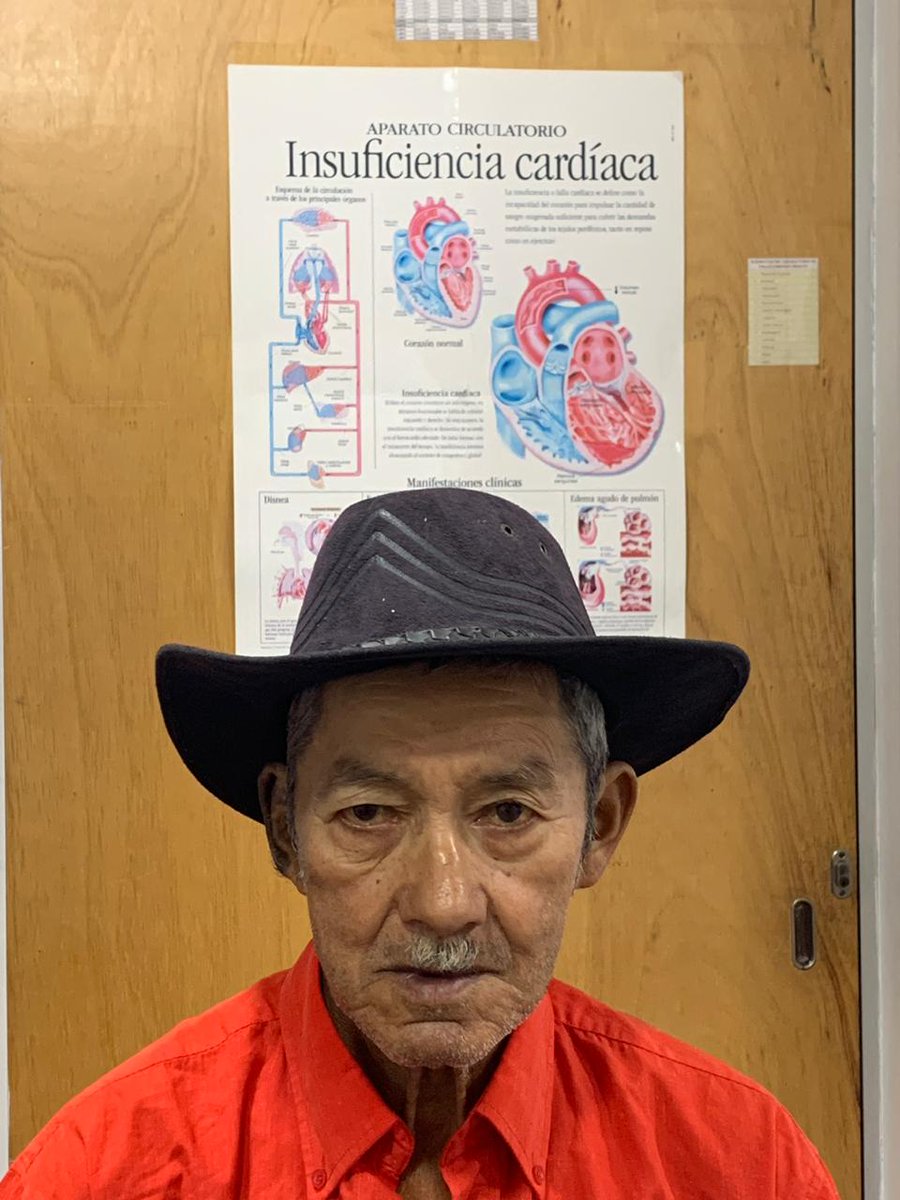
"I am 66 years old. I am a farmer and have lived in the countryside in Colombia all my life. 3 years ago I started getting more tired than normal. Then my feet swelled and finally I could not walk short distances..." Read Jorge's story: https://www.world-heart-federation.org/chagas-disease/jorge/ … #WorldChagasDay
Today, more than 100 years after the discovery of #Chagas disease, there are between 6 and 7 million affected people and 7,000 who die annually. These deaths are preventable in their vast majority with an early diagnosis and with treatment. #WorldChagasDay #JornadaChagas2019
Monday, January 21, 2019
SAMβA - Selective Antagonist of Mfn1- βIIPKC Association
Nova molécula diminui insuficiência cardíaca em ratos
Sintetizada por pesquisadores da USP e de Stanford, SAMβA abre caminho para novos tratamentos de doença crônica do coração

esquisadores da Universidade de São Paulo (USP) em parceria com a Universidade Stanford, nos Estados Unidos, sintetizaram em laboratório uma molécula capaz de reestabelecer a morfologia e a função mitocondrial do coração de ratos com insuficiência cardíaca, melhorando as contrações do órgão. A molécula SAMβA – acrônimo de Selective Antagonist of Mfn1- βIIPKC Association – abre caminho para o desenvolvimento de fármacos que possam tratar esse tipo de doença.
Doença crônica que pode ter origem em um infarto, mas também na hipertensão, doença de Chagas e outras enfermidades, a insuficiência cardíaca ocorre quando o coração não se contrai com força adequada para bombear sangue suficiente para o corpo. O tratamento deve ser feito por toda a vida e inclui remédios, fisioterapia e boa alimentação. “Ainda assim, como a insuficiência cardíaca é a via final comum de várias doenças que afetam o coração, a maior parte dos pacientes vai a óbito em decorrência dela: em média 50% deles morrem em uma janela de cinco anos”, diz Julio Cesar Batista Ferreira, professor do Departamento de Anatomia do Instituto de Ciências Biomédicas (ICB) da USP, especialista em fisiologia cardiovascular./.../
++++++++++++++++++++++


Wednesday, December 12, 2018
Flu
Flu Shot Tied to Heart Failure Survival
Getting the flu shot each year is associated with better survival outcomes for heart failure (HF) patients, a large, Danish cohort study found.
After adjustment for education, household income, prescriptions, comorbidities, and inclusion date, patients getting at least one influenza vaccination during the median 3.7 years of follow-up had an 18% lower risk of all-cause mortality (HR 0.82, 95% CI 0.81-0.84) and death from cardiovascular causes (HR 0.82, 95% CI 0.81-0.84).
The more years vaccinated and the earlier in the flu season it was done, the lower the risk of all-cause and cardiovascular death <0 .001="" and="" bsc="" colleagues="" copenhagen="" daniel="" for="" in="" med="" modin="" of="" reported="" span="" the="" trend="" university="">/.../
The more years vaccinated and the earlier in the flu season it was done, the lower the risk of all-cause and cardiovascular death <0 .001="" and="" bsc="" colleagues="" copenhagen="" daniel="" for="" in="" med="" modin="" of="" reported="" span="" the="" trend="" university="">/.../
Sunday, February 05, 2017
Chronic Heart Failure
Contribuição do AMICOR Reginaldo Hollanda Albuquerque (Brasília)
Optimizing Outcomes in Chronic Heart Failure: New Thinking, New Choices
Optimizing Outcomes in Chronic Heart Failure: New Thinking, New Choices
No link há um transcrito de uma videoaula sobre o assunto.
Espero que gostem
Reginaldo
Foi publicado no site ReachMD - que é um site de vídeos. No anexo é um transcrito.
Saturday, July 09, 2016
Heart Failure update
Recomendação do AMICOR Reginaldo Albuquerque
- Written by

Heart Failure Update—Two New Treatments and What We Need to Know
This targeted update of the treatment section of the heart failure guidelines is focused on the RAAS blockade agents and introduces two new agents that our cardiology colleagues may prescribe our patients.
As a reminder: ACE inhibitors and ARBs are important in the treatment of heart failure patients who have reduced ejection fraction, who, selectively, should also be on a beta blocker and aldosterone antagonists./.../
Friday, June 05, 2015
Levosimendan
LION-HEART: IV Levosimendan May Lower Natriuretic Peptides, Hospitalization in Advanced CHF Patients


RELATED LINKS
Topic Alert
Receive an email from Medscape whenever new articles on this topic are available.

RELATED DRUGS & DISEASES
SEVILLE, SPAIN — Periodic administration of the intravenous inodilator levosimendan (Orion Pharma) is not only safe and tolerable for patients with advanced, chronic heart failure (HF), it may also improve clinical outcomes, suggests new research[1].
The Levosimendan Intermittent Administration in Outpatients: Effects on Natriuretic Peptides in Advanced Chronic Heart Failure (LION-HEART) trial of 69 adults from 12 centers in Spain showed that those who were randomly assigned to receive 6-hour cycles of IV levosimendan had significantly reduced concentrations of natriuretic peptides (N-terminal pro-brain natriuretic peptide [NT-proBNP]) after 12 weeks vs those receiving placebo (the primary end point), as well as significantly fewer HF hospitalizations and a combination of all-cause deaths/hospitalizations (secondary end points).
In addition, 91% of the treatment group and 81% of the placebo group received all scheduled infusions.
"These positive effects of levosimendan on NT-proBNP levels translated into clinical improvements," Dr Josep Comín-Colet (Hospital del Mar Medical Research Institute, Barcelona, Spain) told attendees at a late-breaking trials session at the Heart Failure Congress 2015 of the European Society of Cardiology Heart Failure Association.
Dr Josep Comín-Colet
|

Comín-Colet later told heartwire from Medscape that the investigators were happily surprised with the secondary outcomes—and with the low number of discontinuations in the treatment arm. "Patients looked at it as something they just needed to go through, like cycles of chemotherapy if they had had cancer," he said.
Of course, he noted that bigger studies are needed to see whether the clinical outcomes can be replicated, but, at least for now, "the findings are important for a patient population that was very sick. Perhaps we have something that can keep them stable until you can do something more, such as a transplant or [left ventricular assist device] LVAD."
Limited Therapeutic Options
Subscribe to:
Posts (Atom)