Translate AMICOR contents if you like

Showing posts with label exercise. Show all posts

Friday, May 08, 2020

Exercise


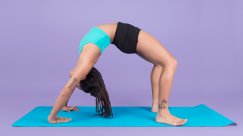
Bare-Minimum Moves for
People With No Time
to Exercise

If squeezing in a workout feels like a pipe dream, certified
personal trainer and Executive Editor of Elemental Anna
Maltby shows a little something you can do instead

Do what you can

Thursday, April 30, 2020

Morning workouts


This Is the Best Time of Day to Work Out, According to Science

finding time to exercise can be challenging, and the most important thing is to squeeze in any amount of it whenever you can. But if you want to optimize your workouts to get the widest range of benefits, you might want to try exercising in the morning.

Here’s what the science says about the best time of day to exercise — and what to expect if you opt for later workouts.

Morning workouts have an edge

Working out in the morning — especially on an empty stomach — is the best way to burn stored fat, making it ideal for weight loss. That’s largely because the body’s hormonal composition in the morning is set up to support that goal, says Anthony Hackney, a professor in the department of exercise and sport science at the University of North Carolina Chapel Hill.
“In the early morning hours, you have a hormonal profile that would predispose you to better metabolism of fat,” Hackney says. People naturally have elevated levels of cortisol and growth hormone in the morning—both of which are involved in metabolism—so you’ll “draw more of your energy from your fat reserves,” Hackney says. That can potentially help with weight loss. Research also suggests that morning exercisers may have less of an appetite throughout the day, which could also help protect them from putting on pounds.

This Is the Best Time of Day to Work Out, According to Science


Saturday, December 21, 2019

Least Amount of Exercise ?

Daily walking targets are the easiest way for the average person to get their minimum daily dose of physical activity

Markham Heid
Markham Heid
Dec 12 · 4 min read
Credit: JGI/Tom Grill/Getty Images

Tuesday, November 19, 2019

Physical activity (65 and over)

“Physical activity is the gateway to well being”

Physical activity guidelines: UK Chief Medical Officers' report

A report from the Chief Medical Officers in the UK on the amount and type of physical activity people should be doing to improve their health.

Older A“,
Adults (65 years and over) 
• Older adults should participate in daily physical activity to gain health benefits, including maintenance of good physical and mental health, wellbeing, and social functioning. Some physical activity is better than none: even light activity brings some health benefits compared to being sedentary, while more daily physical activity provides greater health and social benefits.

• Older adults should maintain or improve their physical function by undertaking activities aimed at improving or maintaining muscle strength, balance and flexibility on at least two days a week. These could be combined with sessions involving moderate aerobic activity or could be additional sessions aimed specifically at these components of fitness.

• Each week older adults should aim to accumulate 150 minutes (two and a half hours) of moderate intensity aerobic activity, building up gradually from current levels. Those who are already regularly active can achieve these benefits through 75 minutes of vigorous intensity activity, or a combination of moderate and vigorous activity, to achieve greater benefits. Weight-bearing activities which create an impact through the body help to maintain bone health.

• Older adults should break up prolonged periods of being sedentary with light activity when physically possible, or at least with standing, as this has distinct health benefits for older people. 10 UK Chief Medical Officers' Physical Activity Guidelin

Sunday, November 03, 2019

Exercise


Scientists are getting closer to understanding why exercise makes us feel good. (It’s more than endorphins.)
Dana G Smith in ElementalMember only content4 min read

Friday, August 23, 2019

Physical Activity

EDITORIAL
Physical Activity, Fitness, and Cardiovascular Health: Insights From Publications in JAMA Network Open
Steven M. Bradley, MD, MPH; Erin D. Michos, MD, MHS; Michael D. Miedema, MD, MPH
ORIGINAL INVESTIGATION
Associations of Aerobic Fitness and Maximal Muscular Strength With Metabolites in Young Men
Urho M. Kujala, MD, PhD; Jani P. Vaara, PhD; Heikki Kainulainen, PhD; et al.
Editorial: Physical Activity, Fitness, and Cardiovascular Health: Insights From Publications in JAMA Network Open; Steven M. Bradley, MD, MPH; Erin D. Michos, MD, MHS; Michael D. Miedema, MD, MPH

Monday, August 12, 2019

Irisina

Hormônio do exercício pode evitar a perda de memória  


14:00
7 jan 2019
Liberada pelos músculos, a irisina melhora o funcionamento dos neurônios e reduz o esquecimento em roedores com enfermidade semelhante ao Alzheimer

Neste neurônio, os pontos de conexão (sinapses, marcadas em verde) com outras células foram restaurados pela ação da irisina, hormônio liberado pelos músculos durante o exercício físicoGuilherme Braga e Mychael Lourenço / UFRJ
Fazer exercícios físicos regularmente melhora o desempenho da memória e parece retardar a ocorrência de esquecimentos nos estágios iniciais da doença de Alzheimer, enfermidade que atinge cerca de 35 milhões de pessoas no mundo e é marcada por perda de memória e redução da capacidade de planejamento. Uma longa sequência de experimentos realizados com células, animais e também seres humanos pelos grupos da neurocientista Fernanda De Felice e do bioquímico Sergio Teixeira Ferreira ajuda agora a explicar por quê. Em um artigo publicado on-line hoje (7/1) na revista Nature Medicine, os pesquisadores brasileiros, ambos professores da Universidade Federal do Rio de Janeiro (UFRJ), apresentam um conjunto robusto de evidências de que o hormônio irisina, liberado pelos músculos durante a atividade física, é importante para a formação da memória e a proteção dos neurônios dos efeitos tóxicos de compostos associados à origem do Alzheimer.

Wednesday, July 10, 2019

Stretching

It’s not just for athletes and the elderly anymore. Stretching is having a moment — especially among millennials.
Zara StoneMember only content5 min read

Tuesday, July 02, 2019

Sole

Sole 
Walking without shoes builds calluses, but that does not limit sensation
By
  on 

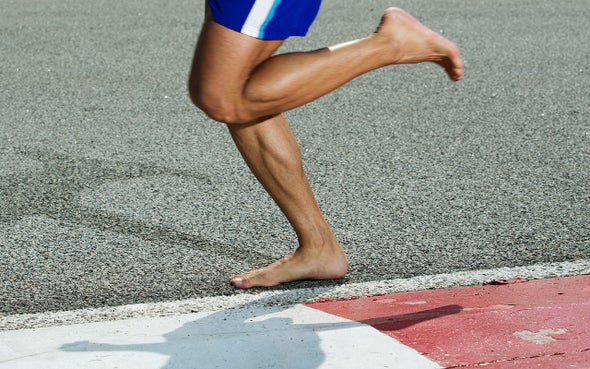
Going Barefoot Is Good for the Sole
Evolutionary biologist Daniel E. Lieberman caused an international stir nearly a decade ago when he published a paper showing that running in cushioned sneakers encourages people to hit the ground harder than running barefoot.
Lieberman, a professor of biological sciences at Harvard University, also started running barefoot himself as an experiment and kept doing it because he enjoyed it. Every spring, after running the Boston Marathon, /.../

Thursday, June 20, 2019

Metformin x Exercise

The diabetes drug metformin, sometimes taken to slow aging, may blunt the health benefits of exercise.
Gretchen Reynolds
“Doctors are very cognizant of drug-drug interactions,” he says. “It’s time we consider drug-and-exercise interactions, too.”

A popular diabetes drug sometimes taken to slow aging may diminish some of the expected health benefits of aerobic exercise in healthy older adults, according to a new report. The drug, metformin, can blunt certain physical changes from exercise that normally help people to age well./.../

Tuesday, April 30, 2019

Children under 5: exercise...

More exercise, less screen time
for children under 5 

Share
Tweet
Forward
Share
WHO has released new guidelines on physical activity, sedentary behavior and sleep for children under 5 years of age. The new guidelines set, for the first time, how long very young children should sit watching screens, called ‘sedentary screen time’. Quality sedentary time young children spend in interactive non-screen-based activities with a caregiver is very important for child development.

Improving physical activity, reducing sedentary time, ensuring quality sleep in young children will improve their physical, mental health and wellbeing. It will also help to prevent childhood obesity and associated diseases later in life.
News release
Read guidelines

Saturday, February 09, 2019

Irisin

How Exercise May Protect Against Alzheimer’s

by Neuroscience News
Researchers report irisin, a hormone released during physical exercise, may promote neurogenesis in the hippocampus. The study sheds new light on why exercise helps improve memory and could help to protect the brain against Alzheimer's disease.

Thursday, January 03, 2019

Physical activity

The health benefits of physical activity: 
Dear Aloyzio,
 
Monica is a 37 year old mother of 3 children. She works full time and finds her life increasingly stressful as she has to bring work home with her, and this is now affecting her home life and marriage. She notices that she is becoming increasingly anxious about her children’s health and is seeing her GP for minor ailments and problems with her sleep. One day she sees you on her own and breaks down in tears saying that she is finding things very difficult. 
How might you approach this scenario and do you think that physical activity is likely to help?
Health benefits of physical activity
Find out more in our module on The health benefits of physical activity: depression, anxiety, sleep, and dementia.

Sunday, December 30, 2018

Physical Activity Guidelines

Abstract
Importance  Approximately 80% of US adults and adolescents are insufficiently active. Physical activity fosters normal growth and development and can make people feel, function, and sleep better and reduce risk of many chronic diseases.
Objective  To summarize key guidelines in the Physical Activity Guidelines for Americans, 2nd edition (PAG).
Process and Evidence Synthesis  The 2018 Physical Activity Guidelines Advisory Committee conducted a systematic review of the science supporting physical activity and health. The committee addressed 38 questions and 104 subquestions and graded the evidence based on consistency and quality of the research. Evidence graded as strong or moderate was the basis of the key guidelines. The Department of Health and Human Services (HHS) based the PAG on the 2018 Physical Activity Guidelines Advisory Committee Scientific Report.
Recommendations  The PAG provides information and guidance on the types and amounts of physical activity to improve a variety of health outcomes for multiple population groups. Preschool-aged children (3 through 5 years) should be physically active throughout the day to enhance growth and development. Children and adolescents aged 6 through 17 years should do 60 minutes or more of moderate-to-vigorous physical activity daily. Adults should do at least 150 minutes to 300 minutes a week of moderate-intensity, or 75 minutes to 150 minutes a week of vigorous-intensity aerobic physical activity, or an equivalent combination of moderate- and vigorous-intensity aerobic activity. They should also do muscle-strengthening activities on 2 or more days a week. Older adults should do multicomponent physical activity that includes balance training as well as aerobic and muscle-strengthening activities. Pregnant and postpartum women should do at least 150 minutes of moderate-intensity aerobic activity a week. Adults with chronic conditions or disabilities, who are able, should follow the key guidelines for adults and do both aerobic and muscle-strengthening activities. Recommendations emphasize that moving more and sitting less will benefit nearly everyone. Individuals performing the least physical activity benefit most by even modest increases in moderate-to-vigorous physical activity. Additional benefits occur with more physical activity. Both aerobic and muscle-strengthening physical activity are beneficial.
Conclusions and Relevance  The Physical Activity Guidelines for Americans, 2nd edition, provides information and guidance on the types and amounts of physical activity that provide substantial health benefits. Health professionals and policy makers should facilitate awareness of the guidelines and promote the health benefits of physical activity and support efforts to implement programs, practices, and policies to facilitate increased physical activity and to improve the health of the US population.