Thursday, April 22, 2010


Earth Day at 40: The Planet Then and Now

40 Years of Earth Day: The Planet Then and Now
On April 22, 1970, the first observation of Earth Day took place, a massive series of gatherings, demonstrations and discussions across the U.S. that many credit as the birth of the modern environmental movement. An oil spill off the California coast was the event that triggered U.S. Senator Gaylord Nelson to launch Earth Day – but concerns about environmental health and the detrimental effects of industrialization were growing, over issues such as pesticide use, oil spills, poor air quality, pollution, loss of wilderness to development and declining biodiversity. Heralded as a resounding success, the first Earth Day resulted in the implementation of a number of U.S. environmental policies, and the movement quickly went global.
Yet today, the environmental challenges we face dwarf those that touched off that first celebration. And the planet we honor on Earth Day is a far different place from that of just four decades ago.
World population has almost doubled, from 3.7 billion to 6.9 billion. The amount of land paved over to build houses, cities and roads has increased 75 percent, from 228 million global hectares to 400 million global hectares, according to Global Footprint Network’s 2009 National Footprint Accounts. The amount of productive forest land required for fuelwood, paper and timber products, has gone up 53 percent to close to 2 billion global hectares. The productive land and sea area we need for food – for fishing, crops and grazing our livestock – has increased 69 percent, to 5.6 billion global hectares.

But the most staggering increase is reflected in our carbon Footprint: the amount of productive land area that would be needed to absorb our carbon emissions. Since 1970, our total carbon Footprint has more than tripled, from 2.9 to 9 billion global hectares. Carbon has also gone from being a smaller part of humanity’s total Footprint than cropland, to outstripping every other area of demand by a significant margin.
The result of this ecological overspending is clear from the crises we are confronting now – most prominently climate change, but also biodiversity loss, deforestation, fisheries collapse, soil erosion and other problems. Earth has changed from a place where we could operate as if resources were limitless, to one in which resource constraints are becoming a pressing and increasingly decisive concern./.../


Facebook CEO Mark Zuckerberg delivers a keynote address at a conference in San Francisco, Wednesday, April 21, 2010.
Marcio Jose Sanchez / AP
Facebook wants to make the Web more social, and in the process increase the information you're willing to share. That was the takeaway from founder Mark Zuckerberg's keynote at Facebook's F8 developer conference Wednesday, when the company rolled out a suite of new products it says can change the Web as much as the hyperlink did. Right now, it's challenging for Web sites to know anything about you, your interests or your friends. That's good in some ways — privacy, for one — but bad in others: short of having, you know, a conversation, it's tricky to share with your friends what you're interested in and discover what they like too.
Read more: http://www.time.com/time/business/article/0,8599,1983721,00.html?xid=newsletter-daily#ixzz0lpfp2Jre
Read more: http://www.time.com/time/business/article/0,8599,1983721,00.html?xid=newsletter-daily#ixzz0lpfp2Jre
Wednesday, April 21, 2010
Childhood Obesity Prevention
Let’s Move — Childhood Obesity Prevention from Pregnancy and Infancy Onward
Janet M. Wojcicki, Ph.D., M.P.H., and Melvin B. Heyman, M.D., M.P.H.
First Lady Michelle Obama unveiled her “Let’s Move” campaign against childhood obesity on February 9, 2010. The program’s main antiobesity strategies are empowering parents and consumers by revamping the nutritional labeling of products by the U.S. Department of Agriculture (USDA), improving the nutritionalstandards of the National School Lunch Program, increasing children’s opportunities for physical activity, and improving access to high-quality foods in all U.S. communities (www.letsmove.gov)./.../
Regulate Salt
Regulate Salt, IOM Says | |||||
|


Joel's Jukebox: Top 64 Stop Smoking Tunes

Joel's Jukebox: Top 64 Stop Smoking Tunes
With half of adult smokers smoking themselves to death, slaves to endless "want" flowing from highjacked dopamine pathways, one of life's greatest challenges is motivating nicotine addicts to seek recovery insight and understanding while still time. Today the popular quit smoking site WhyQuit.com unveils Joel's Jukebox, eleven hours of easy listening, yet another free quitting tool waiting to be discovered. Imagine 64 free sessions with one of the world's top stop smoking counselors.
Author of the popular free ebook "Never Take Another Puff" (over two million downloads) there's increasing awareness that Joel Spitzer may be the Babe Ruth of smoking cessation. Having started as a volunteer with the American Cancer Society in 1972, he has since presented more than 325 six-session quitting clinics spanning 13 days (each session two hours), and over 570 single session seminars.
"Added sugars" in diet
"Added sugars" in diet linked to higher triglycerides, lower HDL-C in NHANES data
APRIL 20, 2010 | Download slides
Atlanta, GA - It's been clear enough that a high-fat diet can worsen serum lipids, but less so that a diet with a lot of added sugar may do it as well. The case for it is stronger with a cross-sectional look at >6000 US adults that found significant, independent associations between increased intake of sugar-sweetened foods, which typically have added sucrose or high-fructose corn syrup, and elevated triglycerides (TG) and reduced HDL-cholesterol levels [1].
The analysis, based on 1999-2006 data from a National Health and Nutrition Examination Survey(NHANES) population, also suggested a big jump in consumption of added sugar compared with NHANES data from almost 30 years earlier, from 10.6% to 15.8% of daily calories, report its authors, led byJean A Welsh (Emory University, Atlanta, GA), in the April 21, 2010 issue of the Journal of the American Medical Association./.../
Trans fat
From Wikipedia, the free encyclopedia
Trans fat is the common name for unsaturated fat with trans-isomer fatty acid(s). Trans fats may bemonounsaturated or polyunsaturated but never saturated.
Unsaturated fat is a fat molecule containing one or more double bonds between the carbon atoms. Since the carbons are double-bonded to each other, there are fewer bonds connected to hydrogen, so there are fewer hydrogen atoms, hence "unsaturated". Cis and trans are terms that refer to the arrangement of chains of carbon atoms across the double bond. In the cis arrangement, the chains are on the same side of the double bond, resulting in a kink. In the trans arrangement, the chains are on opposite sides of the double bond, and the chain is straight./.../
Cover of original Crisco cookbook, 1912
Cover of original Crisco cookbook, 1912


This drug kills patients!
This drug kills patients! Avoiding sensationalism in clinical trials
APRIL 19, 2010 |Durham, NC - Reporting of important clinical trials needs to avoid unnecessary hype and fear-mongering and proceed in a scientific manner that helps define the risks and benefits of new therapies [1]. These are the conclusions from a group of researchers addressing the recent public sensationalism of clinical trials, particularly the emergence of unexpected cancer findings with ezetimibe (Zetia, Merck/Schering-Plough Pharmaceuticals) and prasugrel (Effient, Eli Lilly/Daiichi Sankyo).
"For those of us who conduct clinical trials, over the past several years there have been a number of sensational items in the lay and medical press about associations and unusual findings," Dr Magnus Ohman (Duke Clinical Research Institute, Durham, NC), the lead author of the commentary, toldheartwire. "These unusual findings have always occurred in clinical trials, and we're going to continue to see these events, but what has changed is that it has become very difficult to separate the wheat from the chaff."
Tuesday, April 20, 2010
Footprint
Endereço sugerido pelo AMICOR Emílio Moriguchi

FOOTPRINT SCIENCE »
Data and methods of Footprint accountingMore » 
FOOTPRINT FOR NATIONS »
Is your country an ecological creditor or debtor?More » 
FOOTPRINT FOR CITIES »
Accounting for your community’s futureMore » 
FOOTPRINT FOR BUSINESS »
Resource strategies for long-term successMore » 
FOOTPRINT FOR YOU »
What’s my Footprint and how can I change it?More »
Global Footprint Network is an international think tank working to advance sustainability through use of the Ecological Footprint, a resource accounting tool that measures how much nature we have, how much we use and who uses what.
By making ecological limits central to decision-making, we are working to endovershoot and create a society where all people can live well, within the means of one planet.
Saturday, April 17, 2010
The Asthma Island Story: Noe Zamel
 |
Dear Aloyzio,
On Saturday April 10 at the Annual Gathering of the Tristan da Cunha Association, held in Southampton, UK, I was the Guest Speaker and the BBC documentary "The Asthma Island Story" was shown. Along with the BBC documentary show a stamp event day cover to celebrate the special event was also presented and I was asked to autograph the covers. This was very emotional to me as you can imagine. Attached is the BBC Event Day Cover.
Best wishes,
Noe
On Saturday April 10 at the Annual Gathering of the Tristan da Cunha Association, held in Southampton, UK, I was the Guest Speaker and the BBC documentary "The Asthma Island Story" was shown. Along with the BBC documentary show a stamp event day cover to celebrate the special event was also presented and I was asked to autograph the covers. This was very emotional to me as you can imagine. Attached is the BBC Event Day Cover.
Best wishes,
Noe
Wednesday, April 14, 2010
Variation in Cardiologists' Propensity to Test and Treat
Variation in Cardiologists' Propensity to Test and Treat
Is It Associated With Regional Variation in Utilization?
Correspondence to F.L. Lucas, PhD, Center for Outcomes Research and Evaluation, Maine Medical Center, Portland, ME 04102. E-mail lucasl@mmc.org
Background: Regional variation in healthcare utilization, including cardiac testing and procedures, is well documented. Some factors underlying such variation are understood, including resource supply. However, less is known about how physician behaviors and attitudes may influence variation in utilization across regions.
Methods and Results: We performed a survey of a national sample of cardiologists using patients vignettes to ascertain physicians' self-reported propensity to test and treat patients with cardiovascular problems, computing a Cardiac Intensity Score for each physician basedon his/her responses intended to measure the physician's propensity to recommend high-tech and/or invasive tests and treatments. In addition, we asked under what circumstances they would order a cardiac catheterization "for other than purely clinical reasons." For some survey items, there was substantial variation in physician responses. We found that the Cardiac Intensity Score was associated with 2 measures of population based healthcare utilization measured within geographic regions, with a stronger association with general healthcare spending than with delivery of cardiac services. Although nearly all physicians denied ordering a potentially unnecessary cardiac catheterization for financial reasons, some physicians acknowledged ordering the test for other reasons, including meeting patient and referring physician expectations, meeting peer expectations, and malpractice concerns. More than 27% of respondents reported ordering a cardiac catheterization if a colleague would in the same situation frequently or sometimes, and nearly 24% reported doing so out of fear of malpractice. These 2 factors were significantly associated with the propensity to test and treat, but only fear of malpractice was associatedwith regional utilization.
Conclusions: Variability in cardiologists' propensity to test and treat partly underlies regional variation in utilization of general health and cardiology services. The factor most closely associated with this propensity was fear of malpractice suits. This factor may be an appropriate target of intervention.
Tuesday, April 13, 2010
What's Good for the Heart May Be Good for the Brain
|
Is the U.S. Army Losing Its War on Suicide?

Chris Hondros / Getty Images
From the invasion of Afghanistan until last summer, the U.S. military had lost 761 soldiers in combat there. But a higher number in the service — 817 — had taken their own lives over the same period. The surge in suicides, which have risen five years in a row, has become a vexing problem for which the Army's highest levels of command have yet to find a solution despite deploying hundreds of mental-health experts and investing millions of dollars. And the elephant in the room in much of the formal discussion of the problem is the burden of repeated tours of combat duty on a soldier's battered psyche./.../
Monday, April 12, 2010
Stroke-Congress Seoul - Korea October 2010

CONGRESS SECRETARIAT
Kenes International, 1-3, Rue de Chantepoulet, P.O. Box 1726, CH-1211 Geneva 1, Switzerland Tel: +41 22 908 0488, Fax: +41 22 906 9140,
E-mail: stroke2010@kenes.com
Kenes International, 1-3, Rue de Chantepoulet, P.O. Box 1726, CH-1211 Geneva 1, Switzerland Tel: +41 22 908 0488, Fax: +41 22 906 9140,
E-mail: stroke2010@kenes.com
Sunday, April 11, 2010
Much Ado About Nothing
April 10th, 2010
Astronomy Without A Telescope – Much Ado About Nothing
Written by Steve Nerlich
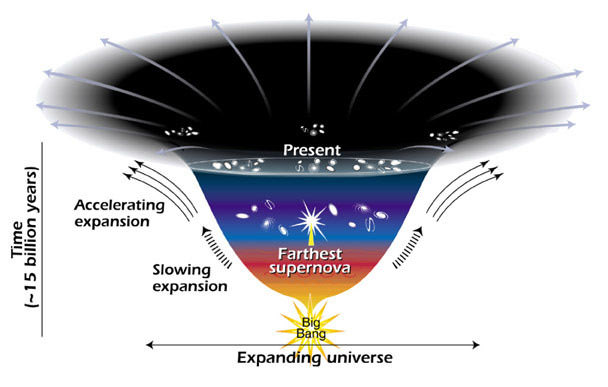 One of the most intriguing things in cosmology is empty space – that apparent spatial emptiness that didn’t obviously exist before the Big Bang. Although classical physics would have it that energy may neither be created or destroyed, it's certainly the case that empty space is being created in abundance as the universe expands.
Subscribe to:
Posts (Atom)