Translate AMICOR contents if you like

Tuesday, January 25, 2011

biblioteca.universia.net


Biblioteca de Recursos

La biblioteca universia de recursos de aprendizaje contiene 13.408.879 recursos de 202 colecciones..
Si estás interesado en conocer como funciona la Biblioteca, pincha aquí

Valora y opina

acerca de nuestros contenidos y lee las opiniones de otros usuarios
Foto altavoz

As Doctors Age, Worries About Their Ability Grow

As Doctors Age, Worries About Their Ability Grow


Well
About eight years ago, at the age of 78, a vascular surgeon in California operated on a woman who then developed a pulmonary embolism. The surgeon did not respond to urgent calls from the nurses, and the woman died.
Share your thoughts on this column at the Well blog.
Even after the hospital reported the doctor to the Medical Board of California, he continued to perform operations for four years until the board finally referred him for a competency assessment at theUniversity of California, San Diego./.../

Intertwining body-self-world

Referido pelo AMICOR Dr. Luiz E. Pellanda
Intertwining body-self-world

We invite attendees to explore the conference theme focussed on the challenges faced when attempting to theorise and research on the interface between bodies, selfhood and the social world.
Submissions on other topics within the remit of the tradition of human sciences research are of course very welcome.
The world is not an object", says Merleau-Ponty, it is the "field for, all my thoughts and all my explicit perceptions. [It is] "what I live through. I am in communication with it. (1962, p.xvii)
Existential phenomenologists argue that person and world are intertwined: "man [sic] is in the world, and only in the world does he know himself" (Merleau-Ponty, 1962, p.xi). Phenomenology wants us to relinquish our conditioning and to bring together polarities of mind-body, self-other, individual-social, feelings-thoughts, body-soul, nature-nurture, mental-physical. The hyphen signifies intertwining rather than separation: the world does not exist 'out there' separate from our perceptions, rather it is part of us and us of it.
While scientists might talk of perception as arising in the senses and interpreted by the brain, existential phenomenologists see perception as arising from our bodily engagement with the world. The world's colours/tones/textures proclaim themselves through our senses; space is disclosed through our body movements; a sense of self arises through our relations with others and is revealed to us through our own embodied reaching out. It is only in the world that we can come to know ourselves.
This intimate interlacing of body-self-world is our theme for the conference and we invite you to explore it (though presentations on other themes are welcome as well). You might, for instance, examine ways the essential permeation between body-self-world shows itself and how human science researchers do not access an 'inner world' so much as an individual's relationship to the world. You might seek to engage the complex interconnections which exist between physical/mental health and social circumstances or how illness is encountered in the context of daily activities and the relational and social realms of the lifeworld. Alternatively, you might wish to examine how to move beyond understandings focused solely on the individual to acknowledge ways self-boundaries are symbolic, practical social constructions formed through cultural convention.
Whatever your topic, please join us in Oxford and through dialogue we can explore our own interconnections./.../

Tobacco addiction


Bookshelf ID: NBK11741 PMID: 21250321

Chapter 46Tobacco Addiction

Prabhat Jha, Frank J. Chaloupka, James Moore, Vendhan Gajalakshmi, Prakash C. Gupta, Richard Peck, Samira Asma, and Witold Zatonski.
Image ch46fu1.jpg
Cigarette smoking and other forms of tobacco use impose a large and growing global public health burden. Worldwide, tobacco use is estimated to kill about 5 million people annually, accounting for 1 in every 5 male deaths and 1 in 20 female deaths of those over age 30. On current smoking patterns, annual tobacco deaths will rise to 10 million by 2030. The 21st century is likely to see 1 billion tobacco deaths, most of them in low-income countries. In contrast, the 20th century saw 100 million tobacco deaths, most of them in Western countries and the former socialist economies./.../

Cognitive Toolkit

January 17, 2011, 1:18 PM

What’s Missing From Our ‘Cognitive Toolkit’?

It’s clearly a pretty hard-wired system. But can we find ways to use what’s locked in our skulls to better effect? I’ll be writing more soon on that broad question, with a hint of my thoughts provided in a recent Tweet. Some variant on  noosphere is clearly nigh.
In the meantime, there’s a rich discussion of aspects of this question on Edge.org, a forum for all manner of minds, curated by the agent and intellectual impressario John Brockman. Once or twice a year since 1998, Edge has tossed provocative questions to variegated batches of scientists, writers, artists and innovators./.../

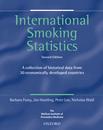
International Smoking Statistics

 ISS Second Edition
The 2nd edition included data up to 1995, and was published by OUP in 2002
:
A Collection of historical data from thirty economically developed countries. Second Edition
Edited by Barbara ForeyJan Hamling and Peter Lee all of P.N.Lee Statistics and Computing Ltd and Nicholas Wald of the Wolfson Institute of Preventitive Medicine, London.
                                 More information about the second edition
    Read a review    International Journal of Epidemiology (Book Reviews April 2004) 
                                 ( Review by Debbie A Lawlor)

ISS WEB Edition
© Barbara Forey, Jan Hamling, John Hamling, Peter Lee, 2006-2011
This work is copyright. It may be reproduced or quoted in whole or in part for study or research purposes, subject to inclusion of an acknowledgement of the source. It may not be reproduced for purposes other than those above or sold without written permission from the authors.
It is planned to publish a WEB Edition chapter for each country separately over the next few years.
The published WEB Edition chapters contain the most recently available data and are available to download as PDF and Excel files.
 
Latest WEB Edition update: 20-Jan-2011
Join the mailing list to be informed of future updates.                                                   
If you are aware of other relevant data sources that we have not included, please contact us so that the data can be considered for inclusion in future editions.

It's Not Which Stent; It's Why Stent?

By George Lundberg, MD, Editor-at-Large, MedPage Today  | January 24, 2011


Hello and welcome. I'm Dr. George Lundberg and this is At Large at MedPage Today.
In 1911, George Bernard Shaw famously wrote "All professions are a conspiracy against the laity".
One hundred years later, in 2011, I write "the MBA has done more to harm the public through bottom-line hospital administration than have many dread diseases".
As an example, the continuing saga of this stent, that stent, the other stent placed into as many coronary and other arteries as often and as fast as possible does show some signs of waning. See the New York Times url:

Quality Gains Elusive with EHRs

By John Gever, Senior Editor, MedPage Today
Published: January 24, 2011
Reviewed by Zalman S. Agus, MD; Emeritus Professor
University of Pennsylvania School of Medicine.

Electronic health records (EHRs) have been promoted as making outpatient care more efficient and boosting quality -- but data from two large prospective surveys seemed to find no clear improvement in the quality of care resulting from EHR use.

Reports on more than 250,000 outpatient visits indicated that, among 20 indexes of care quality, only one -- diet counseling for high-risk adults -- showed significantly better performance in EHR-related visits compared with visits tracked with conventional record-keeping systems, according to Max J. Romano and Randall S. Stafford, MD, PhD, both of Stanford University.

Their findings, reported online in the Archives of Internal Medicine, emerged from analysis of data from the National Ambulatory Medical Care Survey and from the National Hospital Ambulatory Medical Care Survey from 2005 to 2007, covering 255,402 patient visits to physician offices and hospital clinics./.../

Monday, January 24, 2011

Chronic diseases and development

From:

Ruggiero, Mrs. Ana Lucia 


Chronic diseases and development

The Lancet - Website: http://bit.ly/fvLopJ

“……..In September 2011, the UN will hold its first High-level Meeting of the General Assembly on chronic non-communicable diseases. The Lancet’s Series of papers is a contribution to preparations for the September meeting.
These papers cover a range of diseases – cardiovascular, diabetes, cancer, and chronic obstructive respiratory diseases – and present strategies for substantial health gains, monitoring, and scaling up of interventions. We also highlight earlier LancetSeries and provide links through to all of the relevant content. …’

Series Comment

Chronic diseases: global action must match global evidence
Robert Beaglehole, Richard Horton
Full Text | PDF/.../

The Foundations of Lifelong Health


InBrief: The Foundations of Lifelong Health

 This edition of the InBrief series explains why a vital and productive society with a prosperous and sustainable future is built on a foundation of healthy child development. This video summarizes findings from The Foundations of Lifelong Health Are Built in Early Childhood, a report co-authored by the National Scientific Council on the Developing Child and the National Forum on Early Childhood Policy and Programs.

New 7 minute online video summarising recent brain science and its implications for public health, programs and policy.
 
I like the way it covers the nutrition/town planning agenda in a way that I have not seen linked elsewhere.
 
I love the line they use the line "Early experiences are built into our bodies, creating
biological �memories� that shape development, for better or for worse."
 
It is also a good rationale for work to create child friendly cities communities.
 
It is from the Harvard Universities' Centre for the Developing Child.
 
If you are unfamiliar with this importance evidence this is a quick and effective introduction.
 
If you are familiar with these ideas, then these are  good resources to use to build support for policy/program change needed to create healthier, more productive and more equal futures.
 
I'm going to put a like to it in my Facebook page so my friends and colleagues can better understand why I work on what I work on.
 
Please share in the ways that are effective for you.
 
Online Video bit.ly/gONXhE
 
There is also concise two page written summary of the sciencehttp://bit.ly/hzojbs 
 
Malcolm Lewis.
Mental Health Promotion Officer
Darling Downs Public Health Unit
Southern Regional Services,
Division of the Chief Health Officer
Queensland Health
 
Phone 07 46319801
Fax: 07 4639 4772


Address: 3 Bell St, Toowoomba QLD 4350
Postal Address: PO Box 1775, Toowoomba QLD 4350  Australia 

National Library of Medicine 175th

The World Leader in Health Information and Innovation Celebrates 175 Years

National Library of Medicine staff members celebrate NLM�s 175th anniversary, standing in front of the current Library building on the NIH campus in Bethesda, Md.
Photo courtesy of jessicamarcotte.com
National Library of Medicine staff members celebrate NLM�s 175th anniversary, standing in front of the current Library building on the NIH campus in Bethesda, Md.
By Dr. Donald A.B. Lindberg, M.D.,Director, National Library of Medicine
In 1836, the library of the U.S. Army Surgeon General consisted of a small collection of medical books on one shelf. Today, the National Library of Medicine (NLM) is the world's largest biomedical library. With some 14 million items in more than 150 languages, it is the worldwide leader in trusted medical and health information and innovation.
But this unique library is about much more than books. Every day it delivers trillions of bytes of data crucial to the lives of millions everywhere. NLM–designed databases and tools lead people to helpful medical literature and health information; help researchers study genes and their role in disease; provide emergency responders with critical information on hazardous substances, and much, much more.

Sunday, January 23, 2011

Kiosko.net

Todos los periódicos del día
Toda la prensa de hoy

    Coronary Calcium May Narrow Field for Statin

    AHA: Coronary Calcium May Narrow Field for Statin Therapy

    By Ed Susman, Contributing Writer, MedPage Today
    Published: November 18, 2010
    Reviewed by Zalman S. Agus, MD; Emeritus Professor
    University of Pennsylvania School of Medicine and
    Dorothy Caputo, MA, RN, BC-ADM, CDE, Nurse Planner

    Action Points  
    • Note that this study was published as an abstract and presented at a conference. These data and conclusions should be considered to be preliminary until published in a peer-reviewed journal.
    • Note that this study suggests that it may be possible to use coronary artery calcium score to identify the subset of asymptomatic patients that would receive the most benefit from statin therapy.
    CHICAGO -- Physicians may be able to refine who will benefit most from taking statins by having patients undergo coronary artery calcium scans.
    By adding the calcium score to the treatment work-up model, researchers here at the annual scientific sessions of the American Heart Association said that they could reduce the number of patients needed to treat to prevent one event to 19 people -- lower even than the 25 to 50 number needed to treat described by the JUPITER investigators.
    In the JUPITER trial, patients with less than 130 mg/dL of low density lipoprotein cholesterol and higher levels of C-reactive protein were significantly able to reduce cardiac events when they were treated with rosuvastatin (Crestor). But the subjects in JUPITER didn't undergo coronary artery calcium scans./.../

    Os números da internet em 2010


    RENAN DISSENHA FAGUNDES (TEXTO) E DAVID MICHELSOHN (INFOGRÁFICO)Sabe quantos emails foram enviados durante o ano passado? E quantos novos sites surgiram?
    A Pingdom, uma empresa sueca de monitoramento de sites, publicou em seu site um levantamento com dados de fontes diversas da web mostrando em números o que foi a internet em 2010. Escolhemos alguns desses indicadores - tiramos aqueles que eram só sobre os Estados Unidos - e produzimos um infográfico pra facilitar a visualização. Confira:
    ÉPOCA

    Saturday, January 22, 2011

    The Joy of Stats

    Referred by the AMICOR Maria Inês Reinert Azambuja


    About the video

    Hans Rosling says there’s nothing boring about stats, and then goes on to prove it. A one-hour long documentary produced by Wingspan Productions and broadcast by BBC, 2010. A DVD is available to order from Wingspan Productions. Director & Producer; Dan Hillman, Executive Producer: Archie Baron. ©Wingspan Productions for BBC, 2010/.../