Translate AMICOR contents if you like

Friday, July 22, 2011

Stroke Burden Varies Considerably Around the World

Pauline Anderson
July 12, 2011 — Stroke mortality and disease burden relative to ischemic heart disease varies considerably around the world, with certain developing countries carrying a higher relative stroke burden, a new comprehensive global analysis shows.
"The most striking finding of this study was that even though heart disease was number 1 in terms of mortality burden as a whole worldwide, there are a substantial minority of countries where stroke is a larger burden than heart disease and many of these countries are in the developing world," said lead author Anthony S. Kim, MD, assistant professor of neurology, University of California, San Francisco.
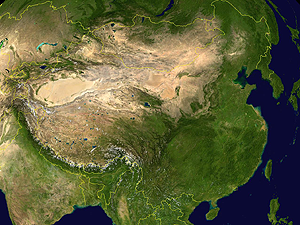
The new study suggests that the greater stroke burden in developing areas of the world may be due to lower national income and vascular risk factors.China in particular is a "big outlier" when it comes to stroke burden relative to heart disease, said Dr. Kim. "The high mortality from stroke in this nation far outpaces ischemic heart disease, which is the exact opposite of the situation in the US, where heart disease outstrips stroke as a cause of death."
The study was published online July 5 in Circulation.
Researchers used data on mortality and rates of disability-adjusted life-years lost from stroke and ischemic heart disease from 192 World Health Organization (WHO) member countries. They also accessed national estimates of risk factors developed by the WHO Burden of Disease Program and income data from World Bank estimates/.../
.

Going into hospital far riskier than flying: WHO

Thursday, July 21, 2011

A surgeon washes his hands before enter in an operating room at a hospital in Marseille, France, April 3, 2008. REUTERS/Jean-Paul Pelissier

  • By Stephanie Nebehay
GENEVA (Reuters) - Millions of people die each year from medical errors and infections linked to health care and going into hospital is far riskier than flying, the World Health Organization said on Thursday.
"If you were admitted to hospital tomorrow in any country... your chances of being subjected to an error in your care would be something like 1 in 10. Your chances of dying due to an error in health care would be 1 in 300," Liam Donaldson, the WHO's newly appointed envoy for patient safety, told a news briefing.
This compared with a risk of dying in an air crash of about 1 in 10 million passengers, according to Donaldson, formerly England's chief medical officer.
"It shows that health care generally worldwide still has a long way to go," he said./.../

Towards Reducing Health Inequities: A Health System Approach to Chronic Disease Prevention.

From: 
Ruggiero, Mrs. Ana Lucia 


A Discussion Paper. 
VancouverBC: Population & Public Health, Provincial Health Services Authority, (2011)

Available online PDF file at: http://bit.ly/r4HuZD

This report adds value in a number of ways by:

• Focusing on what the health system can do in relation to the design and delivery of services, with a particular emphasis on prevention;
• Uncovering and sharing information about several current BC initiatives and recent policy directions that can
  support the health system’s role in reducing health inequities;
• Providing more detailed information about issues and barriers within the health system in BC that may be inadvertently creating
  or perpetuating health inequities that contribute to chronic diseases in three specific underserved populations.
  Seven overarching barriers are identified that affect the availability, accessibility, and acceptability of health services in BC 
(see Section 4);
• Proposing five recommendations for action for addressing the barriers faced by those underserved populations (see Section 5),
  and highlighting two of those recommendations as priority recommendations 
(see Section 6);
• Building on the recommendations for action by identifying 27 specific opportunities for appropriate and relevant actions the health system can take (see Section 5);
• Identifying opportunities for further dialogue and action (see Section 6); and
• Providing a list of relevant equity related tools, resources, frameworks, and local activities and initiatives that can be aligned with,
  utilized, adapted, or built upon to implement the recommendations for action 
(see Appendix D & E).

Tools and resources include health equity/assessment tools, indicators, health literacy toolkits and courses, cultural competency training modules, community engagement frameworks, and cultural broker/patient navigator modules. These tools and  resources are conveniently organized by the opportunities for action they are intended to support…”

PROJECT: 

Reducing Health Inequities: A Health System Approach to Chronic Disease PreventionWebsite:  http://bit.ly/r9heKR A Health System Approach to Chronic Disease Prevention project to identify the actions the health system can take towards reducing health inequities. 
Three underserved populations were indentified for the focus of this work:

- immigrants,
- refugees, and
- individuals transitioning into and out of the corrections system. 
An engagement process was undertaken with a wide range of key stakeholders from across BC representing health authorities, government, and community organizations to collectively put forward recommendations for action to reduce health inequities and improve the quality and accessibility of the health system's policies, programs and services. ….”
Chronic Disease Prevention project Steering Committee:
Paola Ardiles, Chair (BC Mental Health & Addiction Services)
Lydia Drasic (PHSA Population & Public Health)
Carole Gillam (Vancouver Coastal Health, Primary Care)
Andrew Kmetic (PHSA Population & Public Health)
John Millar (PHSA Population & Public Health)
Ann Pederson (BC Women’s Hospital & Health Centre and the BC Centre of Excellence for Women’s Health)
Meredith Woermke (PHSA Population & Public Health)
Seeing the S-curve in everything

July 21, 2011 by Editor

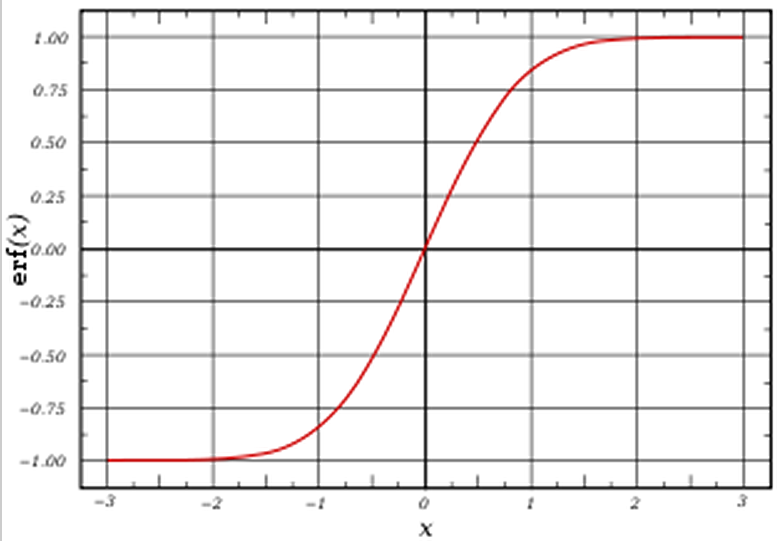
S-curve (credit: Wikipedia)
The ubiquitous logistics S-curve (also known as the sigmoid function) has long been recognized by economists and scientists. Now professor Adrian Bejan at Duke University, with collaborator Sylvie Lorente from the University Toulouse, has developed a theory that explains the reason for the prevalence of this particular pattern throughout nature and the man-made world.
Economic trends, population growth, the spread of cancer, or the adoption of new technology seem to follow certain patterns, says Bejan. A new technology, for example, begins with slow acceptance, followed by explosive growth, only to level off before “hitting the wall.”/.../

Thursday, July 21, 2011

Equity, social determinants and public health programmes

From: Ruggiero, Mrs. Ana Lucia 

Edited by Erik Blas and Anand Sivasankara Kurup 2010, 300 pages 
ISBN 978 92 4 156397 0 
World Health Organization 2010
Available online PDF [300p]  athttp://bit.ly/cv95bR
“…This book is a collection of analyses of the social determinants of health that impact on specific health conditions. Stemming from the recommendations of the Commission on Social  Determinants of Health, promising interventions to improve health equity are presented for the areas of: alcohol-related disorders, cardiovascular diseases, child health and nutrition, diabetes, food safety, maternal health, mental health, neglected tropical diseases, oral health, pregnancy outcomes, tobacco and health, tuberculosis, and violence and injuries.
The book was commissioned by the Department of Ethics, Equity, Trade and Human Rights as part of the work undertaken by the Priority Public Health Conditions Knowledge Network of the Commission on Social Determinants of Health, in collaboration with 16 of the major public health programmes of WHO. In addition to this, through collaboration with the Special Programme of Research, Development and Research Training in Human Reproduction, the Special Programme for Research and Training in Tropical Diseases, and the Alliance for Health Policy and Systems Research, 13 case studies were commissioned to examine the implementation challenges in addressing social determinants of health in low-and middle-income settings….”
To know more about the work of WHO on social determinants of health, please visit: www.who.int/social_determinants/en
Table of Contents
Acknowledgement 
Foreword
Chapter 1       Introduction and methods of work -  Erik Blas and Anand Sivasankara Kurup 
Chapter 2       Alcohol: equity and social determinants - Laura A. Schmidt, Pia Mä
kelä, Jürgen Rehm and Robin Room 
Chapter
 3       Cardiovascular disease: equity and social determinants  -  Shanthi Mendis  and A Banerjee
Chapter 4       Health and nutrition of  children: equity and social determinants
                     Fernando C. Barros, Cesar G. Victora, Robert W. Scherpbier, and, Davidson Gwatkin
Ch
apter 5       Diabetes: equity and social Determinants David Whiting, Nigel Unwin,  and Gojka Roglic Chapter 6       Food safety: equity and social determinants - Jean-Louis Jouve, Jens Aaagaard-Hansen and Awa Aidara-Kane
Chapter 7
       Mental disorders: equity and social determinants
                     Vikram Patel, Crick 
Lund, Sean Hatherill, Sophie Plagerson, Joanne Corrigall, Michelle Funk, and, Alan J. FlisherChapter 8       Inequity and Social Determinants of Neglected Tropical Diseases - Jens Aagaard-Hansen and Claire-Lise Chaignat Chapter 9       Oral health: equity and social determinants  -  Stella Kwan and Poul Erik Petersen Chapter 10      Unintended pregnancy and pregnancy outcome: equity and social determinants 
                      Shawn Malarcher, LG Olson and Norman Hearst 
Chapter 11      Tobacco use: equity and social determinants
                       Annette David, Katharine Esson , Anne-Marie Perucic and Christopher Fitzpatrick 
Chapter 12      Tuberculosis: the role of risk factors and social determinants
                       Knut Lönnroth, Ernesto Jaramillo, Brian Williams, Chris Dye, and Mario Raviglione 
Chapter 13      Violence and unintentional injury: equity and social determinants - Helen Roberts and David Meddings Chapter 14      Synergy for equity  Erik Blas and Anand Sivasankara Kurup

Vascular Dementia Rate Edges Alzheimer's Disease


By Chris Kaiser, Cardiology Editor, MedPage Today
Published: July 21, 2011
Reviewed by Zalman S. Agus, MD; Emeritus Professor
University of Pennsylvania School of Medicine.
Action Points  
  • Note that this AHA/ASA statement reviews current understanding of vascular contributions to cognitive impairment and dementia.
  • Point out that clinicians are encouraged to use screening tools to detect cognitive impairment in their older patients and to continue to treat vascular risks according to nationally or regionally accepted guidelines for the management of hypertension, diabetes, and hypercholesterolemia.
The rate of dementia in those older than 65 in developed countries can be as high as 10%, and while the prevalence of Alzheimer's disease doubles every 4.3 years, the prevalence of vascular dementia doubles every 5.3 years, according to a scientific statement from the American Heart Association/American Stroke Association.
Both Alzheimer's disease and vascular cognitive impairment share clinical and imaging features, and they may coexist, especially in later life, according to the statement published online July 21.
Philip B. Gorelick, MD, MPH, and Angelo Scuteri, MD, PhD, who co-chaired the working group that produced the statement, said that the evidence increasingly points to an alteration in neurovascular function as key to the pathobiology of Alzheimer's disease as well as vascular cognitive 

Censo 2010: Rio Grande do Sul também passa por envelhencimento populacional

Em análise realizada por pesquisadores do Observatório das Metrópoles, do núcleo de Porto Alegre e da Fundação de Economia e Estatística/RS, baseada nos dados divulgados até o momento pelo Censo 2010, verificou-se importantes mudanças no perfil demográfico do estado do Rio Grande do Sul, com destaque para o aumento da proporção da população de 45 a 64 e da população de 65 anos e mais.
Destaque também para a diminuição das crianças, jovens e adultos jovens (até os 44 anos). Mas foram as crianças de zero a quatro anos que mais diminuíram o peso na proporção de população no Estado. De fato, o índice de idosos subiu de 27,61% em 2000 para 44,61% em 2010. Essa é uma mudança muito significativa na estrutura demográfica gaúcha. Especialmente se levarmos em consideração que essa mudança atingiu tanto os homens como as mulheres./.../

Cancer Risk Higher in Tall Women


By Nancy Walsh, Staff Writer, MedPage Today
Published: July 20, 2011
Reviewed by Robert Jasmer, MD; Associate Clinical Professor of Medicine, University of California, San Francisco.
Tall women are at greater overall risk for cancer than their short counterparts, although the degree of risk varies depending on the type of cancer, a large U.K. prospective study confirmed.

Overall, for every four-inch increase in height over 5 feet, women had a 16% greater risk of developing cancer (95% CI 1.14 to 1.17,P<0.0001), according to Jane Green, DPhil, of the University of Oxford, and colleagues./.../

Wednesday, July 20, 2011

New Bible Aims for 'Common' Language, Gender Neutrality

By:  

We didn't know Jesus being called the “Son of Man” was so confusing. But the publishers of the Common English Bibletranslation want to clear up anything and everything that can confuse those inclined to dive into the Bible, so “Son of Man” now reads “the Human One.” Not exactly poetic, but arguably modern/.../


Kids on the Move


Making the case

Working with members and partners involved in the “Kids on the Move” project, the World Heart Federation has produced four factsheets to help members make the case for promoting healthy diet and physical activity as a priority for policy, school curricula, and community activity. Click on the pictures below to download the fact sheets in PDF.


Tuesday, July 19, 2011

publicidade de alimentos

Indicado pela profa. Dra. Maurem Ramos
Artigo trata do vergonhoso parecer do Conar sobre publicidade de alimentos

17/07/2011

Por Mariana Ferraz

“Da mesma forma que Suécia e Dinamarca tem por base evitar que suas crianças de olhos azuis fiquem gordinhas, o Brasil tem por base acabar com a desnutrição dos nossos meninos moreninhos. Ao contrário dos Estados Unidos, aqui o Mc’Donalds não é vício, é aspiração.” “Cada vez mais crianças pedirão um brinquedo para o pai e este orgulhosamente dirá: Sim, eu posso!” - Trechos do parecer de Enio Basilo Rodrigues aprovado com unanimidade pelo Conar (Conselho Nacional de Autoregulamentaçao Publicitária) - Representação n. 085/11./.../

Monday, July 18, 2011

Ageing: 100 Plus

100 Plus: How the Coming Age of Longevity Will Change Everything, From Careers and Relationships to Family and Faith (From Kurzweil)

author Sonia Arrison


100 Plus book coverAmazon | Humanity is on the cusp of an exciting longevity revolution. The first person to live to 150 years has probably already been born.

What will your life look like when you live to be over 100? Will you be healthy? Will your marriage need a sunset clause? How long will you have to work? Will you finish one career at sixty-five only to go back to school to learn a new one? And then, will you be happily working for another sixty years? Maybe you’ll be a parent to a newborn and a grandparent at the same time. Will the world become overpopulated? And how will living longer affect your finances, your family life, and your views on religion and the afterlife?
100 Plus, futurist Sonia Arrison takes us on an eye-opening journey to the future at our doorsteps, where science and technology are beginning to radically change life as we know it. She introduces us to the people transforming our lives: the brilliant scientists and genius inventors and the billionaires who fund their work. The astonishing advances to extend our lives — and good health — are almost here. In the very near future fresh organs for transplants will be grown in laboratories, cloned stem cells will bring previously unstoppable diseases to their knees, and living past 100 will be the rule, not the exception./.../

Atomic structure discovered for a sodium channel

July 14, 2011 by Editor (From Kurzweil)


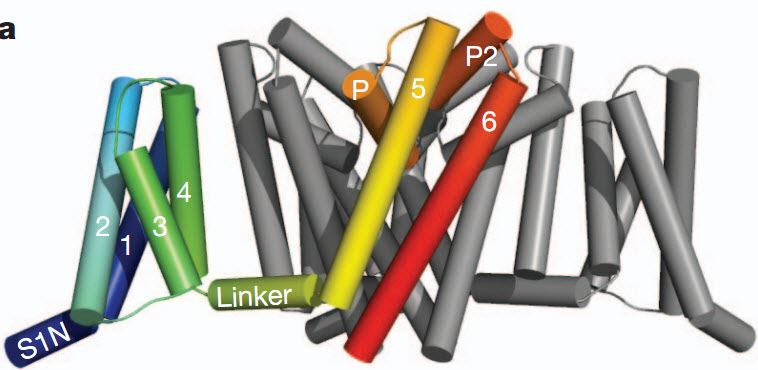
Voltage-gated sodium channel (credit: Jian Payandeh et al./Nature)
Scientists at the University of Washington in Seattle have determinedthe atomic architecture of a sodium channel at .27 nanometers resolution.
Sodium channels are pores in the membranes of excitable cells — such as brain nerve cells or beating heart cells — that emit electrical signals. Sodium channels selectively open and close to allow the passage of millions of tiny charged particles across the cell membrane. The voltage-gated flow of sodium ions generates electrical current in the brain.
Mutations in voltage-gated sodium channels underlie inherited forms of epilepsy, migraine headaches, heart rhythm disturbances, periodic paralysis, and some pain syndromes. Many medications for pain, epilepsy and cardiac arrhythmias –– as well as for local and regional anesthesia — act on sodium channels.
Knowing how form affects function in sodium channels could lead to many new ideas from scientists around the world on designing drugs to home in on critical areas of the sodium channel molecule, the researchers said.
Ref.: William A. Catterall, et al., The crystal structure of a voltage-gated sodium channel, Nature, 2011; [DOI:10.1038/nature10238]

Energy: 7 Radical Solutions


Multimedia from Scientific American

Dia Mundialda Atividade Física

segunda-feira, 18 de julho de 2011


  • Dia Mundial Atividade Física
    Informações e envio de resumos: www.simposiocelafiscs.org.br resumo não perca a chance de submeter o artigo na íntegra para publicação no suplemento especial da Revisimento

    www.simposiocelafiscs.org.br
    o Simpósio Internacional de Ciências do Esporte consolida-se como um importante evento científico que têm reunido nos últimos eventos pesquisadores e instituições proporcionando um forte intercâmbio educativo/científico entre os participantes.

  • Aprovada a Declaração de Porto Alegre sobre DCNT

    States Fight Back Against City Laws on Unhealthy Food

    By ADAM COHEN Monday, July 18, 2011

    The city of Cleveland took a stand against unhealthy restaurant food this year, adopting a ban on added trans fats. The new law could have helped reduce heart disease in the city, but before it could take effect, the Ohio state government stepped in — and overturned the ban.
    In recent years, cities have become more aggressive about trying to make the food sold within their borders healthier, at a time when heart disease is the No. 1 cause of death in the U.S. and a main cause of disability.