|
Sunday, March 24, 2013
Centro de Estudos sobre Tabaco e Saúde


Saturday, March 23, 2013
Brain Treatments
Head Lines | Mind & Brain
 See Inside
See InsideOld Drugs Find New Life as Brain Treatments
| March 21, 2013 | 1
Developing new drugs is no easy feat. As much as 95 percent of new compounds fail along the path to becoming clinically available. Attrition is especially high for drugs treating the central nervous system. The ones that do succeed rack up an average cost of $1.8 billion. So researchers are increasingly turning to the bottles already on the shelf. Proved safe for human consumption and often understood at a molecular level, today's familiar pills might just be tomorrow's medical discovery. Sometimes one man's side effect is another man's cure.

Earth Worst Days
Earth Worst Days

Higgs Boson
Jeanna Bryner, LiveScience Managing Editor
Date: 14 March 2013 Time: 08:01 AM ET
Confirmed! Newfound Particle Is a Higgs Boson
 |
 The mass of the Higgs boson particle, possibly uncovered at the Large Hadron Collider (LHC) in Geneva, may mean doom for our universe. Here, proton-proton collisions at the LHC showing events consistent with the Higgs. The mass of the Higgs boson particle, possibly uncovered at the Large Hadron Collider (LHC) in Geneva, may mean doom for our universe. Here, proton-proton collisions at the LHC showing events consistent with the Higgs.CREDIT: CERN/CMS/Taylor, L; McCauley, T |
A newfound particle discovered at the world's largest atom smasher last year is, indeed, a Higgs boson, the particle thought to explain how other particles get their mass, scientists reported today (March 14) at the annual Rencontres de Moriond conference in Italy.
Physicists announced on July 4, 2012, that, with more than 99 percent certainty, they had found a new elementary particle weighing about 126 times the mass of the proton that was likely the long-soughtHiggs boson. The Higgs is sometimes referred to as the "God particle," to the chagrin of many scientists, who prefer its official name.
But the two experiments, CMS and ATLAS, hadn't collected enough data to say the particle was, for sure, the Higgs boson, the last undiscovered piece of the puzzle predicted by the Standard Model, the reigning theory of particle physics/.../
.
.
Friday, March 22, 2013
Water Day
World Water Day
 Currently, more than one in six people-894 million-lack a source of safe drinking water. Two and a half billion people, including almostone billion children, live without even basic sanitation. The combined effects of a lack of clean water and basic sanitation are approximately 1.6 million preventable deaths each year.
On World Water Day, to celebrate freshwater and the sustainable management of freshwater resources, we are featuring a guest post by Ashley Grimes, a Project Officer at Kopernik. Grimes describes the imperative for improved access to safe drinking water, as well as the need to mobilize behind the existing solutions to this challenge. She also details three innovative and simple technologies currently in use in the communities with which Kopernik partners.
Click here to read more. Then, follow these links to learn more about how you can get involved in World Water Day, the International Year of Water Cooperation, or read the eBriefing from the New York Academy of Sciences' "Water and Health: Global Health and Our Shared Responsibilities" conference.
Featured question:
In the spirit of World Water Day, David Sherman asks "do electronic monitors measuring the output and quality of hand pumps for water have a future in remote areas in Africa?"/.../
Brain Activity
[+]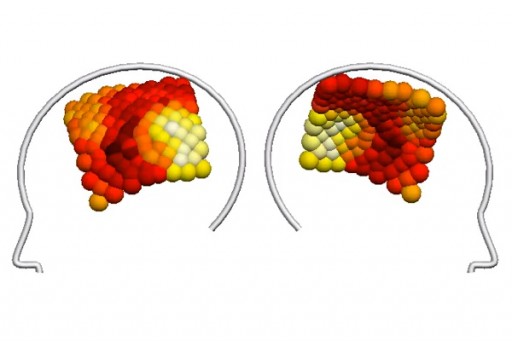
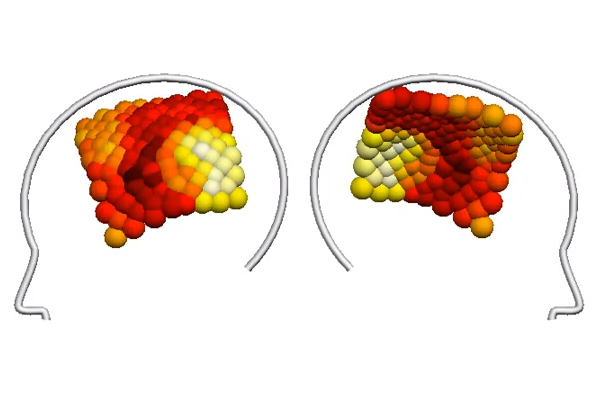
A still-shot of a wave of brain activity measured by electrical signals in the outside (left view) and inside (right view) surface of the brain. The color scale shows the peak of the wave as hot colors and the trough as dark colors. (Credit: David Alexander/KU Leuven)
Our understanding of brain activity has traditionally been linked to brain areas — when we speak, the speech area of the brain is active.
New research by an international team of psychologistsshows that this view may be wrong. The entire cortex, not just the area responsible for a certain function, is activated when a given task is initiated.
Furthermore, activity occurs in a pattern: waves of activity roll from one side of the brain to the other.
The research was led by David Alexander and Cees van Leeuwen (Laboratory for Perceptual Dynamics).
The brain can be studied on various scales, researcher David Alexander explains: “You have the neurons, the circuits between the neurons, the Brodmann areas — brain areas that correspond to a certain function — and the entire cortex.
Traditionally, scientists looked at local activity when studying brain activity, for example, activity in the Brodmann areas. To do this, you take EEG’s (electroencephalograms) to measure the brain’s electrical activity while a subject performs a task and then you try to trace that activity back to one or more brain areas.”/.../
Cosmology

Cosmic microwave background seen by Planck space telescope, (credit: ESA)
The most detailed map ever created of the cosmic microwave background — the relic radiation from the Big Bang — acquired by ESA’s Planck space telescope, has been released, revealing features that challenge the foundations of our current understanding of the Universe and may require new physics.
- The fluctuations in the CMB temperatures at large angular scales do not match those predicted by the standard model in physics — their signals are not as strong as expected from the smaller scale structure revealed by Planck.
- An asymmetry in the average temperatures on opposite hemispheres of the sky runs counter to the prediction made by the standard model that the Universe should be broadly similar in any direction we look.
- A cold spot extends over a patch of sky that is much larger than expected.
- Dark energy, a mysterious force thought to be responsible for accelerating the expansion of the Universe, accounts for less than previously thought.
Thursday, March 21, 2013
Cutting DNA

MAR 20, 2013 9:15 AM14,803 56
56
56

When scientists Phillipe Horvath and Rodolphe Barrangou set out to find a better way to make yogurt, they didn't expect to stumble across one of the future's most promising discoveries: a super protein that can accurately cut DNA—and could perhaps revolutionize genetic engineering.

The protein, called Cas9, can be exploited to snip strands of DNA in exactly the place researchers want. It doesn't make genetic engineering easy, but does make it much, much easier—as it allows researchers to splice sequences of DNA together affordably, with unprecedented accuracy.
So how does it work? Well, Cas9 was found last year to join forces with bacteria in such a way that, combined, they home into viruses and kill them by cutting their DNA at specific, targeted points. That's interesting—in fact, it made it a prime candidate for making yogurt production more efficient./.../
Wednesday, March 20, 2013
NCD

March 18, 2013
NCDs: A 47 Trillion dollar Problem We Cant Ignore
As Indian Americans, we have a lot to be proud of in our communities and in the changes underway in India. Today, to protect our families and this remarkable progress, we must address one of the greatest health and development challenges of the century, the rise of non-communicable diseases (NCDs). NCDs, including diabetes, heart disease, cancer, and chronic lung diseases, have thus far escaped our attention and collective action.
The Rising Threat of NCDs
NCDs kill 2 out of 3 people today – six times as many as from HIV, TB and Malaria combined, making them the greatest threat to health and development that you’ve never heard of. It’s a mistake to consider these diseases of affluence – 80% of the deaths are in developing countries, and NCDs hit the poorest of the poor the hardest. It’s true that India and other developing countries have raised standards of living and made great strides against many infectious diseases, but there is little time to celebrate: the recent Global Burden of Disease report from the World Health Organization established that while infectious disease is decreasing, the prevalence of NCDs is increasing rapidly around the world./.../
Oligomers and Alzheimer
Correlation of Specific Amyloid-β Oligomers With Tau in Cerebrospinal Fluid From Cognitively Normal Older Adults ONLINE FIRST
Published online March 11, 2013
ABSTRACT
Importance To improve the ability to develop treatments that prevent incipient Alzheimer disease (AD) from progressing to overt AD, it is important to understand the molecular basis of the earliest pathophysiological abnormalities and to determine how amyloid-β (Aβ) is involved very early in its pathogenesis.
Objective To investigate 2 specific Aβ oligomers, Aβ trimers and Aβ*56, in human cerebrospinal fluid (CSF); evaluate the effects of aging and AD; and obtain support for the hypothesis that they may be pathogenic by determining their relationships to CSF tau.
Design A CSF sampling study.
Settings The University of Minnesota Medical School in Minneapolis, Minnesota, and the Salhgrenska University Hospital, Sweden.
Participants Forty-eight older adults with mild cognitive impairment or AD (impaired group); 49 age-matched cognitively intact control subjects (unimpaired group); and 10 younger, normal control subjects.
Main Outcome Measures Measurements of CSF Aβ trimers, Aβ*56, the 42–amino acid Aβ isoform (Aβ1-42), total tau (T-tau), and phospho-tau 181 (p-tau181). The hypothesis being tested was formulated after data collection.
Results We observed that Aβ trimers and Aβ*56 levels increased with age; within the unimpaired group, they were elevated in subjects with T-tau/Aβ1-42 ratios greater than a cutoff that distinguished the unimpaired group from subjects with AD. In the unimpaired group, T-tau and p-tau181 were found to correlate strongly with Aβ trimers and Aβ*56 (r > 0.63), but not with Aβ1-42 (−0.10 < r < −0.01). The strong correlations were found to be attenuated in the impaired group.
Conclusions and Relevance In cognitively intact older adults, CSF Aβ trimers and Aβ*56 were elevated in individuals at risk for AD, and they showed stronger relationships with tau than did Aβ1-42, a surrogate for Aβ fibril deposition. These findings suggest that prior to overt symptoms, 1 or both of the Aβ oligomers, but not fibrillar Aβ, is coupled to tau; however, this coupling is weakened or broken when AD advances to symptomatic stages. The uncoupling is interesting in light of the failure of experimental Aβ therapies to improve mild cognitive impairment/AD, which has prompted a shift in the timing of Aβ therapies to asymptomatic subjects. Knowing which Aβ species to target in asymptomatic subjects may enhance the success of future treatments for AD.
Promising New Targets Identified in Early AD
Sugary Drinks
Sugary drinks may explain 180 000 deaths worldwide each year
MARCH 19, 2013large amounts of sugary beverages was associated with an increased body-mass index (BMI), which in turn was linked with BMI-related deaths from diabetes, CVD, and cancer [1].
Specifically, the researchers found that in 2010, 132 000 deaths from diabetes, 44 000 deaths from CVD, and 6000 deaths from cancer in the world could be attributed to drinking sugar-sweetened soft drinks, fruit juice, or sports beverages.
The study by Dr Gitanjali Singh (Harvard School of Public Health, Boston, MA) and colleagues was reported atEPI|NPAM 2013, the Epidemiology and Prevention/Nutrition, Physical Activity and Metabolism 2013 Scientific Sessions.
"It is a [surprisingly] large number of deaths—tens of thousands of deaths—that are being caused by consuming sugary beverages," Singh said in an interview. Three-quarters of these BMI-related deaths were from diabetes, which "suggests that limiting sugary-beverage intake is an important step in reducing diabetes deaths," she noted./.../
Kidney injury and Statin
"High-potency" statins linked to acute kidney injury in analysis
Montreal, QC - Taking statins at "high-potency" dosages, with levels depending on the agent, appears to raise the adjusted risk of acute kidney injury by 34% over the first four months of treatment, compared with taking lower-dose statins, suggests an analysis [1].
In the study, from Dr Colin R Dormuth (University of British Columbia, Vancouver) and colleagues and based on data from observational cohorts predominantly in Canada but also the UK and US, the high-potency statins wererosuvastatin (Crestor, AstraZeneca) at >10 mg/day, atorvastatin at >20 mg/day, and simvastatin at >40 mg/day. Statins at other dosages were defined as "low-potency."
The findings were published online today in BMJ.
From a total of 2 067 639 patients aged >40 years who started on statin therapy for the first time from 1997 to 2008, including almost 60 000 patients with a history of chronic kidney disease (CKD), each patient hospitalized with acute kidney injury over the next 120 days was propensity-matched to 10 who didn't develop acute kidney injury.
The rate ratio (RR) for hospitalization for acute kidney injury for users of high-potency vs low-potency statins was 1.34 (95% CI 1.25-1.43) for those without a CKD history and a nonsignificant 1.10 (95% CI 0.99-1.23) for those with a history of CKD./.../
Tuesday, March 19, 2013
Harvard OnLine
Harvard Online: A Worldwide Hit
When the Harvard School of Public Health opened its virtual doors last fall to a worldwide student body online, the first course they offered was neither broad nor lofty. But 55,000 students signed up for "Health in Numbers: Quantitative Methods in Clinical and Public Health Research."
In other words, biostatistics and epidemiology, together in one offering (PH207x for those looking in the online course catalog). The free course taught students basic lessons in how to handle variability and associated uncertainty, explained course co-developer Marcello Pagano, PhD, professor of statistical computing at Harvard, who has taught at the school for the past 35 years.
"Statistics is at the forefront and the foundation of public health in this country," said Pagano. The randomized clinical trial has been one of the major advances in medicine in the 20th century, he said, and "is just basic to everything."
The public health course was just one of many free offerings from edX, a not-for-profit enterprisebetween Harvard University and the Massachusetts Institute of Technology (MIT). EdX was designed to create a new online learning experience "with courses that reflect their disciplinary breadth," according to the organization's website.
Monday, March 18, 2013
Women In Health
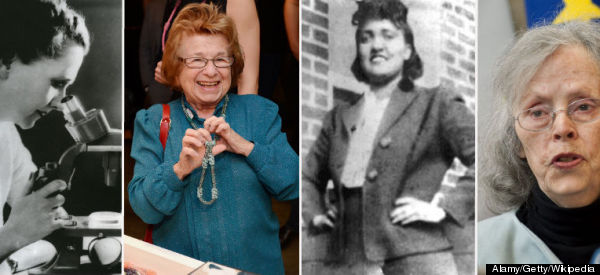
If you've received a blood transfusion, had lifesaving radiation therapy, experienced a natural birth or even lost weight by counting calories, you have used one of the many health innovations given to us by women in medicine. The history of women in medical professions is a long, not always happy one.
In honor of Women's History Month, the Healthy Living staff has been thinking about the accomplishments of women in science. As health journalists, we believe that all doctors and researchers deserve more recognition for their contributions to society. And as women, we can't help but notice that our gender is still treated differently in the sciences -- from colleague discrimination to legislation aimed at lessening the control female patients have over their bodies, it can sometimes feel as though we're living in a previous era.
That is, until we realize what previous generations actually went through. Take for example the story of Rosalind Franklin: the geneticist's strides in X-ray photography led to the best images of DNA strands of her era, but coworker Maurice Wilkins shared her images with a competing team at Cambridge, who used it to help solve the mystery of how DNA is structured. It wasn't until decades later that Franklin was recognized for her contribution -- well after her death and after that competing team (along with Wilkins) were awarded the Nobel Prize.
Now, we live in a country where half of medical school graduates are women and a country where we value -- have actually written into law -- retelling the accomplishments of women in our own history. So we decided to celebrate by bringing together a list of 50 women who have had the greatest impact in medicine and health research and have, in the process, taught us about our own bodies. Continue reading.../.../
In honor of Women's History Month, the Healthy Living staff has been thinking about the accomplishments of women in science. As health journalists, we believe that all doctors and researchers deserve more recognition for their contributions to society. And as women, we can't help but notice that our gender is still treated differently in the sciences -- from colleague discrimination to legislation aimed at lessening the control female patients have over their bodies, it can sometimes feel as though we're living in a previous era.
That is, until we realize what previous generations actually went through. Take for example the story of Rosalind Franklin: the geneticist's strides in X-ray photography led to the best images of DNA strands of her era, but coworker Maurice Wilkins shared her images with a competing team at Cambridge, who used it to help solve the mystery of how DNA is structured. It wasn't until decades later that Franklin was recognized for her contribution -- well after her death and after that competing team (along with Wilkins) were awarded the Nobel Prize.
Now, we live in a country where half of medical school graduates are women and a country where we value -- have actually written into law -- retelling the accomplishments of women in our own history. So we decided to celebrate by bringing together a list of 50 women who have had the greatest impact in medicine and health research and have, in the process, taught us about our own bodies. Continue reading.../.../
Invasão do Iraq: 10 anos...

The Iraq Invasion 10 Years Later: A Wrong War
"show the folly of overlooking local realities, be they political, cultural, or historic, and trying to impose our views on these societies and trying to remake these societies using large amounts of American military might."/.../
Subscribe to:
Posts (Atom)