Saturday, September 28, 2013


Friday, September 27, 2013

10 Things I Didn’t Know About Google
Interesting stuff that didn't fit into our big cover story.

For this week’s TIME cover story on Google’s “moon shot” projects — including Calico, a new company that will research ways to extend human life — I spent a big chunk of time hanging out at the company’s Googleplex headquarters talking to Googlers, including co-founder and CEO Larry Page. I’d visited Google often in the past, but never saw so much or spoke to so many people in different parts of the organization.
Much of what I learned made its way into the article. But I was also left with lots of interesting tidbits that didn’t get mentioned, either for lack of space or because they didn’t quite fit the scope of the story, which I co-wrote with colleague Lev Grossman.
Here are ten of them that I think are worth sharing:/.../
Wednesday, September 25, 2013
Metformin x Cognition
Diabetes Drug Metformin May Impair Cognition
Sep 24, 2013
EDITORS' RECOMMENDATIONS
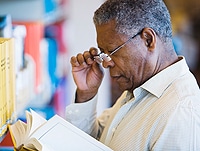

Metformin use in some patients with type 2 diabetes is associated with cognitive impairment that might be alleviated with vitamin B12 and calcium supplementation, a new study from Australia suggests.
This isn't the first time metformin has been linked to cognitive problems stemming from vitamin B12 deficiency, but prior data have been conflicting, lead author Eileen M. Moore, PhD, a medical research scientist in the department of surgery, Deakin University, Geelong Hospital, Barwon Health, Geelong, Australia, told Medscape Medical News.
Up to 30% of patients taking metformin may be deficient in B12, and this is thought to be due to an interaction between metformin and a receptor in the distal ileum, leading to some inhibition in the uptake of the vitamin, she and her colleagues say.
However, she told Medscape Medical News, "Metformin remains a very effective first-line antidiabetic drug and may reduce cardiovascular risk in patients with diabetes. Clinicians and patients should not be alarmed by these findings, but the need to monitor and correct vitamin-B12 levels is highlighted."
INTERNET 2050?
September 23, 2013 |
 A global computer-based communication network has fundamentally changed our social, cultural, and political landscape over the past 20 years. As an evolutionary anthropologist, I have to point out that there has been no previous communication revolution of this speed or intensity. Consequently, this communication tool gives us the power to completely restructure our entire existence, both on an individual and collective level.
As inescapably pervasive as the Internet’s emergence has been, fewer scientists are studying it, than you would think. Even fewer scientists are attempting to situate its emergence within the context of our technological evolution, or understand its potential future development in the 21st century.
So I’ll ask… what will the Internet be in 2050?
Today, I can’t help but notice that the Internet is getting more and more intelligent. When it first emerged it was passive and unorganized. Today, it is massively active, alerting you about opportunities that may interest you. It is also massively organized, with weighted hyperlinks, wikis, and powerful search engines.
Also, consider the obvious:
1) We keep giving the Internet more and more data every year
2) We keep using the Internet more and more every year
3) And finally, more and more of us are able to use the Internet every year
The end goal of some of these trends seem evident to me. We will eventually have all of our lives recorded in some way, shape, or form on the Internet. Some of this information may exist in mediums that don’t currently exist today.
We will also eventually have our entire communication existence mediated in some way through the Internet. The devices that we use to access the Internet keep getting smaller, and more intimately accessible. Will they eventually just become a part of our bodies this century? After the “wearables” revolution, the “internals” revolution will probably not be far behind.
And clearly all humans will eventually be able to access the Internet, wherever they are. Just consider the Google Loom project. All 7 billion of us (and then 8 billion, and then 9 billion of us) all interacting seamlessly and intimately on the Internet in new digital worlds of our own making.
Sharing, commenting, liking, buying, selling, writing, tweeting, hash-tagging.

Internet users per 100 inhabitants
Tannosomes
Tannosomes and the trickle-around effect: a new cell organelle is discovered
September 20, 2013 |  2
2
2
Last week, when French researchers unveiled a newly discovered plant organelle related to wine and tea, I waited for frenetic coverage. And waited. Only a few obscure wine websites covered the news.
When I contacted the study co-author, Jean-Marc Brillouet of the French National Institute for Agricultural Research (INRA), he immediately put me in touch with another team member who could speak with me on short notice (Brillouet’s schedule was booked)./.../
Medical Mistakes
How Many Die from Medical Mistakes in U.S. Hospitals?
An updated estimate says it could be at least 210,000 patients a year, more than twice the number in a frequently quoted Institute of Medicine report
By combining the findings and extrapolating across 34 million hospitalizations in 2007, James concluded that preventable errors contribute to the deaths of 210,000 hospital patients annually.
That is the baseline. The actual number more than doubles, James reasoned, because the trigger tool doesn't catch errors in which treatment should have been provided but wasn't, because it's known that medical records are missing some evidence of harm, and because diagnostic errors aren't captured.
An estimate of 440,000 deaths from care in hospitals "is roughly one-sixth of all deaths that occur in the United States each year," James wrote in his study. He also cited other research that's shown hospital reporting systems and peer-review capture only a fraction of patient harm or negligent care./.../
RNA

RNA da metástase
Estudo mostra papel de um tipo especial de ácido ribonucleico no processo de disseminação do câncer
MARCOS PIVETTA | Edição 211 - Setembro de 2013

Células epiteliais (em vermelho) e mesenquimais (verde): as primeiras não são capazes de migrar como as segundas
Aquelas sequências do genoma humano que não carregam instruções para a fabricação de proteínas e, uma década atrás, eram denominadas DNA lixo se mostram cada vez mais importantes para entender a maquinaria celular implicada em processos biológicos, inclusive em certas doenças. Um gene localizado no cromossomo humano 12 e conhecido pelo nome de Hotair gera um RNA bastante longo, composto por 2.200 nucleotídeos, que não dá origem a proteína alguma.
Tuesday, September 24, 2013
How 142 Nations Capitalize on Science
How 142 Nations Capitalize on Science
How well do mature and emerging nations capitalize on science?
| October 7, 2013
Since 2007 economists from Cornell University, INSEAD and the World Intellectual Property Organization (WIPO) have issued the annual Global Innovation Index (GII), a report that sizes up the innovative capacities and results of the world's economies. This year's report includes data on 142 economies, which represents 94.9 percent of the world's population and 98.7 percent of global GDP. How does one measure something as abstract as “innovation”? The GII researchers use 84 data points ranging from political stability to ease of starting a business to the number of Wikipedia edits originating there every year.
This year's big-picture findings: R&D spending has rebounded around the world after suffering in the wake of the global financial crisis. The same high-income usual suspects—the wealthiest European countries in particular—dominate the top of the list. The BRIC nations—Brazil, the Russian Federation, India and China—all slipped in this year's rankings. R&D spending is growing more quickly in emerging markets than in rich countries. And unexpected players such as Costa Rica, Uganda and Moldova are doing impressively well with comparatively little.

Multidimensional poverty
|
live webcast of side-event at the UN General Assembly
1.15-2.30 pm EST (GMT-4), 24 September 2013, United Nations, New York
Live and on-demand webcast coverage will be available on UN Web TV:
The Multidimensional Poverty Peer Network will hold a special side-event today to coincide with the High Level Meetings of the 68th Session of the UN General Assembly. The event will addressthe future of multidimensional poverty measurement in the context of the post-2015 development agenda.
Panelists working at the forefront of poverty measurement will make the case for a new multidimensional poverty index (MPI) 2015+ (also described as an MPI 2.0) to support the post-2015 development goals. The MPI2015+ would often be complemented by national MPIs, as in Mexico and Colombia, whose indicators reflect national priorities and contexts. The Network will echo calls for a ‘data revolution’ to undergird multidimensional poverty measures with better and more frequent data.
Confirmed speakers at the event on 24 September include:
Live and on-demand webcast coverage will be available on UN Web TV:http://webtv.un.org
Data shows that people who are multidimensionally poor are not necessarily income poor. Nor do the same policies reduce both poverties. By adopting a multidimensional poverty measure to support the post-2015 development goals, we can incorporate participatory insights of those living in poverty and ensure we eradicate both multidimensional and income poverty.
“We are now discussing new ways for the post-Millennium era. I think this approach could be extremely useful to help the whole world to measure itself socially in a much better way.”
Juan Manuel Santos, President of the Republic of Colombia
“I find the work on multidimensional poverty to be highly relevant and extremely useful for our efforts to substantially reduce poverty in the Philippines.”
Arsenio M. Balisacan, Minister of Socioeconomic Planning for the Philippines
This event is organised by the German Ministry for Economic Cooperation and Development, CONEVAL of Mexico, the Department for Social Prosperity of Colombia, the Oxford Poverty and Human Development Initiative at the University of Oxford (OPHI) and the newMultidimensional Poverty Peer Network, a global network of policymakers dedicated to advancing the multidimensional measurement of poverty and improving poverty reduction efforts.
==============================
| |
| friend us on Facebook |follow us on Twitter | |
Monday, September 23, 2013
Desigualdades
Dois artigos da Folha de SP recomendados pela AMICOR Maria Inês Reinert Azambuja
21/09/2013 - 03h00
21/09/2013 - 03h00
Inteligência e indigência
(Drauzio Varela. FSP)
Mil vezes ser filho de intelectuais ricos do que ter pais pobres e ignorantes. Nutrição inadequada, infecções de repetição e indigência cultural comprometem o desenvolvimento do cérebro da criança.
Vamos à pobreza.
O cérebro é o órgão que mais consome energia. No recém-nascido, 87% das calorias ingeridas são consumidas por ele. Esse número cai para 44% aos cinco anos; 34% aos dez; 23% nos homens e 27% nas mulheres adultas./.../
********
23/09/2013 - 01h30
Cidades: entre desafios e esperanças
(Raquel Rolnik)
Estava em Belfast, capital da Irlanda do Norte, em plena missão como relatora da ONU para o direito à moradia, chocada com os muros que separam as comunidades católicas das protestantes no norte da cidade (denominados --pasmem!-- de "peace lines" --ou linhas da paz), quando recebi o convite da Folha para publicar uma coluna quinzenal em "Cotidiano".
Aceitei imediatamente, reconhecendo o privilégio de poder abrir mais um espaço de reflexão sobre as cidades neste momento de nossa trajetória urbana. Mas por que este momento é particularmente especial?/.../
Sunday, September 22, 2013
2620 AMICOR 16 - Chegou a primavera!

the Art of Connecting
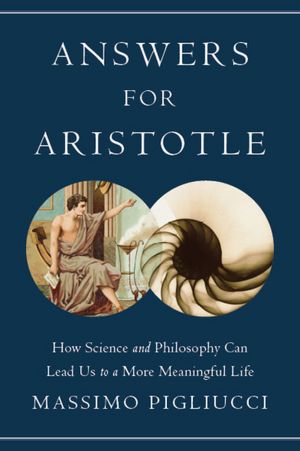
The Science and Philosophy of Friendship: Lessons from Aristotle on the Art of Connecting*by Maria Popova* *“Friends hold a mirror up to each other; through that mirror they can see each other in ways that would not otherwise be accessible to them, and it is this mirroring that helps them improve themselves as persons.”* *“A principal fruit of friendship,”* Francis Bacon wrote in his timeless meditation on the subject,*“is the ease and discharge of the fulness and swellings of the heart, which passions of all kinds do cause and induce.”* For Thoreau, friendship wasone of life’s great ... mais »
Sem título
The US government has betrayed the internet. We need to take it back The NSA has undermined a fundamental social contract. We engineers built the internet – and now we have to fix it • Explaining the latest NSA revelations – Q&A - [image: Bruce Schneier] - - Bruce Schneier - The Guardian, Thursday 5 September 2013 20.04 BST - Jump to comments (720) [image: Internet business cables in California.] 'Dismantling the surveillance state won't be easy. But whatever happens, we're going to be breaking new ground.' Photograph: Bob Sacha/Corbis Government and industr... mais »
long-term memory

Proteins that are vital to long-term memorySeptember 16, 2013 (Credit: iStockphoto) Scientists from the Florida campus of The Scripps Research Institute(TSRI) have found a group of proteins called Wnts that are essential to the formation of long-term memories. These proteins send signals from the outside to the inside of a cell, inducing a cellular response that is crucial for normal functioning of the adult brain (and aspects of embryonic development, including stem cell differentiation). “By removing the function of three proteins in the Wnt signaling pathway, we produced a deficit... mais »
Cooperation = Health

A radical new holistic view of health based on cooperation and disease based on competitionSeptember 16, 2013 A cytoscape analysis of all candidate genes identified at least twice and for which network information was available shows that many of the candidate genes are tightly linked to each other (credit: Marion Dejosez et al./*Science*) Researchers at The Mount Sinai Medical Center havedeveloped a radical holistic view of health — seeing it as a cooperative state among cells, while they see disease as result of cells at war that fight with each other for domination. Their unique a... mais »
Got rhythm?

Got rhythm? You can learn languages and reading better The surprising link between music, rhythmic abilities and language skills; can music training help you learn to read? September 18, 2013 Mechanical metronome (credit: Wikimedia Commons) Northwestern University researchers have found biological evidence linking the ability to keep a beat to the neural encoding of speech sounds. The study has significant implications for reading, according to Nina Kraus, director ofNorthwestern’s Auditory Neuroscience Laboratory. The study demonstrates that accurate beat-keeping involves synchronizatio... mais »
Power of Diverse Minds

How to Exploit the Power of Diverse Minds A good idea can be powerful. Many of them, in a network of diverse minds, can be more powerful still By The Editors 7 inShare Share on Tumblr [image: State of the World's Science 2013, Test Tubes]State of the World's Science 2013The growing connectedness of the world and the rising contribution of scientists and engineers from all continents have broadened the possibilities for human creativity »September 19, 2013 [image: Linked Chain in Beacons] Image: *Kotryna Zukauskaite* In Brief - Big corporations used to midwife good ... mais »
Inventiveness
When It Comes to Inventiveness, How Do Nations Compare? To foster innovation, a nation must take advantage of its location, history and culture, and reach outward to foreign markets and talent By Soumitra Dutta , Daniela Benavente and Sacha Wunsch-Vincent 10 inShare Share on Tumblr [image: State of the World's Science 2013, Test Tubes]State of the World's Science 2013The growing connectedness of the world and the rising contribution of scientists and engineers from all continents have broadened the possibilities for human creativity »September 19, 2013 [image: Two business... mais »
RABIRIUS

*Referência para meus amigos e parentes arquitetos e apreciadores da arte e fotografia* Rabirius (architect) From Wikipedia, the free encyclopedia *Rabirius* was an Ancient Roman architect who lived during the 1st and 2nd Century AD. His designs included the massive Flavian Palace, situated on the Palatine Hill at Rome, and the Alban Villa at present-day Castel Gandolfo, both erected on a commission by his patron, emperor Domitian.[1] Domitian's care for the architect may have been mirrored by Vespasian and Titus, his son, as the Colosseum in Rome (across from the Palatine Hill) resem... mais »
Chronobiology

*Artigo referido pela AMICOR Maria Inês Reinert Azambuja*Chronobiology: Stepping out of time - Michael Eisenstein Nature 497, S10–S12 (23 May 2013) doi:10.1038/497S10aPublished online 22 May 2013 Article tools - PDF - Citation - Reprints - Rights & permissions - Article metrics How can people better adapt to an 'unnatural' world of artificial lighting and alarm clocks? Subject terms: - Sleep - Circadian rhythms and sleep By the time Elizabeth Klerman boards the train to go to her office at Brigham & Women's Hospital in Boston, Massachusetts, the c... mais »
Imagination
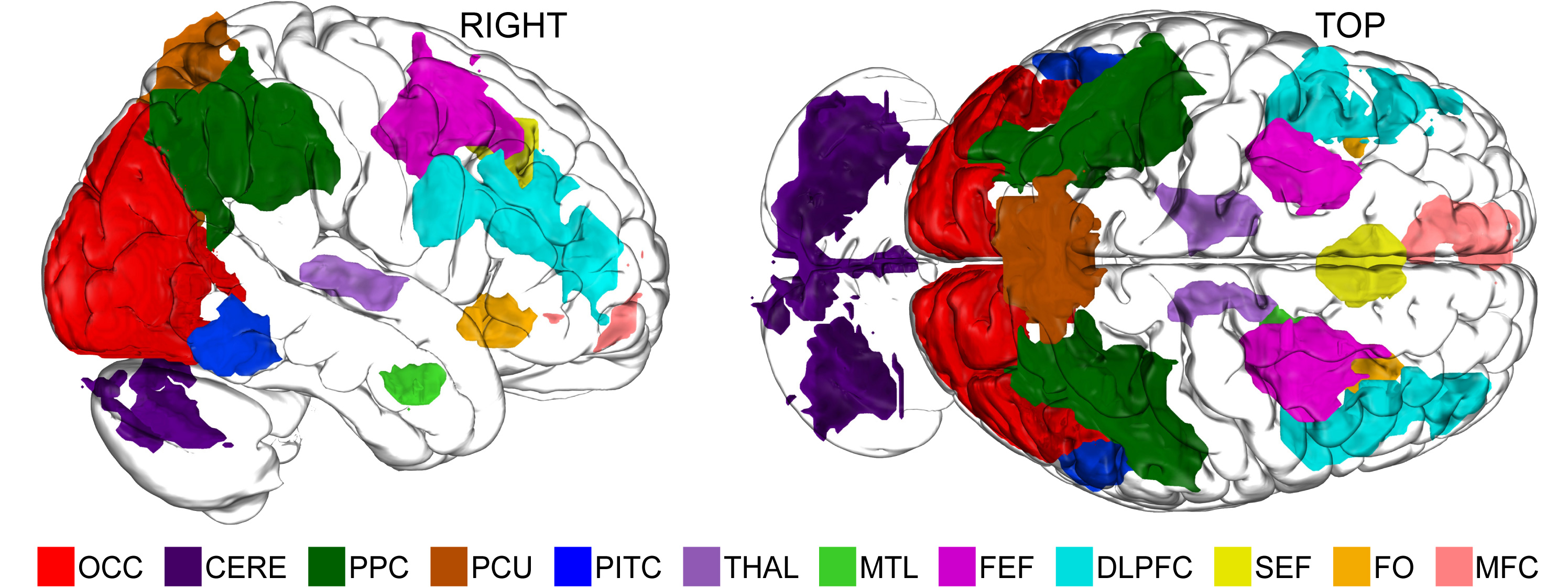
Where is imagination located in the human brain?September 18, 2013 *[+]*[image: Schlegel-mental-workspace-image-high-res.jpg] Eleven areas of the brain are showing differential activity levels in a Dartmouth study using functional MRI to measure how humans manipulate mental imagery (credit: Alex Schlegel) Imagination lies in a widespread neural network — the brain’s “mental workspace” — that consciously manipulates images, symbols, ideas and theories and gives humans the laser-like mental focus needed to solve complex problems and come up with new ideas, Dartmouth researchers conclude ... mais »
Forgetting
A gene for forgetting Could lead to new PTSD treatments September 20, 2013 [image: mit_memories_fade_away] (Credit: Christine Daniloff/MIT) A new study from MIT reveals a gene that is critical to the process of memory extinction (when older memories are replaced with new experiences). Enhancing the activity of this gene, known as Tet1, might benefit people with posttraumatic stress disorder (PTSD) by making it easier to replace fearful memories with more positive associations, says Li-Huei Tsai, director ofMIT’s Picower Institute for Learning and Memory. The Tet1 gene appears to control... mais »
Violent Video Games
A Plea for Caution: Violent Video Games, the Supreme Court, and the Role of Science Ryan C. W. Hall, MD, Terri Day, JD, LLM, MSSA, and Richard C. W. Hall, MD Additional article information Abstract On November 2, 2010, the US Supreme Court heard arguments in the case of *Schwarzenegger v Entertainment Merchants Association*, with a ruling expected in 2011. This case addressed whether states have the right to restrict freedom of speech by limiting the sale of violent video games to minors. To date, 8 states have tried to pass legislation to this effect, with all attempts being found un... mais »
Aging

Google seeks the fountain of youth By Charlie Osborne | September 19, 2013, 1:39 AM PDT Some of the best minds of my generation will eventually be destroyed by aging -- but not if Google can help it. Can the world's greatest information indexer really solve humanity's most universal problem?|*- Aly Windsor*, News Editor 0Comments more + - - - - - - - Think Google, think search engine, autonomous vehicles, Android and offices complete with gourmet food and slides. You don’t immediately associate the tech firm with the ageing process. However, according to t... mais »
Foucault
Google doodle honors Foucault and his pendulum - [image: Foucault's pendulum Google doodle] Google changed its doodle to honor Leon Foucault, inventor of the famed pendulum that demonstrated Earth's rotation. (Google / September 18, 2013) - - [image: How a comet impact may have jump-started life on Earth -- and elsewhere]How a comet impact may have jump-started life on Earth -- and elsewhere - Did life on Earth start on Mars? A scientist lays out the evidence - [image: Sun's magnetic field is about to flip: What it means for Earth]Sun's magnetic field is ... mais »
Subscribe to:
Posts (Atom)