Translate AMICOR contents if you like

Thursday, April 30, 2020

Spoken languages in the US

Most Spoken Languages in the U.S.


In the United States, 121,520,180 households speak English, and of those, 94,970,700 households only speak English. That means more than 26 million people speak a second language at home. 
Additionally, 8 percent of the U.S. population is considered limited-English proficient, meaning they more commonly speak another language. In fact, you may be surprised to learn there are 20 different languages commonly spoken across our 50 states.
Read on to discover the 20 most spoken languages in the U.S., as defined by the U.S. Census Bureau./.../

Bird photography

#birdphotography
Image

Dying soon

Would most covid-19 victims have died soon, without the virus?

 new study suggests not

“Sacrifice the weak”, urged a sign at a protest against Tennessee’s lockdown on April 20th—though whether the person holding it was trolling the other protesters is unknown. Some claim social distancing is pointless, since covid-19’s elderly victims would soon have died of other causes. In Britain many pundits have said that two-thirds of the country’s dead were already within a year of passing away. They cite an estimate made in March by Neil Ferguson, an epidemiologist at Imperial College London who advises the government.
Mr Ferguson notes that two-thirds was the upper bound of his estimate, and that the real fraction could be much lower. He says it is “very hard” to measure how ill covid-19’s victims were before catching it, and how long they might have lived otherwise. However, a study by researchers from a group of Scottish universities has attempted to do so. They found that the years of life lost (ylls) for the average Briton or Italian who passed away was probably around 11, meaning that few of covid-19’s victims would have died soon otherwise./.../

Solitude

Solitude has always been both a blessing and a curse


Two timely books spell out its dangers and perennial allure

In his “politics” Aristotle argued that, thanks to the gift of language, man is destined to be a social and therefore a political animal. Yet the human instinct to socialise has always been balanced by an urge to withdraw into solitude. A few hermits make their lives in isolation, but many ordinary folk believe society is only tolerable if punctuated by frequent spells on their own. “There are many modern thinkers who emphasise the individual’s dependency upon society,” John Cowper Powys, a British writer and advocate of solitude, observed. “It is, on the contrary, only the cultivation of interior solitude, among crowded lives, that makes society endurable.”
Historians are for the most part solitary creatures themselves—the sort of people who, at school, preferred reading to team sports and, as adults, desperately try to avoid committees in order to spend more time in the library. All the same, they generally focus on gregarious activities, whether politicians on manoeuvres or the masses on the march. Bucking that trend, a couple of fascinating books on social isolation have appeared in time for the lockdown. Fay Bound Alberti has tried her hand at a history of loneliness. David Vincent focuses on loneliness’s rather more interesting sibling, solitude. Both concentrate on late modern Britain, Ms Alberti because she argues, somewhat unpersuasively, that loneliness is a recent phenomenon, the product of industrialisation and secularisation; Mr Vincent because he has spent a lifetime studying the country’s modern social history. What Aristotle called the “bird which flies alone” is finally getting his due./.../

Philosophy


We need philosophy more than ever, but it has drifted too far from the issues that matter
More To That in Human PartsMember only content13 min read

Éduard Manet

Édouard Manet: A Bar at the Folies-BergèreFEATURED BIOGRAPHYÉdouard Manet
READ MORE

Philosophy


We need philosophy more than ever, but it has drifted too far from the issues that matter
More To That in Human PartsMember only content13 min read

Pandemic Glossary

Words to help you make sense of your experience

Forge Editors
Forge Editors
Apr 30 · 6 min read
Photo: Isabel Pavia/Getty Images

Covid toes?

Are 'covid toes' a real symptom of the coronavirus?


frostbite-like rash on a person's toes might be a symptom of the new coronavirus, according to anecdotal evidence from dermatologists around the world. 
However, research is needed to determine whether this peculiar rash is truly caused by  COVID-19.
The pinkish-reddish rash can turn purple over time, and causes a burning sensation in some people, Dr. Esther Freeman, a dermatologist at Massachusetts General Hospital in Boston, told The Washington Post. But the inflammation tends to disappear without treatment in two to three weeks, Freeman said.
View image on Twitter

Pandemias Histórias

Archaeological research is unearthing Venice’s quarantine history to illuminate how the Italian city created a vast public health response 700 years ago and helped lay the modern foundation for coping with pandemics.
READ MORE


Image
People were contracting and dying from plague at least 3,000 years before there’s any archaeological or historical evidence for an epidemic. Why didn’t these earlier infections lead to devastating outbreaks like the Black Death?
READ MORE

Wednesday, April 29, 2020

Medicalo response to Crisis

J. Barr and S.H. Podolsky
DOI: 10.1056/NEJMp2008512 | April 29, 2020
FREE
D.S. Jones
N Engl J Med 2020;382:1681-1683 | Published Online March 12, 2020
FREESlideshow

Universe

Today’s highlights
It’s often said that nothing can travel faster than light, but that’s only part of the story.
The anomaly from our universe’s past that still refuses to be solved
Ella Alderson in Predict5 min read

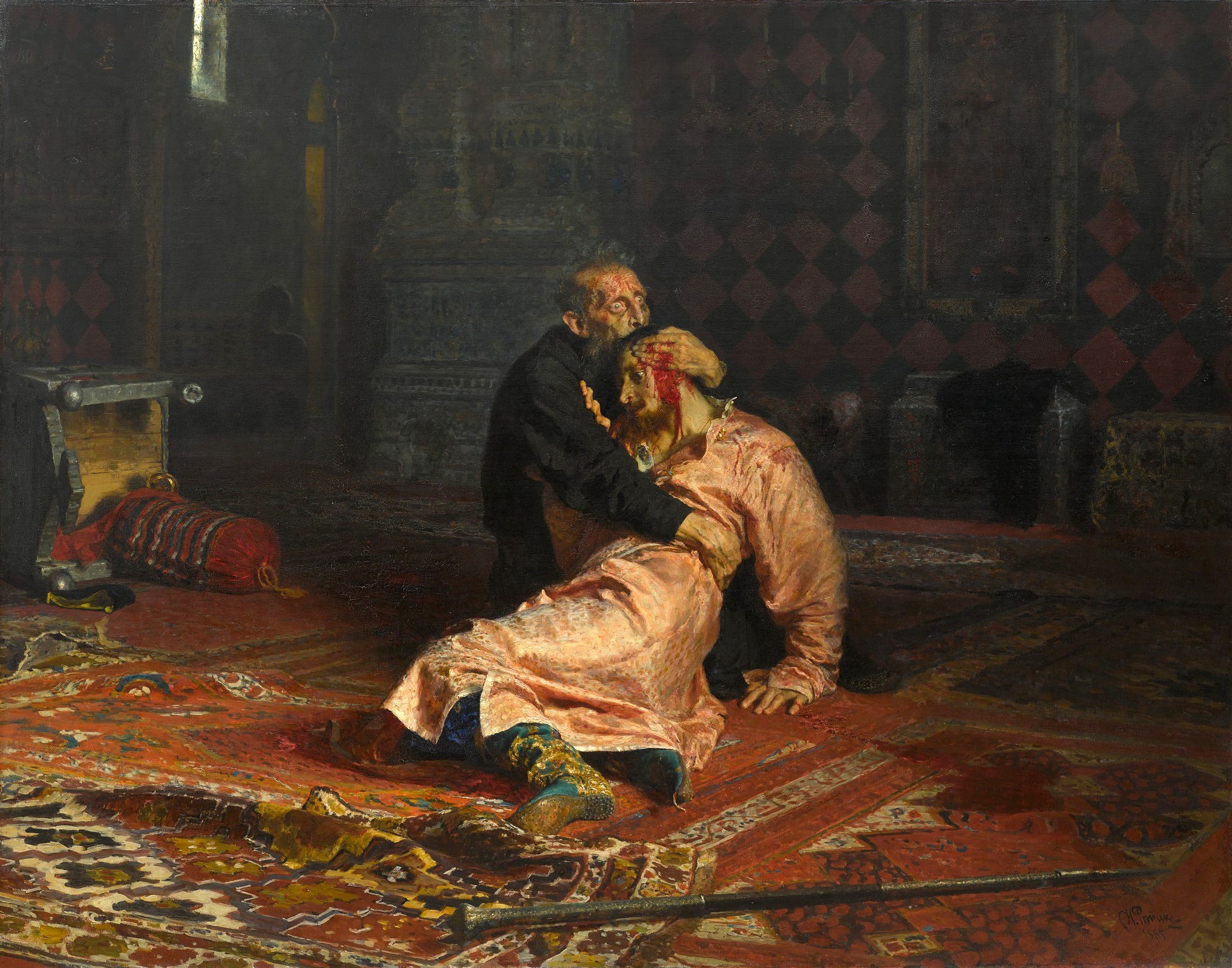
Ivan the Terrible


Was the founder of the Tsardom of Russia really as terrible as his name suggests?

Dark Matter

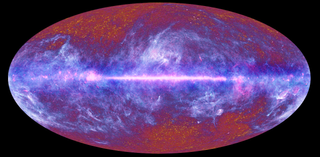
A long-lost type of dark matter may resolve the biggest disagreement in physics

A map of the sky shows the Cosmic Microwave Background (CMB), a remnant of the period of the early universe when this lost dark matter might have existed.
(Image: © ESA and the Planck Collaboration)
One of the deepest mysteries in physics, known as the Hubble tension, could be explained by a long-since vanished form of dark matter. 
The Hubble tension, as Live Science has previously reported, refers to a growing contradiction in physics: The universe is expanding, but different measurements produce different results for precisely how fast that is happening. Physicists explain the expansion rate with a number, known as the Hubble constant (H0). H0 describes an engine of sorts that’s driving things apart over vast distances across the universe. According to Hubble’s Law (where the constant originated), the farther away something is from us, the faster it's moving.