AMICOR 3.201
Ao abrir mais um encontro com meus AMICOR, desejo externar minha alegria por ter conseguido, passados 28 anos, o que era nosso objetivo inicial quando iniciamos este instrumento de comunicação, como uma forma de espichar, ou dar contiuidade, ao "Seminário de dez dias de Gramado, sobre Epidemiologia e Prevenção de Doenças Cardiovasculares", onde nos reunimos mais de trinta interessados de várias partes do pais, e alguns convidados internacionais. Nos primeiros tempos ficamos um tanto frustrados porque só acontecia um monólogo, com o apoio da Dra. Maria Inês Reinert Azambuja e a manifestação esporádica de alguns amigos que comprovavam estarmos sendo seguidos de perto. Havia também um subproduto que nos encorajava em continuar, que era uma forma de colecionar temas de interesse, aos quais podiamos retornar sempre que quizéssemos.
É provável que o formato inicial (que andou passando por várias tentativas de encontrar um mais adequado) e os múltiplos compromissos dos amigos, fossem fatores limitantes. Hoje, além das mudanças contínuas, estamos mais acostumados a usar a informática como instrumento de comunicação, e também o temário se expandiu e se diversificou. Hoje também não concentramos nosso interesse somente na Prevenção, e nas Doenças Cardiovasculares, mas nos expandimos para a Promoção da Saúde, dentro de uma perspectiva mais ampla, que eu ousaria chamá-la de Curiosidade pela Vida e sua Qualidade, madulada pelo Prazer (não somente Conheciemnto) do Encontro e do Intercâmbio.
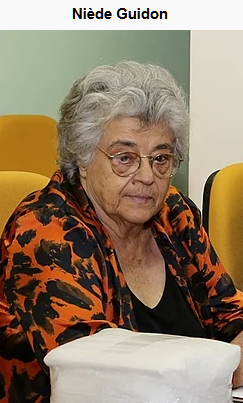
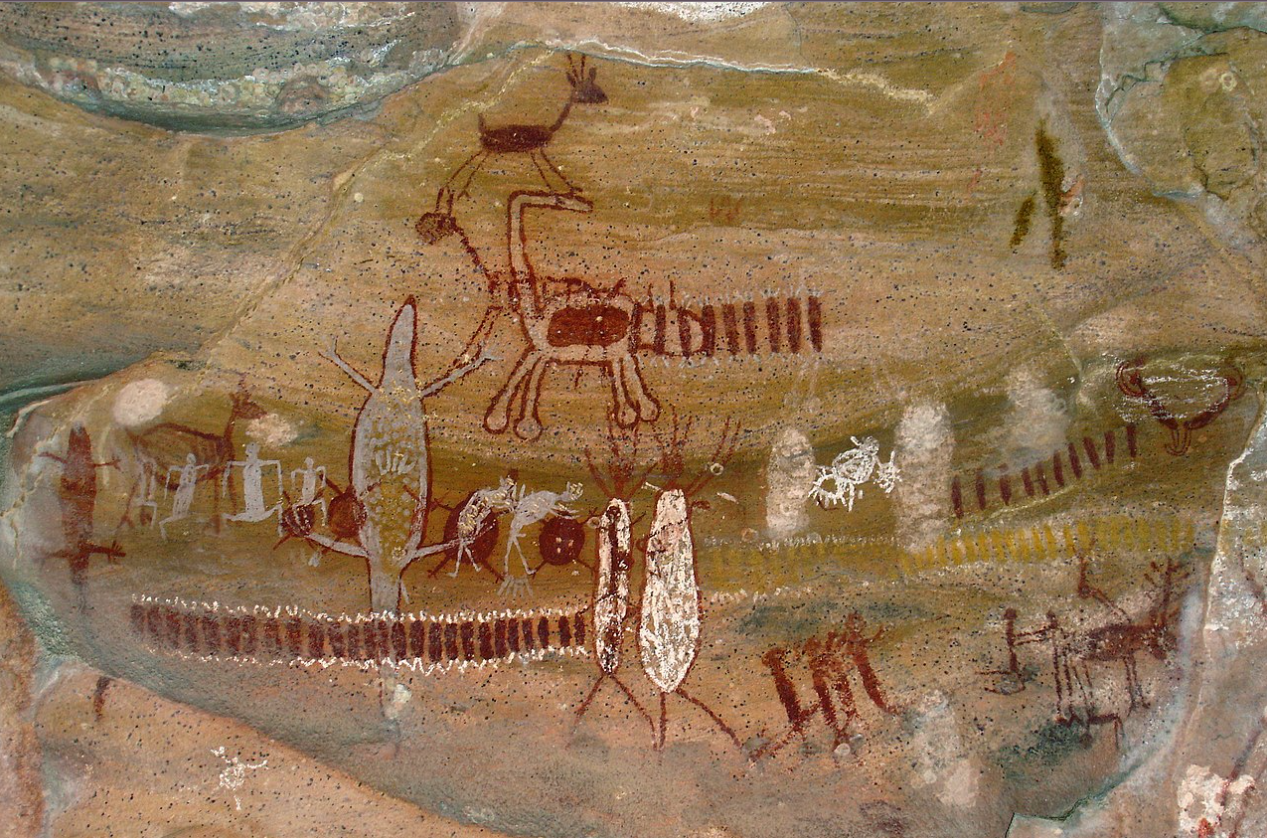
Usei como imagem introdutória uma Pintura Rupestre encontrada pela arqueóloga Niede Guidon (falecida no último dia 4, aos 92 anos) no Parque Nacional da Serra das Capivaras, que não deixa de ser um BLOG daquela época (de 30 a 50 mil anos atrás)...
Tentarei reproduzir alguns dos comentários e colaborações recebidas, mais ou menos cada semana. É possível que eu não consiga enviar a todos os AMICOR uma
mensagem de alerta sobre novas postagens. Quem quiser acessar por conta é só digitar
http://amicor.blogspot.com que abrirá as últimas postagens. Na coluna da direita também será possível acessar todas as outras
desde 2004. Também, por tema, é possível usar o recurso do
"search" que aparece logo no início. Comentários e contribuições pelo
Whats APP ou meu e-mail
achutti@gmail.com Para quem não desejar receber mais mensagens de alerta sobre nova postagem, pediria a gentileza de me envia uma mensagem excluíndo-se da lista AMICOR.
# Da Maria Inês Reinert: Henri Berson, o filósofo que desafiou Einstein e mudou para sempre a discussão sobre a natureza do tempo
e mais: https://youtu.be/OYZ6rRFx5gU?si=Cnn8gKjrTcHZqJ4B
# Da Anna Marisa Ossok: Como sempre,muito bom o AMICOR!! Não sabia do Aldir Blanc e da doença de sua filha. Outrossim, concordo com quem disse "que bom que o Sr. trouxe a IA para discussão no AMICOR".Grande abraço
# Do Roger dos Santos Rosa: 3.200! Baita marca!!! 👏👏👏
# Da minha irmã Maria Helena, com quem estou trabalhando conteúdos de Genealogia, tentando corrigi-los e colocar em ordem. Vai a seguir uma foto de nossa família pelo costado materno, onde eu estou como ecém nascido no colo de minha mãe Luiza Adamy Cechella. Da foto só restamos por aqui minha irmã e eu, ela a menininha de branco, de pé, entre nossa mãe e nossa avó... Meu tio Nilo Cechella, logo atrás de meu avô teve duas datas no corrente mês de junho a celebrar: nascimento no dia 3 e morte no dia 5 com quase 70 anos (em 1984)
# Da Adiles Tombini. Da varanda da casa dela, dia 05/06 às 17:24, em Florianópolis... # Do Roberto Rebés Abreu: Bom dia. Olha o Amicor remetendo aos Instagram e YouTube. Gostei da descoberta da música tá na cara, quem me olha sempre diz, tá morando em Itaara. E como os bons os vizinhos, o prato não pode voltar vazio, compartilho uma versão do tempo, interpretado pela Nana Caymi. https://youtu.be/bt3sTeYcoaM?si=AJfnnsUn_xpPVjC3 # Da Anna Paula Cechella: minha prima que mora no Rio, qua aniversariou no dia 2 p.p., filha de meu Primo Dr. Paulo Geraldo Cechella, falecido há um mes, e neta daquele que apontei na foto de família de minha mãe, que celebrou nascimento e fim da vida há poucos dias. Ela encomendou uma missa para o dia 5, em nome da família.# De minha Prima Denise Achutti: Boa noite ótimos artigos lindo vídeo da tua prima Ana Paula boa semana Abraço Denise
https://www.instagram.com/reel/DHnnDVvODoq/?igsh=MWV0bGJhZDlxYnlqbw==
# Do Dr. Tiago Roberto Sarmento LeiteEnvelhecer...
# Da Marza Severo:
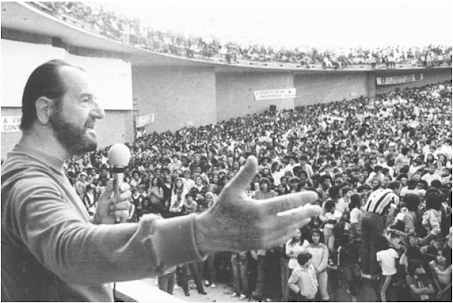
# Entre tantas outras manifestações agradeço a: C. Eduardo, Patrícia R., Jefferson R., Regina Y., Clovis Eloy K., Aristóteles Comte , Pedro Martin, Luiza Carolina L., Centro H C Santa Casa, Sarita M, André Pereira, Rosalda P., Dallarosa, Maria Zilda, Rosa Matia T. C., Mario Antônio M., Carla F., Familia Bordignon, Marineida F., Antonio P., Thiago Roberto SL., Verônica C., Emílio M., Rafael I., Ma. de Lourdes A., Tito, Valeskwa A., Custódia A. R. Rita....# Maurício Sirotsky Sob
100 anos em 05/06/1925. nasceu em Erebango. Comunicador, empresário, jornalista
 # AZLifeSciences
Uneveling the misteries of the Barr Bodies and Ageing
When it
comes to health, women age differently than men, particularly with regard to conditions such as cardiovascular disease and neurodegenerative disorders like dementia and Parkinson’s. Researchers at the Technical University of Munich (TUM) have now proposed a new explanation.
In aging female mice, genes on the second X chromosome, normally inactive, become reactivated. This genetic shift may play a role in how women’s health changes later in life./../
# Inteligência Artificial:
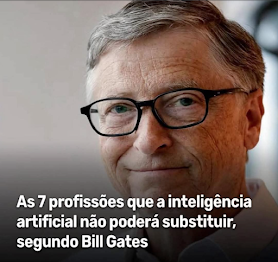
(14/05/2025) "Segundo Bill Gates, as sete profissões que a inteligência artificial não poderá substituir são:
1. Programadores: Apesar da IA auxiliar na codificação, a criação de soluções inovadoras requer criatividade e julgamento humano.
2. Profissionais de biotecnologia, energias renováveis e desenvolvimento de IA: Essas áreas demandam conhecimento multidisciplinar e sensibilidade que vão além da análise de dados.
3. Médicos: Embora a IA possa ajudar em diagnósticos, a tomada de decisões complexas e o cuidado empático com os pacientes são insubstituíveis.
4. Advogados: A interpretação das leis e a compreensão do contexto social exigem habilidades humanas que a IA não possui.
5. Educadores: A conexão emocional e a adaptação às necessidades individuais dos alunos são aspectos que a tecnologia não consegue replicar.
6. Profissionais de Recursos Humanos: A gestão de pessoas, resolução de conflitos e construção de culturas organizacionais saudáveis dependem de empatia e compreensão emocional.
7. Profissionais de Serviços Sociais: O apoio emocional e psicológico, bem como a intervenção em crises, requerem julgamento humano e habilidades que a IA não consegue reproduzir." #ia #ai #tecnologia #celular #dicas #computador Ver
|
| Each week Quanta Magazine explains one of the most important ideas driving modern research. This week, computer science staff writer Ben Brubaker explores how information theory shaped the modern world, and its unexpected connections to other areas of science. |
|
What Is Information? The Answer Is a Surprise.By BEN BRUBAKER |
|
It’s often said that we live in the information age. But what exactly is information? It seems a more nebulous resource than iron, steam and other key substances that have powered technological transformations. Indeed, information didn’t have a precise meaning until the work of the computer science pioneer Claude Shannon in the 1940s.
Shannon was inspired by a practical problem: What’s the most efficient way to transmit a message over a communication channel like a telephone line? To answer that question, it’s helpful to reframe it as a game. I choose a random number between 1 and 100, and your goal is to guess the number as quickly as possible by asking yes-or-no questions. “Is the number greater than zero?” is clearly a bad move — you already know that the answer will be yes, so there’s no point in asking. Intuitively, “Is the number greater than 50?” is the best opening move. That’s because the two possible answers are equally likely: Either way, you’ll learn something you couldn’t have predicted.
In his famous 1948 paper “A Mathematical Theory of Communication,” Shannon devised a formula that translated this intuition into precise mathematical terms, and he showed how the same formula can be used to quantify the information in any message. Roughly speaking, the formula defines information as the number of yes-or-no questions needed to determine the contents of a message. More predictable messages, by this measure, contain less information, while more surprising ones are more informative. Shannon’s information theory laid the mathematical foundation for data storage and transmission methods that are now ubiquitous (including the error correction techniques that I discussed in the August 5, 2024, issue of Fundamentals). It also has more whimsical applications. As Patrick Honner explained in a 2022 column, information theory can help you win at the online word-guessing game Wordle.
In a 2020 essay for Quanta, the electrical engineer David Tse reflected on a curious feature of information theory. Shannon developed his iconic formula to solve a real-world engineering problem, yet the underlying mathematics is so elegant and pervasive that it increasingly seems as if he hit upon something more fundamental. “It’s as if he discovered the universe’s laws of communication, rather than inventing them,” Tse wrote. Indeed, Shannon’s information theory has turned out to have unexpected connections to many different subjects in physics and biology.
What’s New and Noteworthy
The first surprising link between information theory and physics was already present in Shannon’s seminal paper. Shannon had previously discussed his theory with the legendary mathematician John von Neumann, who observed that Shannon’s formula for information resembled the formula for a mysterious quantity called entropy that plays a central role in the laws of thermodynamics. Last year, Zack Savitsky traced the history of entropy from its origins in the physics of steam engines to the nanoscale “information engines” that researchers are developing today. It’s a beautiful piece of science writing that also explores the philosophical implications of introducing information — an inherently subjective quantity — into the laws of physics.
Such philosophical questions are especially relevant for researchers studying quantum theory. The laws of quantum physics were devised in the 1920s to explain the behavior of atoms and molecules. But in the past few decades, researchers have realized that it’s possible to derive all the same laws from principles that don’t seem to have anything to do with physics — instead, they’re based on information. In 2017, Philip Ball explored what researchers have learned from these attempts to rebuild quantum theory.
Physics isn’t the only field influenced by ideas from information theory. Soon after Shannon’s paper, information became central to the way researchers think about genetics. More recently, some researchers have brought principles from information theory to bear on some of the thorniest questions in biology. In a 2015 Q&A with Kevin Hartnett, the biologist Christoph Adami described how he uses information theory to explore the origins of life. In April, Ball wrote about a new effort to reframe biological evolution as a special case of a more fundamental “functional information theory” that drives the emergence of complexity in the universe. This theory is still speculative, but it illustrates the striking extent of information theory’s influence.
As the astrobiologist Michael Wong told Ball, “Information itself might be a vital parameter of the cosmos, similar to mass, charge and energy.” One thing seems certain: Researchers studying information can surely expect more surprises in the coming years. |
|
| A 1992 profile in IEEE Spectrum, by the writer John Horgan, paints a vivid picture of Claude Shannon’s playful side. |
|
| James Gleick’s book The Information: A History, a Theory, a Flood is remarkably ambitious, touching on the development of written language, the telegraph and the rise of the internet as well as the origins and influence of Shannon’s information theory. Gleick discussed the themes of the book in a fascinating 2012 lecture at Harvard University. |
|
The science historian Matthew Cobb wrote a 2013 article in the journal Cell recounting how the language of information became widespread in biology.
| | How Much Energy Does It Take To Think?By CONOR FEEHLY Studies of neural metabolism reveal our brain’s effort to keep us alive and the evolutionary constraints that sculpted our most complex organ.
Read the article |
|
 | The Core of Fermat’s Last Theorem Just Got SuperpoweredBy JOSEPH HOWLETT By extending the scope of the key insight behind Fermat’s Last Theorem, four mathematicians have made great strides toward building a “grand unified theory” of math.
Read the article |
 | First Map Made of a Solid’s Secret Quantum GeometryBy SHALMA WEGSMAN Physicists recently mapped the hidden shape that underlies the quantum behaviors of a crystal, using a new method that’s expected to become ubiquitous.
Read the article |
|
For Algorithms, a Little Memory Outweighs a Lot of Time
With SAMIR PATELand BEN BRUBAKERA new proof upends a major assumption about the relationship between time and memory in computing.
Listen (Apple) | Listen (Spotify)
Read the article |
|
|
|
|
|
|
|
|
|