We honor the scrappy newcomers and established players that make the Web so useful, entertaining and just plain indispensable More »
This Blog AMICOR is a communication instrument of a group of friends primarily interested in health promotion, with a focus on cardiovascular diseases prevention. To contact send a message to achutti@gmail.com http://achutti.blogspot.com
Translate AMICOR contents if you like
Tuesday, August 16, 2011
Monday, August 15, 2011
An Anatomy of Addiction: When Two Brilliant Minds Met a 'Miracle Drug'
By LEV GROSSMAN Friday, Aug. 05, 2011

An Anatomy of Addiction by Howard Markel
The audience erupted. They had just witnessed one of the great moments in the history of anesthesia. The wonder drug was cocaine.
But it wasn't the cocaine we know today. When we first meet it in the distinguished medical historian Howard Markel's rich, revelatory new book, it's something else entirely. Markel's An Anatomy of Addiction: Sigmund Freud, William Halsted, and the Miracle Drug Cocaine is like the early pages of a family photo album, showing us cocaine as it has not been seen for over 100 years. The drug was pharmaceutically pure enough, to be sure, and plenty potent, but cocaine is now an institution, with its own politics and its own economics and its own malevolent cultural mythology. Back then it was just a novel chemical compound like any other: innocent, newly refined, culturally neutral, stripped of any meaning, its future bright and still full of promise.
Bury Our Nuclear Waste — Before It Buries Us
By EBEN HARRELL Monday, Aug. 15, 2011

These containers were used to transport low-level radioactive waste in Clive, Utah
George Frey / Bloomberg News / Getty Images
- COMMENT
Some 2 billion years ago, a natural-uranium deposit deep underground in what is now the west-central African country of Gabon spontaneously went critical. In the only known case of a nuclear-fission reactor forming naturally on earth, the Gabon deposit fissioned just like a modern-day power plant. As well as generating a substantial amount of heat, the uranium also produced a huge quantity of radioactive waste products, including around four tons of plutonium. Because this naturally occurring nuclear waste was buried deep underground, it remained remarkably well confined as it decayed over the course of millennia./.../
Projeto Percurso do Artista
Fotografia

Livro resume trajetória de Luiz Eduardo Achutti
Fotógrafo gaúcho autografa "Projeto Percurso do Artista" nesta segunda-feira
Sunday, August 14, 2011
Urban Sustainability in Latin America and the Caribbean
From:
|
Available online at: http://bit.ly/qMmbks
Likewise, economic activity in the region is significantly concentrated in its cities. Between 60% and 70% of the regional gross domestic product (GDP) is currently produced in urban areas. Despite this generation of wealth, two out of every three people in Latin American and Caribbean cities live in poverty. These circumstances, together with the growing importance of cities’ impact on the environment and the high vulnerability of Latin American and Caribbean cities to climate change, natural disasters, and financial limitations, create a need for reflection on the concepts of sustainability and urban development in LAC./.../
Stop big tobacco exploitation of agriculture
Visit www.FairTradeTobacco.org and view 24 new photographs on the health and socio-ecological costs of tobacco growing in developing countries. Each month a new set of tobacco farming photographs will be uploaded to www.FairTradeTobacco.org
World No Tobacco (WNT) Day on 31 May 2012 with a tobacco agriculture and human rights theme is the appropriate time for global tobacco control researchers and advocates to show others that tobacco is more than simply a health issue.
Sign the petition below to encourage the World Health Organization to declare "Stop big tobacco exploitation of agriculture" as the theme for WNT Day 2012.
http://www.change.org/
In solidarity
Marty Otañez
Assistant Professor
Anthropology Department
University of Colorado, Denver
marty.otanez@ucdenver.edu
http://www.fairtradetobacco.
Feliz dia dos Pais!...

Em nossa casa reunimo-nos para festejar:
três pais, três futuros pais
e quatro valerosas meninas....
três pais, três futuros pais
e quatro valerosas meninas....
British riots – a different perspective on digital media
Computing Our Way to Paradise?
(How) can the Internet and communications technologies
help achieve a more sustainable planet?
British riots – a different perspective on digital media
By RRThere are certainly many different perspectives to the summer 2011 British riots. This letter to the editor from Rose Dyson in the Globe and Mail/.../
Saturday, August 13, 2011
2514 - AMICOR 14
▼ 2011 (516)
- Health professionals for a new century: Transform...
- Morning Smoke Linked to Greatly Increased Cancer R...
- Plano de Enfrentamento das Doenças Crônicas Não Tr...
- The Most Useful Fitness Apps
- Berlin Wall
- Where is the consumer's voice in "Top Doctors/Best...
- Cigarettes Hurt Women's Hearts More than Men's
- London's richest people worth 273 times more than ...
- Censorship of the Patient-Physician Relationship
- Drug to Fight Any Viral Infection
- New Treatment Against Leukemia Shows Promise
- DNA in Space? Biological Building Blocks Found in ...
- Social Media’s Impact on Kids A Mixed Bag
- Bike Sharing Could Save Lives: Study
- Tobacco Industry Agriculture Exploitation
- Pneumologia: Princípios e Prática
Health professionals for a new century: Transforming education to strengthen health systems in an interdependent world
|
Available online PDF [116p.] at: http://t.co/ka3fWz6
“……….One hundred years ago, a series of studies about the education of health professionals, led by the 1910 Flexner report, sparked groundbreaking reforms. Through integration of modern science into the curricula at university-based schools, the reforms equipped health professionals with the knowledge that contributed to the doubling of life span during the 20th century. By the beginning of the 21st century, however, all is not well.
Glaring gaps and inequities in health persist both within and between countries, underscoring our collective failure to share the dramatic health advances equitably. At the same time, fresh health challenges loom.
New infectious, environmental, and behavioural risks, at a time of rapid demographic and epidemiological transitions, threaten health security of all. Health systems worldwide are struggling to keep up, as they become more complex and costly, placing additional demands on health workers.
Professional education has not kept pace with these challenges, largely because of fragmented, outdated, and static curricula that produce ill-equipped graduates.
The problems are systemic mismatch of competencies to patient and population needs; poor teamwork; persistent gender stratification of professional status; narrow technical focus without broader contextual understanding; episodic encounters rather than continuous care; predominant hospital orientation at the expense of primary care; quantitative and qualitative imbalances in the professional labour market; and weak leadership to improve health-system performance. Laudable efforts to address these deficiencies have mostly floundered, partly because of the so-called tribalism of the professions—ie, the tendency of the various professions to act in isolation from or even in competition with each other.
Redesign of professional health education is necessary and timely, in view of the opportunities for mutual learning and joint solutions offered by global interdependence due to acceleration of flows of knowledge, technologies, and financing across borders, and the migration of both professionals and patients…”
Morning Smoke Linked to Greatly Increased Cancer Risk

It seems intuitive when you think about it -- those who must smoke the quickest after waking, are likely the most addicted to cigarettes. And smokers who are most addicted, likely use more cigarettes on average, and thus have a higher cancer risk.
This straightforward hypothesis has been upheld in a pair of studies [1][2] currently previewed in the journal Cancer. Penn State University College of Medicine researcher Joshua E. Muscat, Ph.D, was the lead author on both studies./.../
Friday, August 12, 2011
Plano de Enfrentamento das Doenças Crônicas Não Transmissíveis
No título encontra-se o link para a Declaração Brasileira para Prevenção e Controle das DCNT.
Repasso a mensagem recebida da Dra. Betine Iser:
........ gostaria que divulgasse a notícia abaixo, e também que na próxima semana será realizado um fórum em Brasilia para apresentação e ratificação do Plano de Enfrentamento das Doenças Crônicas Não Transmissíveis.
Obrigada
Um Abraço
Betine Iser
É com grande satisfação que encaminhamos a DECLARAÇÃO BRASILEIRA PARA A PREVENÇÃO E CONTROLE DAS DOENÇAS CRÔNICAS NÃO TRANSMISSÍVEIS.
Apoie esse importante manifesto a favor da prevenção das Doenças Crônicas Não Transmissíveis.
Para isso, estamos enviando também um link por meio do qual você pode assinar essa declaração. Participe! "
Labels:
chronic diseases,
Health Promotion,
Prevention
The Most Useful Fitness Apps
If you're looking to turn your phone into a personal trainer, there are thousands of apps to choose from. Whether you want yoga moves, strength training tips or help training for a 5K, one of these apps will help you meet your fitness goals -- straight from your phone.
Berlin Wall
Construction of the Berlin Wall, which separated East from West Berlin from 1961 to 1989, began 50 years ago today. |
Where is the consumer's voice in "Top Doctors/Best Hospital" rankings?
This is a guest post from one of our HealthNewsReview.org medical editors, Harold DeMonaco, director of the Innovation Support Center at the Massachusetts General Hospital. By: Gary Schwitzer | August 11, 2011 There are approximately 800,000 practicing physicians in the United States and not all of them can be the best. Finding the best doctor is a hit-or-miss process, and even when you think you have found one, you really have no idea if your impression is valid. US News and World Report recently released a searchable database of the "Top Doctors" in the United States. Presumably consumers now have the ability to find the best physicians to care for them or family members. But is this more than simply a popularity contest and is care better when provided by the "top physicians" ?/.../Cigarettes Hurt Women's Hearts More than Men's

|
|
London's richest people worth 273 times more than the poorest
Academic argues in new book that society has the widest divide since the days of slavery
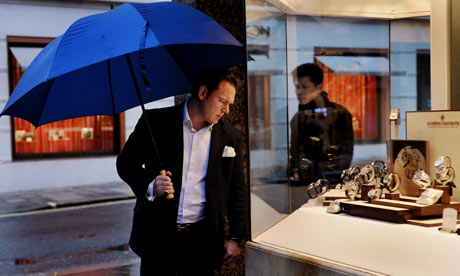
London is the most unequal city in the developed world. Photograph: Sarah Lee
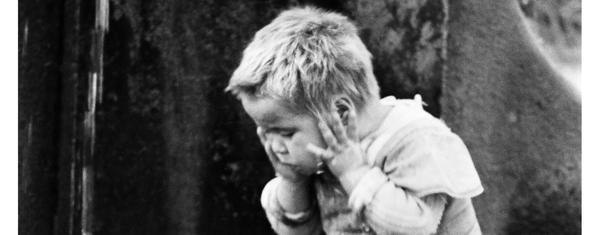
London is most unequal city in the developed world, with the richest tenth of the population amassing 273 times the wealth owned by the bottom tenth – which creates a "means chasm" not seen since the days of a "slave owning society", according to a new book.
In Injustice: Why Social Inequality Persists published by Policy Press, Danny Dorling, a professor of human geography at Sheffield University and an expert on social disparity, paints a bleak picture of an extremely unjust Britain where differences in wealth have led to a profoundly divided society.
Subscribe to:
Posts (Atom)