Translate AMICOR contents if you like

Showing posts with label peace. Show all posts

Thursday, February 28, 2019

Against Nuclear War

Contribuição do AMICOR Enrique Barros:

 See all authors and affiliations
Science  01 Mar 2019:
Vol. 363, Issue 6430, pp. 907
DOI: 10.1126/science.aax1180
Fifty years ago, on 4 March 1969, research and teaching at the Massachusetts Institute of Technology (MIT) came to a halt as students, faculty, and staff held a “research strike” for peace. The strike protested United States involvement in the Vietnam War and MIT's complicity in this engagement through its Instrumentation Laboratory (now the Draper Laboratory), a major contracting lab for the U.S. Department of Defense. The anniversary of this activism by scientists (see the Book Review on page 935 ) is a reminder that the scientific community must continue to recognize its social responsibilities and promote science as a benefit for all people and for a peaceful world./.../

Tuesday, October 02, 2018

Beating the Plowshare

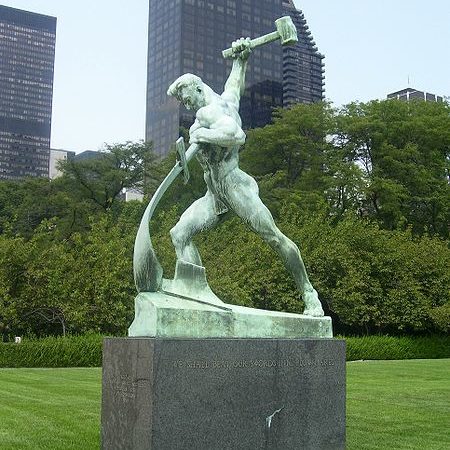
Let Us Beat Swords Into Plowshares
statue at the United Nations
Headquarters, New York City. |
Photo courtesy of Rodsan18
ADDRESSING CLIMATE CHANGE THROUGH THE UN SECURITY COUNCIL AS A FUNDAMENTAL THREAT TO LIFE, SUSTAINABLE DEVELOPMENT AND SECURITY ON THE EARTH.

The following article outlines a call for the UN Security Council (UNSC), consistent with Articles 25 and 26 of the UN Charter, to pass a resolution that is legally binding on all member-states to devote from 10-20 percent of their annual or projected defense budgets to the critical security issue of restraining and then reversing climate change. A more complete explanation of the Earth Armistice proposal, with supporting sources and footnotes, can be found here and in the MAHB’s library.

 THE IMMEDIATE IMPERATIVE: TIME FOR DECISION AND DECISIVE ACTION
In order to address and reverse climate change, the Earth Armistice requires that all states, following the appropriate UN Security Council Resolution (UNSC),[1] to set aside from 10% to 20% of their current and projected defense budgets yearly, and invest these funds domestically as well as internationally to: cut carbon consumption to near zero; develop and deploy green technologies to rapidly transition from carbon based energy or technology to sustainable energy and technologies; use negative emissions to develop and deploy carbon sequestration (Earth-based on land or in oceans) or geo-engineering (aerosol or in the atmosphere) technologies,[2] as well as engage and support massive conservation and –in honor of  Wangari Maathai of Kenya– reforestation efforts on every inhabited continent in the world.[3]
++++++++++++++++++++++++
Origin of plowshare
First recorded in 1350–1400, plowshare is from the Middle English word plowghschare. See plowshare2
Dictionary.com Unabridged Based on the Random House Unabridged Dictionary, © Random House, Inc. 2018

Examples from the Web for plowshare

Historical Examples of plowshare

  • They must beat their swords into plowshareand their spears into pruning-hooks.
    Ancient Art and Ritual
    Jane Ellen Harrison
  • To turn the bird sticks into pruning hooks and the bird baths into plowshares.
    Ptomaine Street
    Carolyn Wells
  • Plowsharebroke while they were turning the clods, the oxen died of pestilence, and blight befell the greencorn.
  • Quietly the golden grain ripens in the sun, and the red furrow of war is supplanted by the plowshares of peace.
    Sword and Pen
    John Algernon Owens
  • Beat your plowshareinto swords, and your pruninghooks into spears: let the weak say, I am strong.

Word Origin and History for plowshare

n.
late 14c., from plow + share (n.2). To beat swords into plowshares is from Isaiah ii:4.

Friday, September 21, 2018

International Day of Peace: September 21

On the occasion of the International Day of Peace being celebrated across the world on September 21, the UN Chief Antonio Guterres in his message urged the world community saying, "Let us act together to promote and defend human rights for all, in the name of lasting peace for all."

He affirmed that peace takes root when people were free from hunger, poverty and oppression and could thrive and prosper. "With the Universal Declaration of Human Rights as our guide, we must ensure the achievement of the Sustainable Development Goals. I encourage you to speak up. For gender equality. For inclusive societies. For climate action. Do your part at school, at work, at home. Every step counts," he acknowledged./.../

Monday, November 28, 2016

Human Rights


Who is behind Human Rights Watch?
by Paul Treanor
Reposted September 7, 2001

The backgrounds of the Board members of Human Rights Watch (HRW), Europe-Central Asia section, with an indication of HRW funding sources. HRW is founded on the idea that the values of the United States are universal, and that the US must impose them on the rest of the world. As the largest human-rights lobby, it is partly responsible for the increasingly expansionist US foreign policy./.../

Thursday, January 14, 2016

Albert Schweitzer

From E. Britannica:

Albert Schweitzer

Alsatian-German theologian and physician
Albert SchweitzerAlsatian-German theologian and physician

Born
January 14, 1875
Kaysersberg, Germany
Died
September 4, 1965


Albert Schweitzer,  (born Jan. 14, 1875, Kaysersberg, Upper Alsace, Ger. [now in France]—died Sept. 4, 1965LambarĆ©nĆ©Gabon), Alsatian-German theologian, philosopher, organist, and mission doctor in equatorial Africa, who received the 1952 Nobel Prize for Peace for his efforts in behalf of “the Brotherhood of Nations.”
The eldest son of a Lutheran pastor, Schweitzer studied philosophy andtheology at the University of Strasbourg, where he took the doctor’s degree in philosophy in 1899. At the same time, he was also a lecturer in philosophy and a preacher at St. Nicholas’ Church, and the following year he received a doctorate in theology. His book Von Reimarus zu Wrede (1906; The Quest of the Historical Jesus) established him as a world figure in theological studies. In this and other works he stressed the eschatological views (concerned with the consummation of history) of Jesus and St. Paul, asserting that their attitudes were formed by expectation of the imminent end of the world.
During these years Schweitzer also became an accomplished musician, beginning his career as an organist in Strasbourg in 1893. Charles-Marie Widor, his organ teacher in Paris, recognized Schweitzer as a Bach interpreter of unique perception and asked him to write a study of the composer’s life and art. The result was J.S. Bach: le musicien-poĆØte (1905). In this work Schweitzer viewed Bach as a religious mystic and likened his music to the impersonal and cosmic forces of the natural world.
In 1905 Schweitzer announced his intention to become a mission doctor in order to devote himself to philanthropic work, and in 1913 he became a doctor of medicine. With his wife, HĆ©lĆØne Bresslau, who had trained as a nurse in order to assist him, he set out for LambarĆ©nĆ© in the Gabon province of French Equatorial Africa. There, on the banks of the OgoouĆ© (Ogowe) River, Schweitzer, with the help of the natives, built his hospital, which he equipped and maintained from his income, later supplemented by gifts from individuals and foundations in many countries. Interned there briefly as an enemy alien (German), and later in France as a prisoner of war during World War I, he turned his attention increasingly to world problems and was moved to write his Kulturphilosophie (1923; “Philosophy of Civilization”), in which he set forth his personal philosophy of “reverence for life,” an ethical principle involving all living things, which he believed essential to the survival of civilization.
Schweitzer returned to Africa in 1924 to rebuild the derelict hospital, which he relocated some two miles up the OgoouƩ River. A leper colony was added later. By 1963 there were 350 patients with their relatives at the hospital and 150 patients in the leper colony, all served by about 36 white physicians, nurses, and varying numbers of native workers.
Schweitzer never entirely abandoned his musical or scholarly interests. He published Die Mystik des Apostels Paulus (1930; The Mysticism of Paul the Apostle), gave lectures and organ recitals throughout Europe, made recordings, and resumed his editing of Bach’s works, begun with Widor in 1911 (Bachs Orgelwerke, 1912–14). His address upon receiving the Nobel Peace PrizeDas Problem des Friedens in der heutigen Welt (1954; The Problem of Peace in the World of Today), had a worldwide circulation.
Despite the occasional criticisms of Schweitzer’s medical practice as being autocratic and primitive, and despite the opposition sometimes raised against his theological works, his influence continues to have a strong moral appeal, frequently serving as a source of encouragement for other medical missionaries.

Sunday, June 23, 2013

2607 - AMICOR 16

Maioria e minoria

Aloyzio AchuttiemAMICOR EXTENSION - HĆ” 33 segundos
*Maioria e minoria* *(enviado para ZH, mas provavelmente nĆ£o serĆ” publicado...)* *Aloyzio Achutti. MĆ©dico.* O assunto de nossas conversas, o que roda em nossas mentes e a mĆ­dia repete, tenta compreender o fenĆ“meno atual e o momento que vivemos. Nas manifestaƧƵes de rua a maioria quer paz, fim da corrupção, justiƧa, polĆ­tica econĆ“mica igualitĆ”ria, seguranƧa, e condiƧƵes para bem viver. Uma minoria, tem se dito repetidamente, aproveita-se para se expressar a seu modo: com violĆŖncia, demonstraƧƵes de ódio, destruição e oportunidade para roubar. No meio ficam em difĆ­cil posição os represe... mais »

Anxiety & Creativity

Aloyzio AchuttiemAMICOR - HĆ” uma hora
Kierkegaard on Anxiety & Creativity*by Maria Popova* *“Because it is possible to create — creating one’s self, willing to be one’s self… — one has anxiety. One would have no anxiety if there were no possibility whatever.”* *“Anxiety is love’s greatest killer,”* AnaĆÆs Nin famously wrote. But what, exactly, is anxiety, that pervasive affliction the nature of which remains as drowning yet as elusive as the substance of a shadow? In his 1844 treatise *The Concept of Anxiety* (*public library*), Danish philosopher *SĆøren Kierkegaard* (1813–1855) explains anxiety as the dizzying effect of ... mais »

Privacy

Aloyzio AchuttiemAMICOR - HĆ” 18 horas
Ixquick Protects Your Privacy! The only search engine that does not record your IP address. Your privacy is under attack! Every time you use a regular search engine, your search data is recorded. Major search engines capture your IP address and use tracking cookies to make a record of your search terms, the time of your visit, and the links you choose - then they store that information in a giant database. Those searches reveal a shocking amount of personal information about you, such as your interests, family circumstances, political leanings, medical conditions, and more. This infor... mais »

OCD Optogenetics

Aloyzio AchuttiemAMICOR - HĆ” 19 horas
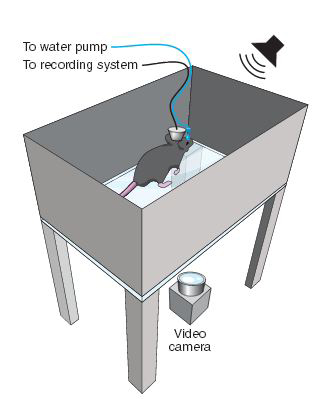
Optogenetics for treating obsessive-compulsive disordersJune 18, 2013 [image: optogenetic_stimulation] Obsessive-compulsive mice exhibit a defective grooming response during a conditioning task (credit: Eric BurguiĆØre et al./*Science*) By applying optogenetics (light stimulation) to specific neurons in the brain, researchers at INSERM (Institut national de la santĆ© et de la recherche mĆ©dicale) havere-established normal behavior in mice with pathological repetitive behavior similar to that observed in human patients suffering from obsessive-compulsive disorders. Repetitive obsessive-com... mais »

Diversifying the WEB

Aloyzio AchuttiemAMICOR - HĆ” 19 horas
Diversifying your online world June 20, 2013 [image: Rewire]In a new book, MIT’s Ethan Zuckerman asserts that we need to overcome the Internet’s sorting tendencies and create tools to make ourselves “digital cosmopolitans.” The Internet promises a seemingly frictionless way of connecting individuals from around the globe. But in reality, that’s not what happens online: Instead, we clump together with people similar to … more…

Brain connections

Aloyzio AchuttiemAMICOR - HĆ” 19 horas
Reversing the loss of brain connections in Alzheimer’s diseaseJune 21, 2013 *[+]* Photomicrograph of nerve cell during an electrical recording (left), fluorescently labeled nerve cell (right) (credit: Sanford-Burnham Medical Research Institute) The first experimental drug to boost brain synapses lost in Alzheimer’s disease has been developed by researchers at Sanford-Burnham. The drug, called *NitroMemantine*, combines two FDA-approved medicines to stop the destructive cascade of changes in the brain that destroys the connections between neurons, leading to memory loss and cognitive de... mais »

Memory: real time

Aloyzio AchuttiemAMICOR - HĆ” 19 horas
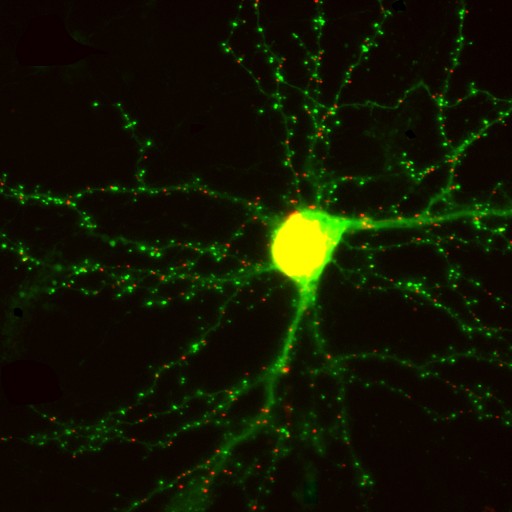
What do memories look like? Glowing neurons reveal memory formation in vivo June 21, 2013 *[+]* A living neuron in culture: Green dots indicate excitatory synapses and red dots indicate inhibitory synapses (credit: Don Arnold/MIT) A USC research team has engineered microscopic probes that light up synapses in a living neuron in real time by attaching fluorescent markers onto synaptic proteins, without affecting the neuron’s ability to function. The fluorescent markers allow scientists to see live excitatory and inhibitory synapses for the first time, and how they change as new memories ... mais »

BigBrain

Aloyzio AchuttiemAMICOR - HĆ” 19 horas
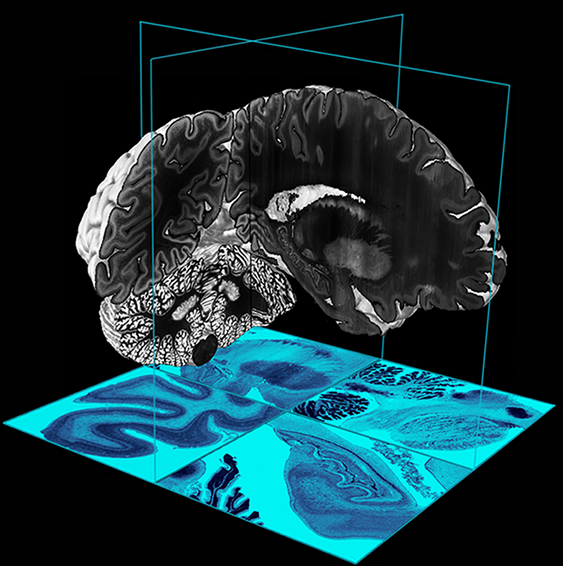
BigBrain: an ultra-high-resolution 3D roadmap of the human brainJune 21, 2013 BigBrain (credit: Montreal Neurological Institute and Forschungszentrum Jülich) A landmark three-dimensional (3-D) digital reconstruction of a complete human brain, called the BigBrain, shows for the first time the brain anatomy in microscopic detail — at a spatial resolution of 20 microns, smaller than the size of one fine strand of hair — exceeding that of existing reference brains presently in the public domain. The new tool is made freely available to the broader scientific community to advance the fiel... mais »

silver + antibiotics

Aloyzio AchuttiemAMICOR - HĆ” um dia
*Bling Beats Bad Bugs* A bit of silver could be good for what ails you. In a series of experiments, researchers have found that ionic silver boosts the efficacy of common antibiotics, helps overcome antibiotic resistance, and can even extend the range of some widely used drugs. Investigators led by James Collins, PhD, of Boston University studied the ways that silver -- long touted as an anti-microbial -- interacts with bacterial cells. It turned out that the metal disrupts several bacterial cellular processes, leading to increases in reactive oxygen species and membrane permeability... mais »

Hypertension ESC Guidelines

Aloyzio AchuttiemAMICOR - HĆ” um dia
New European Hypertension Guidelines Released: Goal Is Less Than 140 mm Hg for All Michael O'Riordan Jun 15, 2013 - 34 comments - - - - - Print - Email Editors' Recommendations - ARB-Cancer Risk Dispute at FDA Depicted in Wall Street Journal - EnligHTN-1 12-Mo Results as Renal Denervation Booms - ACE Inhibitors Better ARBs in Hypertensives Topic Alert Receive an email from Medscape whenever new articles on this topic are available. - [image: Personal Alert] Add Hypertension to My Topic Alert Drug & Reference Information - Pathophysiology of... mais »

MR immage Aorta

Aloyzio AchuttiemAMICOR - HĆ” 4 dias
sclerosisLatest News| Videos Aorta May Hold Clues to Cardiac Health By Michael Smith, North American Correspondent, MedPage Today Published: June 18, 2013 Reviewed by F. Perry Wilson, MD, MSCE; Instructor of Medicine, Perelman School of Medicine at the University of Pennsylvania and Dorothy Caputo, MA, BSN, RN, Nurse Planner Take Posttest Action Points - Note that this analysis of a large cohort study demonstrated that increasing abdominal aortic wall thickness was associated with future cardiovascular events. - Be aware that this metric did not outperform more standard ris... mais »

Cardiologistas chegando atrasados

Aloyzio AchuttiemAMICOR EXTENSION - HĆ” 4 dias
*(Artigo ZH 2004)* *Nós cardiologistas estamos chegando atrasados...* *Aloyzio Achutti. Membro da Academia Sul-Rio-Grandense de Medicina.** * A cardiologia tem tido um desenvolvimento explosivo nas Ćŗltimas dĆ©cadas. Entre as diversas especialidades mĆ©dicas Ć© das que mais tem reunido conhecimento cientĆ­fico, recursos tecnológicos, prestĆ­gio, equipamentos e tĆ©cnicas de diagnóstico e de intervenção farmacológica, e de tratamento invasivo e cirĆŗrgico. As sub-especialidades tiveram que se diferenciar para que pudessem os profissionais dominar cada um dos complexos procedimentos e adquirir a... mais »

JƔ foi RemƩdio...

Aloyzio AchuttiemAMICOR EXTENSION - HĆ” 4 dias
*(Artigo ZH de 2004)* *JĆ” foi remĆ©dio....* *Aloyzio Achutti. Membro da Academia Sul-Rio-Grandense de Medicina.* SĆ£o bem recentes as histórias do medicamento contra artrite (antiinflamatório) que foi recolhido porque fazia mal para o coração, e do outro para baixar o mau colesterol, que tambĆ©m provocou mortes. AliĆ”s, qualquer remĆ©dio, como substĆ¢ncia nĆ£o natural, Ć© tambĆ©m um veneno, e em geral trata-se de um mal menor, que precisa ser utilizado com muito cuidado para que os benefĆ­cios procurados nĆ£o sejam inferiores aos efeitos colaterais indesejĆ”veis. NĆ£o Ć© su... mais »

Medical cybersecurity

Aloyzio AchuttiemAMICOR - HĆ” 6 dias
FDA urges cybersecurity for devices ‘Many medical devices contain configurable embedded computer systems that can be vulnerable to cybersecurity breaches.’WASHINGTON | June 14, 2013 “Many medical devices contain configurable embedded computer systems that can be vulnerable to cybersecurity breaches,” FDA officials wrote. “In addition, as medical devices are increasingly interconnected, via the Internet, hospital networks, other medical device and smartphones, there is an increased risk of cybersecurity breaches, which could affect how a medical device operates.” [See also: Washington ... mais »

Alzheimers: The Numbers

Aloyzio AchuttiemAMICOR - HĆ” 6 dias
Working, Caregiving and Alzheimer’s: The Numbers *More than 5 million Americans are currently afflicted with Alzheimer’s disease, and the Alzheimer’s Association expects those numbers to rise to 14 million by 2050, with one diagnosis every 33 seconds.* Want to know what 14 million people with dementia will look like? The population of the states of Pennsylvania and Illinois are currently 13 million each, while Ohio has 11 million citizens and Georgia a million less. Pick a state. Now imagine that everyone is demented. That’s the scope of Alzheimer’s. That’s what the disease will look ...