|
Wednesday, December 22, 2010
Lipitor Odor Problem Continues, Recall Expands


Tuesday, December 21, 2010
Re“evolutionary” Regenerative Medicine
Helen M. Blau, PhD;
Jason H. Pomerantz, MD
Author Affiliations: Baxter Laboratory for Stem Cell Biology, Stanford University School of Medicine, Stanford, California (Dr Blau); and Department of Surgery, University of California, San Francisco (Dr Pomerantz).
- KEYWORDS:
- amputation,
- biology,
- biomedical research,
- cell cycle,
- evolution,
- extremities,
- genes, retinoblastoma,
- pluripotent stem cells,
- regeneration,
- regenerative medicine,
- tissue engineering,
- tumor suppressor protein p14arf.
The potential to regenerate damaged limbs and hearts seems the subject of science fiction, but newts and zebrafish do it all the time. What can scientists learn from these simple creatures? Why have mammals not retained this remarkably useful property in the course of evolution? Can an evolutionary perspective on the mechanisms used by “lowly” organisms inform the approach to human tissue regeneration? Could this lead to the generation of abundant patient-specific differentiated cells for cell therapy, for elucidating disease mechanisms, for therapeutic drug screening? Recent studies suggest that this is possible./.../
Whole-Fat Dairy Products May Lower Type 2 Diabetes Risk: Study
Whole-Fat Dairy Products May Lower Type 2 Diabetes Risk: Study
Rare fatty acid found more in whole milk, yogurt and cheeses, researcher explains
Monday, December 20, 2010

The fatty acid is called trans-palmitoleic acid, according to the study in the Dec. 21 issue of the Annals of Internal Medicine, and people with the highest blood levels of this fatty acid reduce their odds of diabetes by 62 percent compared to those with the lowest blood levels of it.
In addition, "people who had higher levels of this fatty acid had better cholesterol and triglyceride levels, lower insulin resistance and lower levels of inflammatory markers," said study author Dr. Dariush Mozaffarian, co-director of the program in cardiovascular epidemiology at Brigham and Women's Hospital and Harvard School of Public Health./.../
The Promise and Pitfalls of Cloud Computing

The PC revolution changed all that, but only for a while. Today, we're all dependent on distant computers all over again — namely the phalanxes of potent servers that power the Web. More and more, we're using browser-based services instead of traditional software, and storing documents, photos, and other data online rather than on our own hard disks. It's a red-hot trend known as cloud computing. (The "cloud" in "cloud computing," incidentally, is a pointless synonym for the perfectly good term "Internet." The only thing the tech industry adores more than an old buzzword is a new buzzword.)Once upon a time, a few decades ago, computers were extraordinarily expensive, room-filling machines — the kind decked out with whirring tape reels, flashing lights, and banks of switches. You didn't pull up a chair up to use one; instead, using a process called timesharing, you accessed it via a remote terminal at the same time as a bunch of other folks./.../
Principles of Medical Ethics
Principles of Medical Ethics
By George Lundberg, MD, Editor-at-Large, MedPage Today | December 20, 2010http://www.medpagetoday.com/Columns/23960?utm_content=GroupCL&utm_medium=email&impressionId=1292911879346&utm_campaign=DailyHeadlines&utm_source=mSpoke&userid=15168
Hello and welcome. I'm Dr. George Lundberg, and this is At Large at MedPage Today.
Hello and welcome. I'm Dr. George Lundberg, and this is At Large at MedPage Today.
Transcript:
The American Medical Association was founded in 1846 for a number of reasons, including to create a Code of Medical Ethics.
It did, and the Code is alive in 2010.
I believe that all medical students should memorize these bedrock principles -- a little like many did the Boy Scout Oath and Law.
And, I believe that all physicians should follow them scrupulously, lifelong.
The Principles are:
I. A physician shall be dedicated to providing competent medical care, with compassion and respect for human dignity and rights.
II. A physician shall uphold the standards of professionalism, be honest in all professional interactions, and strive to report physicians deficient in character or competence, or engaging in fraud or deception, to appropriate entities.
III. A physician shall respect the law and also recognize a responsibility to seek changes in those requirements which are contrary to the best interests of the patient.
IV. A physician shall respect the rights of patients, colleagues, and other health professionals, and shall safeguard patient confidences and privacy within the constraints of the law.
V. A physician shall continue to study, apply, and advance scientific knowledge, maintain a commitment to medical education, make relevant information available to patients, colleagues, and the public, obtain consultation, and use the talents of other health professionals when indicated.
VI. A physician shall, in the provision of appropriate patient care, except in emergencies, be free to choose whom to serve, with whom to associate, and the environment in which to provide medical care.
VII. A physician shall recognize a responsibility to participate in activities contributing to the improvement of the community and the betterment of public health.
VIII. A physician shall, while caring for a patient, regard responsibility to the patient as paramount.
IX. A physician shall support access to medical care for all people.
That's it. The Nine. Do them now, and forever.
That's my opinion. I'm Dr. George Lundberg, At Large for MedPage Today./.../
The Principles are:
I. A physician shall be dedicated to providing competent medical care, with compassion and respect for human dignity and rights.
II. A physician shall uphold the standards of professionalism, be honest in all professional interactions, and strive to report physicians deficient in character or competence, or engaging in fraud or deception, to appropriate entities.
III. A physician shall respect the law and also recognize a responsibility to seek changes in those requirements which are contrary to the best interests of the patient.
IV. A physician shall respect the rights of patients, colleagues, and other health professionals, and shall safeguard patient confidences and privacy within the constraints of the law.
V. A physician shall continue to study, apply, and advance scientific knowledge, maintain a commitment to medical education, make relevant information available to patients, colleagues, and the public, obtain consultation, and use the talents of other health professionals when indicated.
VI. A physician shall, in the provision of appropriate patient care, except in emergencies, be free to choose whom to serve, with whom to associate, and the environment in which to provide medical care.
VII. A physician shall recognize a responsibility to participate in activities contributing to the improvement of the community and the betterment of public health.
VIII. A physician shall, while caring for a patient, regard responsibility to the patient as paramount.
IX. A physician shall support access to medical care for all people.
That's it. The Nine. Do them now, and forever.
That's my opinion. I'm Dr. George Lundberg, At Large for MedPage Today./.../
Elemental Shift: Periodic Table Gets Weight Changes

A picture of how the revised entry for carbon will look on the periodic table. Credit: T. B. Coplen (U.S. Geological Survey).
1 of 1
Ten elements that help make up the universe, including the carbon our biology is based on and the oxygen in the air we breathe, are now getting changed in an unprecedented way — they are getting their very atomic weights altered.
Scientists have not invented some magical way to transform the masses of all these elements. Instead, they are updating what are often thought of as constants of nature on the periodic table./.../
Monday, December 20, 2010
2010 ACCF/AHA Guideline for Assessment of Cardiovascular Risk in Asymptomatic Adults: Executive Summary
A Report of the American College of Cardiology Foundation/American Heart Association Task Force on Practice Guidelines
It is essential that the medical profession play a central role in critically evaluating the evidence related to drugs, devices, and procedures for the detection, management, or prevention of disease. Properly applied, rigorous, expert analysis of the available data documenting absolute and relative benefits and risks of these therapies and procedures can improve the effectiveness of care, optimize patient outcomes, and favorably affect the cost of care by focusing resources on the most effective strategies.One important use of such data is the production of clinical practice guidelines that, in turn, can provide a foundation for a variety of other applications, such as performance measures, appropriate use criteria, clinical decision support tools, and quality improvement tools.
A lost civilization under the Persian Gulf?
Dec. 15, 2010
Courtesy of University of Chicago Press Journals
and World Science staff
and World Science staff
Once fertile ground now submerged under the Persian Gulf may have been home to some of the earliest human populations outside Africa, according to a new report.
Jeffrey Rose, an archaeologist and researcher with the University of Birmingham in the U.K., said the area in and around this “Persian Gulf Oasis” may have been host to humans for over 100,000 years before it was swallowed up by the Indian Ocean around 8,000 years ago.
Rose’s hypothesis introduces a “new and substantial cast of characters” to the human history of the Near East, he said, and suggests that humans may have established permanent settlements in the region thousands of years before current migration models suppose.
His report is published in the December issue of the research journal Current Anthropology./.../
Jeffrey Rose, an archaeologist and researcher with the University of Birmingham in the U.K., said the area in and around this “Persian Gulf Oasis” may have been host to humans for over 100,000 years before it was swallowed up by the Indian Ocean around 8,000 years ago.
Rose’s hypothesis introduces a “new and substantial cast of characters” to the human history of the Near East, he said, and suggests that humans may have established permanent settlements in the region thousands of years before current migration models suppose.
His report is published in the December issue of the research journal Current Anthropology./.../
Gisele Bündchen vira heroína de desenho para salvar o planeta
Gisele Bündchen, uma das modelos mais bem pagas do mundo, virou personagem de desenho animado. Sua missão? Salvar o planeta.
Não é de hoje que Gisele se engajou no tema. Ela tem um blog sobre sustentabilidade. Já fez campanha pelas nascentes do Brasil. Foi protagonista de um vídeo contra as mudanças climáticas.
A ideia agora é atingir a garotada. O desenho, chamado Gisele and the Green Team (Gisele e o time verde) e produzido pela AOL, foi pensado para crianças e pré-adolescentes. A animação conta a história de cinco modelos lideradas por Gigi, personagem de Gisele. A rotina das top se divide entre as passarelas e a luta contra desmatamentos, vazamentos de óleos, entre outras agressões ao meio ambiente.
Confira um episódio do desenho.
(Aline Ribeiro)
Sunday, December 19, 2010
Ho, Ho, Ho!...
Enviado para o Jornal ZH
HO, HO, HO!...
A risada do bom velhinho, representada por fonemas onomatopaicos (estranhos à nossa língua), faz parte dos símbolos de relacionamento social valorizados nesta época do ano, assim com a troca de mensagens, os augúrios, os presentes, os abraços, os brindes e os encontros de grupos familiares e de trabalho.
Em geral essas manifestações são vistas com um olhar crítico negativo, como sendo resultado de manipulações com interesse comercial. Não dá para negar da estratégia mercadológica, tirando proveito de uma característica natural, cujos aspectos positivos, no entanto, podem e precisam ser valorizados.
Os símbolos podem carregar muitos conteúdos: o menino Jesus recém-nascido na manjedoura, os pastores e os reis, o Papai Noel, representam fases do ciclo vital, do ano novo, do ano velho, provavelmente figuras masculinas para celebrar a descoberta dos outros, e não somente de nós mesmos, que facilmente nos confundimos com a imagem da mãe.
Seres humanos, assim com a maior parte dos animais, somos naturalmente gregários. A segregação, o isolamento e a solidão fazem mal para a saúde, aumentam o risco de adoecer e de morrer precocemente.
Já era bem conhecida a síndrome do coração partido. E quem já não experimentou ou não teve medo de ser rejeitado ou de ficar na solidão?
Pesquisa científica de revisão da literatura médica recente conclui que a influência do relacionamento social sobre a mortalidade é comparável a de outros fatores bem estabelecidos de risco.
Através deste estudo foi possível estimar em 50% o aumento de sobrevida para aqueles que tinham forte relacionamento social, independentemente de grupo etário, sexo, estado de saúde inicial, e tempo de observação. Diferença houve comparando as medidas mais complexas de integração social com as mais simples, binárias ou domésticas.
As famílias estão encolhendo, o contato entre as pessoas está ficando cada vez mais superficial, esporádico, e competitivo. Cada vez mais tem gente vivendo só.
Paradoxalmente, a mesma força agregadora que busca uma identidade no grupo familiar, no clube, na crença religiosa, na corporação, no partido político, na etnia, no bairro, é a mesma que segrega, traça fronteiras e define quem pode e quem não pode pertencer ao clã.
O sucesso dos grupos de relacionamento virtual na internet e na mobilização presencial de massa, com pretexto artístico ou outro qualquer, devem estar na mesma esteira, e satisfazer a mesma necessidade de testar e sentir que outros existem além de nós mesmos, que pensam parecido, com os quais podemos trocar afeto e festejar a descoberta com alegria.
O ideal seria construir um mundo sem barreiras de segregação, e poder dar e receber afeto todos os dias, constantemente, mas enquanto isto não se realiza, vale saber que temos também bons sentimentos, que estamos cercados por gente igual e capaz de nos corresponder, mesmo que seja apenas na expressão de um desejo. Faz bem para a saúde de quem dá e de quem recebe. Contrapõe-se à violência competitiva e segregadora.
Embora já saibamos que Papai Noel não existe, vale saudar o momento e a descoberta com um profundo, encorpado e caloroso Ho, Ho, Ho!...
INFLUENZA RECYCLING AND SECULAR TRENDS IN MORTALITY AND NATALITY1
Article recently published from the AMICOR Maria Ines Reinert Azambuja
Secular variations in longevity and in population aging are of huge interest to actuaries. It is
shown here that temporal changes in mortality and natality accompany the recycling of influenza
A viruses, i.e., the re-exposure of human populations, from time to time, to influenza A viruses
antigenically similar to viruses (H1, H2, H3) that circulated in the past. Mortality (and natality)
change as birth cohorts (whole population and maternal) with specific types and levels of
vulnerability to influenza A re-infections, acquired through early-life effects of infection with one
(period-specific) influenza A sub-type, course through subsequent influenza A environments
over time. Epidemiologic evidence of association between secular trends in mortality (and
natality) and interactions between birth-cohort and period effects of influenza A circulation is
presented both for the U.K. and the U.S. New interpretations to several epidemiologic and
demographic observations follow from this finding./.../
"Mando um artigo meu publicado agora nos anais de um evento de economia em Edinburgo em que participei como convidada no ano passado - sobre longevidade.
É um artigo para revolucionar o conhecimento sobre a causalidade das ocorrências... (se vai ou não, o futuro dirá...), e também sobre a evolução da longevidade e da natalidade...
Espero que o artigo seja lido como sugiro em citação no início... E que cada um pense a partir de sua área, em se os conceitos se aplicam ou não...
E mande suas críticas, pois é a partir das críticas e do que eu conseguir responder que a teoria irá se sustentar ou não."abstract
Secular variations in longevity and in population aging are of huge interest to actuaries. It is
shown here that temporal changes in mortality and natality accompany the recycling of influenza
A viruses, i.e., the re-exposure of human populations, from time to time, to influenza A viruses
antigenically similar to viruses (H1, H2, H3) that circulated in the past. Mortality (and natality)
change as birth cohorts (whole population and maternal) with specific types and levels of
vulnerability to influenza A re-infections, acquired through early-life effects of infection with one
(period-specific) influenza A sub-type, course through subsequent influenza A environments
over time. Epidemiologic evidence of association between secular trends in mortality (and
natality) and interactions between birth-cohort and period effects of influenza A circulation is
presented both for the U.K. and the U.S. New interpretations to several epidemiologic and
demographic observations follow from this finding./.../
Holiday Movie Preview 2010

Directed by Darren Aronofsky
With Natalie Portman, Mila Kunis, Vincent Cassel, Barbara Hershey and Winona Ryder
pens 12.3
Nina, the Prima Ballerina of Black Swan— director Darren Aronofsky's fantastically insane damnation of the ballet business — is a role Natalie Portman was born to play. Chronologically a woman, Nina lives frozen in a little girl's pure, perfect world. In her bedroom full of pink pigs in tutus, she falls asleep to the sound of a music box wound by her hovering mother (a terrifying Barbara Hershey). When she awakes, she dresses in some combination of soft gray, pink or white and goes to Lincoln Center, where she dreams of bringing the same standard of pretty perfection to the stage.
more:http://www.time.com/time/specials/packages/article/0,28804,2036884_2036882_2036439,00.html #ixzz18ZMADBoD
Prioridades de Pesquisa em Vigilância Sanitária - ANVISA
Recomendado pela AMICOR Maria Inês Reinert Azambuja
Agência Nacional de Vigilância Sanitária

www.anvisa.gov.br
Consulta Pública nº 113, de 13 de dezembro de 2010.
D.O.U de 14/12/10
A Diretoria Colegiada da Agência Nacional de Vigilância Sanitária, no uso das atribuições que lhe conferem o inciso IV do art. 11 e o art. 35 do Regulamento da ANVISA aprovado pelo Decreto nº 3.029, de 16 de abril de 1999, e tendo em vista o disposto no inciso V e nos §§ 1º e 3º do art. 54 do Regimento Interno aprovado nos termos do Anexo I da Portaria nº 354 da ANVISA, de 11 de agosto de 2006, republicada no DOU de 21 de agosto de 2006, em reunião realizada em 09 de dezembro de 2010, adota a seguinte Consulta Pública e eu, Diretor-Presidente, determino a sua publicação:
Art. 1º Fica aberto, a contar da data de publicação desta Consulta Pública, o prazo de 30 (trinta) dias
para que sejam apresentadas críticas e sugestões relativas à proposta de Prioridades de Pesquisa em Vigilância Sanitária, em anexo, que comporão uma /.../
Agência Nacional de Vigilância Sanitária
www.anvisa.gov.br
Consulta Pública nº 113, de 13 de dezembro de 2010.
D.O.U de 14/12/10
A Diretoria Colegiada da Agência Nacional de Vigilância Sanitária, no uso das atribuições que lhe conferem o inciso IV do art. 11 e o art. 35 do Regulamento da ANVISA aprovado pelo Decreto nº 3.029, de 16 de abril de 1999, e tendo em vista o disposto no inciso V e nos §§ 1º e 3º do art. 54 do Regimento Interno aprovado nos termos do Anexo I da Portaria nº 354 da ANVISA, de 11 de agosto de 2006, republicada no DOU de 21 de agosto de 2006, em reunião realizada em 09 de dezembro de 2010, adota a seguinte Consulta Pública e eu, Diretor-Presidente, determino a sua publicação:
Art. 1º Fica aberto, a contar da data de publicação desta Consulta Pública, o prazo de 30 (trinta) dias
para que sejam apresentadas críticas e sugestões relativas à proposta de Prioridades de Pesquisa em Vigilância Sanitária, em anexo, que comporão uma /.../
Friday, December 17, 2010
Google Earth for the body
Google Earth for the body
| December 17, 2010 |
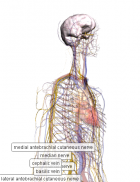 | Google has just launched its latest browser experiment, Google Body Browser. Body Browser shows an interactive detailed 3D model of the human anatomy that includes multiple layers, such as the circulatory and nervous systems and the skeleton and muscles. It works like Google Maps, with special tools for viewing different types of body systems (nervous … more… |

Subscribe to:
Posts (Atom)