Translate AMICOR contents if you like

Thursday, February 21, 2013

GAVIN RAIN

GAVIN RAIN
Indicação de dois AMICOR José e Maria Inês Reinart Azambuja.
Estou lhe enviando o link do site de um artista cujo trabalho nós (eu e a Inês) gostamos muito. O que eu achei interessante é que a obra acontece em dois níveis, como no pontilhismo (Seurat e cia.), mas é muito mais complexa.
Acho que ajuda a desmistificar o conceito de que a comunicação da ideia se faça diretamente através dos símbolos gráficos, do texto ou da palavra. Parece que tudo funciona como instumento de estímulo para recriação da imagem no cérebro receptor com os elementos que ele tem na memória.
O pensamento e as idéias não podem ser passados ou repassados mas, na trasmissão, precisam ser, cada vez, recriados com os elementos disponíveis no receptor. Até dentro de nos mesmos, cada vez que chamamos algo da memória, ao recoloca-lo ele volta diferente, enriquecido e reajustado a todo o conjunto pré-existente da experiência.


How did you come up with the style?

The truth is I don't really know. I came to the style from a number of different thought processes I was having at the time. I can take you through those and you can draw your own conclusions. Firstly I was looking at a photograph taken of the Martian surface by the Mars Orbital Surveyor. Part of the image had broken up – it was just noise. I remember thinking at the time: "that's not just noise, that's also information... the circuitry short-circuited for a reason, and in the future perhaps that noise will tell its own story – when we are more advanced and can read it". Story two: I was looking at a digital photograph and remember thinking about how much information we're losing in the trade-off for expedience. Digital means "distinct interval". All those amazing tones you find in traditional cameras have been chopped up and most of them discarded. We don't seem to care that we're losing this quality. I wanted to paint in a style that highlighted this loss – I wanted to expose that dark-space. My initial paintings were like this – on a black background to describe this issue. So I came to the style from the need to tell a story – to present a perspective. I usually dislike art that doesn't communicate anything. I also hate it when I'm viewing art and I don't know the message. I wanted to avoid that – everyone has to get my message – which is to step back. I came up with the style before I painted the first piece. The trick then became to see if I could pull it off...

How do you do your style?

Very slowly. There are a lot of steps. I'll try simplify it. I start with an image, either a rough sketch or a photograph. Like you'll find in a woodcut, I convert gradients to alternating light and dark areas. The bigger the circles, the less white canvas shows through, the darker the area overall... My initial paintings were basically just 8 layer woodcuts. Then I wanted to add more colour, so now there's an extra step – each dot is like a mini-woodcut, consisting of 5 layers or so. From a distance your eye puts these 5 colours together and you get a resulting colour – a merged colour. Yes, I could just paint one colour per dot and achieve a similar result, but part of my message for the work is in the close-up aesthetic. Stuff is interesting from close up. Our lives have a lot of texture/noise. Then we step back, and we see the influence of people and things in our lives – the things that shaped us. I'd like to try echoing that in my work if I can. So each dot is a different size (like the woodcut) and a different colour. Combining these two techniques creates the image.

A little bit about your past?

I'm from Cape Town. I studied Art and Neuropsychology at the University of Cape Town in the 80s and 90s. I started with pointillism around 2003/2004 but I've been painting all my life. My influences are Seurat (obviously), Russian avant garde art of the 1900s and a whole host of architects – I planned to study architecture at an earlier stage of my life to try and marry my two interests: art and mathematics./.../

Tobacco and Poverty


Tobacco and Poverty

Photo By: Rob Port
Photo By: Rob Port
This post was written by Francisco J. Quintana (Legal Intern from Universidad
Torcuato Di Tella) and Paula Avila Guillen (Institute Associate)
of the O’Neill Institute for National and Global Health Law. Any questions or comments about this post can be directed to fjq2@law.georgetown.edu or pa390@law.georgetown.edu.
            Significant advances have been made and continue to be made in international tobacco control, yet more policy attention should be paid to the link between tobacco consumption and poverty. Though overall tobacco consumption is decreasing in the developed world, it is increasing in developing countries[1]. While middle and upper classes are now more protected from the effects of tobacco, lower classes remain unprotected. Tobacco control policies, with emphasis on the link between tobacco consumption and poverty, need to be designed and enforced. /.../

Peace Symbol


The Creation of the Peace Symbol (1958)
Historically, the idea of peace has been represented by symbols that attempt to transcend differences of culture, such as the white dove, the olive branch, and the broken rifle. The now-familiar line-drawing of a crow's foot in a circle was created specifically for the Campaign for Nuclear Disarmament by British artist Gerald Holtom, but it quickly caught on as a general, international sign for peace. Holtom has stated that it is derived from the semaphore flag signals for what two letters?

More...

Sexologa: Bibliografia


11 impressionantes trabalhos científicos de sexologia


Por  em 20.02.2013 as 16:00
A sexologia é uma ciência social que engloba estudos biológicos rigorosos sobre reprodução e resposta sexual, bem como psicologia, sociologia e história. No entanto, não foi até o século XIX que os cientistas começaram a se referir a si mesmos como “sexólogos”.
Daquele momento em diante, uma literatura científica rica e diversificada dedicada ao sexo começou a aparecer. Conheça alguns desses trabalhos que mudaram a história ou que são simplesmente fascinantes/.../

:

Prtugueses na Austrália


Map 'shows Cook wasn't first'

  • Decrease Text Size
Map / Reuters
Evidence ... the map that an Aussie author says shows the Portuguese discovered Australia / Reuters
A 16th century maritime map in a Los Angeles library vault proves Portuguese 
adventurers, not British or Dutch, were the first Europeans to discover Australia, 
according to a new book detailing the secret discovery of the continent.
The book, Beyond Capricorn, says the map, which accurately marks geographical
sites along Australia's east coast in Portuguese, proves Portuguese seafarer Christopher de Mendonca led a fleet of four ships into Botany Bay in 1522 - almost 250 years before Britain's Captain James Cook./.../


WEB connections


February 18, 2013

Any Two Pages on the Web Are Connected By 19 Clicks or Less

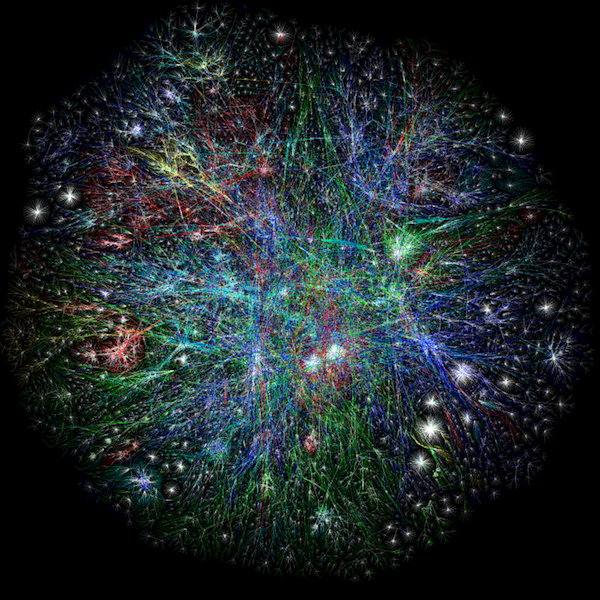
The Opte Project creates visualizations of the 14 billion pages that make up the network of the web. Image viaOpte Project
No one knows for sure how many individual pages are on the web, but right now, it’s estimated that there are more than 14 billion. Recently, though, Hungarian physicist Albert-László Barabási discovered something surprising about this massive number: Like actors in Hollywood connected by Kevin Bacon, from every single one of these pages you can navigate to any other in 19 clicks or less.
Barabási’s findings, published yesterday in Philosophical Transactions of the Royal Society, involved a simulated model of the web that he created to better understand its structure. He discovered that of the roughly 1 trillion web documents in existence—the aforementioned 14 billion-plus pages, along with every image, video or other file hosted on every single one of them—the vast majority are poorly connected, linked to perhaps just a few other pages or documents./.../


Read more: http://blogs.smithsonianmag.com/science/2013/02/any-two-pages-on-the-web-are-connected-by-19-clicks-or-less/#ixzz2LWw2l9dS 
Follow us: @SmithsonianMag on Twitter

Wednesday, February 20, 2013

Head, Neck, Brain, Spine


Logo
HNBS
Welcome to HeadNeckBrainSpine, a website intended for those interested
 in neuroradiology anatomy and learning from neuroradiology cases. 
To navigate the website click on the images below or on the above menu.


Dead Tongues Revival


Software Revives Dead Tongues

A computer algorithm works almost as well as a trained linguist in reconstructing how dead "protolanguages" would have sounded

TechMediaNetwork


10
Share


Image: Shutterstock: Koya979
A computer algorithm works almost as well as a trained linguist in reconstructing how dead "protolanguages" would have sounded, says a new study.
"Our [computer] system is doing a basic job right now," says Alex Bouchard-Côté, an assistant professor in the department of statistics at the University of British Columbia and lead author of the paper describing the algorithm. But the program does a good enough job that it may be able to give linguists a head start, the statistician added./.../

Stone Age human teeth


02/19/2013 02:00 PM EST

Food manufacturing progress altered oral bacteria, leading to chronic problems, researchers say
HealthDay news image

Source: HealthDay
Related MedlinePlus Page: Dental Health

Mental Illness = Evil ?


Mass Distraction: Equating Mental Illness With 'Evil'

James L. Knoll IV, MD
DisclosuresFeb 14, 2013
 

Introduction

"Reason is not driven from her seat,
but Distraction sits down upon it along with her,
holds her trembling upon it
and frightens her from her propriety."
--Lord-Chancellor Erskine, Speech in Defense of Hadfield, 1800[1]
Having spent most of their lives taking multiple-choice tests, physicians will recognize the role of the distractor. Distractors are the incorrect answers that seem plausible, but are nevertheless not the correct answer. More plausible distractors result in a more difficult question./../

Tuesday, February 19, 2013

"Medical Gutenberg"


Hello. I'm Dr. Eric Topol, Director of the Scripps Translational Science Institute and Editor-in-Chief of Medscape. In The Creative Destruction of Medicine series, named for the book I wrote, I am trying to zoom in on critical aspects of how the digital world can create better healthcare."Medical Gutenberg": What do I mean by that? If we go back to the 1400s and the printing press invented by Johannes Gutenberg, you know how transformative that invention was. The high priests were no longer the only ones who could read; the ability to read books was unleashed to the public. Many years, many centuries have passed since those times, but here in the 21st century we're getting consumers -- the public -- to read medical stuff. And why is this important? Not only can a smartphone get you all the data you need -- whether it's glucose, vital signs, blood pressure, or heart rhythm -- you also get algorithms, with the data processed and given back to you. You don't even know if you need to contact a physician because that flow of data and information is now in the hands of the consumer. And they're learning to read and understand it. For example, I have patients who I'm now getting hundreds of blood pressure readings from, whereas I never would have had any readings before. And they know what is abnormal, what percent is abnormal, and even what day of the week and what the circumstances are that precipitate abnormal blood pressures./.../

Alzheimar and Infection?


Can Infections Cause Alzheimer's Disease?

  1. Robert Wallace*
  1. *Correspondence to Dr. Robert Wallace, Department of Epidemiology, College of Public Health, The University of Iowa, 105 River St. Iowa City, IA 52242 (e-mail: robert-wallace@uiowa.edu).
  1. Abbreviations: Aβ, β-amyloid; AD, Alzheimer's disease; ApoE4, apolipoprotein ɛ4; APP, amyloid precursor protein; CNS, central nervous system; CSF, cerebral spinal fluid; HSV-1, herpes simplex virus type 1; PCR, polymerase chain reaction.
  • Accepted October 16, 2012.

Abstract

Late-onset Alzheimer's disease (AD) is the most prevalent cause of dementia among older adults, yet more than a century of research has not determined why this disease develops. One prevailing hypothesis is that late-onset AD is caused by infectious pathogens, an idea widely studied in both humans and experimental animal models. This review examines the infectious AD etiology hypothesis and summarizes existing evidence associating infectious agents with AD in humans. The various mechanisms through which different clinical and subclinical infections could cause or promote the progression of AD are considered, as is the concordance between putative infectious agents and the epidemiology of AD. We searched the PubMed, Web of Science, and EBSCO databases for research articles pertaining to infections and AD and systematically reviewed the evidence linking specific infectious pathogens to AD. The evidence compiled from the literature linking AD to an infectious cause is inconclusive, but the amount of evidence suggestive of an association is too substantial to ignore. Epidemiologic, clinical, and basic science studies that could improve on current understanding of the associations between AD and infections and possibly uncover ways to control this highly prevalent and debilitating disease are suggested.

Sunday, February 17, 2013

Health Universal coverage


World Bank Group releases 22-country study of universal health coverage

February 14, 2013

Studies point to convergence on solutions to difficult challenges in health policy implementation
WASHINGTON, February 14, 2013 – As a growing number of countries tackle the fiscal challenge of providing universal health coverage (UHC) for their citizens, today the World Bank released a set of 22 case studies of countries that have significantly expanded access to health care in the last decade, with the aim of helping countries make more informed health policy and program choices.
Researchers looked systematically at countries’ experiences with a set of parameters related to achieving UHC, including designing and managing benefits packages, expanding coverage to the poorest and excluded populations, providing quality care, and health financing. The 22 countries studied included ArgentinaBrazilChileChinaColombia,Costa RicaEthiopiaGeorgiaGuatemalaIndiaIndonesiaJamaicaKenyaKyrgyz RepublicMexicoNigeriaPeruPhilippinesThailandTunisiaTurkey and Vietnam. The Bank also released an analysis of the impact of UHC efforts in the developing world./.../

2589 -AMICOR 15


Ernest Greiner (07/05/1917-17/02/1987)

Aloyzio AchuttiemAMICOR EXTENSION - Há 19 minutos
Padre Ernesto Greiner foi um grande amigo que tivemos, cujo falecimento (há 26 anos) lembramos no dia de hoje. Encontrei cartas que lhe escrevi quando esteve hospitalizado na Alemanha em 1982, nas quais abordo iatrogenia e terrorismo médico, tema objeto de uma palestra minha para a Associação dos ex-blosistas da Alemanha naquela ocasião. Vai também uma carta de um sobrinho dele depois que eu lhe comuniquei o falecimento cinco anos depois. Seu círculo de admiradores poderá compartilhar destes documentos relacionados com seus cinco últimos anos de vida. Oportunamente, quando encontrar u... mais »

Stress, Love and more

Aloyzio AchuttiemAMICOR - Há um dia
Be Mine Forever: Oxytocin May Help Build Long-Lasting Love The hormone oxytocin increases empathy and communication, key to sustaining a relationship between mates By Luciana Gravotta 11 inShare [image: Two locks on a fence with a heart on each.]**Image: Public Domain / Hans If cupid had studied neuroscience, he’d know to aim his arrows at the brain rather than the heart. Recent research suggests that for love to last, it’s best he dip those arrows in oxytocin. Although scientists have long known that this hormone is essential for monogamous rodents to stay true to their... mais »

Decision making

Aloyzio AchuttiemAMICOR - Há 2 dias
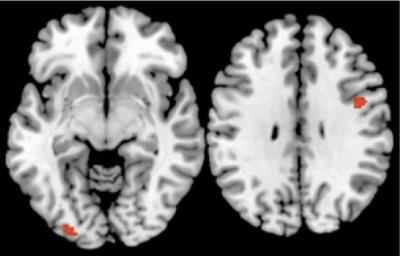
How unconscious processing improves decision-makingFebruary 15, 2013 *[+]* New brain imaging research from Carnegie Mellon University found that the brain regions responsible for making decisions continue to be active even when the conscious brain is distracted with a different task. This image shows unconscious activity in two parts of the brain, the left visual cortex and right prefrontal cortex. (Credit: Carnegie Mellon University) New brain imaging research from Carnegie Mellon University finds that the brain regions responsible for making decisions continue to be active even whe... mais »

Amerca Migration

Aloyzio AchuttiemAMICOR - Há 2 dias
Don't Fear the MigrantsDon't Fear the Migrants*What America really needs to worry about is when they stop coming.* BY FRANK JACOBS | FEBRUARY 14, 2013 U.S. President Barack Obama probably didn't have *Chunyun *in mind when he pressed for immigration reform during his recent State of the Union address. During China's annual spring festival travel season, or Chunyun, approximately 200 million Chinese -- give or take a few million -- make like salmon and return from the industrial centers on China's coast to their ancestral homes farther inland (with a few going against the flow from r... mais »

Nossa Terra...

Aloyzio AchuttiemAMICOR - Há 2 dias
*Espetáculo da Natureza* *(enviou-nos meu primo Rafael Cechella Isaia)*

Major Depression and Varicella ZV

Aloyzio AchuttiemAMICOR - Há 2 dias
Varicella Zoster Virus–Specific Immune Responses to a Herpes Zoster Vaccine in Elderly Recipients With Major Depression and the Impact of Antidepressant Medications 1. Michael R. Irwin1, 2. Myron J. Levin2, 3. Mark L. Laudenslager2, 4. Richard Olmstead1, 5. Anne Lucko3, 6. Nancy Lang2, 7. Carmen Carrillo1, 8. Harold A. Stanley3, 9. Michael J. Caulfield4, 10. Adriana Weinberg2, 11. Ivan S. F. Chan4, 12. Jim Clair4, 13. Jeff G. Smith4, 14. R. D. Marchese4, 15. Heather M. Williams3, 16. Danielle J. Beck3, 17. Patricia T. McCook... mais »

From Pyramids to Pillars

Aloyzio AchuttiemAMICOR - Há 4 dias
*From Population Pyramids to Pillars* [image: pyramid-pillar] To give people a clear and compelling picture of world population, demographers have a favorite graphic—the population pyramid. It looks like its name: a very broad base that comes to a point at the top. Ages are displayed as groupings, and the pyramid has two sides—one for males and one for females. But for many countries, a pillar and not a pyramid is the accurate graphic. This new pillar has far more significance than a simple change in the shape of a graph. It represents a new form of society that is emerging world... mais »

Reducing Na Intake...

Aloyzio AchuttiemAMICOR - Há 5 dias
*Com Dr. Eduardo Costa fizemos um estudo semelhante baseado na Pesquisa sobre PA no RS de 1978, publicado em 1994 (**Eduardo de A Costa, Geoffrey Rose, Carlos H. Klein and Aloyzio C. Achutti: Diastolic pressure as na index of salt sensitivity. Journal of Human Hypertension (1994) 8, 703-709. publicado em Setembro) *Reducing sodium in U.S. may save hundreds of thousands of lives over 10 years February 11, 2013 *Study Highlights:* - Reducing sodium consumption could save 280,000 to 500,000 lives in the United States over 10 years. - Researchers used three computer simulati... mais »

beta-metilamino-L-alanina

Aloyzio AchuttiemAMICOR - Há 5 dias
*Se as Cianobactérias são tão frequentes e estão por toda a parte, não poderiam explicar tanta doença neurológica de origem incerta?* BMAA neurotoxic effects Degenerative locomotor diseases had been described in animals grazing on cycad species, fueling interest in a possible link between the plant and the etiology of ALS/PDC . Subsequent laboratory investigations discovered the presence of BMAA. BMAA induced severe neurotoxicity in rhesus macaques, including:[3] - limb muscle atrophy - nonreactive degeneration of anterior horn cells - degeneration and partial loss of pyrami... mais »

Para ser Feliz...

Aloyzio AchuttiemAMICOR - Há 5 dias
Receita de bolo para ser feliz, por um filósofo de meia-tigela - Minitratado *(Urbano Leonel Sant' Anna - 12/02/2013)* Esta manhã, 6h15, depois de 6h de sono bem dormido (e merecido) acordei muito feliz. Pensei na conturbada noite do dia anterior e percebi que, apesar de até ter motivos para estar triste e de serem quase 4h da madrugada do 8º dia em que eu não conseguia ter mais do que 4h de descanso, também tinha ido deitar muito, muito feliz. Então me veio uma questão à cabeça: Será que todas as pessoas estão assim, tão de bem com a vida que pouco se abalam? A julgar pelo que tenho... mais »

Mônica...

Aloyzio AchuttiemAMICOR EXTENSION - Há 6 dias
Logo que montamos nosso consultório antigo na Praça Dom Feliciano No. 78 Salas 709 e 710, há mais de 41 anos, atendíamos cardiologia pediátrica e compramos uma boneca MONICA (que hoje está chegando aos 50 anos) para entreter os pequenos pacientes. Lembro-me que eu dizia que iria examinar junto com a boneca, ou examinava a boneca simultaneamente para demonstrar o que iria fazer. Diversos pacientes, hoje adultos, lembram-se da Monica e até perguntam por ela.. Por este motivo a levamos para o consultório novo (Av. Borges de Medeiros 2500 Sala 1005 - Prime Offices junto ao Shopping Praia... mais »

Health Priorities Setting

Aloyzio AchuttiemAMICOR - Há 6 dias
Setting Priorities for Local Healthwatch FEBRUARY 11, 2013 tags: Citizens Advice, Health and Wellbeing Board, health inequalities, joint health and wellbeing strategy, joint strategic needs assessment, jsna, mental health, social determinants of health,tackling health inequalities *Setting Priorities for Local Healthwatch* [image: Blog Feb 2013] As Local Healthwatch organisations start to be confirmed they will immediately feel pressure to demonstrate impact. What factors does local Healthwatch need to take into account when determining its priorities? I was asked to give a short talk... mais »

Dr. Urbano Sant'Anna e Dra. Valderês

Aloyzio AchuttiemAMICOR EXTENSION - Há uma semana
YouTube - Dra. Valderês cantando com Dr. Urbano Sant' Anna Cliqu

Carnaval

Aloyzio AchuttiemAMICOR EXTENSION - Há uma semana
[image: Carnaval] *Encontrei ete texto no meu desktop com data de 16 de janeiro de 2004. Não lembro se foi publicado.*É Carnaval!... *Aloyzio Achutti. Membro da Academia Sul-Rio-Grandense de Medicina.* Carnaval está ligado com alegria que, por sua vez, está ligada à saúde. Saúde é necessária para se ter plena alegria e, alegria deve promover a saúde. Vida, saúde e alegria, devem ser procuradas e conquistadas continuamente. Não há uma data especial ou um período para encontra-las. A celebração é um ritual humano ou, quem sabe, um arquétipo, no qual festejam... mais »