Translate AMICOR contents if you like

Showing posts with label mathematics. Show all posts

Sunday, October 04, 2020

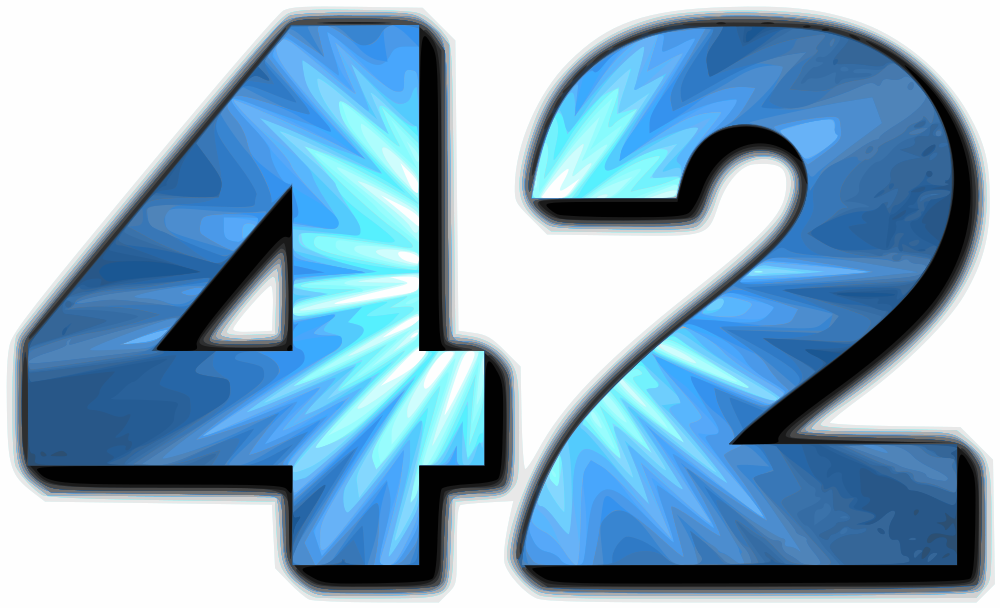
42


Image for post

The Biggest Fundamental Questions That ‘42’ Really Is The Answer To

We’re still not sure what the ultimate question is. Here are 5 excellent candidates.

Touted as the answer to the ultimate question about life, the Universe, and everything, 42 plays an important role not only in popular culture, specifically through Douglas Adams’ Hitchhiker’s Guide to the Galaxy, but in physics and mathematics as well. Too bad we’re still not sure what the question is. (MARTINULTIMA & HABITATOR TERRAE / WIKIMEDIA COMMONS)

We’re still not sure what the ultimate question is. Here are 5 excellent candidates.

Ethan Siegel
Oct 1 · 9 min read


Friday, September 18, 2020

Quantamagazine


My Bookmarks
Dear Readers,

At Quanta, we strive to produce the best science and math journalism as a service to our valued readers. To that end, we hope you’ll take a few minutes to complete our new reader survey at quantamagazine.org/survey. Let us know how we’re doing and how we can better serve you, and you’ll have a chance to win one of 20 Quanta T-shirts, tote bags or books (your choice). Thank you and good luck!

Thomas Lin
Editor in Chief

ABSTRACTIONS BLOG | ALL TOPICS


How Mathematical ‘Hocus-Pocus’ Saved Particle Physics

By CHARLIE WOOD

Renormalization has become perhaps the single most important advance in theoretical physics in 50 years.

Tuesday, June 30, 2020

Theorem of Calculus

Attribution: By Kabel — Own work, CC BY-SA 4.0, https://commons.wikimedia.org/w/index.php?curid=11034713

Wednesday, June 10, 2020

Primes and Equations

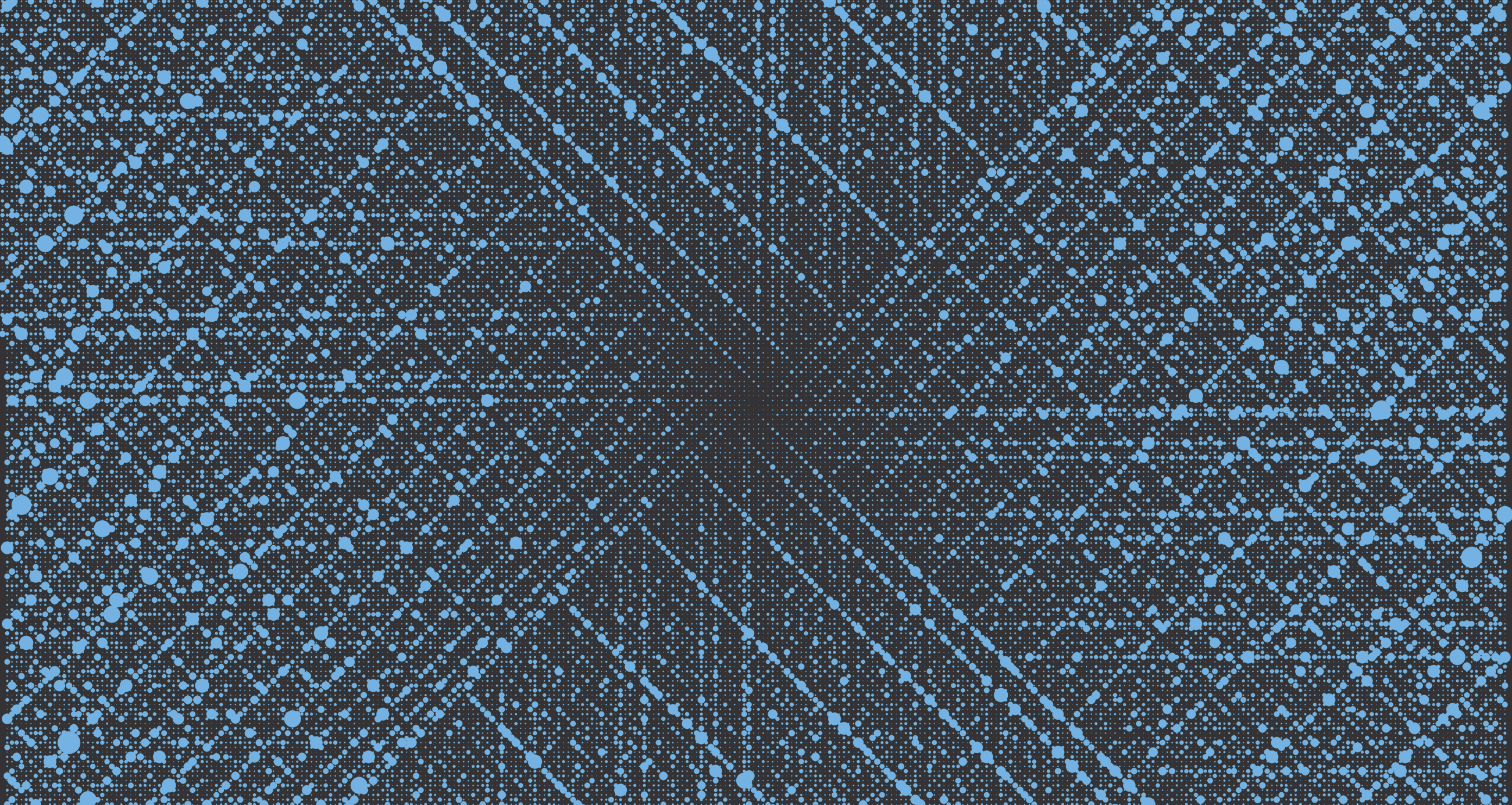
Unexpected Beauty in Primes

The Visualization of Primes & Its Potential Significance

Jesus Najera
Oct 12, 2019 · 9 min read
The significance of prime numbers, in both everyday applications & as a subtopic pertinent to all branches of math, cannot be overstated. We quietly rely on their special properties to carry the backbone of countless parts of our society — all because they are an irreducible part of the very fabric of nature. Resistant to any further factorization, prime numbers are often referred to as the “atoms” of the math world. As Carl Sagan so eloquently describes them:/.../
There’s a certain importance to prime numbers’ status as the most fundamental building blocks of all numbers, which are themselves the building blocks of our understanding of the universe.
..................................................................

One of the masters of writing mathematician Ian Stewart wrote about 17 equations that changed the world. In…

Saturday, May 30, 2020

Primes Euler's formula

This little known but awesome property about primes may change your mind about encryption

Saturday, May 16, 2020

Calculus

A rare look at the history and logic of calculus, how it was invented and developed, and what it reveals…

Tuesday, April 07, 2020

Saturday, March 28, 2020

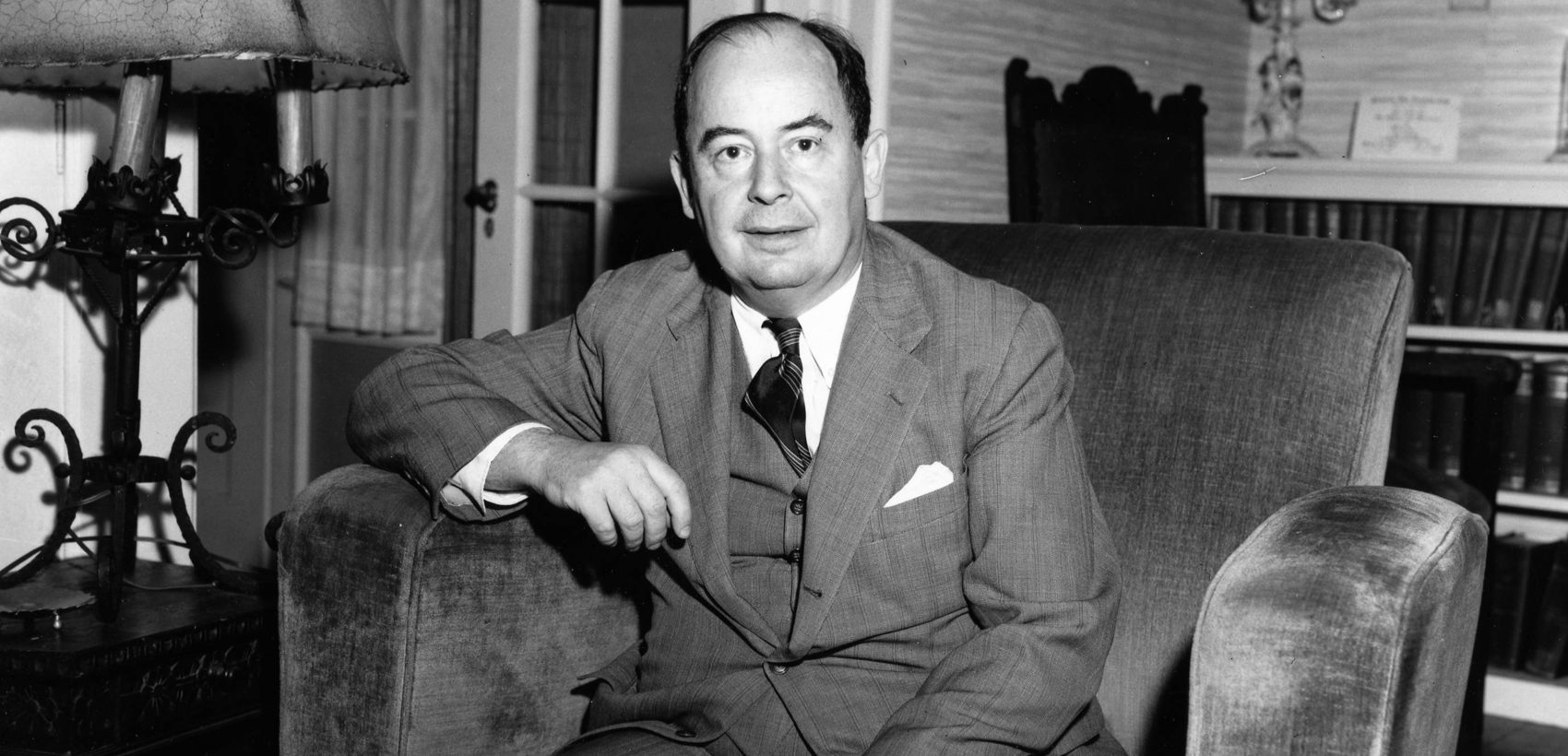
John von Neumann

Most mathematicians prove what they can, von Neumann proves what he wants
Itis indeed supremely difficult to effectively refute the claim that John von Neumann is likely the most intelligent person who has ever lived. By the time of his death in 1957 at the modest age of 53, the Hungarian polymath had not only revolutionized several subfields of mathematics and physics but also made foundational contributions to pure economics and statistics and taken key parts in the invention of the atomic bomb, nuclear energy and digital computing.
Known now as “the last representative of the great mathematicians”, von Neumann’s genius was legendary even in his own lifetime. The sheer breadth of stories and anecdotes about his brilliance, from Nobel Prize-winning physicists to world-class mathematicians abound:
”You know, Herb, Johnny can do calculations in his head ten times as fast as I can. And I can do them ten times as fast as you can, so you can see how impressive Johnny is” — Enrico Fermi (Nobel Prize in Physics, 1938)
“One had the impression of a perfect instrument whose gears were machined to mesh accurately to a thousandth of an inch.” — Eugene Wigner (Nobel Prize in Physics, 1963)
“I have sometimes wondered whether a brain like von Neumann’s does not indicate a species superior to that of man” — Hans Bethe (Nobel Prize in Physics, 1967)
And indeed, von Neumann both worked alongside and collaborated with some of the foremost figures of twentieth century science. He went to high school with , collaborated with  at ETH, attended lectures by  in Berlin, worked under  at , with  and  in Princeton, with  in Copenhagen and was close with both  and  at Los Alamos./.../