Translate AMICOR contents if you like

Saturday, June 11, 2016

Neuroscience


@neuroscience
Neuroscience | Latest news, research, books and journal articles in neuroscience, neurology, psychology and alzheimer's disease

Antiaging suplements

Deep neural networks to help identify, formulate advanced antiaging supplements

Life Extension teams with Insilico Medicine to use big data and deep learning to identify and develop natural approaches to promote health and support extended human longevity, including "geroprotectors"
June 7, 2016
(credit: InSilico Medicine)
Insilico Medicine andLife Extensionannounced today an exclusive collaboration to identify novel biomarkers of human aging through the use of big-data analytics and AI, with the ultimate goal of discovery and formulation of nutrients to support health and longevity.
Insilico Medicine* is a big-data analytics company specializing in applying advances in deep learning to discovery of biomarkers and drugs.… read more

Genoma building

Scientists plan to build human genome from scratch

June 6, 2016
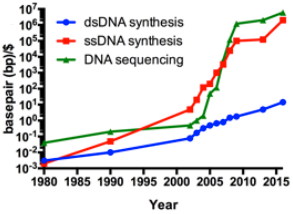
Efficiency trends in DNA sequencing (green) and synthesis of double-stranded DNA (dsDNA, blue) and single-stranded DNA (ssDNA, red) over the past ~35 years. Double-stranded DNA, or<br />
gene synthesis, has improved noticeably over the past ~10 years, but still lags behind<br />
sequencing and ssDNA synthesis. The disruptive improvement in sequencing and ssDNA (oligonucleotides) synthesis technologies has improved from multiplex and miniaturization technologies in high-throughput DNA sequencing and oligo microarray technologies, respectively. Commercial gene synthesis technologies relies on both oligo synthesis (building blocks) and sequencing (validation of synthesis) technologies. (credit: Jef D. Boeke/Science)
Leading genomics experts have announced Genome Project-write (HGP-write), which aims to synthesize entire genomes of humans and other species from chemical components and get them to function in living cells.
As explained in Science, the goal of HGP-write is to reduce the costs of engineering large genomes, including a human genome, and to develop an ethical framework for genome-scale engineering and transformative medical applications.
Impacts… read more

Migaine and Vitamins

Many With Migraine Could Have Vitamin Deficiencies

Source: Cincinnati Children’s Hospital Medical Center.
Researchers uncertain whether supplementation would help prevent migraines.
A high percentage of children, teens and young adults with migraines appear to have mild deficiencies in vitamin D, riboflavin and coenzyme Q10 — a vitamin-like substance found in every cell of the body that is used to produce energy for cell growth and maintenance.
These deficiencies may be involved in patients who experience migraines, but that is unclear based on existing studies.
“Further studies are needed to elucidate whether vitamin supplementation is effective in migraine patients in general, and whether patients with mild deficiency are more likely to benefit from supplementation,” says Suzanne Hagler, MD, a Headache Medicine fellow in the division of Neurology at Cincinnati Children’s Hospital Medical Center and lead author of the study.
Dr. Hagler and colleagues at Cincinnati Children’s conducted the study among patients at the Cincinnati Children’s Headache Center. She will present her findings at 9:55 am Pacific time Friday, June 10, 2016 at the 58th Annual Scientific Meeting of the American Headache Society in San Diego.
Dr. Hagler’s study drew from a database that included patients with migraines who, according to Headache Center practice, had baseline blood levels checked for vitamin D, riboflavin, coenzyme Q10 and folate, all of which were implicated in migraines, to some degree, by previous and sometimes conflicting studies. Many were put on preventive migraine medications and received vitamin supplementation, if levels were low. Because few received vitamins alone, the researchers were unable to determine vitamin effectiveness in preventing migraines.
Image shows a woman in a wooden mask.
Previous studies have indicated that certain vitamins and vitamin deficiencies may be important in the migraine process. Studies using vitamins to prevent migraines, however, have had conflicting success. NeuroscienceNews.com image is for illustrative purposes only.
She found that girls and young woman were more likely than boys and young men to have coenzyme Q10 deficiencies at baseline. Boys and young men were more likely to have vitamin D deficiency. It was unclear whether there were folate deficiencies. Patients with chronic migraines were more likely to have coenzyme Q10 and riboflavin deficiencies than those with episodic migraines.
Previous studies have indicated that certain vitamins and vitamin deficiencies may be important in the migraine process. Studies using vitamins to prevent migraines, however, have had conflicting success.
ABOUT THIS NEUROLOGY RESEARCH ARTICLE
Source: Jim Feuer – Cincinnati Children’s Hospital Medical Center
Image Source: This NeuroscienceNews.com image is in the public domain.
Original Research: The findings will be presented at the 58th Annual Scientific Meeting of the American Headache Society in San Diego, June 9 – 12 2016.

Friday, June 10, 2016

Movies 2016

The Best Movies of 2016 So Far


At the middle of the year we tend to look ahead to summer blockbusters and autumn Oscar fare, but some of 2016's finest movies are already behind us

Wednesday, June 08, 2016

Permeabilidade da BHE

“Vazamento” na barreira hematoencefálica, um fator fundamental na doença de Alzheimer precoce

  • APA
  • 393 Visualizações
    2 estrelas
Um estudo holandês mostrou uma correlação entre a gravidade do vazamento e o comprometimento cognitivo.
Pesquisadores holandeses identificaram um mecanismo fundamental na doença de Alzheimer (DA) precoce, que se manifesta como um aumento na permeabilidade da barreira hematoencefálica (BHE). Os achados foram publicados na revista “Radiology”.
Cientistas da Universidade de Maastricht compararam 16 pacientes adultos com DA precoce com 17 controles saudáveis pareados pela idade usando imagiologia de ressonância magnética realçada por contraste. Eles mediram as taxas de vazamento da BHE e geraram um mapa denominado histograma para ajudar a determinar a quantidade de tecido cerebral com vazamento.
Comparados aos controles, a taxa de vazamento da BHE era significativamente maior em pacientes com DA, e o vazamento ficava distribuído através do cérebro. Pacientes com DA apresentaram uma percentagem significativamente maior de tecido cerebral na substância cinzenta, incluindo o córtex, com vazamento. Um comprometimento semelhante, porém mais sutil, da BHE ficou evidente na substância branca do cérebro. Mais importante, os pesquisadores encontraram uma relação entre o comprometimento da BHE e o declínio do desempenho cognitivo.
Isto sugere que uma BHE comprometida é parte da patologia precoce da DA e pode ser parte de uma cascata de eventos, levando, eventualmente, ao declínio cognitivo e à demência. “O vazamento da barreira hematoencefálica significa que o cérebro perdeu sua proteção, a estabilidade das células cerebrais está comprometida e o ambiente em que as células nervosas interagem se tornou mal condicionado”, disse o autor do estudo, Walter H. Backes. “Para a pesquisa de Alzheimer, isso significa que uma nova ferramenta se tornou disponível para estudar a contribuição do comprometimento da barreira hematoencefálica no cérebro na instalação e progressão da doença em estágios iniciais ou pré-estágios de demência.”

Tuesday, June 07, 2016

Medical Errors

The Real Cause of Deadly Medical Errors

Individuals do make lethal mistakes, but the main reason for preventable medical mistakes is a health care system inadequate to the complexities of 21st-century medicine 
By Ashish Jha on June 2, 2016


A few months ago, I cared for an older patient that I will call Mr. Jones. He lived alone and one afternoon, after a neighbor found him disoriented, was brought into the emergency department. Diagnosed with pneumonia, he was admitted and started on standard guidelines-based antibiotics. By next morning, he had taken a turn for the worse and was sent to the intensive care unit where he struggled and eventually died 72 hours later. Troubled by the death of a seemingly healthy man, I spoke to his daughter who lived in California. She mentioned he had been admitted to another hospital two months prior, also for pneumonia. The lab at that hospital told me his pneumonia had been caused by an unusual bacterium susceptible to only a few antibiotics—none of which we had used. And days later, when our lab confirmed that Mr. Jones’ current pneumonia was caused by the same bacteria, I knew his death had been wholly preventable. Despite our best efforts, we all missed it.A recent report in the British Medical Journal (BMJ)estimates that 250,000 Americans die each year due to medical errors. This reportsparked a firestorm. Skeptics carefully documented why that number might be wrong. While other estimates have put the number of deaths from medical errors at 100,000 , many in the medical community believe the number of cases is much smaller. The truth depends largely on the most important question of all: what is a medical error?/.../

Mitochondria and Neuron regeneration


image shows axons

Mobilizing Mitochondria May Be Key to Regenerating Damaged Neurons: Mouse Study


Summary: A new study reports boosting the transport of mitochondria along axons enhances the ability for mouse nerve cells to replace themselves following injury.
Source: Rockefeller University Press.
Researchers at the National Institute of Neurological Disorders and Stroke have discovered that boosting the transport of mitochondria along neuronal axons enhances the ability of mouse nerve cells to repair themselves after injury. The study, “Facilitation of axon regeneration by enhancing mitochondrial transport and rescuing energy deficits,” which has been published in The Journal of Cell Biology, suggests potential new strategies to stimulate the regrowth of human neurons damaged by injury or disease.
Neurons need large amounts of energy to extend their axons long distances through the body. This energy – in the form of adenosine triphosphate (ATP) – is provided by mitochondria, the cell’s internal power plants. During development, mitochondria are transported up and down growing axons to generate ATP wherever it is needed. In adults, however, mitochondria become less mobile as mature neurons produce a protein called syntaphilin that anchors the mitochondria in place. Zu-Hang Sheng and colleagues at the National Institute of Neurological Disorders and Stroke wondered whether this decrease in mitochondrial transport might explain why adult neurons are typically unable to regrow after injury.
image shows axons
After axonal injury, nearby mitochondria become incapable of producing ATP, as indicated by their change in color from yellow (healthy) to green (damaged). NeuroscienceNews.com image is credited to Zhou et al., 2016.
Sheng and his research fellow Bing Zhou, the first author of the study, initially found that when mature mouse axons are severed, nearby mitochondria are damaged and become unable to provide sufficient ATP to support injured nerve regeneration. However, when the researchers genetically removed syntaphilin from the nerve cells, mitochondrial transport was enhanced, allowing the damaged mitochondria to be replaced by healthy mitochondria capable of producing ATP. Syntaphilin-deficient mature neurons therefore regained the ability to regrow after injury, just like young neurons, and removing syntaphilin from adult mice facilitated the regeneration of their sciatic nerves after injury.
“Our in vivo and in vitro studies suggest that activating an intrinsic growth program requires the coordinated modulation of mitochondrial transport and recovery of energy deficits. Such combined approaches may represent a valid therapeutic strategy to facilitate regeneration in the central and peripheral nervous systems after injury or disease,” Sheng says.
ABOUT THIS NEUROLOGY RESEARCH ARTICLE
Funding: This research was supported by National Institutes of Health, NIH/National Institute of Neurological Disorders and Stroke.
Source: Ben Short – Rockefeller University Press
Image Source: This NeuroscienceNews.com image is credited to Zhou et al., 2016.
Original Research: Abstract for “Facilitation of axon regeneration by enhancing mitochondrial transport and rescuing energy deficits” by Bing Zhou, Panpan Yu, Mei-Yao Lin, Tao Sun, Yanmin Chen, and Zu-Hang Sheng in Journal of Cell Biology. Published online June 7 2016 doi:10.1083/jcb.201605101
CITE THIS NEUROSCIENCENEWS.COM ARTICLE
Rockefeller University Press. “Mobilizing Mitochondria May Be Key to Regenerating Damaged Neurons: Mouse Study.” NeuroscienceNews. NeuroscienceNews, 7 June 2016.
.

The Price of Prosperity

The Real Threat of an Aging Population


Todd G. Buchholz is a former White House director of economic policy under President George H.W. Bush, managing director of the Tiger hedge fund and the author of The Price of Prosperity.

And how to address it

In my book The Price of Prosperity I report that America now has more golf courses than McDonalds. This is not a story about Americans preferring manicured grass to grass-fed beef. It’s a story of 40 million retiring baby boomers looking for a place to take a walk and exercise.
We used to size up a person by counting his children. Now we count Rolex watches, six-pack abs and Instagram followers. The Center for Disease Control recently reported that Americans gave birth to about10,000 fewer babies in 2015 than in 2014. Go to an airport departure gate and count how many people pre-board because they are seniors hobbling with walkers rather than young parents with baby strollers. The lack of babies makes the airplanes quieter, but for the country’s economic future, it suggests turbulence ahead.

Diabetes 2 control

Intensive Blood Sugar Control May Be Too Much for Some With Type 2 Diabetes

Individualized treatment is important, expert says
     
By Robert Preidt
Monday, June 6, 2016
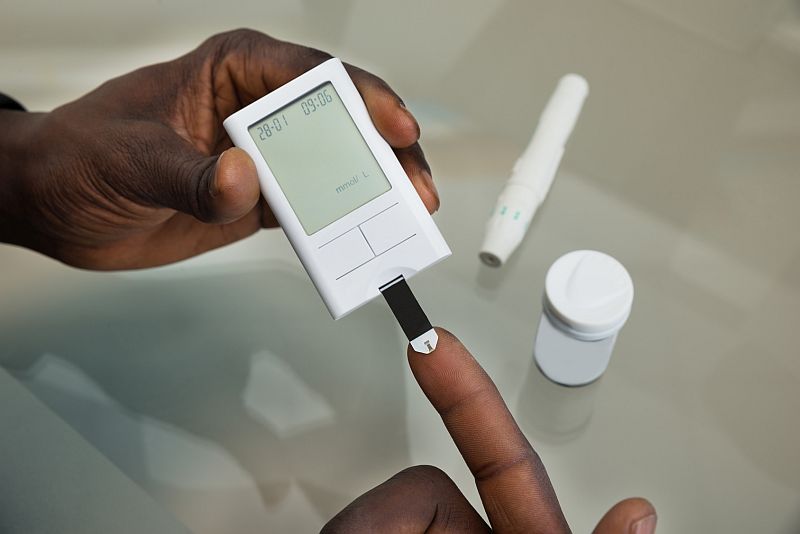
HealthDay news image
MONDAY, June 6, 2016 (HealthDay News) -- Intensive treatment of blood sugar levels in some people with type 2 diabetes may cause serious complications, new research suggests.
"In this study, we found that, particularly among older patients and patients with serious chronic conditions, intensive treatment nearly doubled the risk of severe hypoglycemia requiring medical attention, including hospitalization," said lead author Dr. Rozalina McCoy. She is an endocrinologist at the Mayo Clinic in Rochester, Minn.
Hypoglycemia (low blood sugar) is a serious potential complication of diabetes treatment. The researchers said it can worsen quality of life and has been linked with cardiovascular events, dementia and death.
The researchers reviewed information from more than 31,500 American adults. All had stable and controlled type 2 diabetes. None was taking insulin. None had a prior history of severe hypoglycemia. Both of these factors are known to increase the risk for future hypoglycemia, the researchers explained.
Nearly 19 percent of older patients and those with serious chronic conditions (clinically complex patients) received intensive blood sugar management. More than 26 percent of non-complex patients received intensive treatment of blood sugar, the study authors reported.
Overall, older and clinically complex patients were nearly twice as likely to develop severe hypoglycemia as non-complex patients. Intensive treatment increased that risk by an additional 77 percent over two years, the researchers said.
"This means that 3 out of 100 older or clinically complex patients with [type 2] diabetes who never had hypoglycemia before, whose [blood sugar] is within recommended targets and who are not on insulin will experience a severe hypoglycemic episode at some point over two years," McCoy said in a Mayo news release.
"This does not even capture the more mild episodes of low blood sugar that patients can treat at home, without having to go to the doctor, emergency department or hospital," she added.
"These findings are concerning for many reasons," McCoy said. "Overtreatment results in greater patient burden, higher risk of medication side effects, and more severe hypoglycemia, which can lead to serious injury and even death. It adds more unnecessary costs for patients and the health care system."
McCoy stressed the need for providing individualized treatments for people with type 2 diabetes.
The study was published online June 6 in the journal JAMA Internal Medicine.
SOURCE: Mayo Clinic, news release, June 6, 2016

Monday, June 06, 2016

universe edge?

Does the universe have an edge?

Erro-Médico

titulo-palpitadas-praticas-manoel-canesin
Em nossa especialidade multifacetada que envolve a cardiologia clínica, cardio-intensivismo, emergência cardiovascular, cardiopediatria, métodos diagnósticos invasivos e não invasivos, hemodinâmica, cirurgia cardíaca, assim como em várias outras especialidades médicas, estamos diante de um problema grave que temos que enfrentar.
Este assunto ainda é pouco discutido no mundo e, muito menos, no Brasil onde as limitações e recursos públicos e privados em saúde são menores. O artigo que apresentamos faz uma revisão interessante e uma análise diferente e única, jamais apresentada sobre o erro médico, colocando-o como a terceira causa de morte nos EUA, perdendo somente para doenças cardiovasculares e câncer.
Artigo-BMJ-Erro-Medico

Sunday, June 05, 2016

Millennials Leaders

10 Millennials Who Are Changing the World
For its newest class of Next Generation Leaders, TIME selected 10 young men and women who are hard at work changing the world

How to Mosquito-Proof

How to Mosquito-Proof Your Yard

mosquito
Getty Images, Illustration by Marisa Gertz for TIME

Here's the lowdown on how to turn your home into an anti-mosquito fortress. It’s mosquito season, and this year, people in the United States are extra skittish amid news that theZika virus is rapidly spreading through the Americas. Not to mention the other mosquito-borne diseases to worry about. On Tuesday the Texas Department of State Health Services announced a locally transmitted case of the debilitating disease chikungunya, and West Nile Virus remains a problem in many states. For advice, we spoke to Joseph Conlon, a technical advisor at the American Mosquito Control Association, about the best ways to mosquito-proof your home./.../