Translate AMICOR contents if you like

Tuesday, July 05, 2016

RNA

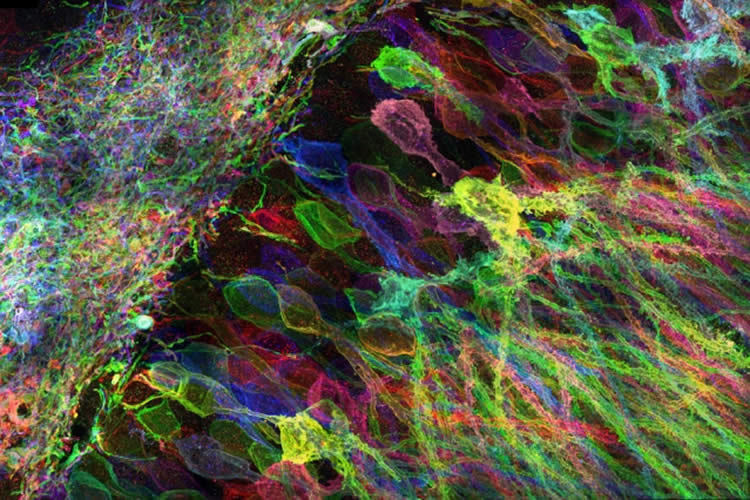
Microscopy technique allows scientists to pinpoint RNA molecules in the brain.
The research is in Nature Methods. (full access paywall)

Y-Chromosomal Adam

Y-Chromosomal Adam Lived 208,300 Years Ago, Says New Study

Jan 23, 2014 by News Staff / Source
According to new research reported in the European Journal of Human Genetics, our most recent common ancestor – the so-called Y-chromosomal Adam – lived on the Earth 208,300 years ago.
Creation of Adam, detail. By Michelangelo Buonarroti, 1510.
Dr Eran Elhaik from the University of Sheffield and his co-authors used conventional biological models to show that Y-chromosomal Adam is 8,300 years older than scientists originally believed. They put Y-chromosomal Adam within the time frame of the Mitochondrial Eve.
“We can say with some certainty that modern humans emerged in Africa a little over 200,000 years ago,” Dr Elhaik said.
The findings contradict a recent study – published in the American Journal of Human Genetics in February 2013 – which had claimed the human Y chromosome originated in a different species through interbreeding which dates Adam to be twice as old.
“In fact, their hypothesis creates a sort of space-time paradox whereby the most ancient individual belonging to Homo sapiens species has not yet been born. If we take the numerical results from previous studies seriously we can conclude that the past may be altered by the mother of Adam deciding not to conceive him in the future, thus, bringing a retroactive end to our species.”
“It is obvious that modern humans did not interbreed with hominins living over 500,000 years ago. It is also clear that there was no single Adam and Eve but rather groups of Adams and Eves living side by side and wandering together in our world.”
Dr Elhaik noted: “the question to what extend did our humans forbearers interbreed with their closest relatives is one of the hottest questions in anthropology that remains open.”
______
Eran Elhaik et al. 2014. The ‘extremely ancient’ chromosome that isn’t: a forensic bioinformatic investigation of Albert Perry’s X-degenerate portion of the Y chromosome. European Journal of Human Genetics, published online January 22, 2014; doi: 10.1038/ejhg.2013.303

Dolly 20 years

Yuck, no

The life of Dolly the sheep

20 years ago today - Dolly the sheep was born (5th July 1996) 

We take a look at the life of the world’s most famous sheep
Making Dolly
Dolly was part of a series of experiments at The Roslin Institute that were trying develop a better method for producing genetically modified livestock. If successful, this would mean fewer animals would need to be used in future experiments.

Frontal Cortex

  1. A sportscaster lunges forward and blurts out, “Interception! Drew Brees threw the ball right into the opposing linebacker’s hands! Like he didn’t even see him!”
    The quarterback likely actually did not see the defender standing right in front of him, said Dobromir Rahnev, a psychologist at the Georgia Institute of Technology. Rahnev leads a research team making new discoveries about how the brain organizes visual perception, including how it leaves things out even when they’re plainly in sight.
    Rahnev and researchers from the University of California, Berkeley have come up with a rough map of the frontal cortex’s role in controlling vision. They published their findings on Monday, May 9, 2016 in the journal Proceedings of the National Academy of Sciences.
    Thinking cap
    The frontal cortex is often seen as our “thinking cap,” the part of the brain scientists associate with thinking and making decisions. But it’s not commonly connected with vision. “Some people believe that the frontal cortex is not involved,” said Rahnev, an assistant professor at the School of Psychology. The new research adds to previous evidence that it is, he said.
    The lack of association with that part of the brain may have to do with the fact it’s other parts that transform information coming from the eyes into sight and others still that make sense of it by doing things like identifying objects in it.
    But the thinking cap of the brain controls and oversees this whole process, making it as essential to how we see as those other areas, Rahnev said. How that works also accounts for why we sometimes miss things right in front of us.
    A camera it’s not
    “We feel that our vision is like a camera, but that is utterly wrong,” Rahnev said. “Our brains aren’t just seeing, they’re actively constructing the visual scene and making decisions about it.” Sometimes the frontal cortex isn’t expecting to see something, so although it’s in plain sight, it blots it out of consciousness.
    To test out the fontal cortex’s involvement in vision, the researchers ran a two-part experiment.
    First, they observed which regions of the brain – in particular the frontal cortex – lit up with activity while healthy volunteers completed visual tasks corresponding to three basic stages of conscious visual perception.
    Second, they inhibited those same regions using magnetic stimulation to confirm their involvement in each visual stage.
    Believing is part of seeing
    The first stage of the visual perception the researchers tested for was selection, Rahnev said. That’s when the brain picks out part of the vast array of available visual stimuli to actually pay attention to.
    In the case of the football quarterback, this might mean focusing on the route the receiver takes.
    The second stage is combination, he said. The brain merges the visual information it processed with other material. “The quarterback’s brain is putting what he actually sees together with expectations based on the play he called,” Rahnev said.
    Then comes evaluation. The quarterback needs to decide whether to release the ball given everything he has processed.
    Expecting a blocker to stop the defending player (which didn’t happen), he may have blotted him out of perception and thrown the ball right at him. Interception.
    “The frontal cortex sends a signal to move your attention onto the object you select,” Rahnev said. “It does some of the combining with other information, and then it’s probably the primary evaluator of what you think you saw.”
    Simple vision brain map
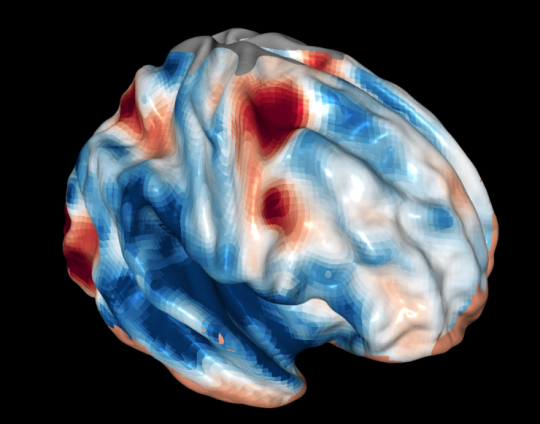
    In experiments, during a functional MRI scan, different parts of the frontal cortex of the participants lit up, corresponding to each vision function.
    The back of the frontal cortex activated during selection; its midsection lit up during combination, and the front, or anterior, part cranked up during evaluation.
    That’s how the researchers arrived at a kind of vision map of the frontal cortex. “It’s a rudimentary map,” Rahnev said. “A very simple one that just says, ‘This is the back. This in the middle. This is the front.’"
    The critical evidence
    The critical evidence for this map came from the use of magnetic stimulation. When the researchers used it to inhibit the back and middle of the frontal cortex separately, subjects became less able to complete the corresponding functions of selection and combination.
    When they stimulated the front, the opposite happened. Subjects were slightly but significantly better able to evaluate the accuracy of what they think they saw.
    “This is a really clear demonstration of the role that the frontal cortex, which is usually seen as the seat of thought, plays in controlling vision.”
    Sorry, officer!
    And there is a practical takeaway for health and safety. Instead of the quarterback telling the coach, “I swear I didn’t see that coming,” often it’s motorists telling police officers the same thing after a car accident.
    Distraction is often the culprit, because it overtaxes the organization of perception, Rahnev said. These three functions are going on all the time in multiple scenarios in our brains while they process the world around us.
    But add too much to the pile, like texting behind the wheel, Rahnev said, and “you can run right into a parked car without ever seeing it.”
Monday, July 04, 2016

Exercício no lazer

Exercício no lazer contribui para a saúde

Estudo brasileiro que acompanha saúde de voluntários indica relação entre índices cardiovasculares e maioria sedentáriaMARIA GUIMARÃES | Edição Online 12:21 1 de julho de 2016

© LÉO RAMOS
A prática de exercícios no lazer, como faz este frequentador do parque paulistano do Ibirapuera, contribui para a saúde cardiovascular e metabólica
Boa parte dos brasileiros à espera dos Jogos Olímpicos, que começam em pouco mais de um mês no Rio de Janeiro, tem mais interesse por assistir esportes pela televisão, no conforto de um sofá, do que praticá-los pessoalmente. A atividade em nível olímpico pode ser excessiva, mas a falta de exercício no tempo de lazer pode estar por trás de um aumento em doenças cardiovasculares e metabólicas, de acordo com estudo coordenado pelo epidemiologista Paulo Lotufo, professor da Faculdade de Medicina da Universidade de São Paulo (FM-USP), que se destaca por acompanhar a saúde de uma população considerável ao longo dos anos.
O trabalho, publicado na edição de junho da revista Journal of the American Heart Association, acompanhou 10.585 integrantes saudáveis do Estudo Longitudinal da Saúde do Adulto (Elsa-Brasil) (ver Pesquisa FAPESP nº 164), dos quais um quarto dizia praticar atividades físicas em seu tempo de lazer: ao menos 150 minutos de atividades físicas moderadas, ou pelo menos 75 minutos de atividade vigorosa por semana. /.../

Saturday, July 02, 2016

Diabete


Área de anexos
Encaminhado pelo AMICOR

Reginaldo Albuquerque

https://drive.google.com/open?id=0B3-0JjscwhtpanFQUzE3ZnBNMU1kMWZUTjdGNkxBbWNaUEow


US Deaths Causes

Top 10 Causes of Death in the US

Troy Brown, RN
June 30, 2016
The death rate in the United States hit an all-time low in 2014. For the age-adjusted death rate of 724.6 deaths per 100,000, down 1% from 2013, heart disease and cancer were still the top two causes of death in the United States in 2014, according to new data from the National Center for Health Statistics published June 30 in National Vital Statistics Reports.
The top 10 causes of death in 2014 were as follows:
  1. Heart disease (23.4% of all deaths)
  2. Cancer (22.5%)
  3. Chronic lower respiratory diseases (5.6%)
  4. Accidents (unintentional injuries; 5.2%)
  5. Cerebrovascular diseases (5.1%)
  6. Alzheimer's disease (3.6%)
  7. Diabetes mellitus (2.9%)
  8. Influenza and pneumonia (2.1%)
  9. Nephritis, nephrotic syndrome, and nephrosis (1.8%)
  10. Intentional self-harm (suicide; 1.6%).
Together these 10 causes of death accounted for 74% of all deaths in the United States. Thay are unchanged from the top 10 causes of death in 2013.

Friday, July 01, 2016

Common Chemicals and Brain Development

Common Chemicals Endanger Child Brain Development, Report Says

Image shows an infographic.
In addition to mercury and lead, flame retardants, air pollutants and chemicals found in many plastics, cosmetics and food containers endanger child brain health, researchers say. NeuroscienceNews.com image is credited to Julie McMahon.

Summary: A new report calls for renewed attention to the growing evidence that many common and widely available chemicals endanger neurodevelopment in fetuses and children of all ages.
Source: University of Illinois.
In a new report, dozens of scientists, health practitioners and children’s health advocates are calling for renewed attention to the growing evidence that many common and widely available chemicals endanger neurodevelopment in fetuses and children of all ages.
The chemicals that are of most concern include lead and mercury; organophosphate pesticides used in agriculture and home gardens; phthalates, found in pharmaceuticals, plastics and personal care products; flame retardants known as polybrominated diphenyl ethers; and air pollutants produced by the combustion of wood and fossil fuels, said University of Illinois comparative biosciences professor Susan Schantz, one of dozens of individual signatories to the consensus statement./.../