Translate AMICOR contents if you like

Showing posts with label science. Show all posts

Friday, September 11, 2020

Nature briefing


Wednesday, August 19, 2020

Scientific Amarica Archive 175

Scientific American Archive
Scientific American
 The heat is on (in the Northern Hemisphere) but we’re stuck inside (it feels like pretty much everywhere). Luckily we have some great reading for you: National Radio Day is August 20, when we honor this device that still finds a large space in the digital ecosystem. We can skip the “murder hornets” and salute the honeybee, which pollinates $15 billion in crops every year. Finally, we should look at space travel, because at Scientific American, we can.

And for our 175th anniversary year, more gems from Scientific American’s history can be found at Artifacts from the Archive.

 
Editor headshot
I hope you enjoy the journey!
Dan Schlenoff
, Editor of “50, 100 & 150 Years Ago”

Monday, July 13, 2020

Scientific Inquiry

The Shifting Terrain of Scientific Inquiry

A Conversation with David Kaiser
Most historians of science, certainly these days, consider themselves historians. That means we use historical methods of research. We comb through the published literature, investigate unpublished things—correspondence, notes, notebooks, grant proposals. For more recent periods, we interview people. (There's a colleague of mine who likes to say that the historian's job is reading dead people's mail, which captures a lot of what we try to do.) We are trying to figure out the texture of lived experience and how that informed the people about whose world we're trying to get our heads back into. On one hand, it is an interpretive effort squarely within the humanities and social sciences to make sense of our world in times and places gone by. With the history of science, we get to have this productive, ongoing discussion with much more contemporary events and efforts in the sciences today. Why do certain ideas take hold and become so prominent? Why do certain questions rise to prominence and get asked in one setting versus another? These are the larger questions about the present-day scientific enterprise that a lot of work in the history of science can help us better understand.
DAVID KAISER is the Germeshausen Professor of the History of Science and professor of physics at MIT. He is the author, most recently, of Quantum Legacies.

Monday, June 01, 2020

Frank Whittle

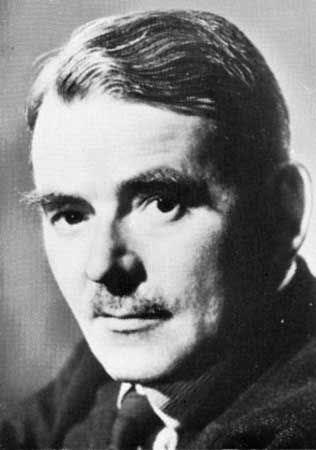
Frank Whittle
1907: English aviation engineer and pilot Frank Whittle, who invented the jet engine, was born.

Friday, May 29, 2020

The Good Scientist

The good scientist

Science is the one culture that all humans share. What would it mean to create a scientifically literate future together?

Martin Rees
is the United Kingdom’s Astronomer Royal. He is a fellow of Trinity College Cambridge, co-founder of the Centre for the Study of Existential Risk at the University of Cambridge and a member of the House of Lords. He is also the author of 10 books, most recently On the Future: Prospects for Humanity (2018). 
Published in association with
Centre for the Study of Existential Risk
an Aeon Partner
3,700 words
Edited by Sally Davies
The Royal Society, the United Kingdom’s academy of sciences, was founded in 1660. At its earliest meetings, scientists shared travellers’ tales, peered through newly invented microscopes, and experimented with airpumps, explosions and poisons. Its earliest fellows included the polymaths Christopher Wren and Robert Hooke, along with enthusiastic amateurs such as the prolific diarist Samuel Pepys. Sometimes gatherings turned gruesome: Pepys recorded the event of a blood transfusion from a sheep to a man – who, amazingly, survived. Health and safety rules render Royal Society meetings somewhat duller these days, but the guiding spirit remains. Right from the start, the Society recognised that science was international and multidisciplinary.
Science and technology, of course, hugely expanded over the following centuries. As a result, the Royal Society’s present-day fellows are specialised professionals. This fact aggravates the barrier between science and the public, as well as between different specialisms. As a physical scientist, most of my own all-too-limited knowledge of modern biology comes from ‘popular’ books on the subject./.../

Thursday, May 28, 2020

Tec & Crisis

Recomendado pela AMICOR Maria InĂªs Reinert Azambuja
Share using:                 https://tinyurl.com/crisisinformatics
First Released:         May 26, 2020
Last Updated:         May 27, 2020
About. This resource was created to support researchers who might be newly conducting crisis informatics research in light of the pandemic of 2020. It also might support creation of new course syllabi on related topics.
It has been produced by members of the crisis informatics research community in May 2020 to consolidate and organize the literature on informatics of disaster mitigation, warning, response, and recovery. This guided bibliography is a living resource, and will continue to be updated.
Instructions for New Contributions. If you are a crisis informatics researcher and would like to contribute to this document, please add that research here as an initial step so that it can then be incorporated into the resource. If you have additional questions, please contact palen@colorado.edu as the corresponding contributor, or one of the other contributors.

Wednesday, March 11, 2020

Mycoplasma

How Mycoplasma Contamination Affects Results and Reproducibility
As one of the most common, yet elusive, contaminants of cell cultures, mycoplasma is a pervasive microorganism that often remains undetected by scientists from around the world.
Join experts from WiCell and Wiley as they discuss the adverse effects mycoplasma has on results and reproducibility of cell culture research:
Basic mycoplasma characterization and its biological effects on cells
Detection, elimination, and prevention of mycoplasma contamination
Impact of mycoplasma on scientific data generated from contaminated cells
The need for monitoring cell line health for cell banking or clinical applications
 
Register now to learn more!
 

Thursday, February 20, 2020

science and faith

Sunday, February 09, 2020

Tuesday, January 28, 2020

Asimov 100

Asimov at 100: A life of wonder

For Isaac Asimov, “nurturing ingenuity and insight through exploration, learning and communication was an ethical imperative and crucial for human progress”, writes digital ethicist David Leslie. It was an ethos that Asimov promoted through 20 million printed words. Discover Asimov’s career as a chemist, science popularizer and legend of science-fiction’s Golden Age.
Nature | 9 min read

QUOTE OF THE DAY

“What was common sense in a world that once existed has become myth in the totally different world that now exists, and suicidal myth at that.”
The relentless pursuit of technological advancement and growth no longer serves humanity or the planet, said science fiction legend Isaac Asimov in 1971. (Nature)

Saturday, January 25, 2020

Leonhard Euler (1707–1783)

The Smartest Person in the World That You Have Never Heard Of

Jul 26, 2019 · 4 min read
Portrait of Leonhard Euler by Jakob Emanuel Handmann (1753)
Unless you study Mathematics or Physics at a university level it is very unlikely that you have ever heard of Leonhard Euler (1707–1783). But as many of the people who know who he is would tell you, his impact on the scientific world cannot be overlooked. Similar to DaVinci, Euler didn’t focus on only one facet of science. He was known for his work in optics, astronomy, music theory, mechanics and fluid dynamics with all his work in these subjects shaping them for years to come as well as some of his theories still being used today. The magnitude the number of his discoveries meant that most weren’t named after him, but after the first person to prove his theories to avoid naming everything after him./.../

Sunday, January 05, 2020

Science Conferences??

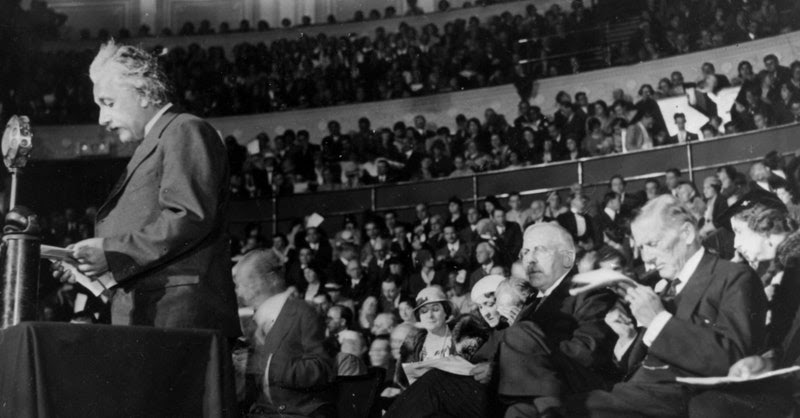
Albert Einstein speaking at a podium in an auditorium

NĂ³s

Lembrei-me que enquanto escoteiro, uma das provas de abilidade era sobre NOS

Color-changing fibers help reveal mysteries of how knots work

Experiments with colorful fibers helped scientists discover a few simple rules behind knots’ varying strengths.
Read More

anniversaries in 2020

Top 10 science anniversaries in 2020

2020 marks anniversaries of the discovery of electromagnetism and X-rays, plus the first atomic bomb.
Read More

Monday, December 30, 2019

Decade...

One Decade, a Lot of Writing

Ten years, measured in words on astrobiology, exoplanets and the cosmos in general

  • By  on 
  • One Decade, a Lot of Writing
    As the 2010s draw to a close I thought I’d reflect on some of the things I’ve written about these past ten years – ranging from books and articles to research papers.
    I actually started this decade as a newbie in writing for a general audience. Back on March 24th, 2010 I kicked off my first-ever blog as a total amateur out in the wild. That was the origin point for Life, Unbounded. My first real science post there? It was on a NASA project to drill into the Antarctic Ross ice-shelf at the most unpromising sounding site of Windless Blight.
    Things moved along from that point, and by July 2011 Life, Unbounded was headed over to Scientific American’s fledging blog network, where it has somehow remained. While that was going on I was also hard at work on my first pop-sci book: Gravity’s Engines which took a look at black holes as real astrophysical objects, rather than the near-mystical entities of so many stories. That gave me a chance to babble on about my own work in that area, and a particularly fascinating piece of astronomical exploration that captured a new side to a supermassive black hole that existed within a couple billion years of the Big Bang./.../

    Sunday, December 29, 2019

    Johannes Kepler

    How Kepler Invented Science Fiction and Defended His Mother in a Witchcraft Trial While Revolutionizing Our Understanding of the Universe

    Na semana passada jĂ¡ havia postado sobre o mesmo tema    https://amicor.blogspot.com/2019/12/johannes-kepler.html 
    How many revolutions does the cog of culture make before a new truth about reality catches into gear?


    This essay is adapted from Figuring.
    This is how I picture it:
    A spindly middle-aged mathematician with a soaring mind, a sunken heart, and bad skin is being thrown about the back of a carriage in the bone-hollowing cold of a German January. Since his youth, he has been inscribing into family books and friendship albums his personal motto, borrowed from a verse by the ancient poet Perseus: “O the cares of man, how much of everything is futile.” He has weathered personal tragedies that would level most. He is now racing through the icy alabaster expanse of the countryside in the precarious hope of averting another: Four days after Christmas and two days after his forty-fourth birthday, a letter from his sister has informed him that their widowed mother is on trial for witchcraft — a fact for which he holds himself responsible.