Translate AMICOR contents if you like

Showing posts with label Health situation. Show all posts

Tuesday, October 29, 2019

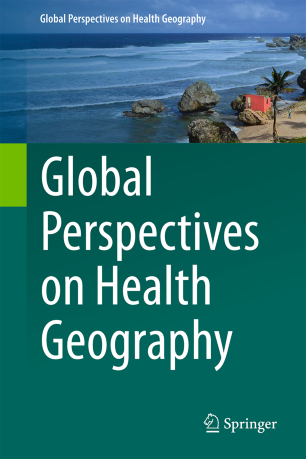
Health Geography


Book Series
There are 5 volumes in this series
Published 2019 - 2020

About this series

Global Perspectives on Health Geography showcases cutting-edge health geography research that addresses pressing, contemporary aspects of the health-place interface. The bi-directional influence between health and place has been acknowledged for centuries, and understanding traditional and contemporary aspects of this connection is at the core of the discipline of health geography. Health geographers, for example, have: shown the complex ways in which places influence and directly impact our health; documented how and why we seek specific spaces to improve our wellbeing; and revealed how policies and practices across multiple scales affect health care delivery and receipt.

The series publishes a comprehensive portfolio of monographs and edited volumes that document the latest research in this important discipline. Proposals are accepted across a broad and ever-developing swath of topics as diverse as the discipline of health geography itself, including transnational health mobilities, experiential accounts of health and wellbeing, global-local health policies and practices, mHealth, environmental health (in)equity, theoretical approaches, and emerging spatial technologies as they relate to health and health services. Volumes in this series draw forth new methods, ways of thinking, and approaches to examining spatial and place-based aspects of health and health care across scales. They also weave together connections between health geography and other health and social science disciplines, and in doing so highlight the importance of spatial thinking.

Dr. Valorie Crooks (Simon Fraser University, crooks@sfu.ca) is the Series Editor of Global Perspectives on Health Geography. An author/editor questionnaire and book proposal form can be obtained from Publishing Editor Zachary Romano (zachary.romano@springer.com).

Sunday, April 07, 2013

Health Impact Assessment (HIA)


About HIA

Conditions in the places where we live, work and play have a tremendous impact on Americans’ health. It is much easier to stay healthy when we can easily and safely walk, run or bike; when we have clean air, healthy food and access to affordable housing; and when we are safe from things like violent crime, fires and lead poisoning. Every day, policy makers in many sectors have opportunities to make choices that—if they took health into account—could help stem the growth of pressing health problems like obesity, injury, asthma and diabetes that have such a huge impact on our nation’s health care costs and on people’s quality of life.
Health impact assessment (HIA) is a fast-growing field that helps policy makers take advantage of these opportunities by bringing together scientific data, health expertise and public input to identify the potential—and often overlooked—health effects of proposed new laws, regulations, projects and programs. It offers practical recommendations for ways to minimize risks and capitalize on opportunities to improve health. HIA gives federal, tribal, state and local legislators, public agencies and other decision makers the information they need to advance smarter policies today to help build safe, thriving communities tomorrow.
The authoring committee of the National Research Council of the National Academies Improving Health in the United States: The Role of Health Impact Assessment defined HIA the following way:
"HIA is a systematic process that uses an array of data sources and analytic methods and considers input from stakeholders to determine the potential effects of a proposed policy, plan, program, or project on the health of a population and the distribution of those effects within the population. HIA provides recommendations on monitoring and managing those effects."

Health impact assessment:
  • looks at health from a broad perspective that considers social, economic and environmental influences;
  • brings community members, business interests and other stakeholders together, which can help build consensus;
  • acknowledges the trade-offs of choices under consideration and offers decision makers comprehensive information and practical recommendations to maximize health gains and minimize adverse effects;
  • puts health concerns in the context of other important factors when making a decision; and
  • considers whether certain impacts may affect vulnerable groups of people in different ways.

Tuesday, May 15, 2012

Health Statistics


Analysis: Health by numbers: A statistician's challenge

Monday, May 14, 2012

By Kate Kelland
LONDON (Reuters) - The next time a headline tells of a sharp fall in measles deaths around the world, or an increase in those on treatment for HIV, or the shifting of the burden of cancer, spare a thought for the number-crunchers behind such far-reaching data.
Above all else, analyzing the state of the world's health - be it by looking at obesity rates, cancer cases, malaria deaths, or HIV-free births - requires decent statistics.
Billions of dollars are allocated and whole policy shifts made on the basis of figures from United Nations agencies like the World Health Organisation (WHO), UNICEF or the World Bank.
Yet good data are hard to find, as the WHO's statistical analysis team knows. And extrapolating meaningful global figures from sparse raw material can be fraught with danger.
In an interview with Reuters ahead of this week's World Health Statistics report, Ties Boerma, WHO's director of health statistics and information systems, started with a little known but alarming fact: "Two thirds of deaths in the world are not registered. And a third of births are also not registered."/.../

Tuesday, May 11, 2010

A 21st Century Roadmap for Advancing Health


A 21st Century Roadmap for Advancing America's Health: The Path from Peril to Progress

RoadmapCoverImageThe Commission on U.S. Federal Leadership in Health and Medicine's second report, A 21st Century Roadmap for Advancing America's Health: The Path from Peril to Progress (May 2010) marks the passage of recent landmark health reform legislation and proposes a series of recommendations to make America the healthiest nation in the world.  The Commission’s recommendations reach beyond health insurance reform to address four pillars of a 21st century health care system for our nation, which include investing in research, strengthening public health and prevention, re-engineering the delivery system, and promoting global health. The report builds on actions proposed in the Commission's first report, New Horizons for A Healthy America.
Co-chaired by Rear Admiral Susan Blumenthal, MD, MPA, Director of CSPC’s Health and Medicine Program, and Denis Cortese, MD, Emeritus President and CEO of Mayo Clinic and Director of the Healthcare Delivery and Policy Program at Arizona State University, the Commission’s membership is comprised of health leaders from government and the private sector including Nobel laureates, former Cabinet secretaries, NIH Directors, and leading members of the health policy community, academia, research, and media. Many of the Commission's recommendations from its reports have been addressed in  health reform legislation and in new Administration initiatives. A 21st Century Roadmap for Advancing America's Health provides a bold, integrated, and comprehensive vision for innovative strategies to put health back into our nation's health care system.
You can download a copy of this publication here.


With the historic passage of the Patient Protection and Affordable Care Act and the Health Care and Education Affordability Reconciliation Act, signed into law on March 23, 2010 and March 30, 2010 respectively, the United States has begun the process of forming a firm and ample base to build a modern health care system that is more efficient, equitable, and effective for all Americans.
Successfully navigating this transformation is essential because America’s health system is in crisis today, threatening the health of its citizens, economy and national security. The United States spent 17.3% of GDP on health in 20091 but ranks only 49th on life expectancy worldwide,2 patients receive the correct treatment just 55% of the time,3 and significant variability exists in the quality of care delivered across our country.


Another commission recommendation facilitated by health IT includes the establishment of a center analogous to the Federal Aviation Administration, to report, monitor and reduce the more than 1.6 million injuries and 100,000 deaths that occur annually due to medical errors.

Monday, May 10, 2010

World Health Statistics 2010


From: Ruggiero, Mrs. Ana Lucia 


World Health Statistics 2010
WHO - World Health Oganization - May 10, 2010
“……World Health Statistics 2010 contains WHO's annual compilation of data from its 193 Member States, and includes a summary of progress towards the health-related Millennium Development Goals and targets.
As with previous versions, World Health Statistics 2010 has been compiled using publications and databases produced and maintained by the technical programmes and regional offices of WHO. Indicators have been included on the basis of their relevance to global public health; the availability and quality of the data; and the reliability and comparability of the resulting estimates.
Taken together, these indicators provide a comprehensive summary of the current status of national health and health systems in the following nine areas:
- mortality and burden of disease;
- cause-specific mortality and morbidity;
- selected infectious diseases;
- health service coverage;
- risk factors;
- health workforce, infrastructure and essential medicines;
- health expenditure;
- health inequities; and
- demographic and socioeconomic statistics.
The estimates in this book are derived from multiple sources, depending on each indicator and the availability and quality of data. In many countries, statistical and health information systems are weak and the underlying empirical data may not be available or may be of limited quality. Every effort has been made to ensure the best use of country-reported data – adjusted where necessary to deal with missing values, to correct for known biases, and to maximize the comparability of the statistics across countries and over time. In addition, statistical techniques and modelling have been used to fill data gaps.
Because of the weakness of the underlying empirical data in many countries, a number of the indicators are associated with significant uncertainty. It is WHO policy on statistical transparency to make available to users the methods of estimation and the margins of uncertainty for relevant indicators. However, because of space restrictions, printed versions of the World Health Statistics series include uncertainty ranges for only a few indicators. Further information on the margins of uncertainty for additional indicators will be made available at the Global Health Observatory web site.[ www.who.int/gho ]….”

DOWNLOAD THE FULL REPORT
Available in 6 languages

Friday, December 18, 2009

Heart Disease and Stroke Statistics—2010 Update

Heart Disease and Stroke Statistics—2010 Update. A Report From the American Heart Association

Donald Lloyd-Jones MD, ScM, FAHA, Robert J. Adams MD, FAHA, Todd M. Brown MD, Mercedes Carnethon PhD, FAHA, Shifan Dai MD, PhD, Giovanni De Simone MD, T. Bruce Ferguson MD, Earl Ford MD, MPH, Karen Furie MD, Cathleen Gillespie , Alan Go MD, Kurt Greenlund PhD, Nancy Haase , Susan Hailpern DPH, P. Michael Ho MD, PhD, Virginia Howard PhD, FAHA, Brett Kissela MD, Steven Kittner MD, Daniel Lackland PhD, FAHA, Lynda Lisabeth PhD, Ariane Marelli MD, Mary M. McDermott MD, James Meigs MD, Dariush Mozaffarian MD, PhD, FAHA, Michael Mussolino PhD, Graham Nichol MD, FAHA, Veronique Roger MD, FAHA, Wayne Rosamond PhD, FAHA, Ralph Sacco MD, FAHA, Paul Sorlie PhD, Randell Stafford MD, Thomas Thom , Sylvia Wasserthiel-Smoller PhD, Nathan D. Wong PhD, Judith Wylie-Rosett EdD, on behalf of the American Heart Association Statistics Committee and Stroke Statistics Subcommittee

Tuesday, December 01, 2009

Em 2008, esperança de vida dos brasileiros chega a 72,86 anos

Em 2008, esperança de vida dos brasileiros chega a 72,86 anos

A esperança de vida ao nascer da população de ambos os sexos no Brasil passou de 69,66 anos (69 anos, 7 meses e 29 dias) para 72,86 anos (72 anos, 10 meses e 10 dias). Assim, brasileiros nascidos em 2008 esperariam viver, em média, 3 anos, 2 meses e 12 dias a mais do que os nascidos em 1998. Em 2008 a esperança de vida ao nascer masculina era de 69,11 anos, e a feminina, de 76,71 anos. Entre 1970 e 2008, a mortalidade infantil caiu de 100 para 23,30 óbitos por mil nascidos vivos. Mesmo considerando-se apenas o período entre 1998 e 2008, a queda da mortalidade infantil evitou mais de 200 mil óbitos. Ainda assim, de 1998 a 2008, morreram, diariamente, 68 homens jovens de 15 a 24 anos por causas externas, totalizando cerca de 272,5 mil óbitos. Nesse período, entre os jovens de 20 a 24 anos, as causas externas vitimaram 9 homens para cada mulher. Esses são algumas informações construídas a partir da Tábua de Mortalidade do IBGE referente ao ano de 2008.

Desde 1999, o IBGE divulga anualmente a Tábua Completa de Mortalidade da população do Brasil, referente a 1º de julho do ano anterior. Esta divulgação tem sido realizada em cumprimento ao Artigo 2º do Decreto Presidencial nº 3.266, de 29 de novembro de 1999. A tábua de mortalidade apresenta a expectativa de vida para idades exatas até os 80 anos, e tem sido utilizada pelo Ministério da Previdência Social como um dos parâmetros do fator previdenciário das aposentadorias sob o Regime Geral de Previdência Social.

De 1998 a 2008, esperança de vida ao nascer cresceu mais de três anos

A esperança de vida ao nascer da população de ambos os sexos no Brasil passou de 69,66 anos (69 anos, 7 meses e 29 dias) para 72,86 anos (72 anos, 10 meses e 10 dias), indicando que um brasileiro nascido em 2008 esperaria viver 3 anos, 2 meses e 12 dias a mais que aquele nascido em 1998.

http://oglobo.globo.com/pais/mat/2009/12/01/esperanca-de-vida-dos-brasileiros-chega-72-86-anos-diz-ibge-914998369.asp

Monday, November 30, 2009

Time: The Year in Health 2009 >A to F

ANDREW FOX / CORBIS

Global health experts agonize over the terrible toll disease takes on the world's children, but a lot less attention is paid to how many kids' lives are claimed by accidents and injuries. Part of that is a numbers game: close to 10 million children under 5 die annually of disease. Comparatively few — 829,000 per year — die because of accidents. Still, that's 2,270 children every day. In late 2008 the World Health Organization issued its first annual report on the problem, listing the top five killers and what can be done to combat them:

Traffic injuries: 260,000 deaths per year. In the developed world, most victims are passengers in vehicles; in the developing world, most are pedestrians or bicyclists. The solutions include seat-belt laws, speed limits and stiffer drunk-driving penalties. The key is imposing and enforcing the rules.

Drownings: 175,000 deaths per year. Parental supervision, CPR education and fenced swimming pools are crucial.

Burns: 96,000 deaths per year. Infants are at greatest risk. The danger is lowest for kids ages 10 to 14 and rises for 15-to-19-year-olds — perhaps because of access to fireworks and gasoline. Smoke alarms, parental policing, childproof lighters and burn centers all reduce risk.

Falls: 47,000 deaths per year. Caregiver stress or inattention, nonchildproof environments and low levels of maternal education are risk factors. Solutions include redesigned playgrounds and furniture, parental-education programs and window guards.

Poisonings: 45,000 deaths per year. Kids under 1 are in the most danger. Child-resistant packaging and measures like removing poisons from the house or keeping them locked up can help.

View the full list for "The Year in Health 2009"


Read more: http://www.time.com/time/specials/packages/article/0,28804,1942543_1942451,00.html?xid=newsletter-daily#ixzz0YLm5j91W

Saturday, October 24, 2009

Health Situation in the Americas: 2009

Health Situation in the Americas: Basic Indicators 2009PDFPrintE-mail

Chronic noncommunicable diseases currently are reaching epidemic proportions in the Americas and are contributing substantially to overall mortality and disease burden in the Region. They result from complex and dynamic socially determined health processes, including epidemiological and demographic transitions. Once thought to be an issue primarily affecting the older population in high-income countries, chronic noncommunicable diseases are now affecting younger population segments and the poor in the lower-income countries of Latin America and the Caribbean.

The means for preventing and controlling most noncommunicable diseases are already well established and high-income countries—followed by middle-income countries— are now showing continuous progress in both prevention and control interventions.

The low- and lower-middle-income countries, on the other hand, face the dual challenge of coping with scarce resources to address both noncommunicable and communicable diseases, as well as infant and maternal mortality.

Among chronic noncommunicable diseases, cardiovascular diseases are a leading cause of morbidity and mortality in the Americas, occurring increasingly within the working age population and thereby contributing disproportionately to the loss of potential years of healthy life and economic productivity. This situation is already recognized as a major and growing public health problem, particularly affecting low- and middle-income countries, but what is less recognized is the role of social disparities as determinants of the premature mortality due to cardiovascular diseases in the Region.

The purpose of this publication is to call the attention of the general public and the governments of the Americas to an exploratory analysis of the relationship between premature mortality due to cerebrovascular diseases (CeVD) and potential socioeconomic inequality determinants at the ecological level.

The map on the first page of this brochure depicts the quintile distribution of proportional premature mortality due to cerebrovascular disease in the countries and territories of the Americas.

The material presented in this brochure has been compiled, drafted, and reviewed by PAHO regional staff, and staff from ministries of health.

icon Basic Indicators 2009

Wednesday, October 07, 2009

WHO Statistical Information System (WHOSIS)

WHO Statistical Information System (WHOSIS)

WHOSIS, the WHO Statistical Information System, is an interactive database bringing together core health statistics for the 193 WHO Member States. It comprises more than 100 indicators, which can be accessed by way of a quick search, by major categories, or through user-defined tables. The data can be further filtered, tabulated, charted and downloaded. The data are also published annually in the World Health Statistics Report released in May.

Important note: the 2009 database will be uploaded soon. In the meantime, the 2009 data is available for download in Excel format.

CUSTOMIZED SEARCH

:: Select indicators for all countries
:: Select from a list of regions/countries, indicators and time periods

SEARCH BY MAJOR CATEGORIES


Mortality and burden of disease
Access data on life expectancy, child mortality, morbidity...

Health service coverage
Access data on skilled birth attendance, antenatal care, TB detection/treatment...

Risk factors
Access data on water and sanitation, nutrition, tobacco use...

Health systems resources
Access data on health workforce, hospital beds and health expenditure.

Inequities
Access data on inequities in health care and health outcome.

Demographic and socioeconomic statistics
Access data on total population, birth/death registration...

Tuesday, May 26, 2009

World Health Statistics 2009

World Health Statistics 2009 report

World Health Statistics 2009


World Health Statistics 2009 contains WHO's annual compilation of data from its 193 Member States, and includes a summary of progress towards the health-related Millennium Development Goals and targets.

This edition also contains a new section on reported cases of selected infectious diseases.

:: Progress on the health-related Millennium Development Goals (MDGs)
Fact sheet N°290

DOWNLOAD THE FULL REPORT

Available in 6 languages

Arabic [pdf 9.35Mb] | Chinese [pdf 6.85Mb] | English [pdf 6.05Mb] | French | Russian [pdf 7.85Mb] | Spanish

Wednesday, October 03, 2007

Health in the Americas - 2007

Health in the Americas, 2007
Pan American Health Organization PAHO/WHO - October 2007
Available online at: http://www.paho.org/HIA/index.html [ Available in English and Spanish]
"....The Regional Volume includes an opening chapter that provides an overview of health in terms of the Millennium Development Goals; of the health status continuum—the unfinished agenda, the protection of health gains, and the confrontation of emerging threats; and of the national and international health sector response to that health status. Also added is a final chapter that contemplates a vision of the future of public health in the Region in the context of the Health Agenda for the Americas, 2008 - 2017, with commentaries from a number of distinguished international experts.
Each of the intervening chapters commences with an introductory summary, which is set off from the main text with a different format. Color is used throughout the volume to assure the clarity of graphic material. Finally,as one of the main purposes of the series Health in the Americasis to trace regional trends in health conditions and health systems over time, complementing this edition are quotations from the Directors of the Organization—from Hugh S.Cumming in the 1920s to Mirta Roses Periago in the 21st century— that are germane to the subjects of the various chapters. The Country Volume presents maps of each country and territory, as well as short notices that highlight a specific health challenge and the response of the national health sector to that challenge. Throughout both volumes, text boxes are introduced to provide additional material; figures and tables are inserted as close as possible to their in-text mention; and bibliographic references are included.
In addition to the present iteration of past trends in the Region this edition provides a vision of the future of health in the Americas. Distinguished leaders with profound experience in international health offer their remarks on the "Health Agenda for the Americas, 2008-2017". These leaders include: George A.O. Alleyne, Stephen Blount, Paolo Buss, Nils Kastberg, Gustavo Kourí, Jay McAuliffe, Sylvie Stachenko, Muthu Subramanian, Ricardo Uauy, and Marijke Velzeboer-Salcedo. The two volumes of Health in the Americas, 2007 Edition, present information for the 2000-2005 period.
Volume I examines health in the Americas from a Regional perspective. Among other issues, the volume's six chapters analyze:- the political, social, and economic context of health, as well as important demographic and mortality trends; - the leading diseases and health problems in the period and efforts to prevent and control them; - the structure and functioning of health systems in the Region and efforts to reform them, and - the scope and impact of international cooperation in health.
ContentsRegional Volume
An overview of regional health
Chapter 1: Health in the context of development HTM: http://www.paho.org/HIA/vol1regionalingcap1.html PDF [30p.] at: http://www.paho.org/HIA/archivosvol1/volregionaling/HIA07%20Regional%20Volume%20ENG%20Ch%201.pdf
Chapter 2: Health conditions and trends HTM: http://www.paho.org/HIA/vol1regionalingcap2.html PDF [150p.] at: http://www.paho.org/HIA/archivosvol1/volregionaling/HIA07%20Regional%20Volume%20ENG%20Ch%202.pdf
Chapter 3: Sustainable development and environmental health HTM: http://www.paho.org/HIA/vol1regionalingcap3.htmlPDF [90p.] at: http://www.paho.org/HIA/archivosvol1/volregionaling/HIA07%20Regional%20Volume%20ENG%20Ch%203.pdf
Chapter 4: Public policies and health systems and services HTM: http://www.paho.org/HIA/vol1regionalingcap4.htmlPDF [84p.] at: http://www.paho.org/HIA/archivosvol1/volregionaling/HIA07%20Regional%20Volume%20ENG%20Ch%204.pdf
Chapter 5: Health and internacional cooperation HTM: http://www.paho.org/HIA/vol1regionalingcap5.htmlPDF [19p.] at: http://www.paho.org/HIA/archivosvol1/volregionaling/HIA07%20Regional%20ENG%20Ch%205.pdf
Chapter 6: Prospects for regional health HTM: http://www.paho.org/HIA/vol1regionalingcap6.htmlPDF [22p.] at: http://www.paho.org/HIA/archivosvol1/volregionaling/HIA07%20Regional%20ENG%20Ch%206%20.pdf
Contributors : http://www.paho.org/HIA/vol1regionalingcont.html
Volume II Country Volume tackles these same issues from a national perspective and includes information on progress towards attaining the Millennium Development Goals. This volume has 46 chapters covering information and analysis for each of the countries or territories in the Americas.
A series of highlighted profiles on health challenges and how the respective national health sector is responding to those challenges are presented for each of the countries.