Translate AMICOR contents if you like

Showing posts with label Population Health. Show all posts

Thursday, July 30, 2020

Sleeping microbes

Sleeping microbes wake up after 100 million years buried under the seafloor
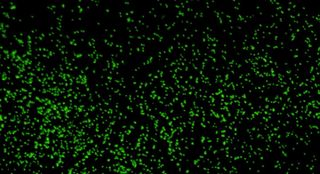
A magnified image shows the revived microbes.
(Image: © JAMSTEC)

Microbes found themselves buried in the dirt 101.5 million years ago, back before even Tyrannosaurus rex when Earth’s biggest meat-eating dinosaur, called Spinosaurus roamed the planet. Time passed, continents shifted, oceans rose and fell, great apes emerged, and eventually human beings evolved with the curiosity and skills to dig up those ancient cells. And now, in a Japanese lab, researchers have brought the single-celled organisms back to life.

Researchers aboard the drill ship JOIDES Resolution collected sediment samples from the bottom of the ocean 10 years ago. The samples came from 328 feet (100 meters) below the 20,000-foot-deep (6,000 m) bottom of the South Pacific Gyre. That's a region of the Pacific Ocean with very few nutrients and little oxygen available for life to survive on, and the researchers were looking for data on how microbes get along in such a remote part of the world.


Thursday, August 09, 2018

Inclusion Health

Recomendado pela AMICOR Maria InĂªs Reinert Azambuja
What works in inclusion health: overview of effective interventions for marginalised and excluded populations
Serena Luchenski, Nick Maguire, Robert W Aldridge, Andrew Hayward, Alistair Story, Patrick Perri, James Withers, Sharon Clint, Suzanne Fitzpatrick, Nigel Hewett

Inclusion health is a service, research, and policy agenda that aims to prevent and redress health and social inequities among the most vulnerable and excluded populations. We did an evidence synthesis of health and social interventions for inclusion health target populations, including people with experiences of homelessness, drug use, imprisonment, and sex work. These populations often have multiple overlapping risk factors and extreme levels of morbidity and mortality. We identified numerous interventions to improve physical and mental health, and substance use; however,
evidence is scarce for structural interventions, including housing, employment, and legal support that can prevent exclusion and promote recovery. Dedicated resources and better collaboration with the affected populations are needed to realise the benefits of existing interventions. Research must inform the benefits of early intervention and implementation of policies to address the upstream causes of exclusion, such as adverse childhood experiences and poverty./.../

Sunday, March 04, 2018

4th People's Health Assembly

Let's come together at the 4th People's Health Assembly !

Fourth People’s Health Assembly taking place 15-19 November 2018 in Dhaka, Bangladesh
Civil society mobilization and policy dialogue for health equity and accountable national and global governance for health.
Background to the Assembly
We are faced today with a global health crisis that is characterized by inequities related to a range of social determinants of health and in access to health services within countries and between countries. In many regions of the world, health systems are poorly designed, under-resourced, and of poor quality, thereby contributing to unacceptable rates of morbidity and mortality.  In large measure, the poor and the vulnerable are being pushed further to the margins due to pitifully inadequate measures to address the social determinants of health. They are also denied access to quality health services as a consequence of unfair economic structures and social conditions that lock people into poverty and ill-health. In recent years, austerity measures in both the global South and the North have further compromised access, often as a consequence of the dismantling of public services and the increasing reliance on private provision of healthcare. The achievement of universal and secure access to comprehensive healthcare services can be a reality only through the revitalization of comprehensive primary health care, as envisioned in the Alma-Ata Declaration of 1978. The People's Charter for Health endorses the Alma Ata declaration, and   affirms that health is a social, economic and political issue -- but above all, a fundamental and inalienable human right./.../

Saturday, November 17, 2012

Europe: Public Health

REPORTS
Health at a Glance: Europe 2012 (OECD 2012)

Health at a Glance: Europe 2012

Health at a glance cover
This second edition of Health at a Glance: Europe presents a set of key indicators of health and health systems in 35 European countries, including the 27 European Union member states, 5 candidate countries and 3 EFTA countries. The selection of indicators is based largely on the European Community Health Indicators (ECHI) shortlist, a list of indicators that has been developed by the European Commission to guide the development and reporting of health statistics. It is complemented by additional indicators on health expenditure and quality of care, building on the OECD expertise in these areas.
Each indicator in the book is presented in a user-friendly format, consisting of charts illustrating variations across countries and over time, brief descriptive analyses highlighting the major findings conveyed by the data, and a methodological box on the definition of the indicators and any limitations in data comparability. An annex provides additional information on the demographic and economic context within which health systems operate.
This publication is the result of collaboration between the OECD and the European Commission, with the help of national data correspondents from the 35 countries. 

Wednesday, October 26, 2011

Overpopulation

Why the Real Victim of Overpopulation Will Be the Environment

The 7 Billion Day is a sobering reminder of our planet's predicament. We are increasing by 10,000 an hour. The median UN forecast is 9.3 billion by 2050, but the range varies by 2.5 billion — the total world population in 1950 — depending on how we work it out.

Every additional person needs food, water and energy, and produces more waste and pollution, so ratchets up our total impact on the planet, and ratchets down everyone else's share — the rich far more than the poor. By definition, total impact and consumption are worked out by measuring the average per person multiplied by the number of people. Thus all environmental (and many economic and social) problems are easier to solve with fewer people, and ultimately impossible with ever more.


Tuesday, August 16, 2011

2011 World Population Data Sheet


Global population will reach 7 billion later in 2011, just 12 years after reaching 6 billion in 1999. Today's world population is double the population in 1967. But while the overall growth rate has slowed, the population is still growing, and growth rates in some countries show little if any decline. The Population Reference Bureau's2011 World Population Data Sheet and its summary report (Population Bulletin) offer detailed information on 18 population, health, and environment indicators for more than 200 countries. Also online:
* Interactive Map: View 17 variables from the World Population Data Sheet. You can easily embed the map, world view or regional view, on your blog or website.
*Video: "7 Billion and Counting." Watch an informative and compelling 3-minute video that explains global population trends and varying levels of population growth and decline among countries.
* Webinar: PRB demographers Carl Haub, James Gribble, and Linda Jacobsen.
This Population Bulletin looks at the four phases of the demographic transition as descriptive of past and future population growth. The report highlights four countries to illustrate each phase and its implications for human well-being: Uganda (high birth rate, fluctuating death rate); Guatemala (declining birth and death rates); India (approaching replacement-level fertility); and Germany (low or very low birth and death rates)./.../

Sunday, July 24, 2011

How Human Beings Are Downgrading Life on Planet Earth

Posted by  Thursday, July 14, 2011 at 2:24 pm


Matt Hansen / Getty Images


We live in the Anthropocene, as some scientists have come to call our new geologic era. The term acknowledges the fact that human beings—nearly 7 billion strong and growing—have so much influence over the life, geography and even chemistry of planet Earth that we're now essentially responsible for the whole show. For good and for ill, the planet from now on will be what we make of it./.../

Wednesday, September 08, 2010

PNAD 2010

08/09/2010 - 10h00

Pnad: Um em cada cinco brasileiros Ă© analfabeto funcional

Rafael Targino
Do UOL EducaĂ§Ă£o
Em SĂ£o Paulo
Um em cada cinco brasileiros (20,3%) Ă© analfabeto funcional, de acordo com a Pnad (Pesquisa Nacional por Amostra de DomicĂ­lios) 2009, divulgada nesta quarta-feira (8) pelo IBGE (Instituto Brasileiro de Geografia e EstatĂ­stica). É considerada analfabeta funcional a pessoa com 15 ou mais anos de idade e com menos de quatro anos de estudo completo. Em geral, ele lĂª e escreve frases simples, mas nĂ£o consegue, por exemplo, interpretar textos.
Segundo a pesquisa, o problema Ă© maior na regiĂ£o Nordeste, na qual a taxa de analfabetismo funcional chega a 30,8%. Na regiĂ£o Sudeste, onde esse Ă­ndice Ă© menor, a taxa ainda supera os 15%.
No entanto, o nĂºmero vem caindo desde 2004, quando, segundo o IBGE, o paĂ­s tinha 24,4% de analfabetos funcionais. Em 2008, o total era de 21%. Em comparaĂ§Ă£o com 2009, a taxa caiu 0,7 pontos percentuais.
Analfabetismo total
A taxa de analfabetismo no Brasil entre pessoas com 15 anos ou mais caiu 0,3 pontos percentuais entre 2008 e o ano passado, de acordo com a Pnad. O Ă­ndice saiu de 10% hĂ¡ dois anos para 9,7% em 2009. Segundo o Ă³rgĂ£o, o isso representa 14,1 milhões de analfabetos –em 2008, eram 14,2 milhões.
De acordo com o IBGE, a maioria dos analfabetos (92,6%) estĂ¡ concentrada no grupo com mais de 25 anos de idade. No Nordeste, a taxa de analfabetismo entre a populaĂ§Ă£o com 50 anos ou mais chega a 40,1%, enquanto que no Sul, esse nĂºmero Ă© de 12,2%. Os nordestinos tĂªm as maiores taxas em todas as faixas de idade.

Leia mais


    Saturday, October 24, 2009

    As Megacidades


    As Megacidades do paĂ­s, elas ainda tĂªm soluĂ§Ă£o


    Outros vĂ­deos


    Em VEJA
    Bicicletas: Dicas de segurança para circular na cidade
    A soluĂ§Ă£o foi cobrar
    Ideias mortas


    Em Megacidades
    Unhabitat
    SeĂ§Ă£o da OrganizaĂ§Ă£o das Nações Unidas para as cidades. DĂ¡ acesso a publicações eletrĂ´nicas sobre temas urbanos (em inglĂªs).
    Metropolis
    Mantido pela rede Metropolis, criada em 1985 para incentivar o intercĂ¢mbio de informações e experiĂªncias entre as grandes cidades.
    Observatoriodasmetropoles
    Instituto virtual que reĂºne mais de 200 pesquisadores de 51 instituições universitĂ¡rias de todo o paĂ­s.
    www.nossasaopaulo.org.br
    www.riocomovamos.org.br
    www.bogotacomovamos.org
    Movimento "Como Vamos", inspirado na experiĂªncia bem-sucedida iniciada em BogotĂ¡, capital da ColĂ´mbia. No Brasil, 22 cidades integram a rede.
    www.vivercidades.org.br
    OrganizaĂ§Ă£o nĂ£o-governamental voltada para a capacitaĂ§Ă£o de quadros e a idealizaĂ§Ă£o e desenvolvimento de soluções relacionadas a polĂ­ticas pĂºblicas, urbanas e regionais.

    Health Situation in the Americas: 2009

    Health Situation in the Americas: Basic Indicators 2009PDFPrintE-mail

    Chronic noncommunicable diseases currently are reaching epidemic proportions in the Americas and are contributing substantially to overall mortality and disease burden in the Region. They result from complex and dynamic socially determined health processes, including epidemiological and demographic transitions. Once thought to be an issue primarily affecting the older population in high-income countries, chronic noncommunicable diseases are now affecting younger population segments and the poor in the lower-income countries of Latin America and the Caribbean.

    The means for preventing and controlling most noncommunicable diseases are already well established and high-income countries—followed by middle-income countries— are now showing continuous progress in both prevention and control interventions.

    The low- and lower-middle-income countries, on the other hand, face the dual challenge of coping with scarce resources to address both noncommunicable and communicable diseases, as well as infant and maternal mortality.

    Among chronic noncommunicable diseases, cardiovascular diseases are a leading cause of morbidity and mortality in the Americas, occurring increasingly within the working age population and thereby contributing disproportionately to the loss of potential years of healthy life and economic productivity. This situation is already recognized as a major and growing public health problem, particularly affecting low- and middle-income countries, but what is less recognized is the role of social disparities as determinants of the premature mortality due to cardiovascular diseases in the Region.

    The purpose of this publication is to call the attention of the general public and the governments of the Americas to an exploratory analysis of the relationship between premature mortality due to cerebrovascular diseases (CeVD) and potential socioeconomic inequality determinants at the ecological level.

    The map on the first page of this brochure depicts the quintile distribution of proportional premature mortality due to cerebrovascular disease in the countries and territories of the Americas.

    The material presented in this brochure has been compiled, drafted, and reviewed by PAHO regional staff, and staff from ministries of health.

    icon Basic Indicators 2009

    Tuesday, October 06, 2009

    Human Development Report 2009

    Human Development Report 2009

    Overcoming barriers:
    Human mobility and development

    Human development is about putting people at the centre of development. It is about people realizing their potential, increasing their choices and enjoying the freedom to lead lives they value. Since 1990, annual Human Development Reports have explored challenges including poverty, gender, democracy, human rights, cultural liberty, globalization, water scarcity and climate change.

    Migration, both within and beyond borders, has become an increasingly prominent theme in domestic and international debates, and is the topic of the 2009 Human Development Report (HDR09). The starting point is that the global distribution of capabilities is extraordinarily unequal, and that this is a major driver for movement of people. Migration can expand their choices —in terms of incomes, accessing services and participation, for example— but the opportunities open to people vary from those who are best endowed to those with limited skills and assets. These underlying inequalities, which can be compounded by policy distortions, is a theme of the report.

    The report investigates migration in the context of demographic changes and trends in both growth and inequality. It also presents more detailed and nuanced individual, family and village experiences, and explores less visible movements typically pursued by disadvantaged groups such as short term and seasonal migration.

    There is a range of evidence about the positive impacts of migration on human development, through such avenues as increased household incomes and improved access to education and health services. There is further evidence that migration can empower traditionally disadvantaged groups, in particular women. At the same time, risks to human development are also present where migration is a reaction to threats and denial of choice, and where regular opportunities for movement are constrained.

    National and local policies play a critical role in enabling better human development outcomes for both those who choose to move in order to improve their circumstances, and those forced to relocate due to conflict, environmental degradation, or other reasons. Host country restrictions can raise both the costs and the risks of migration. Similarly, negative outcomes can arise at the country levels where basic civic rights, like voting, schooling and health care are denied to those who have moved across provincial lines to work and live. HDR09 shows how a human development approach can be a means to redress some of the underlying issues that erode the potential benefits of mobility and/or force migration.

    Download the Report

    HDR 2009 cover

    PDF (GIF) Complete report [3,884 KB]
    PDF (GIF) Summary [739 KB]
    PDF (GIF) Errata [70 KB]
    PDF (GIF) Flyer [257 KB]

    Chapters and Language versions
    Human mobility data
    Research Papers