Translate AMICOR contents if you like

Friday, October 06, 2017

Culture: Constructive Tweeting

Vale a pena ler: tem a ver com família, comunicação, linguagem, afetividade, desigualdade social, psicologia, ideologia, desenvolvimento cultural, arquétipos  e muito mais...

What songbirds could teach us about
 constructive tweeting
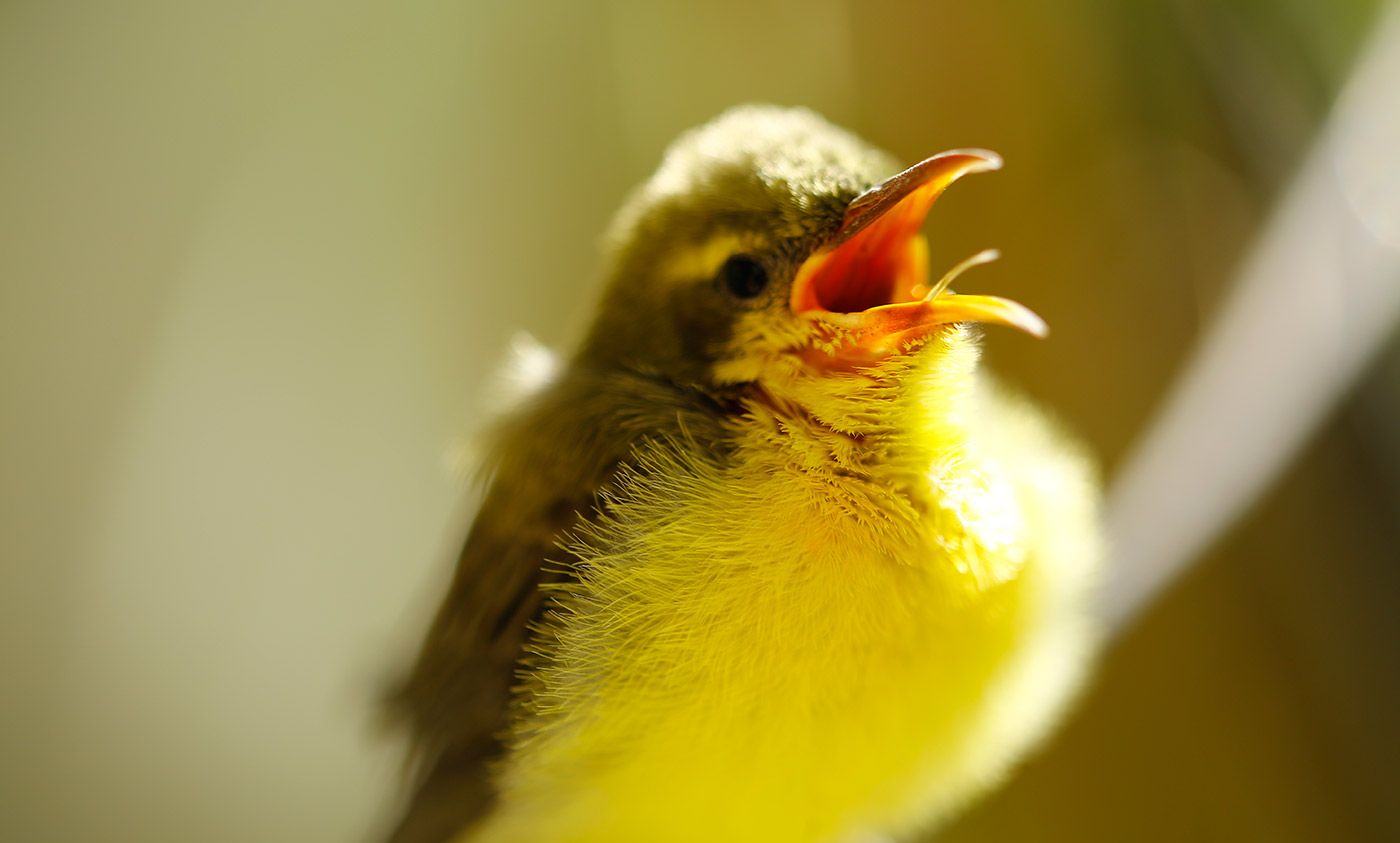
<em>Photo by Mayur Patel</em>

Ofer Tchernichovski
is a zoologist and professor in the department of psychology at Hunter College at the City University of New York, where he runs the Laboratory of Vocal Learning.
1,500 words
Edited by Sam Dresser
We are surrounded by cultural products: cities, technologies, the arts and music. But culture is also deep inside us, in our ability to speak, in our sense of belonging, in our values. The capacity of our brain to adapt to and integrate culture is what makes us human: from birth, your mind was set to absorb concepts, technologies and social conventions that accumulated over thousands of generations. Feral children, deprived of human society during early life, can rarely recover, and often remain dysfunctional throughout their lives. In contrast, a socially isolated kitten will develop into a fairly normal, functional cat.
Yet cultures can be seen (and heard) in many non-human animals. Studying them reveals some of the mechanisms through which our own culture has evolved. Cultures are not just the passive accumulation of customs and traditions; they are formed, and then sustained by a fine balance between social forces. And we can learn from other species about the biological origin of those forces – as well as how these forces are now shaping the future of our culture./.../

Late-life dependency

Summary

Background

Little is known about how the proportions of dependency states have changed between generational cohorts of older people. We aimed to estimate years lived in different dependency states at age 65 years in 1991 and 2011, and new projections of future demand for care.

Thursday, October 05, 2017

Astrocdytes and Respiration control

astrocytes are shown

Astrocytes Play Key Role in Respiratory Center and Breathing Regulation

by Neuroscience NewsTo study the role of astrocytes in respiration, the researchers used an in-house developed technique in which part of the brainstem of a mouse is kept alive in a special culture dish. NeuroscienceNews.com image is credited to Archontia Kaminari.
A groundbreaking study from Karolinska Institute researchers reports astrocytes play a key tole in the respiratory center of the brain stem and assist with the regulation of breathing. The findings are significant as they could provide clues to the causes of respiratory diseases.
Comment   See all comments

Stories meaning

Image shows the brain.

Wednesday, October 04, 2017

Cryo-electron microscopy


Nobel Chemistry Prize Won for Capturing Proteins in Action

Three scientists developed microscope methods that use electrons and cold temperature to reveal tiny details of life’s machinery


Images produced by cryo-electron microscopy show proteins in detail. Credit: Royal Swedish Academy of Sciences

Just before noon today, Stockholm time, three real visionaries struck scientific gold: the 2017 Nobel Prize in Chemistry. The researchers had developed ways of imaging complex proteins at the atomic level, adopting electron microscopes to see how the molecules create antibiotic resistance, convert light into energy for photosynthesis, and how the Zika virus functions. “For developing cryo-electron microscopy for the high-resolution structure determination of biomolecules in solution," the Royal Swedish Academy of Sciences awarded the chemistry prize to Jacques Dubochet of the University of Lausanne in Switzerland, Joachim Frank of Columbia University in New York City, and Richard Henderson of the MRC Laboratory of Molecular Biology in Cambridge, England./.../

Sputnik 1

From E. Britannica
Sputnik 3, the first multipurpose space-science satellite placed in orbit. Launched May 15, 1958, by the Soviet Union.1957: Sputnik 1 launched by U.S.S.R.
On this day in 1957 the Soviet Union launched Sputnik 1, the first artificial satellite, which orbited the Earth until 1958, inaugurated the space age, and heightened Cold War competition between the U.S.S.R. and the U.S.

Tuesday, October 03, 2017

Monday, October 02, 2017

Violência POA


Qual o bairro com mais assassinatos 
em Porto Alegre? E com menos? Veja no Raio X da Violência

Nova ferramenta interativa de GaúchaZH permite cruzar 
dados colhidos pela editoria de Segurança desde 2011,
disponibilizando um retrato detalhado dos assassinatos
ocorridos na Capital


GaúchaZH lança nesta sexta-feira (21) o Raio X da Violência, nova
ferramenta feita a partir de levantamento organizado pela editoria de
Segurança desde o começo de 2011. São pelo menos 3.697 pessoas
mortas em homicídios e latrocínios em mapa agora disponível
publicamente, com atualizações diárias. Entre os recortes trágicos
dessa contagem, a perda de jovens é a que deixa marcas de maior
prejuízo para o futuro da cidade.

circadian rhythm

This year's Nobel Prize in Physiology or Medicine goes to a trio of researchers, Jeffrey C. Hall of the University of Maine, Michael Rosbash of Brandeis University, and Michael W. Young of Rockefeller University, who identified the molecular mechanism controlling the circadian rhythm.
++++++++++++++++++++++++++
10/02/2017 01:50 PM EDT

Illustrations of Jeffrey C. Hall, Michael Rosbash and Michael W. Young. Copyright Nobel Media. Ill. N. Elmehed
The Nobel Assembly has awarded the 2017 Nobel Prize in Physiology or Medicine jointly to Jeffrey C. Hall and Michael Rosbash of Brandeis University and Michael W. Young of Rockefeller University in New York for "their discoveries of molecular mechanisms controlling the circadian rhythm." The National Science Foundation (NSF) has provided support to the research of these three researchers, including grants from the Office of International Science and Engineering for Hall and Robash and ... 
More at https://www.nsf.gov/news/news_summ.jsp?cntn_id=243275&WT.mc_id=USNSF_51&WT.mc_ev=click

Sunday, October 01, 2017

Universidade no contexto histórico-social

Recomendado pela AMICOR Maria Inês Reinert Azambuja

quarta-feira, 13 de setembro de 2017

O que resta da universidade?

Vladimir Safatle

É claro que a universidade não tem mais lugar no interior do processo de reprodução material da vida. Em uma dinâmica de produção de empregos em que os estratos médios são constantemente eliminados a partir de processos de reengenharia contínua, em que os empregos de nível salarial mais baixos são, ao mesmo tempo, precarizados e elevados em seus padrões de exigência de formação e no qual os estratos mais elevados são oligarquicamente garantidos (ou seja, eles são alcançados independentemente da formação dos seus ocupantes), é uma das maiores mistificações de nossa época insistir no binômio formação/empregabilidade.