Researchers report inosine could be a potential route to the first RNA and the origin to life on Earth.
|
Monday, December 03, 2018
Inosine


Health for All by the year 2000
1981 - Global Strategyfor Health for Allby the Year 2000
PREFACE
In 1979, the Thirty-second World Health Assembly launched the Global Strategy for health for all by the year 2000 by adopting resolution WHA32 .30. In this resolution the Health Assembly endorsed the Report and Declaration of the International Conference on Primary Health Care, held in Alma-Ata, USSR, in 1978. In the same resolution, the Health Assembly invited the Member States of WHO to act individually in formulating national policies, strategies and plans of action for attaining this goal, and collectively in formulating regional and global strategies, using as a basis the guiding principles issued by WHO's Executive Board in the document entitled Formulating Strategies for Health for All by the Year 2000. A large number of countries in all regions have since formulated national strategies, and all regions have drafted regional strategies. The Global Strategy that follows has been based on the Alma-Ata Report and Declaration and the Executive Board's guiding principles; it reflects the national and regional strategies as seen from a global perspective. It also responds to resolution 34/58 of the United Nations General Assembly concerning health as an integral part of development, which was adopted in November 1979. This Global Strategy for health for all by the year 2000 was adopted by the Thirty-fourth World Health Assembly in resolution WHA34.36, which reads as follows: /.../
Glossary of Terms
Biospectal
Médecins, mais entrepreneurs dans l’âme
Deux médecins, l’un au CHUV et l’autre aux HUG, développent des applications qui pourraient s’avérer révolutionnaires. Celles-ci transforment les smartphones en stéthoscope et en tensiomètre. La valorisation des inventions nées dans les hôpitaux reste toutefois une question délicate/.../
first human heart transplant (today/1967)
 |
|
Sunday, December 02, 2018
4 x 10p84 particles of light
| ||||
|

proton’s mass

Physicists finally calculated where the proton’s mass comes from
A new study indicates that the proton is much more than just the sum of its parts.


Stress
Early Life Stress Hinders Neuron Development, Causing Attention Disorders: Mouse Studyby Neuroscience News |
Female mice who experienced early life stress developed problems and had fewer neurons in areas of the brain responsible for regulating emotions and making sense of rules, researchers report.
Saturday, December 01, 2018
2897 - AMICOR 21
UFRGS-Jubilados 60, 50 e 25 anos

*Associação dos Antigos Alunos da UFRGS celebrou ontem* No meio dos "bichos" da Medicina de 25 anos 60 anos Aloyzio Achutti Saudações iniciais… Sinto-me privilegiado por poder estar ainda aqui celebrando, com meus colegas da turma médica de 1958 a conclusão de nosso curso, e ao mesmo tempo honrado com convite para falar em nome dos colegas das outras onze unidades existentes na época em nossa Universidade. Nossa Faculdade de Medicina foi a segunda a ser criada (em 1898) portanto completando agora 120 anos, exatamente o dobro de nossos sessenta de hoje. Esse número, convencionou-se r... mais »
Porto Alegre: Atlas Ambiental

- Home - O Atlas - Educação - Digital - Ciência - Como ler - Expediente - - *Capítulo 01 - O Atlas* Conhecer para Cuidar Depois de inspirar a elaboração de obras similares em mais de 60 cidades no Brasil e no mundo, o Atlas Ambiental de Porto Alegre, lançado pela primeira vez em 1998, completa duas décadas de existência. Em 2018, o livro ganha uma versão digital na internet. Hospedada no Centro de Documentação e Acervo Digital da Pesquisa da UFRGS, a obra ficou mais acessível para quem quiser conhecer o ambiente natural da cidade... mais »

Hugging
*Consensual Hugs Seem to Reduce Stress* People who had a conflict in a given day but also got hugged were not as affected by the negative interaction as were their unhugged counterparts. When a friend comes to you after a stressful day, how do you comfort them? Do you let them rant? Do you pour them a glass of wine? Those could work. But a new study finds that a very effective technique is also simple and easy. “Hugging.” Michael Murphy is a psychology postdoc at Carnegie Mellon University in Pittsburgh. He wanted to know if people who received hugs regularly could handle stress an... mais »
Personalized Medicine

(Illustration by David Parkins) Statistical pitfalls of personalized medicine “Causality is hard to study and difficult to prove,” says statistician Stephen Senn — and our failure to understand it is contributing to false hopes about the potential of personalized medicine. Senn calls out lazy language, arbitrary dichotomies, inappropriate yardsticks and ever-changing human physiology as some of the issues that stymie drugs in clinical trials. Nature | 10 min read
Human Genoma Editing
How the genome-edited-babies revelation will affect research Conversation at the Second International Summit on Human Genome Editing in Hong Kong is focused on one thing: a shock announcement earlier this week by genomics researcher He Jiankui, claiming that he used CRISPR gene editing on human embryos resulting in the birth of healthy twin babies. The claim has prompted an outcry from scientists, who are concerned that He leap-frogged international ethics discussions and put the children at risk of unknown health effects. Even He’s own university distanced itself from the results. ... mais »
greenhouse gas

Nations must triple efforts to curb greenhouse gas [image: China, the United States, Europe and India have contributed most greenhouse-gas emissions over the past decade] Governments of the world need to triple their current efforts to reduce greenhouse-gas emissions in order to keep global warming under the crucial limit of 2 °C by 2030. The United Nations’ annual emissions-gap report projects that emissions will rise by 10% between 2017 and 2030 — they need to drop by 25% instead. The report also points out ways to close the gap, and says that scaling up and replicating existing po... mais »
La sécurité des Dispositifs médicaux

Dispositifs médicaux: la sécurité devra être renforcée en Suisse Une enquête réalisée par le Consortium international de journalistes d’investigation a dernièrement mis en lumière les carences concernant le contrôle des implants, prothèses et autres dispositifs médicaux, qui auraient causé la mort de milliers de personnes dans le monde. Le point sur la situation en Suisse Pompes à insuline, prothèses de hanche, de genou, stents, pacemakers… Le marché des dispositifs médicaux – tous les produits ne rentrant pas dans la catégorie des médicaments – est en pleine expansion. En S... mais »
Claude Lévi-Strauss

[image: Claude Lévi-Strauss.] 1908: French social anthropologist Claude Lévi-Strauss, a leading exponent of structuralism, was born in Belgium.
BR 456 mil médicos ativos
*Do Conselho Federal de Medicina* [image: IMG-20181127-WA0002]
Nobel Prizes

*Today, November 27* [image: Nobel Prize: medal] FEATURED EVENT 1895 Nobel Prizes established Through the will drawn up by Alfred Bernhard Nobel—the Swedish chemist, engineer, and industrialist who invented dynamite and other, more powerful explosives—the Nobel Prizes were established on this day in 1895.
AD and DNA Recombination
Never Before Seen DNA Recombination in Brain Linked to Alzheimer’sby Neuroscience News Researchers identified gene recombination in neurons that produces new gene variants in the brains of those with Alzheimer's disease. The findings, researchers say, may point to a potential near term treatment for the neurodegenerative disease. Read more of this post
A/H1N1 - 3D
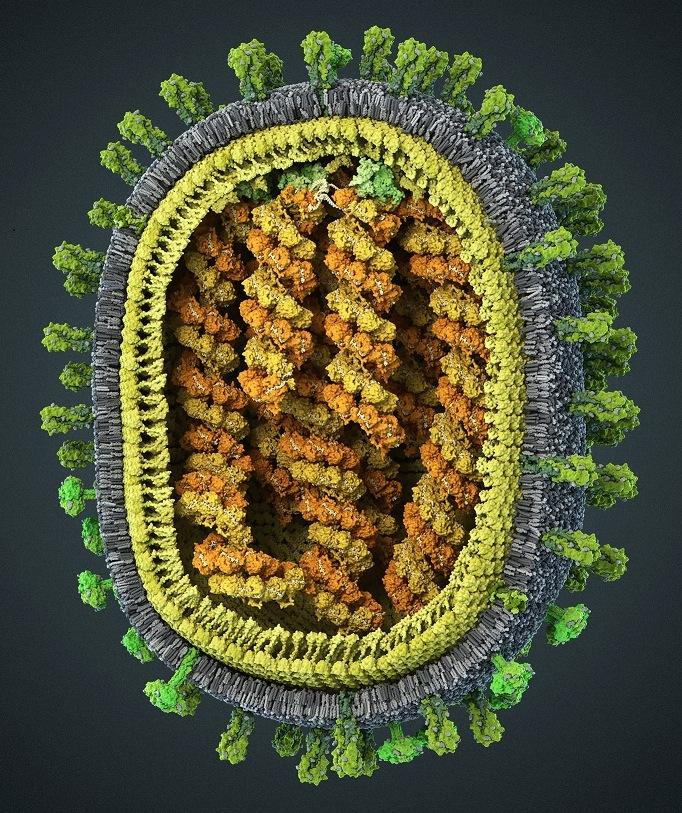
*A/H1N1 - 3D* O mais preciso e completo modelo 3D de um vírus
Tele-Empathy

Greetings and welcome to the weekly Exponential Medicine newsletter where we share a curated set of news stories relevant to the cutting edge and future of health and medicine and talks from prior Exponential Medicine (xMed) programs. *Tele-Empathy: How do you make someone else feel another's pain and discomfort? *When physicians become patients they often develop new forms of empathy that can improve their capabilities as caregivers. In this terrific talk from xMed 2017, Yan Fossat & Alec Melkonian from Klick Labs share the importance and data behind empathy, and novel approaches... mais »
UFRGS-Jubilados 60, 50 e 25 anos
Associação dos Antigos Alunos da UFRGS celebrou ontem

No meio dos "bichos" da Medicina de 25 anos

60 anos
No meio dos "bichos" da Medicina de 25 anos

60 anos
Aloyzio Achutti
Saudações iniciais…
Sinto-me privilegiado por poder estar
ainda aqui celebrando, com meus colegas
da turma médica de 1958 a conclusão de
nosso curso, e ao mesmo tempo honrado
com convite para falar em nome dos
colegas das outras onze unidades existentes
na época em nossa Universidade.
Nossa Faculdade de Medicina foi a
segunda a ser criada (em 1898) portanto
completando agora 120 anos, exatamente
o dobro de nossos sessenta de hoje.
Esse número, convencionou-se representar na vida de uma pessoa o marco da
senectude. Na vida profissional - aos que conseguem chegar até aqui - pode
significar experiência e memória de muitas histórias para contar…
Segundo me consta, estamos de volta à inauguração deste magnífico Salão
de Atos, pois fomos a primeira turma a utilizá-lo com local de formatura.
Essa obra arquitetônica faz parte do conjunto recém construído na expansão
do campus central da época em que nosso Reitor era o eminente
Professor Eliseu Paglioli. Um filho seu era nosso colega de turma, recebeu o
diploma das mãos de seu pai e, felizmente hoje está também aqui presente..
Havíamos escolhido como Paraninfo o saudoso Professor
Rubens Mário Garcia Maciel, que por sua vez, em 1937, escolhera
como patrono, nosso reitor de 1958, numa feliz coincidência
Durante nossa vida Profissional tivemos oportunidade de apreciar um
desenvolvimento técnico-científico acelerado, exigindo permanente adaptação
daquele equipamento que recebemos durante nossos cursos acadêmicos.
Mas foi a base em cima da qual conseguimos pôr em prática as maravilhas de
hoje. Não mudaram os princípios éticos e humanos sobre os quais debruçamos
nossa formação, embora estejam sempre ameaçados pela constante
necessidade de adaptação e tentação de ultrapassar seus limites.
O tempo nos permitiu apreciar, participar, sonhar, imaginar e alcançar
as recompensas de missão cumprida, amizade e afeto de tanta gente que
fomos encontrando em nossos caminhos.
O panorama mundial entretanto ainda se constitui numa contínua frustração
pela nossa incapacidade de controlar a violência, o tribalismo, a desigualdade,
a ganância, a deterioração de nossas instituições e de nosso ambiente, a
drogadição, o instinto de morte.
É difícil avaliar se o que vemos é expressão de uma piora, ou se estamos
apenas tendo mais chance de conhecer o que estava anteriormente oculto.
Temos mais motivos de distração, desviando nosso olhar dos problemas
que temos para resolver, fugimos de tudo que deveria nos causar compaixão.
Aprendemos que as causas das causas do problemas de Saúde, situam-se fora
do setor saúde, tornando-o objetivo comum e de interesse a todas as disciplinas.
Aprendemos que só com médicos, ou mais médicos, não conseguiremos um mundo
melhor ou feliz. Na época de nossa formatura já dizia o Diretor da Organização
Mundial da Saúde Halfdan Mahler “se nada mais for descoberto com a ciência,
mas o que já existe for posto ao alcance de todos, haverá mais saúde no ano 2000”.
O novo século chegou, já se passaram sessenta anos e nossa incompetência em
administrar nossa própria casa fica cada vez mais evidente..Longevidade aumentou
principalmente por redução da mortalidade no início da vida, mas sem assegurar um
desenvolvimento emocional, intelectual e social para as novas gerações. Ao menos
não na proporção do aumento populacional e da disponibilidade de recursos
tecnológicos. As desigualdades permanecem ou aumentam.
Nossos conhecimentos sobre determinantes do comportamento humano
ainda deixam muito a desejar. Os recursos disponíveis para a comunicação
se desenvolveram enormemente, mas em vez de servir para nos aproximar,
têm contribuído para a desinformação, segmentação e descrédito. Fomos à Lua,
estamos tentando sair de nossa Galáxia e até vislumbramos os umbrais do universo.
Às vezes dá impressão que estamos tentando abandonar nossa morada antes
que se destrua....
Em nossa turma de Medicina éramos oitenta e oito, dos quais provavelmente
menos da metade teve condições para hoje celebrar conosco. Muitos só
permanecem em nossa memória e da população por eles atendida.
Ao lembrar colegas, é hora de lembrar também nossos familiares, professores,
funcionários, pessoal dos hospitais e serviços onde exercemos nossas profissões,
nossos clientes e oportunidades de praticar e nos sentirmos úteis e realizados.
Entidades profissionais, associações como a dos Antigos Alunos desta
Universidade… Nada teríamos feito, ou teria acontecido se tivéssemos
agido sozinhos.
Eu, em particular, preciso agradecer minha esposa e colega
Dra. Valderês Antonietta Robinsonque fará parte dos sexagenários de profissão
dentro de dois anos. Foi por causa dela que estou aqui neste momento, se não,
teria feito parte da turma do ano passado como formado em Engenharia
(cujo curso tem um ano menos que a Medicina)...
Devo dizer que me sinto como um veterano de sessenta anos, abraçando os
demais e desejando saúde, felicidade e sucesso aos calouros de
cinquenta e vinte e cinco anos!...
Agradecendo à Professora Jussara Issa Musse pela organização deste festejo.
Subscribe to:
Posts (Atom)