Translate AMICOR contents if you like

Showing posts with label Stress. Show all posts

Thursday, April 23, 2020

Stress

Biologist Leads Pioneering Study on Stress

A biologist at Louisiana State University conducted a pioneering research study that could help us to better understand the role of dopamine in stress resilience in humans through analyzing wild songbirds. This study could lead to increased prevention and treatment of stress-related disorders.   
Dopamine is a chemical in the brain that is important for learning and memory. Department of Biological Sciences Assistant Professor Christine Lattin, and colleagues conducted this study of wild songbirds showing that dopamine is important in responding to chronic stressors, which can help wildlife conservation efforts in response to environmental stressors such as habitat destruction, natural disasters, extreme weather events and increases in predation.
Lattin, who is the lead author on the study published in Nature's Scientific Reports, applied a biomedical imaging technology called Positron Emission Tomography, or PET, scans that are used commonly on humans but rarely on wild animals to quantify dopamine receptors in house sparrows.              
"This study is exciting because it is the first time PET scans have been used in wildlife to quantify dopamine receptors in the brain. Developing this technique has opened the door to being able to scan animals and release them back into the wild," she said. "We need to know how these wild birds are coping with stressors and responding to changes to the environment so we can understand how to best protect them."
In addition to the biomedical imaging, Lattin and colleagues tracked changes in the birds' body mass and hormone levels, and observed their behavior using a remotely operated video camera to study wild house sparrows' response to captivity over four weeks. The birds were scanned after being brought in to the lab and then again four weeks later. By using PET scans, they were able to study how the stress of captivity affected the birds over time.
They found that one type of dopamine receptor decreased over time during captivity, which suggests that birds became less resilient to stress over time. The greater the decrease in dopamine receptors, the more they exhibited anxiety-related behaviors such as feather ruffling. All of the wild birds also decreased body mass.
"These physiological, neurobiological and behavioral changes suggest that songbirds are not able to habituate to captivity, at least over short periods of time. It is very important that scientists studying stress in wildlife find more ways to study them in their natural habitat," Lattin said.              
Source: lsu.edu

Sunday, September 22, 2019

Teeth Grinding

What Teeth Grinding Reveals About Your Psyche

The underlying causes behind this nighttime menace

Sep 9 · 6 min read
Credit: Jamie Carroll/Getty Images
AAccording to the American Sleep Association, about 10% of people suffer from teeth grinding, also known as bruxism, and researchers believe the number of patients suffering from it has increased in recent years. While there are a number of medical and lifestyle causes for bruxism, teeth grinding can also be a window into your psyche — and a sign that you may need to reduce stress.
There are several risk factors for unwanted jaw movement: Medications (like some antidepressants, antipsychotics, and amphetamines), along with tobacco, caffeine, alcohol, or recreational drug use can cause people to grind their teeth at night. Age also plays a role; grinding teeth is fairly common among young children and, in most cases, it dissipates by adulthood.

Wednesday, April 03, 2019

Stress and Social Self


FROM THE ARCHIVE | Stress and the Social Self: How Relationships Affect Our Immune System

thebalancewithin_sternberg.jpg?w=195Relationships, Adrienne Rich argued in her magnificent meditation on love, refine our truths. But they also, it turns out, refine our immune systems. That’s what pioneering immunologist Esther Sternberg examines in The Balance Within: The Science Connecting Health and Emotions(public library) — a revelatory inquiry into how emotional stress affects our susceptibility to burnout and disease.
As just about every socialized human being can attest, interpersonal relationships play a significant role in our experience of stress — either contributing to it and or alleviating it. And the way we connect — something psychologist Barbara Fredrickson has termed “positivity resonance” — is deeply patterned through our earliest experiences of bonding, which train our limbic pathways. Sternberg traces the cognitive origin of these formative patterns:/.../

Thursday, March 28, 2019

Stress menagement

How Neurofeedback Is Revolutionizing Stress Management

We may be able to train ourselves to control brain activity


Credit: Alfred Pasieka/Science Photo Library/Getty ImagesFear, stress, and anxiety are some of the biggest dangers to our 
mental health. But like many of our unpleasant emotions, they have 
important functional origins; without them, we lack the motivation 
to flee from danger or avoid harmful behaviors.
The amygdala is a brain structure involved in emotional experiences, such as fear and anxiety. Stressful experiences can adjust its sensitivity. For soldiers who enter military service, for example, symptoms of stress correlate with their amygdala reactivity. After their military service, their amygdala is more responsive to medical images than it was before their service started.

Wednesday, February 27, 2019

Sweets and Stress

Why Do We Crave Sweets When We're Stressed?

A brain researcher explains our desire for chocolate and other carbs during tough times Achim Peters
Although our brain accounts for just 2 percent of our body weight, the organ consumes half of our daily carbohydrate requirements—and glucose is its most important fuel. Under acute stress the brain requires some 12 percent more energy, leading many to reach for sugary snacks.
Carbohydrates provide the body with the quickest source of energy. In fact, in cognitive tests subjects who were stressed performed poorly prior to eating. Their performance, however, went back to normal after consuming food.
When we are hungry, a whole network of brain regions activates. At the center are the ventromedial hypothalamus (VMH) and the lateral hypothalamus. These two regions in the upper brain stem are involved in regulating metabolism, feeding behavior and digestive functions. There is, however, an upstream gatekeeper, the nucleus arcuatus (ARH) in the hypothalamus. If it registers that the brain itself lacks glucose, this gatekeeper blocks information from the rest of the body. That’s why we resort to carbohydrates as soon as the brain indicates a need for energy, even if the rest of the body is well supplied./.../

Sunday, January 13, 2019

Stress

The Upside of Stress — Highly enjoyable and very informative. This book offers a counter-intuitive look at why stress is good for you and how you can develop the capacity to get better at handling stress. Even if you're not stressed it will help you develop the skills to change how your friends and family look at stress. The ability to not only embrace stress but learn from it is a powerful combination.

Sunday, December 02, 2018

Stress

Early Life Stress Hinders Neuron Development, Causing Attention Disorders: Mouse Study

by Neuroscience News
Female mice who experienced early life stress developed problems and had fewer neurons in areas of the brain responsible for regulating emotions and making sense of rules, researchers report.

Thursday, August 16, 2018

Pre-natal stress


Stress During Pregnancy Increases Mood Disorder Risk for Female Offspring

by Neuroscience News
A new study reports maternal stress during pregnancy can increase the risk of female offspring developing mood disorders. Researchers reveal higher maternal cortisol levels during pregnancy were linked to alterations in newborns' functional brain connectivity in emotional processing areas.

Wednesday, May 30, 2018

stress echoes down

How stress echoes down the generations

Changes to sperm may transmit epigenetic changes to children
THE effects of child abuse can last a lifetime. Neglected or abused children have a higher risk of developing all sorts of ailments as adults, including mental illnesses such as depression but also physical ones like cancer and stroke. In fact, the effects may last even longer. Emerging evidence suggests that the consequences of mistreatment in childhood may persist down the generations, affecting a victim’s children or grand-children, even if they have experienced no abuse themselves.
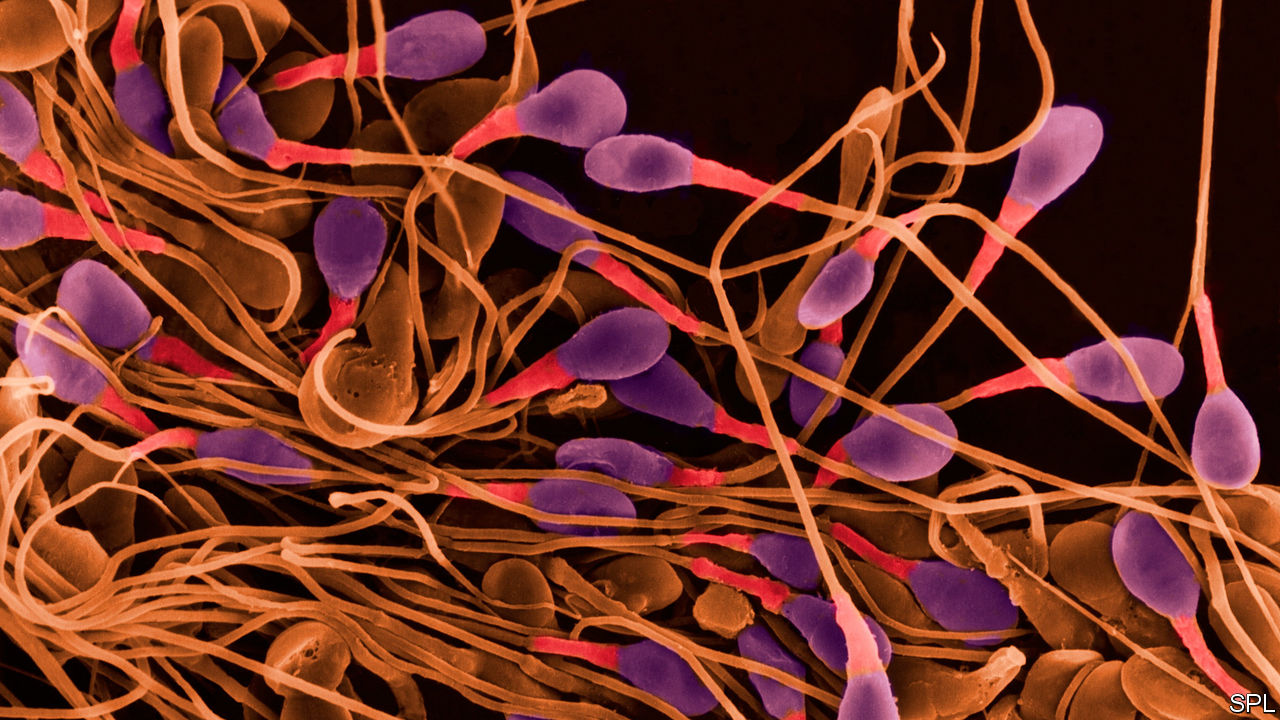
Exactly how this happens is not well understood. Rigorous experiments on human subjects are difficult. Scientists have therefore turned to rats and mice. But now Larry Feig of Tufts University and his colleagues have shown that psychological stress seems to cause similar changes in the sperm of both mice and men. Their study is published this week in Translational Psychiatry.

Latest stories

See more
Biologists know that traits are carried down the generations by genes. Genes encode proteins, and proteins make up organisms. That is still true. But it has recently become clear that it is not the whole story. Organisms regulate the activity of their genes throughout their lives, switching different genes on and off as circumstances require. It is possible that such “epigenetic” phenomena can be passed, along with the genes themselves, to an animal’s descendants. They offer a mechanism by which an animal’s life experiences can have effects on its offspring.
Hunting for signs of this, Dr Feig and his colleagues asked 28 male volunteers to complete a questionnaire assessing the severity of any trauma they had experienced as youngsters. They also asked their volunteers to provide sperm samples. They then looked for evidence for a common epigenetic mechanism involving small molecules called micro-RNAs. Their job is to bind to another molecule called messenger RNA, whose task in turn is to ferry information read from a gene to the cellular factories that create the required protein. Micro-RNA renders messenger RNA inactive, reducing the activity of the gene in question—and it can travel in sperm alongside DNA.
Sure enough, upon screening the men’s sperm, the researchers found that concentrations of two types of micro-RNAs, miR-34 and miR-449, were as much as 100 times lower in samples from abused men.
The team then turned to their mice. A standard way to stress mice is to move them to new cages, with new mice, from time to time until they reach adulthood. When the team did this they found that the stressed males had lower levels of miR-34 and miR-449 in their sperm. They mated these males with unstressed females. The resulting embryos also had low levels of the two micro-RNAs. And so in turn did sperm produced by the male offspring of these unions.
Dr Feig and others have shown that the female offspring of stressed male mice tend to be more anxious and less sociable. Furthermore, the sons of stressed fathers themselves produce stressed daughters. The effects of cage-shuffling, in other words, seem to last for at least three generations. The researchers have not demonstrated conclusively that miR-34 and miR-449 are responsible. But their results are suggestive.
To try to nail their case, the researchers plan to carry out a bigger study. This time, they will give questionnaires to their human subjects’ fathers, to tease out whether any epigenetic changes they observe arise from the childhood experiences of the subject or his father. Sisters and daughters may be included in the study, too. That is an ambitious goal. It is also a worthy one. Unless genetic engineering can one day be perfected, changes in genes are hard-wired. But epigenetic effects might be treatable, by boosting levels of particular micro-RNAs in sperm, for example. That could mean the legacy of abuse is no longer passed to future generations.
This article appeared in the Science and technology section of the print edition under the headline"Stress test"

Tuesday, November 07, 2017

Stress language

Volunteers' use of certain words predicted stress-related changes in gene expression better than their self-reported feelings

Language Patterns Reveal Body’s Hidden Response to Stress

Language Patterns Reveal Body's Hidden Response to Stress
Subtleties in the language people use may reveal physiological stress.
Psychologists found that tracking certain words used by volunteers in randomly collected audio clips reflected stress-related changes in their gene expression. The speech patterns predicted those physiological changes more accurately than speakers’ own ratings of their stress levels.
The research, which is published on November 6 in Proceedings of the National Academy of Sciences suggests that changes in language may track the biological effects of stress better than how we consciously feel. It’s a new approach to studying stress, says David Creswell, a psychologist at Carnegie Mellon University in Pittsburgh, Pennsylvania, and one that “holds tremendous promise” for understanding how psychological adversity affects physical health./.../

Workplace health

Adicionar legenda
Good mental health enables people to realize their potential, cope with the normal stresses of life, work productively, and contribute to their communities.

Employers and managers can help create a healthy workplace where workers and managers actively contribute to the working environment by:
  • Allowing for flexible working hours or telecommuting as necessary;
  • involving employees in decision-making; 
  • creating programmes for career development of employees; and
  • recognizing and rewarding the contribution of employees.
Employers that have initiatives to promote mental health and support employees in the workplace see gains not only in the health of their employees but also in their productivity at work.
Mental health at work

Thursday, November 02, 2017

Cause of Stress

This Is the Number-One Cause of Stress for Americans
A new survey from the American Psychological Association shows that Americans have a lot of stress. Here's what they're most anxious about
By Alexandra Sifferlin 
November 1, 2017
TIME Health
For more, visit TIME Health.
More than half of Americans say that the present day is the worst period of American history that they can remember, according to a new survey of stress in the United States.
The American Psychological Association (APA) just released the results of its annual Stress in America survey, which revealed that the biggest stressor Americans face is the state of the U.S. The APA surveyed 3,440 American adults in August, and 63% of them said the future of the nation is a “very” or “somewhat” significant source of stress. That’s slightly more than other common stressors, like money at 62% and work at 61%./.../