Translate AMICOR contents if you like

Sunday, April 15, 2012

Mapping the biosphere:


Systematics and Biodiversity

Volume 10, Issue 1, 2012

Abstract

The time is ripe for a comprehensive mission to explore and document Earth's species. This calls for a campaign to educate and inspire the next generation of professional and citizen species explorers, investments in cyber-infrastructure and collections to meet the unique needs of the producers and consumers of taxonomic information, and the formation and coordination of a multi-institutional, international, transdisciplinary community of researchers, scholars and engineers with the shared objective of creating a comprehensive inventory of species and detailed map of the biosphere. We conclude that an ambitious goal to describe 10 million species in less than 50 years is attainable based on the strength of 250 years of progress, worldwide collections, existing experts, technological innovation and collaborative teamwork. Existing digitization projects are overcoming obstacles of the past, facilitating collaboration and mobilizing literature, data, images and specimens through cyber technologies. Charting the biosphere is enormously complex, yet necessary expertise can be found through partnerships with engineers, information scientists, sociologists, ecologists, climate scientists, conservation biologists, industrial project managers and taxon specialists, from agrostologists to zoophytologists. Benefits to society of the proposed mission would be profound, immediate and enduring, from detection of early responses of flora and fauna to climate change to opening access to evolutionary designs for solutions to countless practical problems. The impacts on the biodiversity, environmental and evolutionary sciences would be transformative, from ecosystem models calibrated in detail to comprehensive understanding of the origin and evolution of life over its 3.8 billion year history. The resultant cyber-enabled taxonomy, or cybertaxonomy, would open access to biodiversity data to developing nations, assure access to reliable data about species, and change how scientists and citizens alike access, use and think about biological diversity information.

Neurocience & Freakonomics


Is neuroscience the new ‘Freakonomics’?

April 9, 2012
The new generation of business thinking culls insights from the cutting edge of neuroscience, says The Washington Post Innovations blog.
We are, as a society, experiencing a profound reappraisal of traditional economics and its shortcomings. The world is suddenly a lot more irrational than we ever thought, full of black swans.
This new thinking about the way the human brain works is starting to impact everything — how supermarkets stock their shelves, when coupon offers are sent out to consumers, and how to devise the perfect title that will get you to click on a news article.
A retail store such as Target now knows that you’re pregnant before your parents do, thanks to the wonders of understanding customer purchase habits. On the Web, understanding human behavior is everything, given that the best and brightest of our generation are now engaged in an elaborate game of getting people to click on a specific button, text link or banner ad./.../

Computing Trend


The computing trend that will change everything

April 10, 2012
The electrical efficiency of computing (the number of computations that can be completed per kilowatt-hour of electricity used) has doubled every year and a half since the dawn of the computer age.
The power needed to perform a task requiring a fixed number of computations will continue to fall by half every 1.5 years (or a factor of 100 every decade). As a result, even smaller and less power-intensive computing devices will proliferate, paving the way for new mobile computing and communications applications that vastly increase our ability to collect and use data in real time.

The number of computations computers can carry out using the same amount of energy has been increasing by a factor of two every 1.5 years (credit: Jonathan Koomey)

Open Source


Wellcome Trust joins 'academic spring' to open up science

Wellcome backs campaign to break stranglehold of academic journals and allow all research papers to be shared free online

Wellcome's move adds weight to the campaign for open access to academic knowledge, which could lead to benefits across a broad range of research fields. Photograph: Mauricio Lima/AFP/Getty Images
One of the world's largest funders of science is to throw its weight behind a growing campaign to break the stranglehold of academic journals and allow all research papers to be shared online.
Nearly 9,000 researchers have already signed up to a boycott of journals that restrict free sharing as part of a campaign dubbed the "academic spring" by supporters due to its potential for revolutionising the spread of knowledge.
But the intervention of the Wellcome Trust, the largest non-governmental funder of medical research after the Bill & Melinda Gates Foundation, is likely to galvanise the movement by forcing academics it funds to publish in open online journals./.../

Intelligence


Where is intelligence located in the brain?

April 11, 2012
Brain Structures
Locations of general intelligence and executive function: red: common areas, orange: general intelligence, yellow: executive function (credit: Aron Barbey)
University of Illinois scientists have mappedthe physical architecture of intelligence in the brain in one of the largest and most comprehensive analyses so far of the brain structures vital to general intelligence and to specific aspects of intellectual functioning, such as verbal comprehension and working memory.
“We found that general intelligence depends on a remarkably circumscribed neural system,” said Neuroscience professor Aron Barbey of the Decision Neuroscience Laboratory, who led the study. “Several brain regions, and the connections between them, were most important for general intelligence./.../

supercentenarians


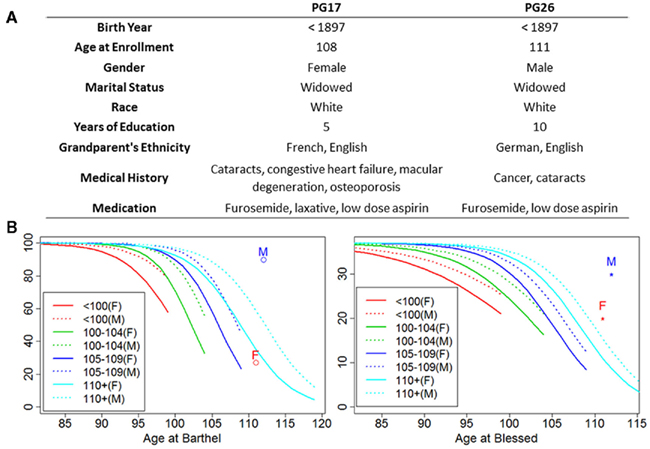
Whole-genome sequences of supercentenarians reveal longevity clues

April 11, 2012
[+]genome_supercentenarians
Summary of patients’ characteristics (credit: Paola Sebastiani et al./Front. Gene.)
A team of researchers has analyzed the complete genomic sequences of male and female supercentenarians, both over 114 years old.
Surprisingly, the researchers showed that the DNA sequences are largely comparable to existing non-supercentenarian genomes, and the two individuals do not appear to carry most of the well-established human longevity-enabling variants already reported in the literature./.../

Scientists and bankers

Scientists and bankers — a new model army

Bankers must now surrender more information on their activities. Scientists should use it to build better system-wide financial models, says John Liechty.

The financial system is in a credit-confidence trap. Like a badly balanced ship trying not to capsize during a storm, banks and financiers are unwilling to make loans or accept collateral in exchange for securing debts — they fear being overwhelmed by the next wave of crisis. Even though the first sovereign default, in Greece, has passed, there is no obvious port in this storm.
How did the system get so far out of balance? And how can scientists — accustomed to modelling complex events to explain and make predictions — help to create a financial system that is more self-stabilizing? Existing financial models failed to predict the crisis of 2008 and the follow-on crisis of 2011–12. They missed the huge system-wide risks that developed as banks promoted an undisciplined supply of mortgages and created an increasingly complex web of relationships through legal contracts that transferred risk throughout the financial markets./.../

DNA folding patterns


Decoding DNA folding patterns

April 12, 2012
Schematic illustrating topological domains and resulting directional bias. A: Interactions upstreamp; B: Interactions downstream (credit: Jesse R. Dixon et al./Nature)
Using a powerful DNA sequencing methodology, researchers at the Ludwig Institute for Cancer Research have investigated the three-dimensional structure of DNA folds in the nucleus of a chromosome.
“With the knowledge of how DNA folds inside the nucleus, we now have a more complete picture of the regulatory process of genes,”said Dr. Bing Ren, Member of the Ludwig Institute for Cancer Research and Professor of Cellular and Molecular Medicine at the University of California, San Diego.
“That is the primary reason we sought to tackle this problem.”
The spatial organization is intimately linked to its role in the body. The findings provide scientists with a greater understanding about the basic principles of DNA folding and its role in gene regulation./.../

Autism Dx.


Can Autism Really Be Diagnosed in Minutes?

A Harvard researcher says he's achieved exceptional accuracy in identifying autism by using just seven online questions and an evaluation of a short home video of the child, instead of conventional, face-to-face exams that can take hours.

Ferran Traite Soler / Vetta / Getty Images Autism is an extremely complex diagnosis. Parental insight, physician observations and hours of data can factor into determining whether a child actually has the condition or is just a little on the quirky side.By Bonnie Rochman | @brochman | 
Now a Harvard researcher, Dennis P. Wall, has published research about a Web-based tool he developed that promises to diagnose autism in minutes, not hours — a proposition that Wall has floated for some time now and has some autism experts so skeptical they’re not even willing to speak on the record about it.
Wall, director of the computational biology initiative at the Center for Biomedical Informatics at Harvard Medical School and associate professor of pathology at the school, combines computer algorithms along with a seven-point parent questionnaire and a home video clip to make a speedy online assessment of whether a child has autism./.../


Friday, April 13, 2012

ZIP & GENETIC Codes


Zip Code as Important as Genetic Code in Childhood Obesity

ScienceDaily (Apr. 10, 2012) — Nearly 18 percent of U.S. school-aged children and adolescents are obese, as the rate of childhood obesity has more than tripled in the past 30 years. The prevalence of obesity puts children at greater risk of developing heart disease, type 2 diabetes, stroke and other illnesses, and of suffering severe obesity as adults. New study results indicate that where a child lives, including factors such as the neighborhood's walkability, proximity to higher quality parks, and access to healthy food, has an important effect on obesity rates. Researchers found that children living in neighborhoods with favorable neighborhood environment attributes had 59 percent lower odds of being obese./.../

longevity clues


Whole-genome sequences of supercentenarians reveal longevity clues

April 11, 2012
[+]genome_supercentenarians
Summary of patients’ characteristics (credit: Paola Sebastiani et al./Front. Gene.)
A team of researchers has analyzed the complete genomic sequences of male and female supercentenarians, both over 114 years old.
Surprisingly, the researchers showed that the DNA sequences are largely comparable to existing non-supercentenarian genomes, and the two individuals do not appear to carry most of the well-established human longevity-enabling variants already reported in the literature....

Aging & Decision


Breakdown of white-matter pathways affects decisionmaking as we age

April 13, 2012
[+]
Brain scans showing the white-matter pathways involved in everyday learning: Top: the pathway shown in red connects the medial prefrontal cortex to the ventral striatum; bottom: the pathway shown in blue connects the medial prefrontal cortex to the thalamus (credit: Gregory Samanez-Larkin)
A Vanderbilt University brain-mapping study has found that people’s ability to make decisions in novel situations decreases with age and is associated with a reduction in the integrity of two specific white-matter pathways.
The pathways connect an area in the cerebral cortex called the medial prefrontal cortex (involved with decision making) with two other areas deeper in the brain: the thalamus (a highly connected relay center in the brain) and ventral striatum (associated with the emotional and motivational aspects of behavior)./.../

progress and prion-like spread of dementias

New MRI technique may predict rate of progress and prion-like spread of dementias
April 13, 2012

White matter in human brain (credit: David Shattuck, Arthur Toga, Paul Thompson/UCLA Lab of Neuro Imaging) A new technique for analyzing brain images may make it possible to predict the rate of progression and physical path of many degenerative brain diseases, using just one magnetic resonance imaging (MRI) image, report scientists at the San Francisco VA Medical Center ( SFVAMC) and the University of California, San Francisco (UCSF). The technique, developed by SFVAMC scientists … more…/.../

Tuesday, April 10, 2012

Reinventando o Sanitário


Global Health
Photograph by Getty/Eco Images; Illustration by Bloomberg View
The toilet is a magnificent thing. Invented at the turn of the 19th century, the flush version has vastly improved human life.
The toilet has been credited with adding a decade to our longevity. The sanitation system to which it is attached was voted the greatest medical advance in 150 years by readers of the British Medical Journal.
Unfortunately it is an impractical luxury for about two- thirds of the world’s 7 billion people because it relies on connections to water and sewerage systems that must be built and maintained at great expense. About 40 percent of all people, an estimated 2.6 billion of them, have no access to even a minimally sanitary facility, according to the World Health Organization./.../

Escolha inteligente...


polemica 09_04.JPG

No Programa Polêmica da Rádio Gaúcha com Lauro Quadros, Stephen Doral Stefani e Alberto Kramerer, sobre intervenções médicas evitáveis e escolhas adequadas.
Abaixo referências sobre o tema já colocadas no blog AMICOR e sugestão do Otávio B. Silva
http://amicor.blogspot.com.br/2012/04/what-should-patients-and-physicians.html
http://amicor.blogspot.com.br/2012/04/unnecessary-left-ventriculographies.html

Otavio Berwanger commented on Stephen Doral Stefani's photo of you.
Otavio wrote: "O paper neste link pode ser útil http://choosingwisely.org/wp-content/uploads/2012/03/033012_Choosing-Wisely-National-Press-Rls-FINAL.pdf"

tobacco-related inequalities

From:Catherine Coleman, Assistant Director, Health Communication Core
Dana-Farber/Harvard Cancer Center

TReND publishes supplement on tobacco-related inequalities in low- and middle-income countries

The National Cancer Institute (NCI) and the Tobacco Research Network on Disparities (TReND), funded by the NCI and Legacy, are pleased to announce the release of Research to Reduce Global Tobacco Inequalities, a special supplement to the journal Cancer Causes and Control, published in March 2012./.../

Monday, April 09, 2012

unnecessary left ventriculographies


Many left ventriculographies are unnecessary

APRIL 5, 2012 Reed Miller

Stanford, CA
 - Left ventriculography is performed in most coronary angiography cases, even when the same information has already been obtained noninvasively, a study of Aetna health benefit claims shows [1].
Dr Ronald Witteles (Stanford University, CA) and colleagues retrospectively analyzed claims data from 96 235 patients who underwent angiography in 2007. They found that left ventriculography was performed in 81.8% of cases and that, in 88% of those cases, the test was probably unnecessary because the patient had undergone a LV ejection assessment within the previous 30 days and there was no reason to expect their LV volume or ejection fraction had changed since that test. Results of the study have been published in the American Heart Journal.
"We observed the seemingly very arbitrary nature of which patients would get a left ventriculogram and which wouldn't. And we would see patients who had had recent alternative assessments of their ejection fractions already done getting the left ventriculogram as a routine add-on procedure. This didn't [make sense] to us from any standpoint—patient care or ethical—so we all felt compelled to investigate it further," Witteles told heartwire. He said that, based on an informal survey of his colleagues, he expected the percentage of apparently extraneous ventriculographies to be around 20%, so when the data showed it was near 90%, it was "shocking."/.../