Translate AMICOR contents if you like

Tuesday, January 18, 2011

World health inequality: Convergence, divergence, and development

[EQ] World health inequality: Convergence, divergence, and development


Ruggiero, Mrs. Ana Lucia (WDC)

 to EQUIDAD

World health inequality: Convergence, divergence, and development

Rob Clark, Department of Sociology, University of Oklahoma, USA
Social Science & Medicine (2011), doi:10.1016/j.socscimed.2010.12.008

“…….Recent studies characterize the last half of the twentieth century as an era of cross-national health convergence, with some attributing welfare gains in the developing world to economic growth.
In this study, I examine the extent to which welfare outcomes have actually converged and the extent to which economic development is responsible for the observed trends. Drawing from estimates covering 195 nations during the 1955-2005 period, I find that life expectancy averages converged during this time, but that infant mortality rates continuously diverged. I develop a narrative that implicates economic development in these contrasting trends, suggesting that health outcomes follow a “welfare Kuznets curve”.
” Among poor countries, economic development improves life expectancy more than it reduces infant mortality, whereas the situation is reversed among wealthier nations. In this way, development has contributed to both convergence in life expectancy and divergence in infant mortality. Drawing from 674 observations across 163 countries during the 1980e2005 period, I find that the positive effect of GDP PC on life expectancy attenuates at higher levels of development, while the negative effect of GDP PC on infant mortality grows stronger…..”

Galaxy Far, Far Away


O descobrimento de galáxias acontece de forma relativamente frequente e não costuma ser um tópico muito especial, mas a recente descoberta das galáxias mais distantes conhecidas está atraindo uma atenção significativa.

ece de forma relativamente frequente e não costuma ser um tópico muito especial, mas a recente descoberta das galáxias mais distantes conhecidas está atraindo uma atenção significativa.
Foram necessários vários telescópios multi comprimento de onda ultra-potentes para avistar o aglomerado de galáxias, que fica aproximadamente 12,6 bilhões anos-luz da Terra e foi chamado de COSMOS AzTEC3.

Equity in Health

Ruggiero, Mrs. Ana Lucia 


International Society for Equity in Health- ISEqH- Call for Submissions

6th International Conference: Making Policy a Health Equity Building Process

Cartagena de Indias, Colombia - September 26-28, 2011
Equity is an important issue to champion for, and is far for been overcome by governments, international or global institution, or academia. However nobody disagrees with it because is too broad. We would like to provide more detail, be more specific and, at the same time, offer a multi disciplinary look. Following this, we intend to “qualify” equity, defining a series of key topics:

• Inequity in access to essential drugs
• Inequity in access to high cost treatments
• Inequity in access to primary health care
• Inequity in the process of health care provision
• Sexual and reproductive health and equity
• Financially catastrophic out of pocket expenditures in health
• Community Participants and health equity
• Quality assurance and its impact to equity
• Communication campaigns, advocacy and health
• Equity to care in different health systems and the impact on equity of Health reforms (decentralization, primary health care strategies, georeference).
• Impact evaluation of health programs and health promotion interventions
• Environment, water, sanitation and inequity in health status and treatment

Equity is not only a research issue. It requires an interdisciplinary approach and a research & policy partnership showing clear experiences about how to reach equity in health. Therefore, we identify certain arenas where research and policymaking interact:
i- Political economy of health reforms
ii- Program evaluation
iii- Governance

Monday, January 17, 2011

Inerbeing


SCOTT D. SAMPSON
Paleontologist and science communicator; Author: Dinosaur Odyssey: Fossil Threads in the Web of Life
INTERBEING
Humanity's cognitive toolkit would greatly benefit from adoption of "interbeing," a concept that comes from Vietnamese Buddhist monk Thich Nhat Hanh. In his words:
"If you are a poet, you will see clearly that there is a cloud floating in [a] sheet of paper. Without a cloud, there will be no rain; without rain, the trees cannot grow; and without trees, we cannot make paper. The cloud is essential for the paper to exist. If the cloud is not here, the sheet of paper cannot be here either . . . "Interbeing" is a word that is not in the dictionary yet, but if we combine the prefix "inter-" with the verb to be," we have a new verb, inter-be. Without a cloud, we cannot have a paper, so we can say that the cloud and the sheet of paper inter-are. . . . "To be" is to inter-be. You cannot just be by yourself alone. You have to inter-be with every other thing. This sheet of paper is, because everything else is."
Depending on your perspective, the above passage may sound like profound wisdom or New Age mumbo-jumbo. I would like to propose that interbeing is a robust scientific fact — at least insomuch as such things exist — and, further, that this concept is exceptionally critical and timely.
Arguably the most cherished and deeply ingrained notion in the Western mindset is the separateness of our skin-encapsulated selves — the belief that we can be likened to isolated, static machines. Having externalized the world beyond our bodies, we are consumed with thoughts of furthering our own ends and protecting ourselves. Yet this deeply rooted notion of isolation is illusory, as evidenced by our constant exchange of matter and energy with the "outside" world. At what point did your last breath of air, sip of water, or bite of food cease to be part of the outside world and become you? Precisely when did your exhalations and wastes cease being you? Our skin is as much permeable membrane as barrier, so much so that, like a whirlpool, it is difficult to discern where "you" end and the remainder of the world begins. Energized by sunlight, life converts inanimate rock into nutrients, which then pass through plants, herbivores, and carnivores before being decomposed and returned to the inanimate Earth, beginning the cycle anew. Our internal metabolisms are intimately interwoven with this Earthly metabolism; one result is the replacement of every atom in our bodies every seven years or so.
You might counter with something like, "Ok, sure, everything changes over time. So what? At any given moment, you can still readily separate self from other."
Not quite. It turns out that "you" are not one life form — that is, one self — but many. Your mouth alone contains more than 700 distinct kinds of bacteria. Your skin and eyelashes are equally laden with microbes and your gut houses a similar bevy of bacterial sidekicks. Although this still leaves several bacteria-free regions in a healthy body — for example, brain, spinal cord, and blood stream — current estimates indicate that your physical self possesses about a trillion human cells and about 10 trillion bacterial cells. In other words, at any given moment, your body is about 90% nonhuman, home to many more life forms than the number of people presently living on Earth; more even than the number of stars in the Milky Way Galaxy! To make things more interesting still, microbiological research demonstrates that we are utterly dependent on this ever-changing bacterial parade for all kinds of "services," from keeping intruders at bay to converting food into useable nutrients.
So, if we continually exchange matter with the outside world, if our bodies are completely renewed every few years, and if each of us is a walking colony oftrillions of largely symbiotic life forms, exactly what is this self that we view as separate? You are not an isolated being. Metaphorically, to follow current bias and think of your body as a machine is not only inaccurate but destructive. Each of us is far more akin to a whirlpool, a brief, ever-shifting concentration of energy in a vast river that's been flowing for billions of years. The dividing line between self and other is, in many respects, arbitrary; the "cut" can be made at many places, depending on the metaphor of self one adopts. We must learn to see ourselves not as isolated but as permeable and interwoven — selves within larger selves, including the species self (humanity) and the biospheric self (life). The interbeing perspective encourages us to view other life forms not as objects but subjects, fellow travelers in the current of this ancient river. On a still more profound level, it enables us to envision ourselves and other organisms not as static "things" at all, but as processes deeply and inextricably embedded in the background flow.
One of the greatest obstacles confronting science education is the fact that the bulk of the universe exists either at extremely large scales (e.g., planets, stars, and galaxies) or extremely small scales (e.g., atoms, genes, cells) well beyond the comprehension of our (unaided) senses. We evolved to sense only the middle ground, or "mesoworld," of animals, plants, and landscapes. Yet, just as we have learned to accept the non-intuitive, scientific insight that the Earth is not the center of the universe, so too must we now embrace the fact that we are not outside or above nature, but fully enmeshed within it. Interbeing, an expression of ancient wisdom backed by science, can help us comprehend this radical ecology, fostering a much-needed transformation in mindset.

Wikipédia:Uma década de informação colaborativa

14/01/2011 - 11:40 - ATUALIZADO EM 14/01/2011 - 12:28
A Wikipédia comemora dez anos neste sábado (15), tendo se tornado um dos site mais importantes do mundo. Durante essa década, a enciclopédia livre foi criticada duramente por conta da confiabilidade e da precisão de seus aritigos - afinal, em tese, qualquer um pode editá-los -, mas cresceu para se tornar parte cotidiana da vida online: um dos dez sites mais acessados do mundo e principal repositório online do conhecimento humano. No fim, imprecisões ocorrem - só que muito menos do que se imaginava, e são corrigidas rapidamente.REDAÇÃO ÉPOCA
A Wikipédia comemora 10 anos neste sábado (15). Depois de críticas sobre a precisão de seus artigos, se transformou em uma das principais fontes de informação da redeUma pesquisa na Pew divulgada na quinta-feira (13) mostra que 53% dos usuários de internet dos Estados Unidos acessam regularmente a Wikipédia para buscar informações. Isso não é muito menos do que os 61% dos americanos que usam redes sociais com regulariedade, ou dos 66% que assistem a vídeos no YouTube. Claro que a maior parte dos usuários vai apenas consumir informações e não editar a Wikipédia, mas essa é uma característica comum das mídias sociais ou interativas.
A campanha anual por recursos da Wikimedia Foundation, a organização sem fins lucrativos que gere a Wikipédia e seus sites irmãos, como o Wikiquote e o Wikibooks, é um exemplo de como a interação com os usuários da internet tem aumentado. Em 2009, a fundação arrecadou US$ 8,59 milhões a partir de 230 mil doações. Em 2010, foram US$ 16 milhões, com 500 mil doações de 140 países. Esse dinheiro serve para manter a Wikipédia no ar sem a necessidade de propagandas, o único site entre os 10 maiores sem publicidade.
Confira alguns dados sobre a Wikipédia no mundo: /.../

The Barker Theory


New insights into ending chronic disease.

OVERVIEW

In 1995, the British Medical Journal named this the “Barker Hypothesis.”David Barker, M.D., Ph.D., FRS is a Physician and Professor of Clinical Epidemiology at the University of Southampton, UK and Professor in the Department of Cardiovascular Medicine at the Oregon Health and Science University, US. Twenty years ago, he showed for the first time that people who had low birth weight are at greater risk of developing coronary heart disease. In 1995, the British Medical Journal named this the “Barker Hypothesis.” It is now widely accepted. In 2003 he joined Professor Kent Thornburg at the faculty at the Heart Research Center, OHSU, to study how nutrition and growth before birth and during early childhood alter the development of the heart.
Dr. Barker’s work is relevant to both Western countries and the Developing World. In the Western world, many babies remain poorly nourished because their mothers eat diets that are unbalanced in macronutrients and deficient in micronutrients, or because their mothers are excessively thin or overweight. In the Developing World, many girls and young women are chronically malnourished.

Sunday, January 16, 2011

Wikipedia

Top 10 Wikipedia Moments

It's been 10 years since Wikipedia published its first article on January 15, 2001. TIME takes a look back at the revolutionary online encyclopedia's milestones throughout the decade.


Medicina e Felicidade

Apontado pela AMICOR Maria Inês Reinert Azambuja
TENDÊNCIAS/DEBATES 

Medicina e felicidade 

MIGUEL SROUGI


Os momentos de felicidade não se perenizam, porque a profissão é frequentemente açodada pelos efeitos de uma sociedade injusta e desigual

A medicina nos oferece um privilégio sem paralelo na existência humana: a chance de aliviar o sofrimento e de resgatar seres para a vida. A sensação proporcionada por esses momentos é arrebatadora. 
E isso acontece no cotidiano da vida médica. Esse processo se insere no conceito de felicidade plena, cuja melhor definição roubei da telinha despretensiosa de meu computador. Li e concordei que felicidade é um estado de contentamento com o que somos, é viver num "continuum" de bem-estar físico, mental e afetivo. Nada material. 
Contudo, a vida me ensinou que, para atingir esse estado de graça, mesmo usufruindo de todo o bem-estar, precisamos estar cercados por pessoas felizes. O médico, como ninguém, tem a oportunidade de criar a felicidade no seu entorno. 
Por essa razão, para pacificar a alma, os médicos não necessitam apenas da ilustração para curar, mas têm que ser dotados de solidariedade e de compaixão, têm que se postar em defesa dos seus pacientes e proteger o seu entorno, como guardiães do corpo e da alma.
Infelizmente, os momentos de felicidade não se perenizam, porque a profissão médica é frequentemente açodada por imperfeições da natureza humana e pelos efeitos de uma sociedade injusta e desigual. 
Profissão que exige o comprometimento pessoal permanente, a separação da família e a convivência com o sofrimento. 
Profissão que, às vezes, se acompanha de incompreensões indevidas da sociedade, que nem sempre reconhece as limitações da medicina ou a existência de fatos inexoráveis que envolvem a existência humana, como a morte implacável, a decadência física pelo passar dos anos ou doenças sem cura. 
Profissão em que seus principais protagonistas, os médicos, são asfixiados por um sistema de saúde pública indigente, perdulário e injusto, gerido por um governo central insensível, que foi capaz de pagar, em 2010, cerca de R$ 180 bilhões da riqueza nacional em juros e destinar só R$ 55 bilhões para financiar toda a saúde do povo brasileiro. 
Governantes incapazes de compreender que sem saúde não existem seres livres. Profissão em que seus membros são acuados pela violência e afrontados por salários incapazes de propiciar vida digna, oprimidos por entidades privadas de assistência, que cerceiam sua autonomia e impõem restrições perigosas às ações médicas. Enfim, profissão que sobrevive pelos seus encantos incontestáveis, mas também porque é conduzida por seres que têm no estoicismo uma de suas marcas incomparáveis. 
Como atenuar esses aspectos menos inebriantes da profissão? 
Não tenho dúvidas: expondo honestamente as limitações da medicina e dos seus profissionais, frágeis como os outros seres. Mais do que isso, denunciando o apequenamento daqueles que nos dirigem, com a dignidade que a posição de médico nos confere. 
Sem a vergonha de protestar, de espernear, usando o mesmo idealismo que todos exibiam quando ingressaram na universidade. Fazendo brotar na sociedade a consciência crítica e os sentimentos da cidadania e da indignação. 
Os médicos devem ser modelos de comportamento, devem aprofundar as relações humanas e devem exercer a medicina na sua dimensão mais sublime. Mas também devem reagir, demonstrar indignação, impregnar os que vêm depois com os sentimentos da consciência crítica e da cidadania. 
Os médicos devem se postar firmemente em defesa dos direitos humanos e contra as indecências, lembrando o arcebispo Desmond Tutu: "Se ficarmos neutros numa situação de injustiça, teremos escolhido o lado do opressor". 


MIGUEL SROUGI, 64, médico, pós-graduado em urologia pela Harvard Medical School (EUA), é professor titular de urologia da Faculdade de Medicina da USP e presidente do Conselho do Instituto Criança é Vida.

Centro Brasileiro de Estudos em Saúde

Apontado pela AMICOR Maria Inês Reinert Azambuja
Cebes - Centro Brasileiro de Estudos de Saúde

Links - Bibliotecas Virtuais

Saturday, January 15, 2011

CDC Health Disparities and Inequalities Report — United States, 2011

Ruggiero, Mrs. Ana Lucia 

 Jan 14 (2 days ago)
CDC Health Disparities and Inequalities Report — United States, 2011
MMWR Supplements: Current Volume (2011) – US Centers for Disease Control and Prevention CDC
January 14, 2011 / Vol. 60 / Supplement / Pg. 1 - 116
Available online at: http://bit.ly/gGbSLN
PDF [116p.] at: http://bit.ly/h35tz3

“….
Health disparities are differences in health outcomes between groups that reflect social inequalities. Despite progress over the past 20 years in reducing this problem, racial/ethnic, economic and other social disparities in health still exists and need to be addressed.
This report is the first in a periodic series examining health disparities in the United States….”

THE LONG TAIL OF GLOBAL HEALTH EQUITY

AMICOR COMMENT:

Progress and partial results in the diagnosis, treatment, prevention and rehabilitation of CVD are evident.
The identification of the classical risk factors for IHD, and the search for new candidate risk factors help to grade individually patients, to comprehend pathogeny, and the adoption of secondary prevention (when disease is already present) or primary prevention (when disease is not yet manifest).

Positive results are evident, but the persistence of inequalities (among people as well as among diseases) are evidences too, that much more can and must be done to reach the benefice to all.

Inequalities (in the incidence, in the precocity, severity, complications incidencde, and in our attitude face to distinct diseases) persist while we compare countries, subpopulations inside de same country and in a same city, among families, sexes and age groups.

While inequalities in health/disease are present we cannot consider accomplished our mission. It is necessary to follow searching for the causes of the inequity, and we need to be prepared to act in a more complete and adequate manner, searching for resources and partnership in science, techniques, arts, certainly yet available inside the human genius.

THE LONG TAIL OF GLOBAL HEALTH EQUITY


Posted on 12/27/10
2010-2011 is a key year for the global non-communicable disease movement, culminating in the September 2011 high-level United Nations meeting in New York City. Historically, non-communicable disease in middle-income countries has received close attention. In this moment, there is also a need to focus on the disease burden of the poorest populations, the bottom billion, largely composed of children and young adults.
"The Long Tail of Global Health Equity: Tackling the Endemic Non-Communicable Diseases of the Bottom Billion,"a conference hosted by Harvard Medical School, Partners In Health, Brigham and Women’s Hospital, NCD Alliance, and the Global Task Force on Expanded Access to Cancer Care & Control in Developing Countries will take place in March 2-3, 2011 in Boston at the Joseph P. Martin Conference Center on the Harvard Medical School campus. Attendance is free. 
The conference will bring together a select group of participants with expertise in conditions such as rheumatic heart disease, Burkitt’s lymphoma, malnutrition-associated diabetes, and the respiratory impact of household fuels, as well as experts in global health financing, infectious disease, and mental health. Some of the featured speakers will include Paul Farmer, Dean Jamison, K. Srinath Reddy, and Peter Hotez. The goal is to provide an opportunity to bring together leaders in the fight for global access to NCD care for the poorest populations. 

Friday, January 14, 2011

Airborne prions are infectious; precautionary measures advised


January 14, 2011 by Editor
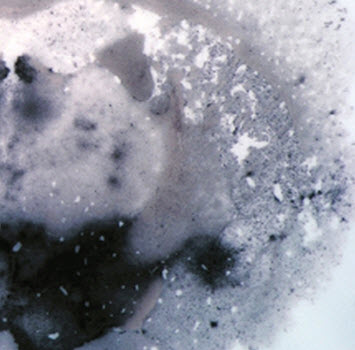
Histoblot analysis of brain tissue from mice exposed to prion aerosols (PLoS Pathogens)The prion is the infectious agent that caused the epidemic of mad cow disease, also termed bovine spongiform encephalopathy (BSE), and claimed the life of over 280,000 cows in the past decades. Transmission of BSE to humans, e.g., by ingesting food derived from BSE-infected cows, causes variant Creutzfeldt-Jakob disease, which is characterized by a progressive and invariably lethal breakdown of brain cells.
Airborne prions are also infectious and can induce mad cow disease or Creutzfeldt-Jakob disorder. This is the surprising conclusion of researchers at the University of Zurich, the University Hospital Zurich and the University of Tübingen. They recommend precautionary measures for scientific labs, slaughterhouses and animal feed plants.
It is known that prions can be transmitted through contaminated surgical instruments and, more rarely, through blood transfusions. The consumption of food products made from BSE-infected cows can also induce the disease, which is responsible for the death of almost 300 people. However, prions are not generally considered to be airborne, in contrast to many viruses including influenza and chicken pox./.../